Animal identification Science Worksheets for Ages 4-8
8 filtered results
-
From - To
Discover the engaging "Animal Identification Science Worksheets" for children ages 4-8, designed to boost your child's learning and excitement about the animal kingdom. Created by educational experts, our worksheets help young learners identify and categorize various animals while developing critical thinking and observation skills. Each worksheet features colorful illustrations and fun activities tailored to captivating kids’ curiosity and fostering a love for science. Perfect for homeschooling or supplementing classroom lessons, these printable resources are an excellent way for children to explore and enjoy the wonders of the animal world. Unlock your child’s potential today!
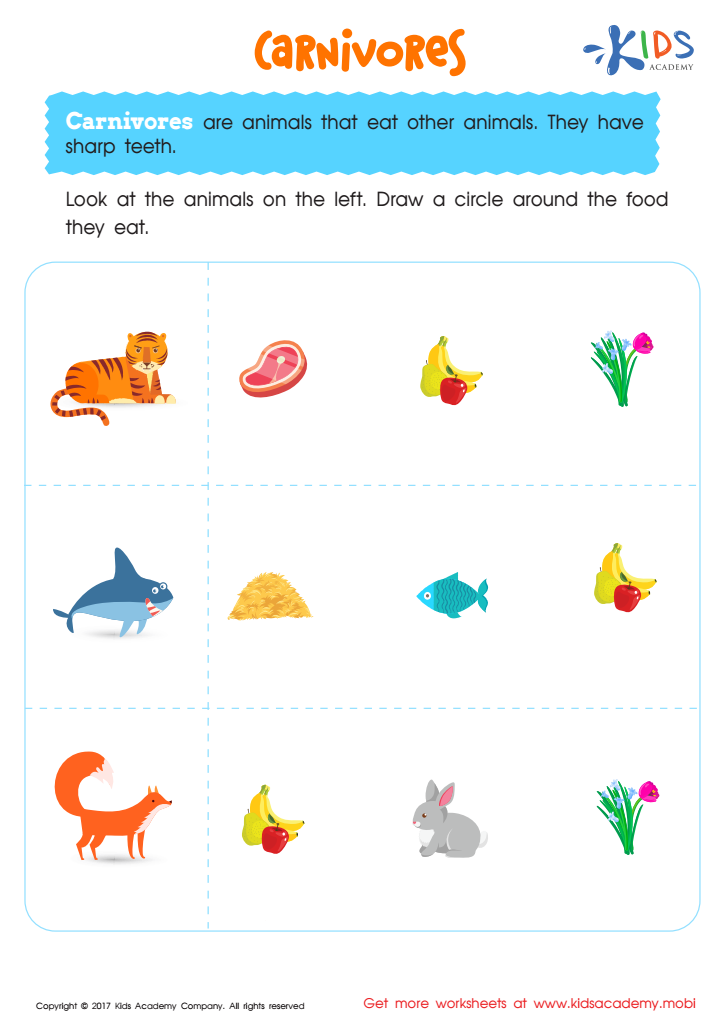
Carnivores Worksheet
 Assign to My Students
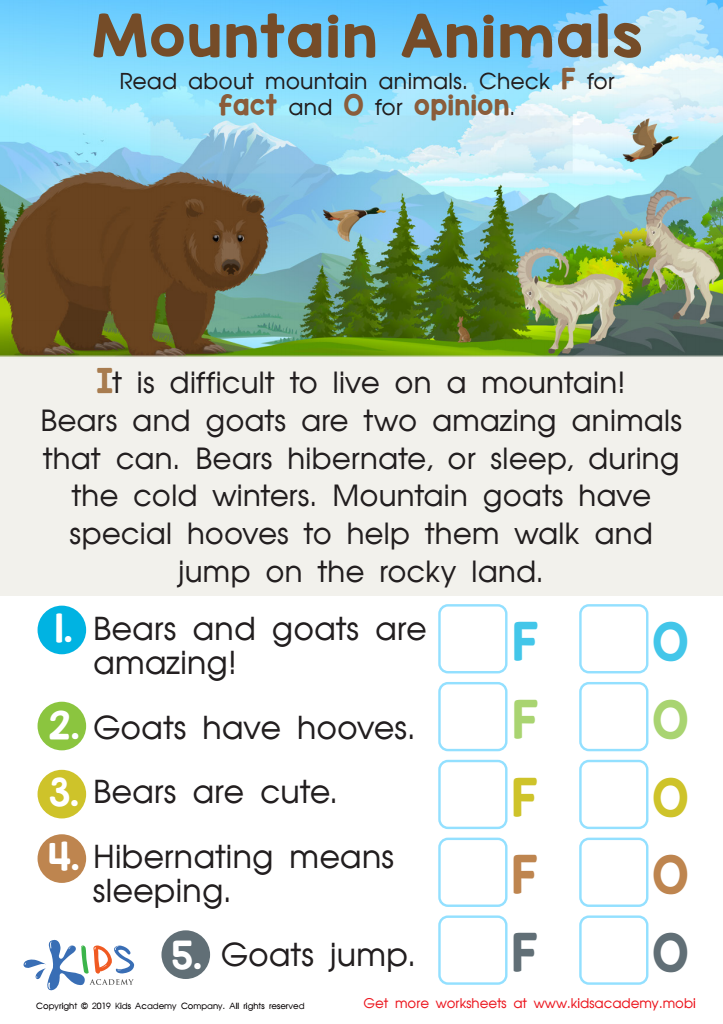
Mountain Animals Worksheet
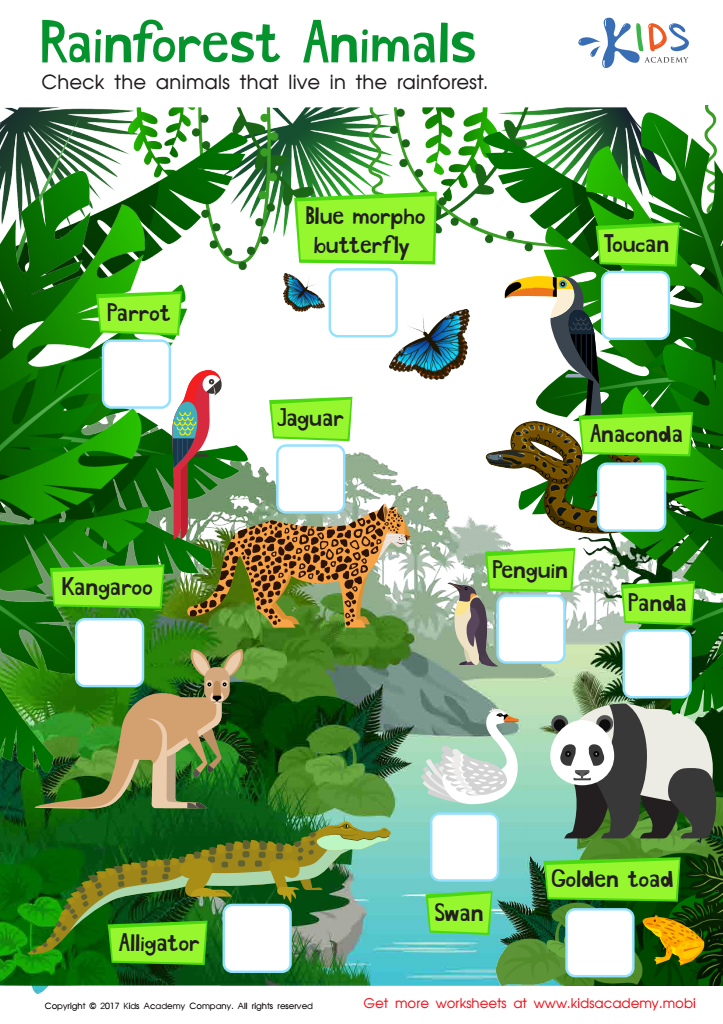
Rainforest Animals Worksheet
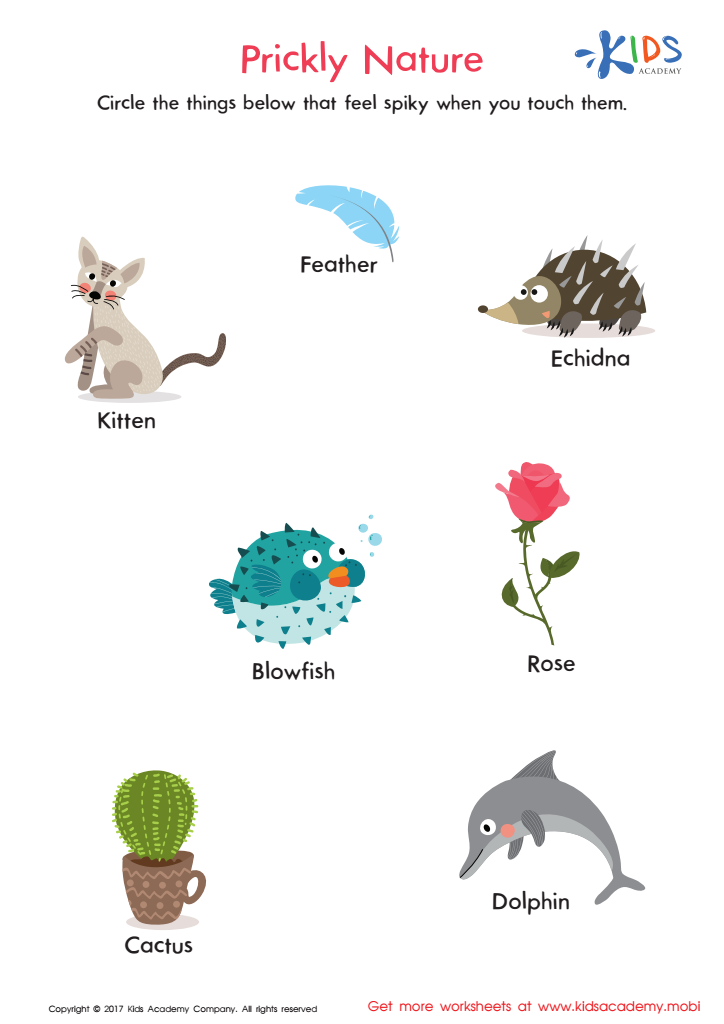
Prickly Nature Worksheet
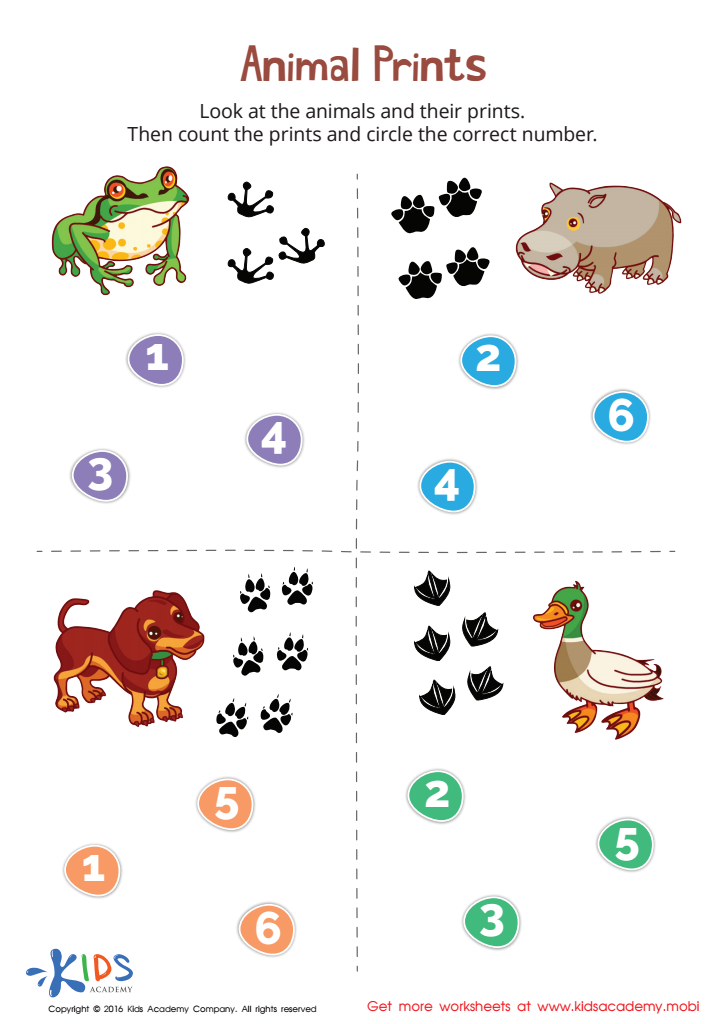
Animal Prints Match-Up Worksheet
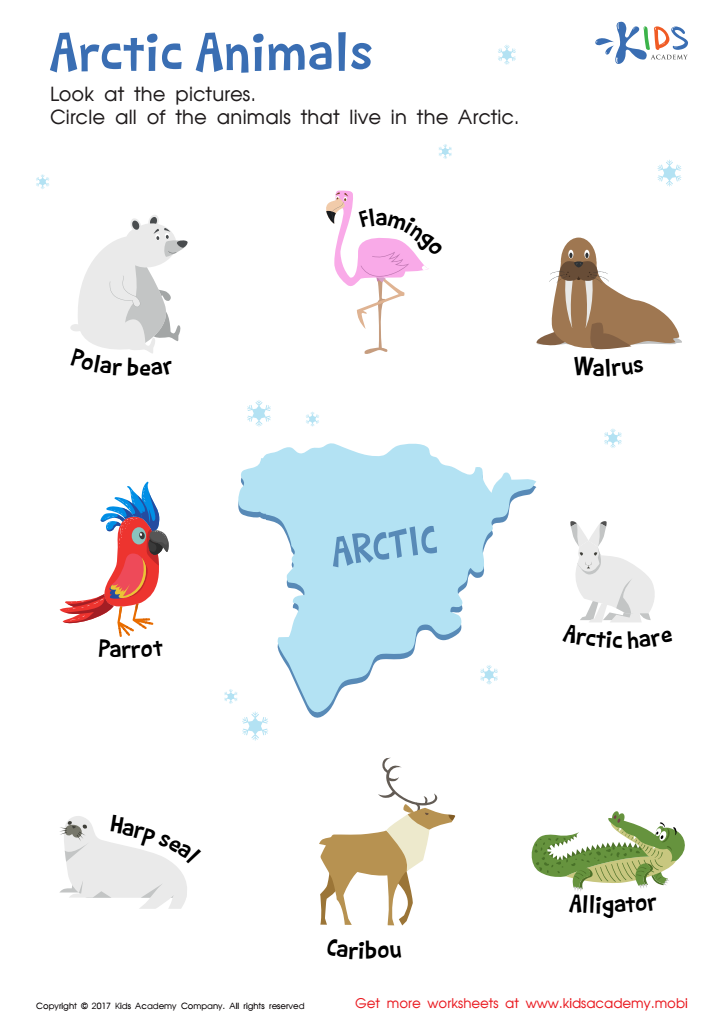
Arctic Animals Worksheet
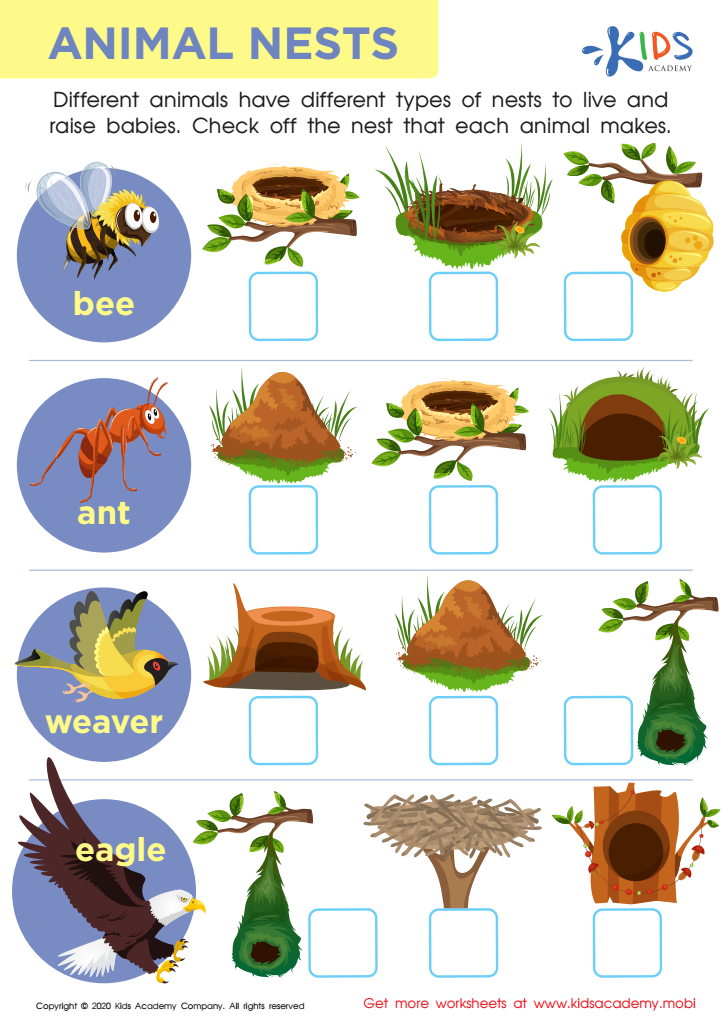
Animal Nests Worksheet
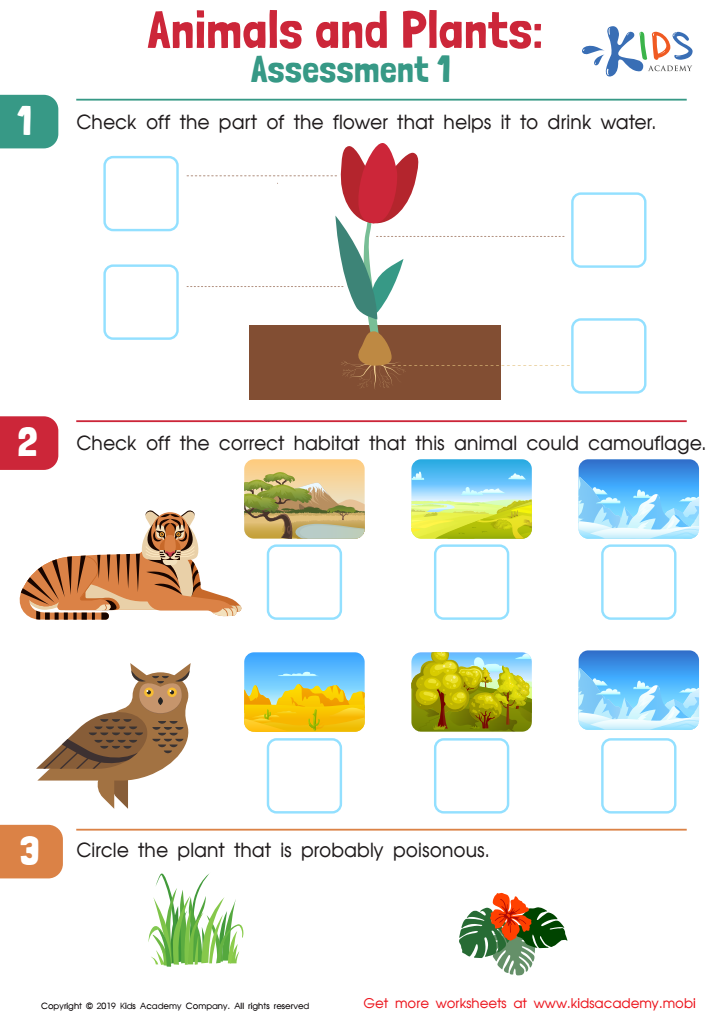
Animals and Plants: Assessment 1 Worksheet








Introducing children aged 4-8 to animal identification science has numerous benefits that greatly enrich their early developmental stages. First and foremost, this educational activity sparks curiosity and fosters a love for learning and nature. Young children naturally have a fascination with animals, and guiding that interest helps cultivate observational skills and critical thinking.
Additionally, learning to identify different animals helps enhance vocabulary and language skills, as children learn not only the names of animals but also descriptive words related to their appearance, habitats, and behaviors. This foundational exposure aids in cognitive development and encourages descriptive language use.
Animal identification activities also teach young children about biodiversity and the importance of conservation. By learning about the wide variety of animal species and their roles in the ecosystem, children become more empathetic and environmentally conscious individuals. This awareness can help shape responsible behavior towards nature and animals as they grow older.
For both parents and teachers, engaging children in animal identification science provides an opportunity for interactive and hands-on learning experiences. It supports pathways for balanced intellectual growth and helps develop fine motor skills through drawing, coloring, or crafting animals. Overall, the benefits extend beyond knowledge, contributing to well-rounded developmental progress in social, language, emotional, and cognitive skills.







