Explore our “Enhancing Vocabulary Science Worksheets” designed for children aged 4 to 8! These engaging worksheets provide a fun and interactive way to boost vocabulary while learning fundamental science concepts. Every activity encourages curiosity, critical thinking, and language development, making science accessible and enjoyable for young learners. From identifying common terms to connecting words with actual science phenomena, our resources cater to various learning styles. Ideal for home or classroom use, these worksheets are crafted to support early education by fostering a love for science and enhancing communication skills. Unlock your child’s potential in both vocabulary and scientific understanding today!

Check out this FREE Trial Lesson on Science for age 4-8!

Bird and Insect Structures

Favorites
With answer key
Interactive
  • 4-8
  • Enhancing vocabulary
  • Science
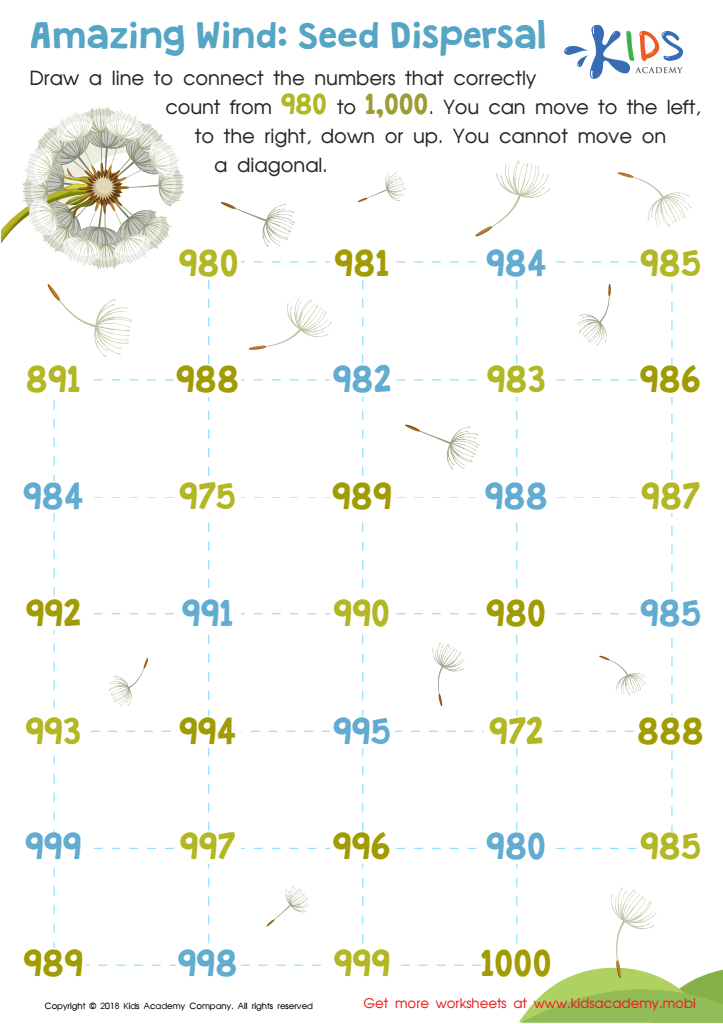
Amazing Wind: Seed Dispersal Worksheet

Amazing Wind: Seed Dispersal Worksheet

Let your child have fun and practice math skills with this worksheet! They'll use traceable lines to disperse a dandelion's seeds, building number sense, sequencing, fine motor, and hand-eye coordination. Discern between similar numbers and strengthen reasoning skills as they enjoy the familiar activity of blowing the seeds away.
Amazing Wind: Seed Dispersal Worksheet
Worksheet
The Water Cycle Worksheet

The Water Cycle Worksheet

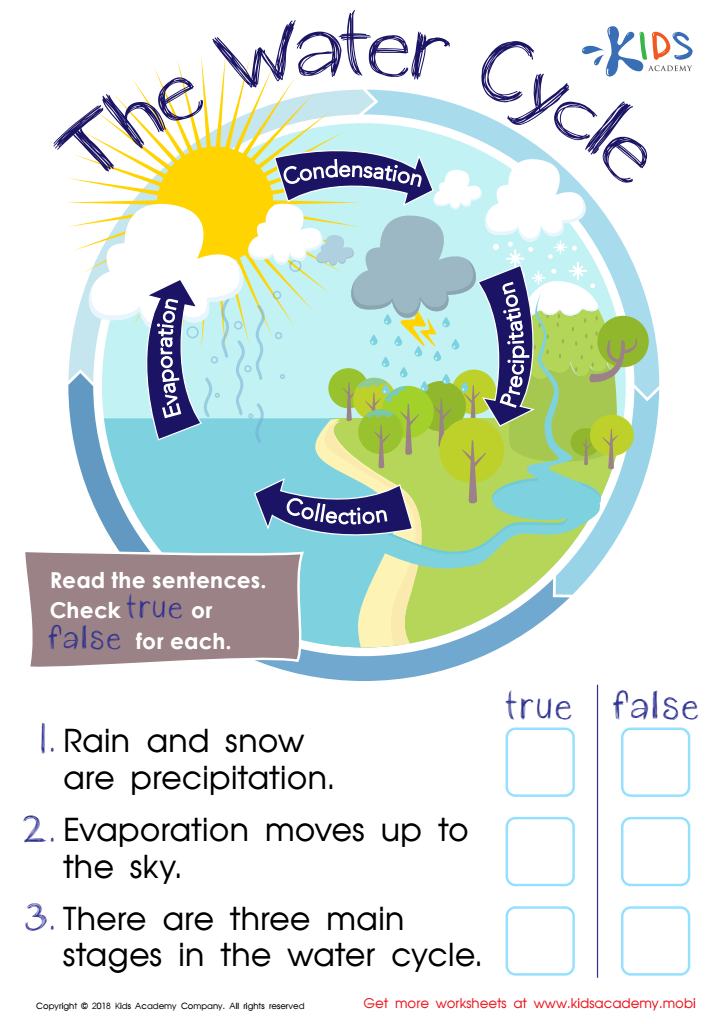
Do your students know about the water cycle? Show them the picture in this worksheet. Explain the stages: collection, evaporation, condensation and precipitation. Read the sentences and have them check the true or false questions. After this, they will understand the cycle water goes through.
The Water Cycle Worksheet
Worksheet
Bird Beaks Worksheet

Bird Beaks Worksheet

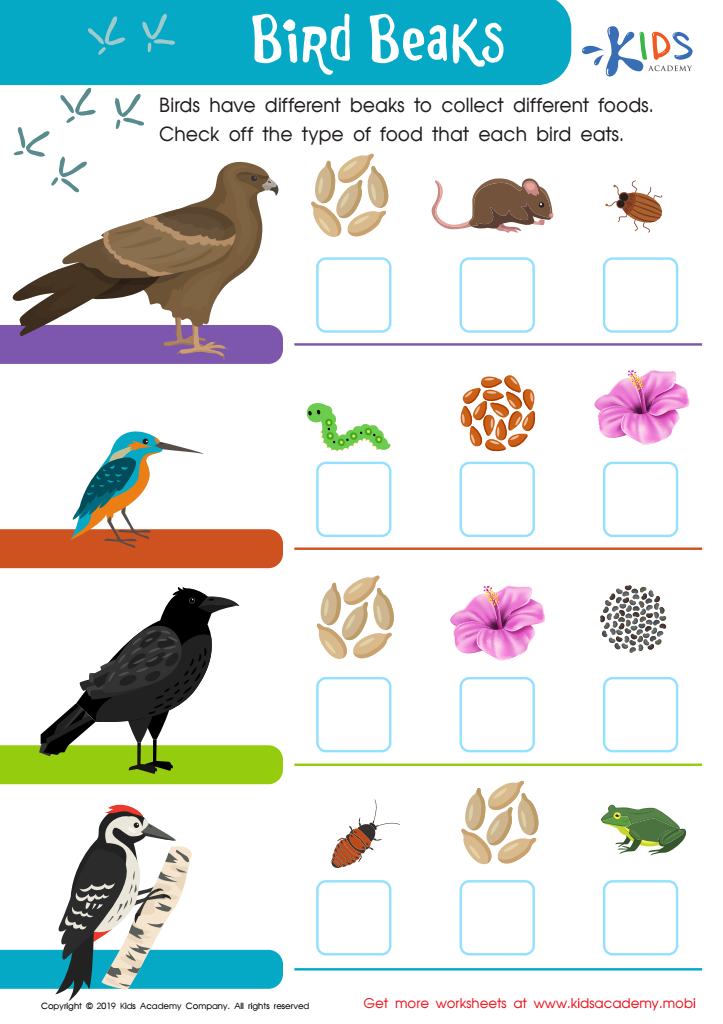
Birds have beaks to eat different types of food. Let your little nature lover explore why with this free worksheet! They'll learn about different beak shapes and match them to the food that's best for them. Be an adorable bird watcher together!
Bird Beaks Worksheet
Worksheet
Parts of Flower Worksheet

Parts of Flower Worksheet

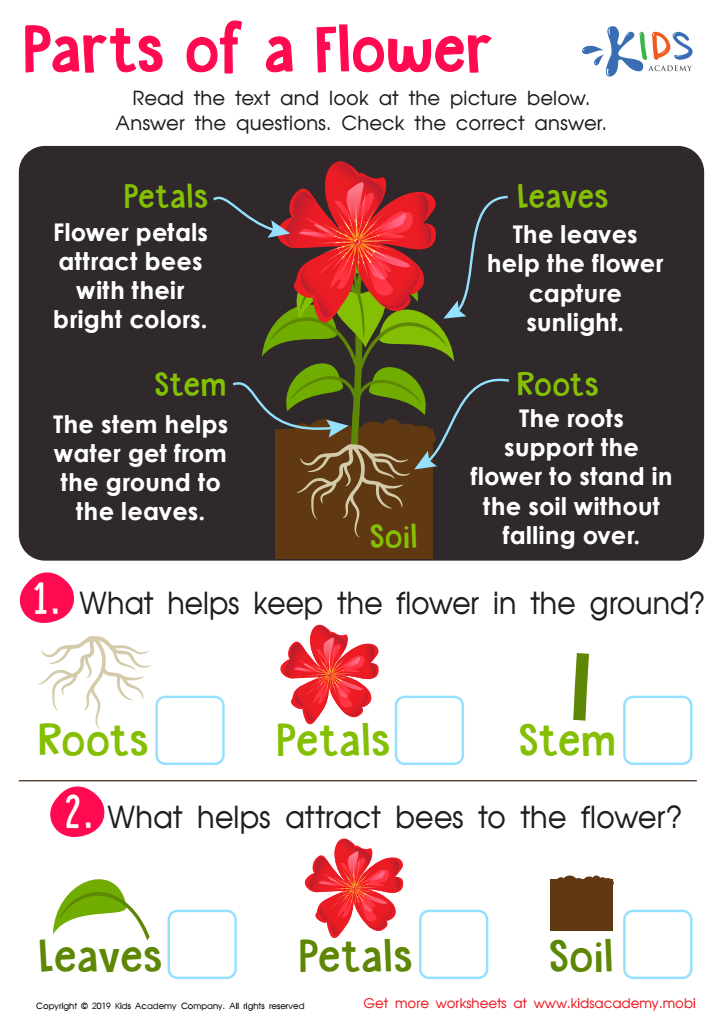
Learning how to dissect info from graphics is essential. This free worksheet on the parts of a flower is a great learning tool for kids. It offers info, picture clues and comprehension questions. Plus, it gives them a visual reference for building on their knowledge of plants.
Parts of Flower Worksheet
Worksheet
Migrate or Hibernate? Worksheet

Migrate or Hibernate? Worksheet

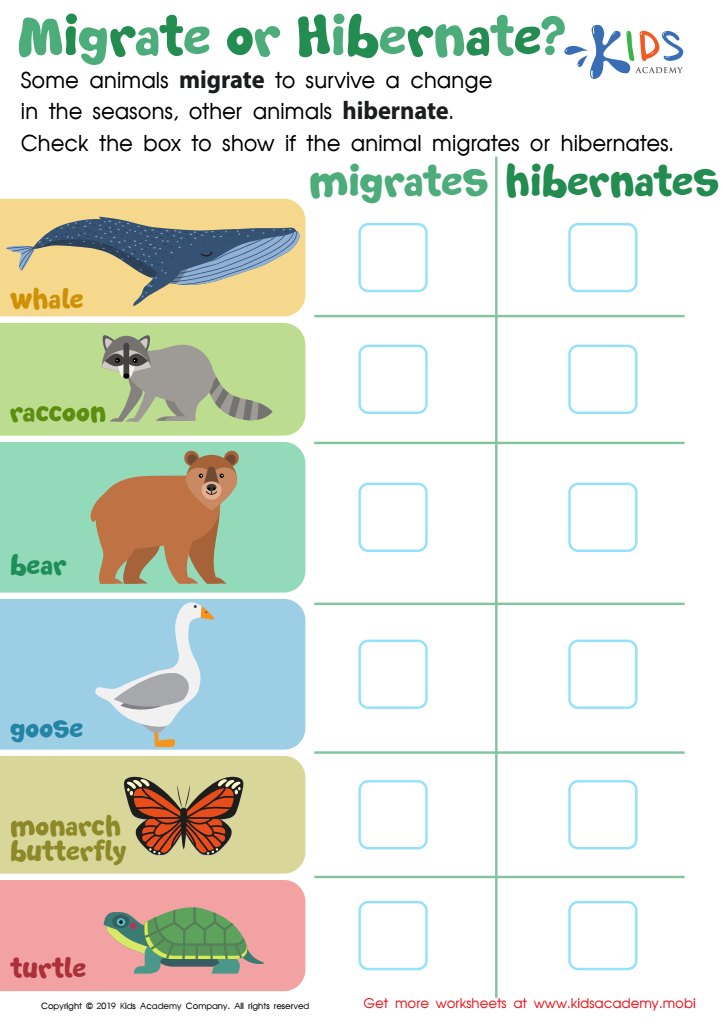
Many animals survive by either migrating or hibernating when the weather changes. Migration involves traveling in flocks or herds to a more temperate climate, while hibernation is when animals stay in their homes and eat and sleep for a long period of time. Show your kids this worksheet and help them decide which strategy animals use to cope with the changing weather.
Migrate or Hibernate? Worksheet
Worksheet
Forms of Water Worksheet

Forms of Water Worksheet

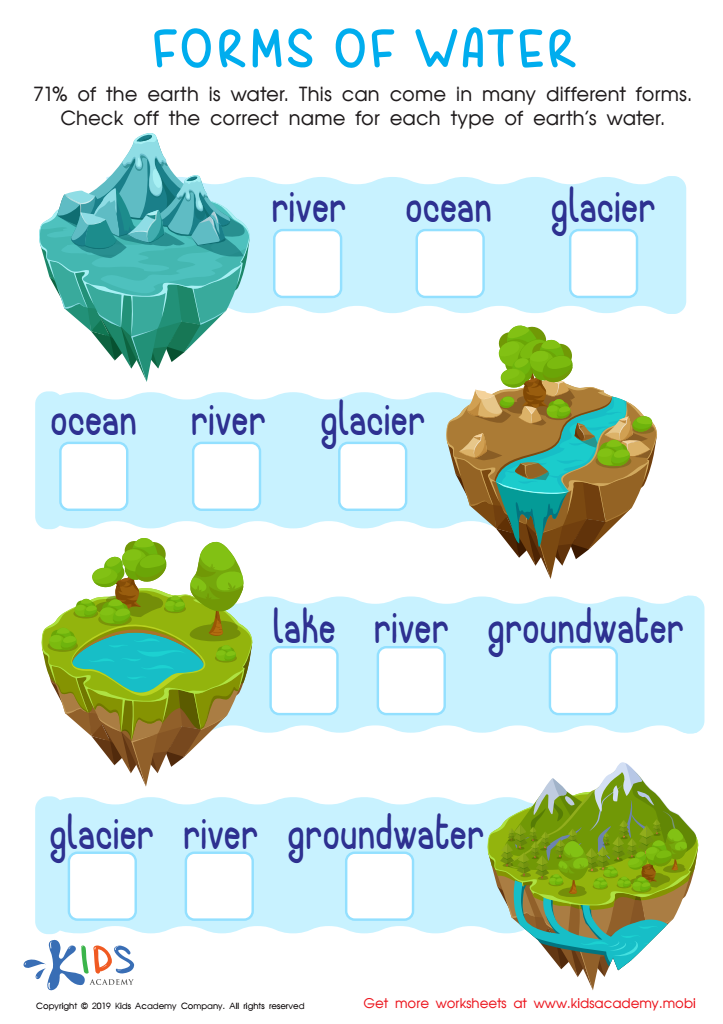
Life on Earth needs water to survive. Luckily, water makes up 75% of the Earth's surface and comes in various forms such as rivers, oceans and lakes. Ask your kids to name other forms and use this worksheet to help them identify each type.
Forms of Water Worksheet
Worksheet
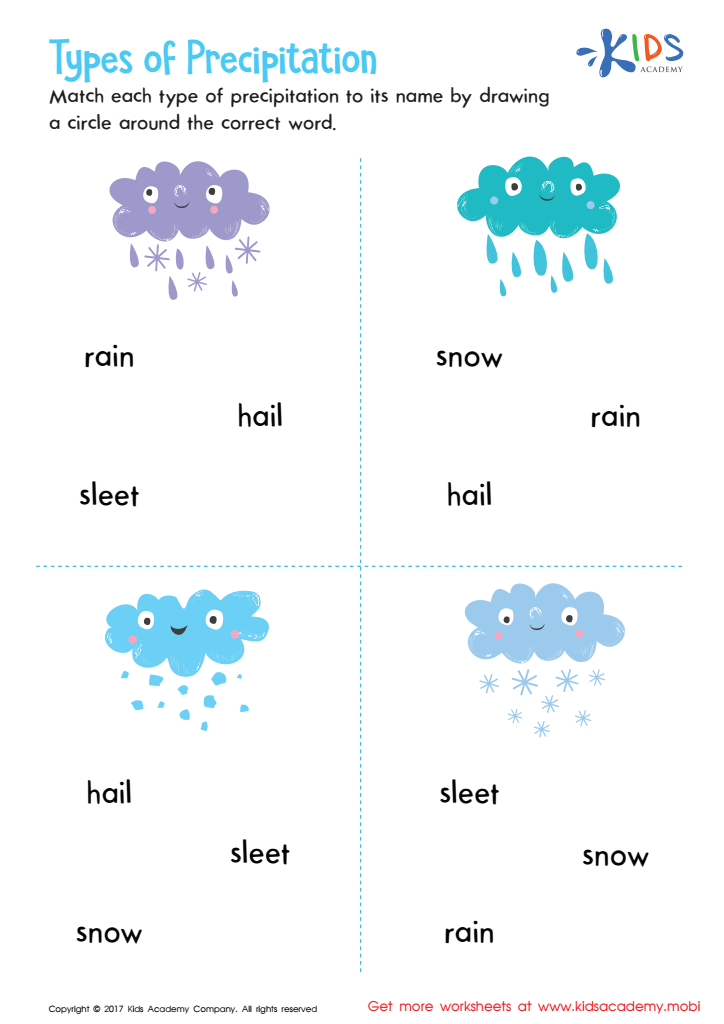
Types of Precipitation Worksheet

Types of Precipitation Printable
Science has a big impact on our world, and teaching kids about weather helps them understand how their learning applies to their lives. Our worksheet reviews different types of weather, so kids can look out the window and know what's happening. It covers familiar types of precipitation and more challenging ones like sleet or hail. Kids can use this to build a mental library of scientific knowledge for the future, even from places that don't get much snow.
Types of Precipitation Printable
Worksheet
Sensory Words Worksheet

Sensory Words Worksheet

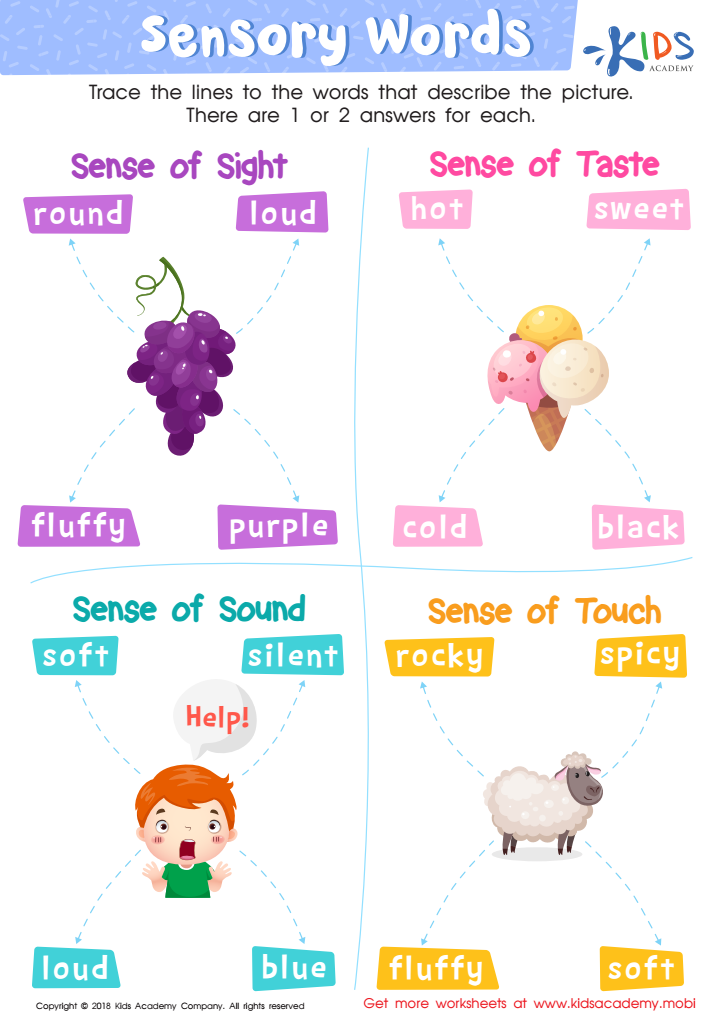
This worksheet helps students explore sensory words by looking at pictures and selecting one or two words to describe how it looks, feels, tastes, smells or sounds. Adding sensory words to texts makes them more interesting and helps students comprehend stories and articles better.
Sensory Words Worksheet
Worksheet


Enhancing vocabulary in science for ages 4-8 is crucial for several reasons. At this developmental stage, children's brains are highly receptive to new words and concepts, laying the foundation for future learning. A strong vocabulary in science helps young learners articulate their thoughts, ask questions, and communicate findings effectively, promoting critical thinking skills.

Furthermore, understanding scientific vocabulary enables children to grasp essential concepts related to the natural world. It encourages curiosity and a love for learning, as they can explore subjects more confidently. Engaging with scientific vocabulary also aids in the development of reading comprehension, as many science materials require familiarity with specific terms.

Parents and teachers play a pivotal role in this process. They can introduce new words through interactive conversations, read-aloud sessions, and hands-on learning experiences—transforming scientific vocabulary from a list of terms to an engaging and enriching part of a child’s learning journey. Ultimately, enhancing scientific vocabulary not only equips children with the language necessary for science but also empowers them to be informed, inquisitive individuals who can make sense of the world around them. Investing in their vocabulary today potentially unlocks a future filled with opportunities in STEM fields.