
Information retention Science Worksheets for Ages 4-8
3 filtered results
Difficulty Level
Grade
Age
-
From - To
Subject
Activity
Standards
Explore our engaging Information Retention Science Worksheets designed for children aged 4 to 8! These interactive resources help young learners develop essential skills in remembering and recalling information. Each worksheet is packed with fun activities that stimulate curiosity and reinforce scientific concepts in a playful way. From matching games to fill-in-the-blanks, our worksheets encourage critical thinking and support memory retention through hands-on learning. Ideal for classroom settings or at-home practice, these materials are tailored to foster a love for science while building foundational skills. Download now to create a stimulating learning experience that promotes effective information retention for young minds!
Favorites
With answer key
Interactive
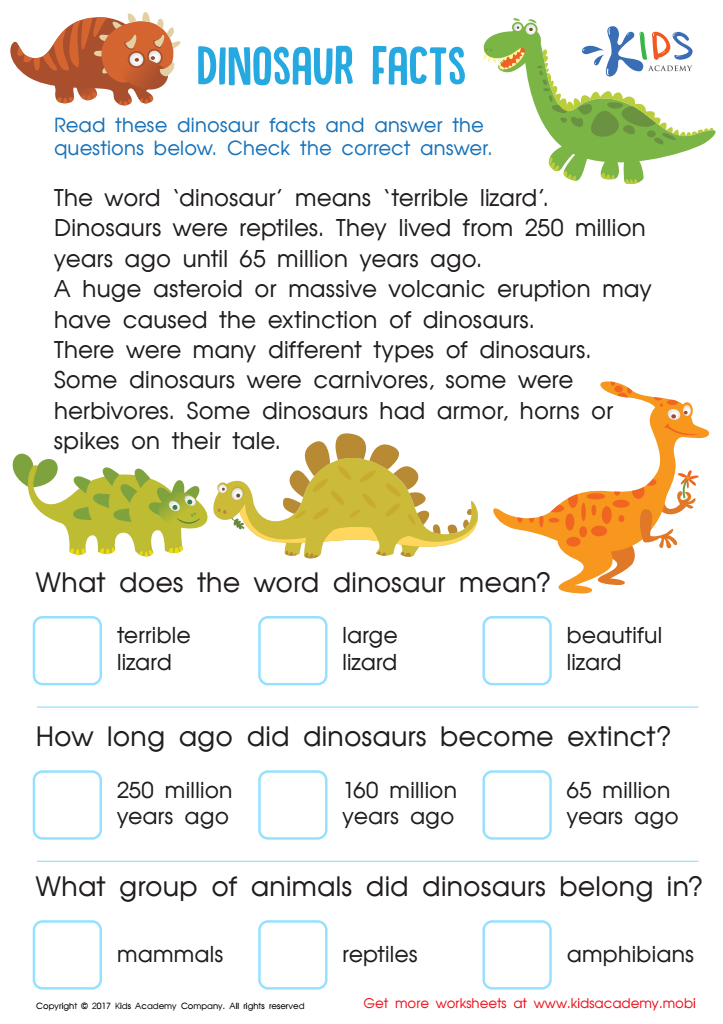
Dinosaur Facts Worksheet
Help your child improve reading skills with engaging nonfiction texts! This dinosaur facts worksheet will teach fun information and test kids on the key details. It'll keep them motivated and ready to learn!
 Assign to My Students
Dinosaur Facts Worksheet
Worksheet
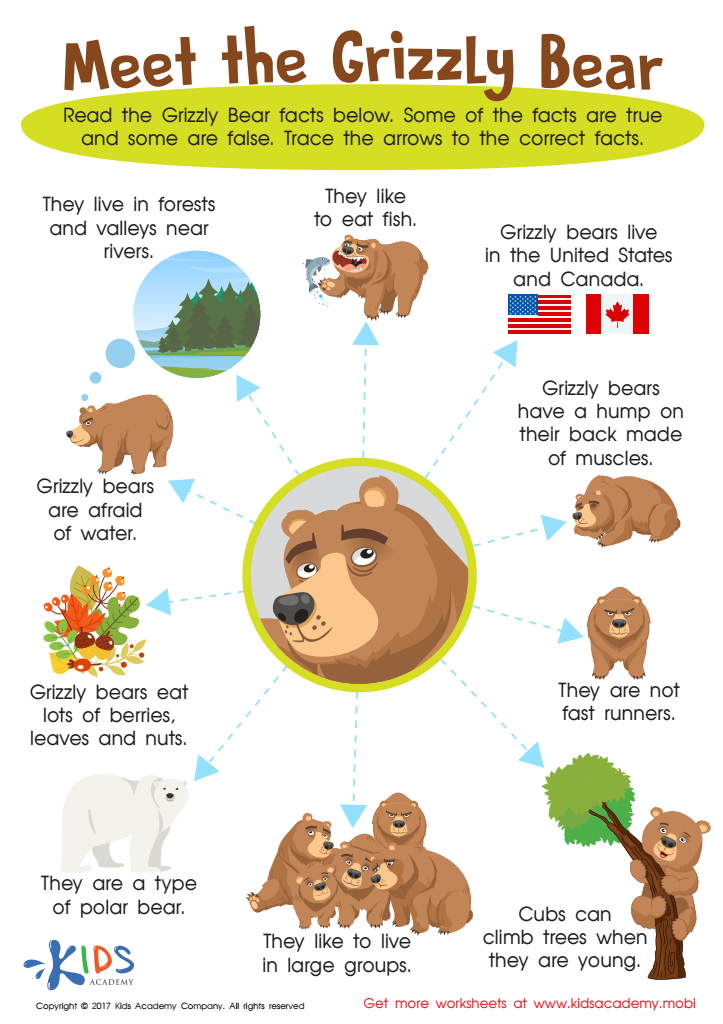
Grizzly Bear Facts Worksheet
Kids will separate truth from fiction in this engaging worksheet about the grizzly bear! Third graders will use their prior knowledge to read the facts and determine which are true and false. Give your child an interesting way to learn more with this vibrant worksheet!
Grizzly Bear Facts Worksheet
Worksheet
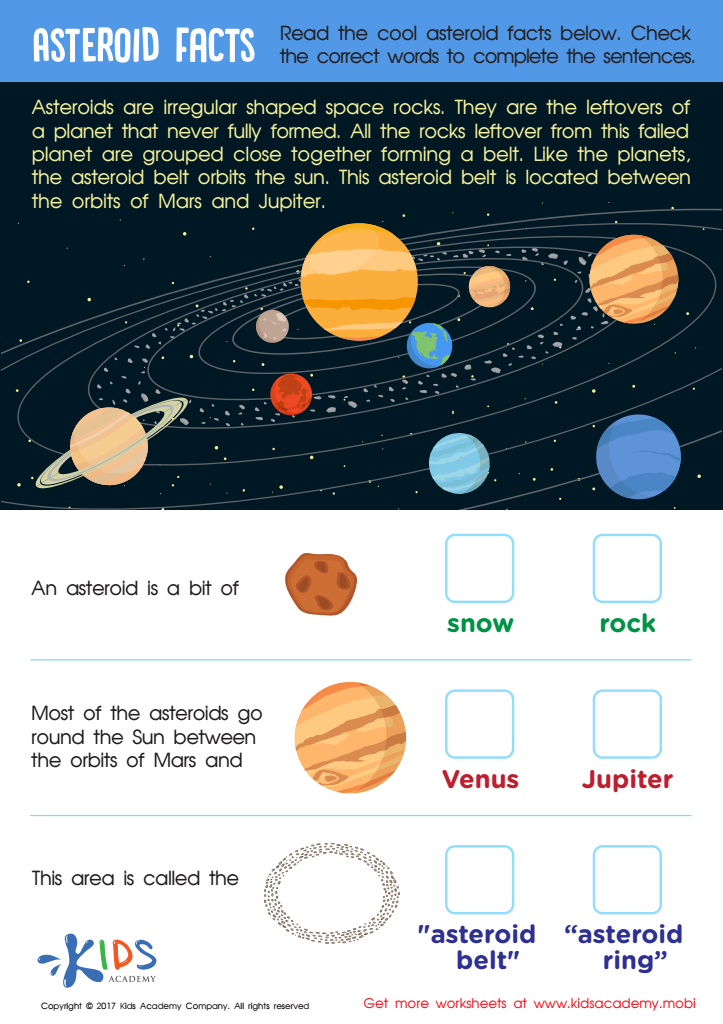
Asteroid Facts Worksheet
Your child can learn about asteroids and hone their comprehension skills with this 2nd-grade asteroid facts worksheet. They'll read a short non-fiction text and select the correct answers to demonstrate understanding of the orbit and properties of these fascinating objects!
Asteroid Facts Worksheet
Worksheet
Join Kids Academy for Free
Who is primarily going to use this learning content?






Information retention science is crucial for parents and teachers of children aged 4-8, as this period marks a foundational stage in cognitive development. Understanding how young children retain information can significantly enhance teaching methods and learning experiences. Research indicates that children at this age benefit from engaging, multi-sensory learning environments that cater to their developing brains. When educators and parents know how children memorize and recall information, they can implement effective strategies, such as repetition, visual aids, and play-based activities, to help reinforce concepts.
Additionally, early exposure to effective information retention techniques fosters a love for learning in children. When curricula are aligned with these principles, children are more likely to retain what they learn, resulting in greater academic success and confidence. Moreover, equipping young learners with strong retention skills sets the groundwork for lifelong learning habits and resilience in navigating more complex subjects in later years.
Ultimately, parents and teachers play a vital role in recognizing and utilizing information retention science to promote cognitive growth and enthusiasm for learning, enabling their children to achieve their fullest potential. By nurturing these skills early on, adults can help create a strong foundation for a child’s future education and overall development.







