
Logical thinking development Science Worksheets for Ages 4-8
3 filtered results
Difficulty Level
Grade
Age
-
From - To
Subject
Activity
Standards
Unlock your child's potential with our Logical Thinking Development Science Worksheets designed for ages 4-8! These engaging and interactive worksheets encourage young learners to enhance their critical thinking, problem-solving, and reasoning skills through fun, hands-on science activities. Each worksheet combines core scientific concepts with logical challenges, making learning both enjoyable and educational. These resources cater to various learning styles, ensuring all children can thrive while exploring the fascinating world of science. Help your little explorers develop essential skills that pave the way for future academic success. Download our worksheets today and watch your child’s confidence and cognitive abilities soar!
Favorites
With answer key
Interactive
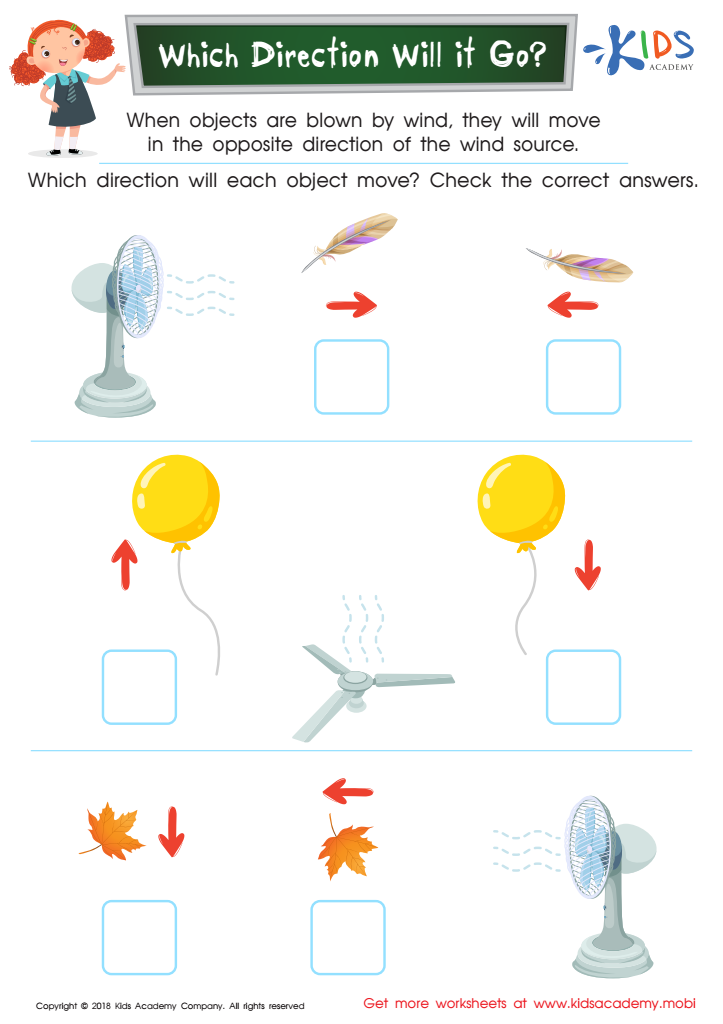
Which Direction Will it Go? Worksheet
Explain to your students: when objects are blown by wind, they will move in the opposite direction. In the worksheet, there are pictures of wind sources and objects being blown by the wind. Ask your child to identify and check the direction each object will move.
 Assign to My Students
Which Direction Will it Go? Worksheet
Worksheet
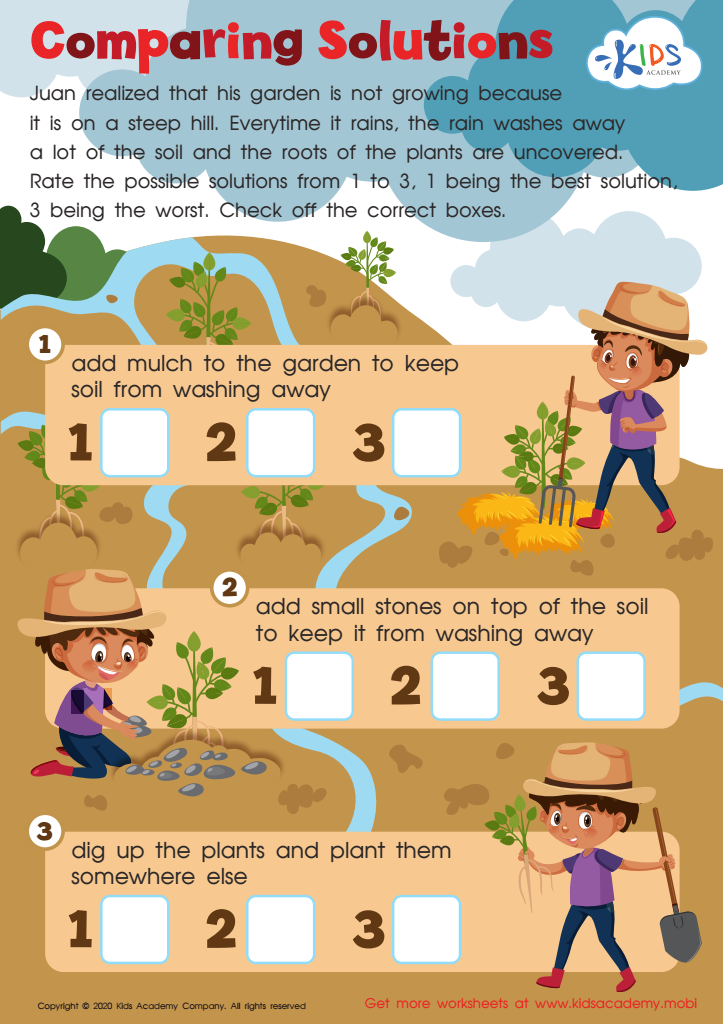
Comparing Solutions Worksheet
Juan can't get his veg garden growing as he'd like, planted on a steep hill. Help your child practice problem-solving by comparing solutions and rating them from most to least effective. With this thought-provoking worksheet, learners can hone the important skill of finding the best solution from a range of options.
Comparing Solutions Worksheet
Worksheet
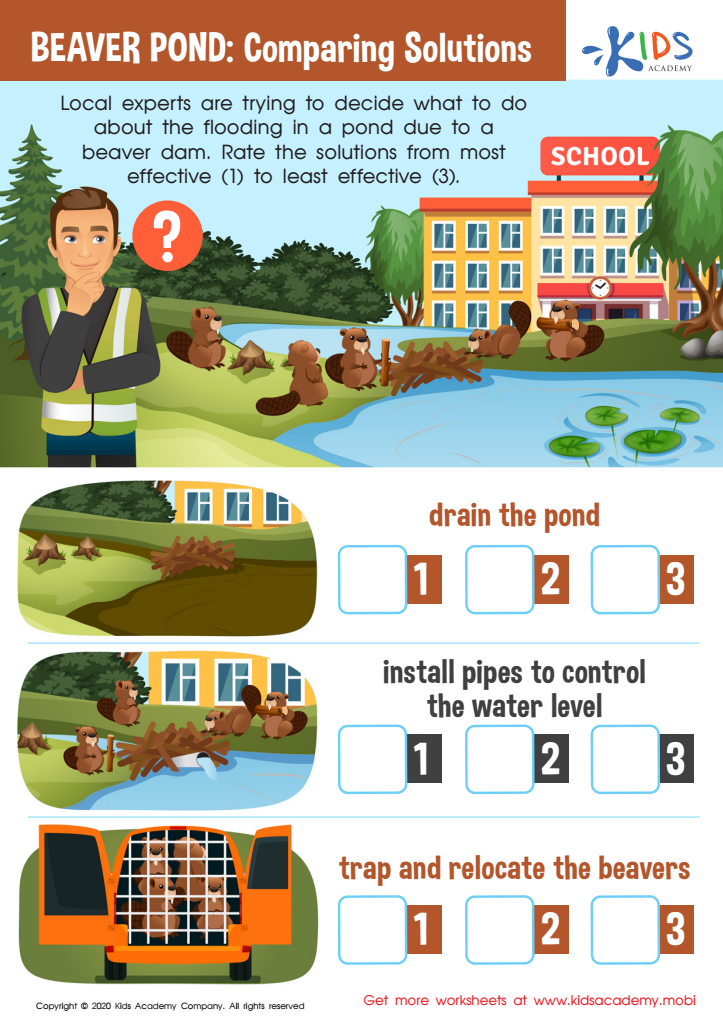
Beaver Pond: Comparing Solutions Worksheet
Got a problem? This science worksheet is great for helping your child compare solutions and pick the best one. Kids get to rate each option's effectiveness by ticking off boxes, from most to least. It's a great way to encourage problem-solving skills, while having fun!
Beaver Pond: Comparing Solutions Worksheet
Worksheet
Join Kids Academy for Free
Who is primarily going to use this learning content?







Parents and teachers should prioritize logical thinking development in young children aged 4-8 because it lays the foundation for critical life skills. During these formative years, children's cognitive abilities are rapidly developing, making it an ideal time to introduce and nurture logical reasoning. Engaging in activities that promote logical thinking—such as puzzles, games, and hands-on experiments—helps children learn how to analyze situations, recognize patterns, and solve problems effectively.
Logical thinking fosters creativity and innovation, allowing children to approach tasks with a structured mindset. When children learn to think logically, they become more confident decision-makers and are better equipped to tackle the complexities of daily life, from academics to social interactions.
Moreover, nurturing logical thinking can enhance children’s academic performance in subjects like mathematics and science, which require reasoning and analytical skills. Additionally, these skills are essential for fostering resilience; logical thinkers are more likely to persist through challenges and learn from failure.
Ultimately, supporting logical thinking development is crucial for preparing children for future academic success and equipping them with essential life skills that will serve them well into adulthood. When parents and teachers foster these abilities, they help children grow into knowledgeable, capable, and thoughtful individuals.







