Sequencing Skills Science Worksheets for Ages 4-8
4 filtered results
-
From - To
Introduce your young learners to the exciting world of science with our "Sequencing Skills Science Worksheets for Ages 4-8." These engaging worksheets are designed to enhance children's understanding of sequences in scientific concepts, fostering critical thinking and problem-solving abilities. Each activity presents visually appealing scenarios where kids order events correctly, promoting logical reasoning and comprehension. Ideal for building foundational skills, these resources support learning in a fun, interactive manner. Perfect for both classroom and home use, our sequencing worksheets prepare young minds for future scientific exploration and discovery. Spark your children's curiosity with our thoughtfully crafted, age-appropriate materials.
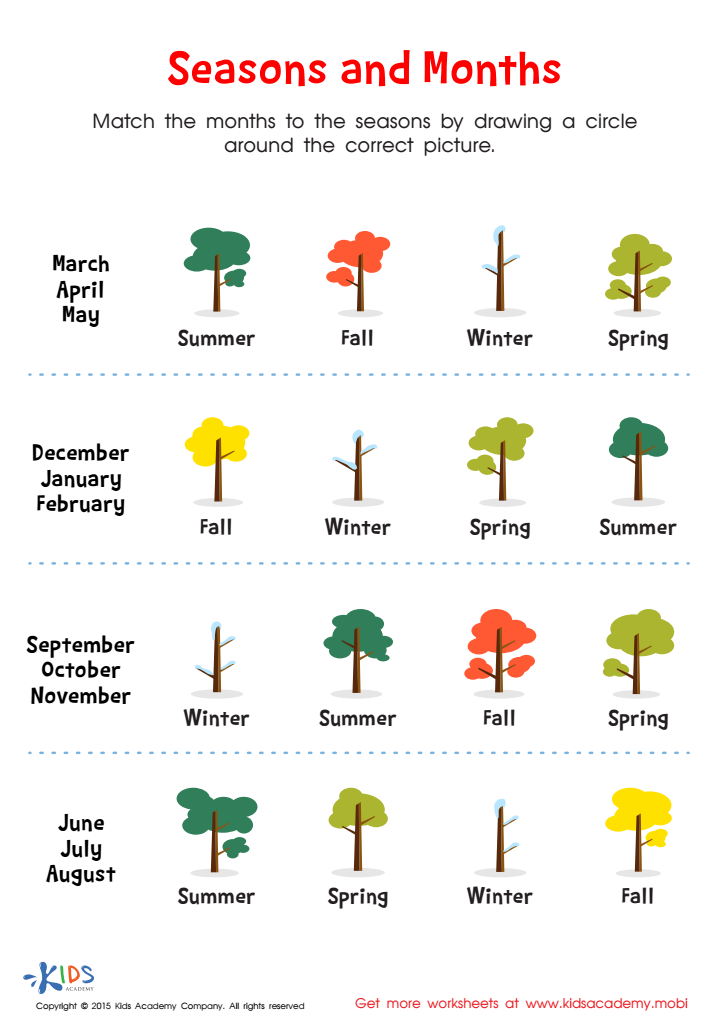
Seasons and Months Worksheet
 Assign to My Students
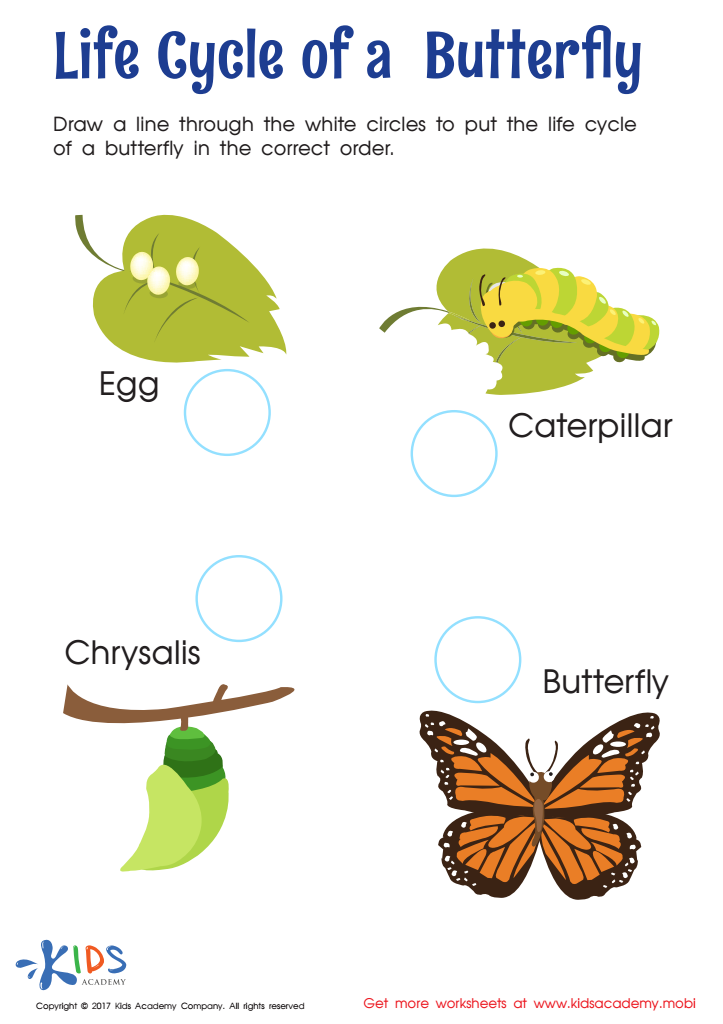
Life Cycle of Butterfly Worksheet
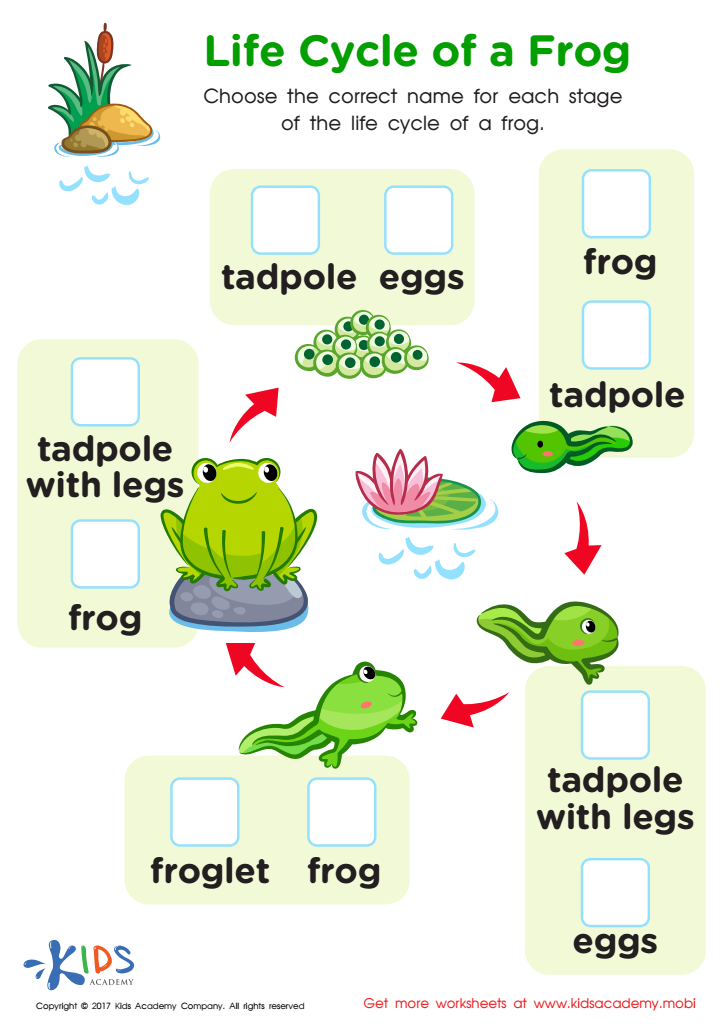
Life Cycle Frog Printable
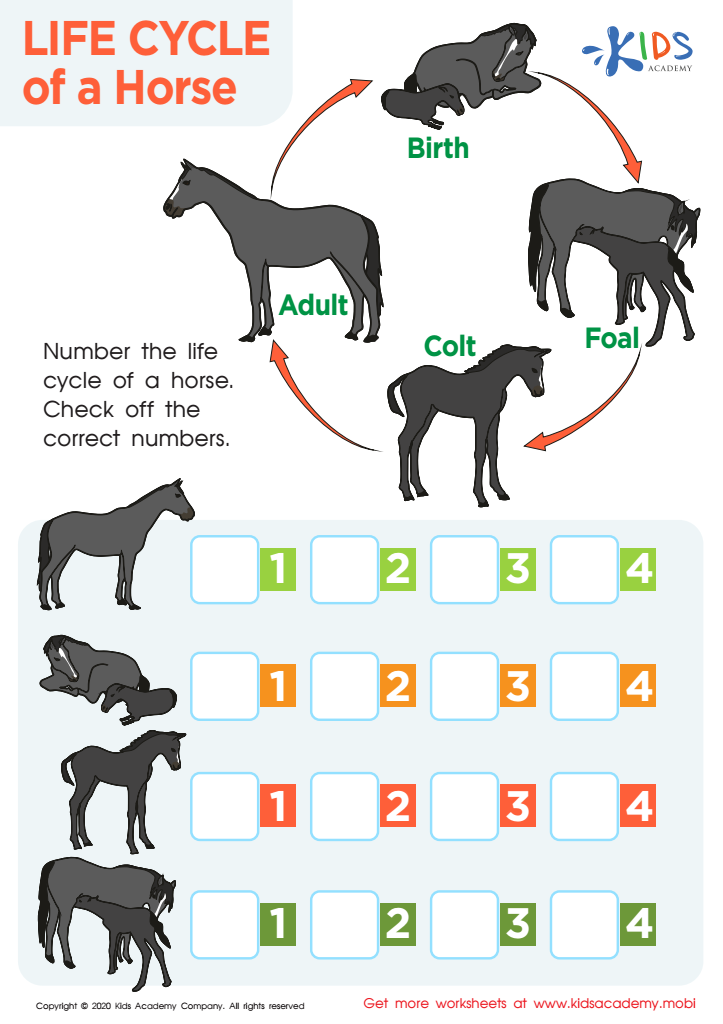
Life Cycle of a Horse Worksheet








Sequencing skills are crucial for young children's cognitive development, particularly in science education for ages 4-8. These skills enable kids to understand the order of events or steps and are foundational for logical thinking and problem-solving. When children master sequencing, they can better grasp scientific concepts, such as the life cycles of plants and animals or the steps in a simple scientific experiment.
For instance, knowing the sequence of planting a seed, watering it, and then observing its growth allows children to comprehend cause and effect. As they see the direct relationship between actions and outcomes, their ability to think critically and understand complex information improves. This skill also extends beyond science; it bolsters reading comprehension through recognizing story order and boosts mathematical ability by understanding the order of operations.
Parents and teachers should nurture sequencing skills through interactive activities like storytelling, science experiments, or day-to-day routines. Puzzles, sequencing cards, and chronological tasks can make learning engaging and effective. By focusing on these skills, adults help children build a strong foundation for future academic success and practical life skills, promoting a more structured and analytical way of thinking that benefits all areas of learning and development.







