Understanding patterns Science Worksheets for Ages 4-8
4 filtered results
-
From - To
Discover a fun and educational way to teach young children about patterns with our "Understanding Patterns Science Worksheets for Ages 4-8." These engaging worksheets help young learners develop essential skills such as recognizing, predicting, and creating patterns. Featuring colorful illustrations and interactive exercises, our resources make learning exciting and relatable. Perfect for both classroom use and homeschool environments, these worksheets are designed to align with early grade science curricula, promoting critical thinking and problem-solving. Start exploring our collection today and watch your child's confidence and curiosity grow as they master the foundational concepts of patterns!
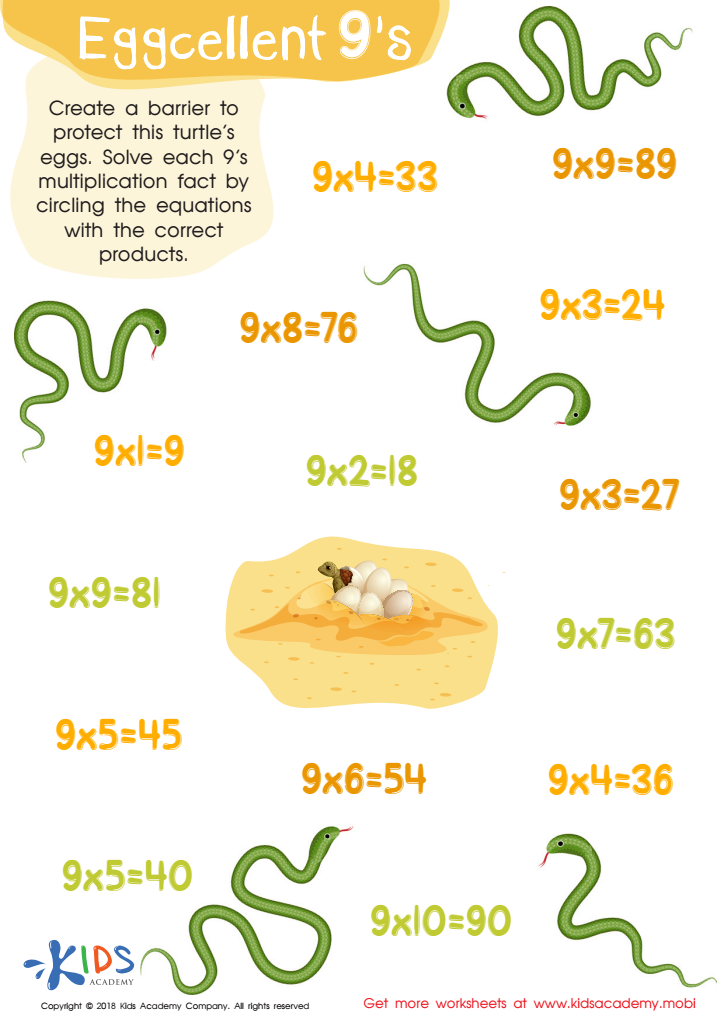
Eggcellent 9’s Worksheet
 Assign to My Students
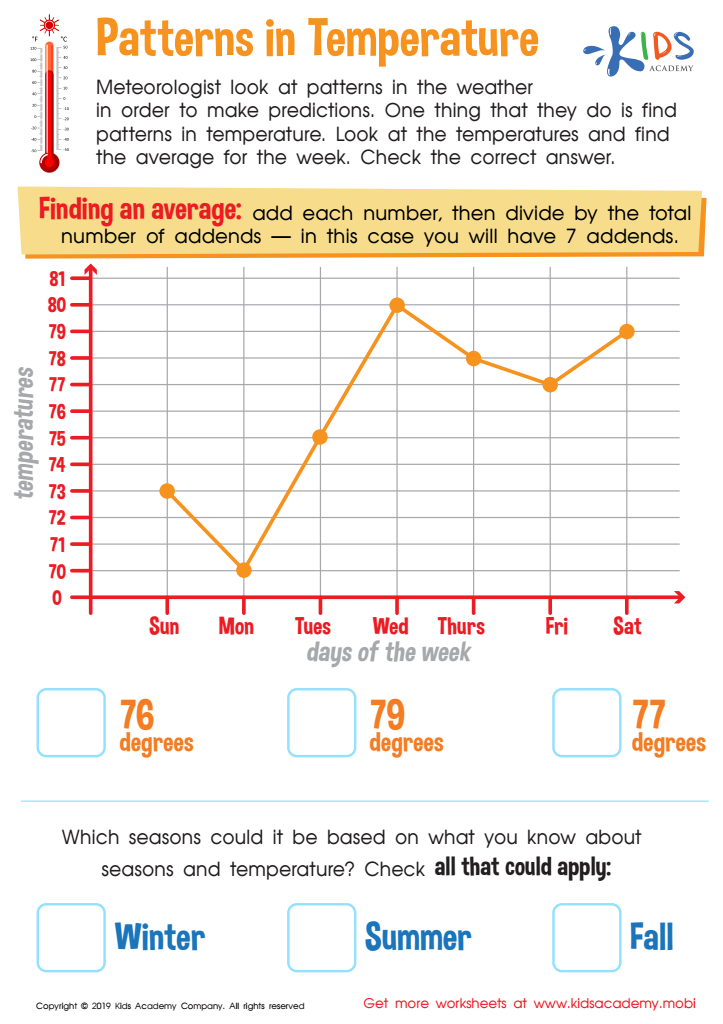
Patterns in Temperature Worksheet
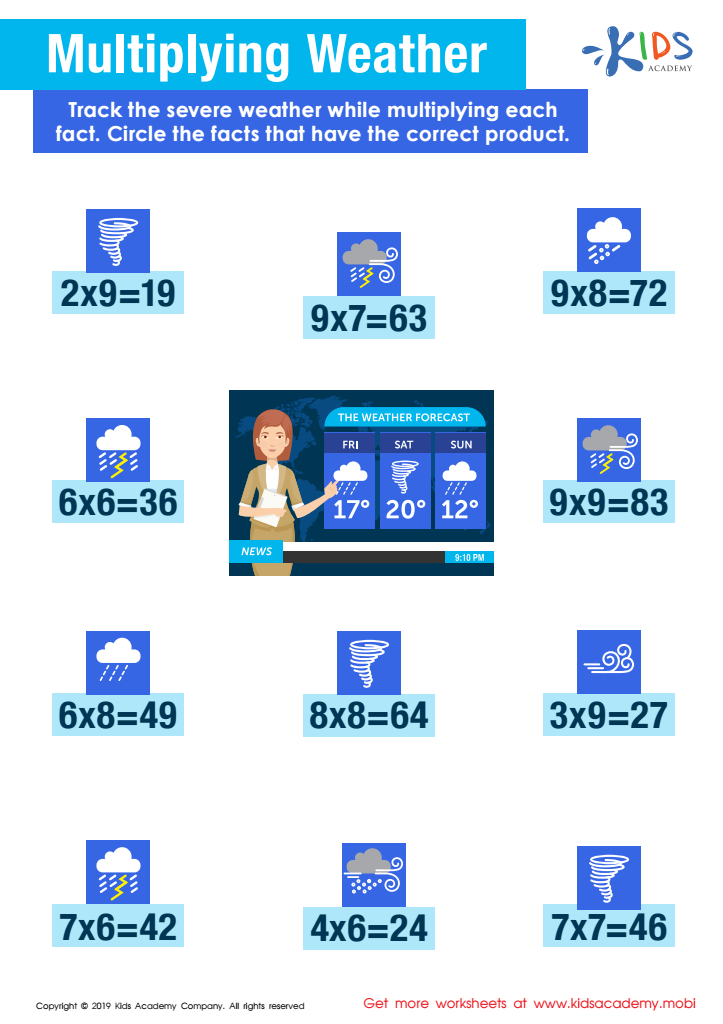
Multiplying Weather Worksheet
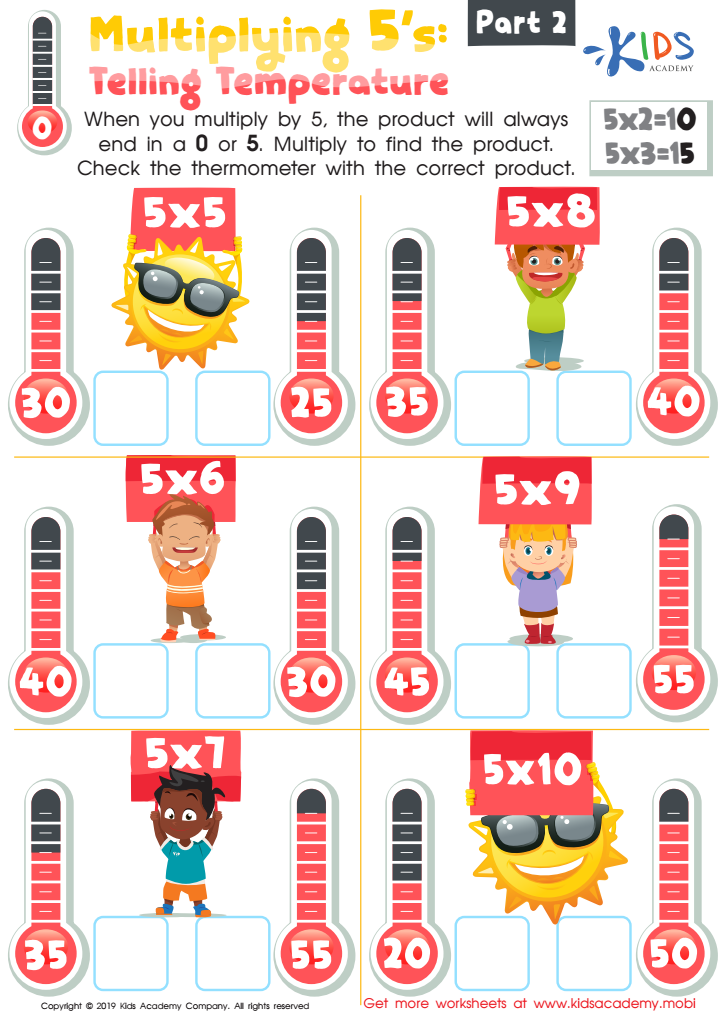
Multiplying 5’s: Telling Temperature Part 2 Worksheet








Understanding patterns is crucial for young children's development in numerous ways. For ages 4-8, recognizing and understanding patterns helps build foundational skills in a variety of subjects, especially math and science. Patterns lead to better prediction skills, enabling children to anticipate what comes next in sequences. This skill is vital for problem-solving and logical thinking, both of which are crucial in science and everyday life.
Moreover, comprehending patterns aids in the development of early literacy skills. Rhyme patterns, story sequences, and grammatical structures become easier to grasp, thereby enhancing reading and writing proficiency. In a broader sense, noticing patterns in nature, daily routines, and art foster observational skills and curiosity – key drivers of scientific inquiry.
For teachers and parents, fostering an environment where pattern recognition is encouraged supports cognitive development. Activities like sorting objects, playing with number sequences, or recognizing patterns in stories, music, and dance engage multiple learning modalities. Such interactive learning helps maintain children's interest, making it easier for educators and parents to facilitate a child’s academic journey.
Ultimately, understanding patterns builds a toolkit for approaching more complex concepts later in life. It helps inculcate a love for learning, providing children with the confidence and curiosity needed for lifelong educational success.







