Critical Thinking Life Science Worksheets for Ages 4-8
4 filtered results
-
From - To
Enhance your child's learning with our Critical Thinking Life Science Worksheets for Ages 4-8. Designed to spark curiosity and foster analytical skills, these worksheets cover essential life science topics through engaging, age-appropriate activities. Kids will explore plant and animal life cycles, ecosystems, and basic biology, encouraging them to ask questions and think deeply about the world around them. Perfect for young learners, our worksheets support classroom learning and home education, making science an exciting adventure. Visit Kids Academy for printables that challenge young minds and nurture a lifelong love of discovery in your budding scientist.
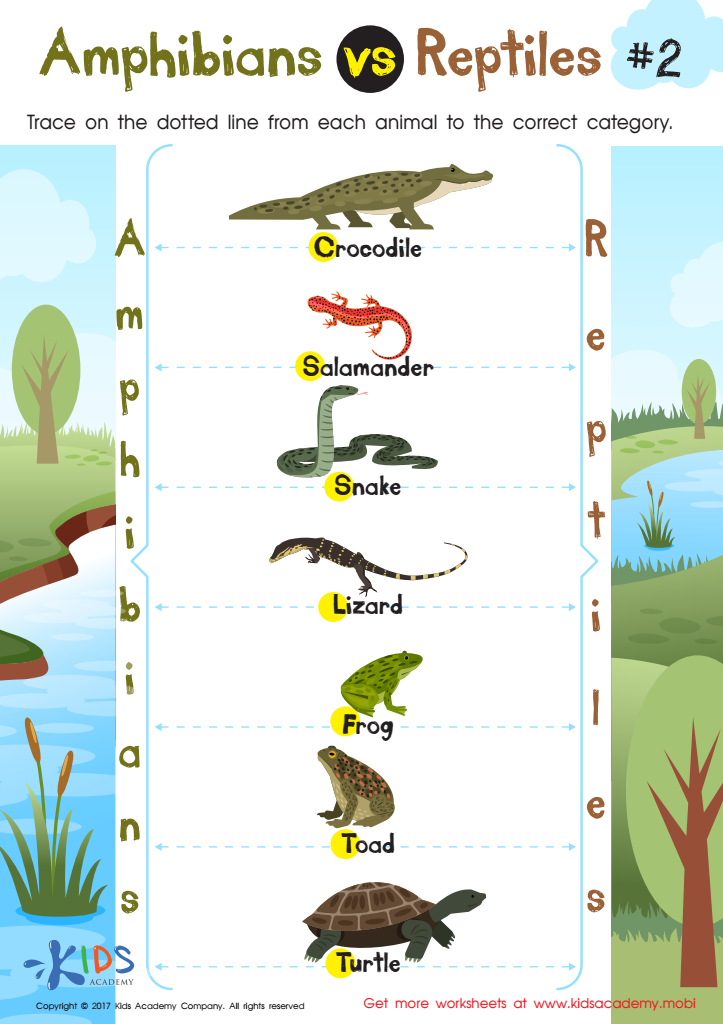
Amphibians vs Reptiles Worksheet for 3rd Grade
 Assign to My Students
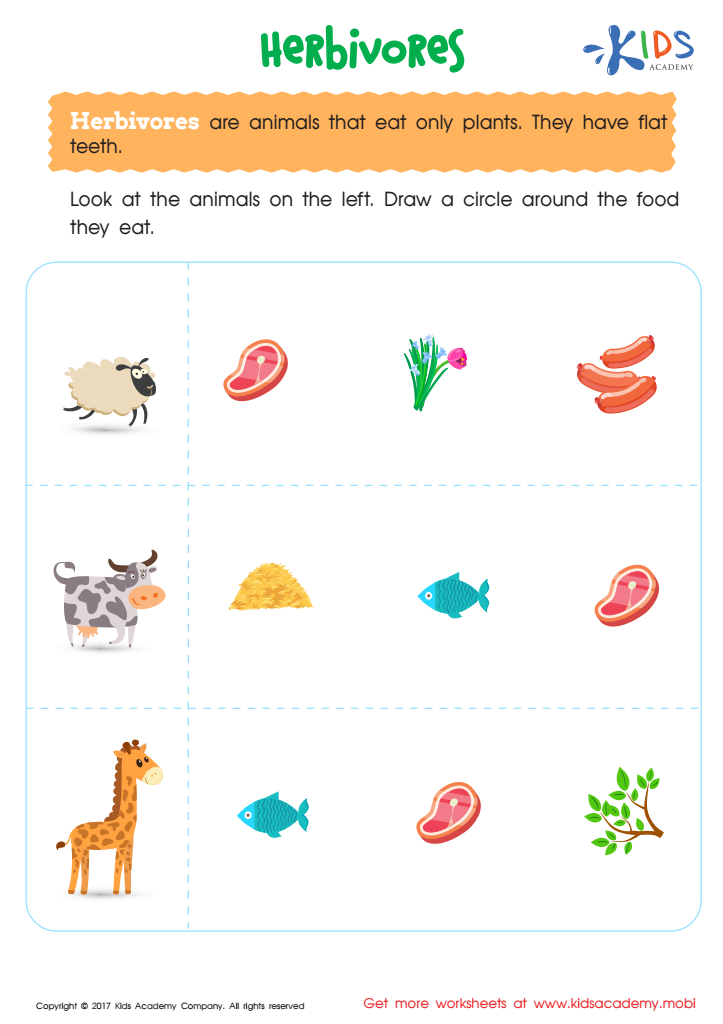
Herbivores Printable
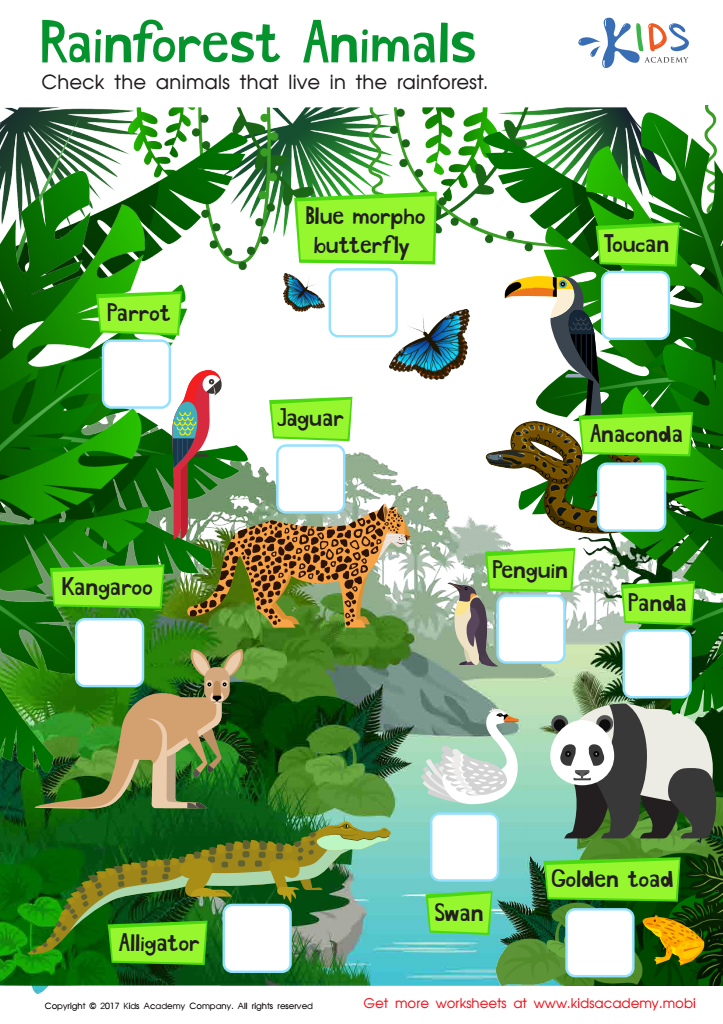
Rainforest Animals Worksheet
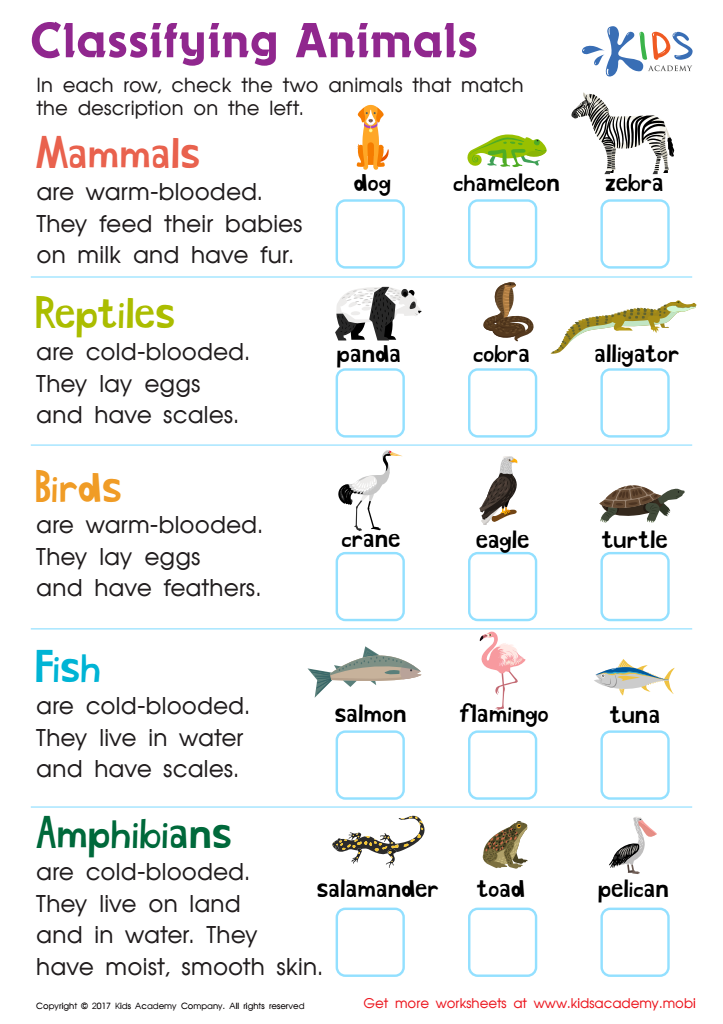
Classifying Animals Worksheet








Parents and teachers should care about critical thinking in life science for children aged 4-8 because it forms a foundational skill set that goes far beyond just understanding scientific facts. Critical thinking encourages young learners to question, explore, and reason, fostering a mindset of curiosity and problem-solving. In the context of life science, children explore the living world around them – from plants and animals to human biology.
By developing critical thinking skills, kids learn how to observe carefully, make predictions, test their hypotheses, and draw conclusions based on evidence. This method not only makes science exciting and hands-on but also translates to everyday decision-making and creativity. For example, a child questioning why plants need sunlight might experiment with placing a plant in different lighting conditions, thereby learning about photosynthesis in a tangible way.
Moreover, early engagement with critical thinking builds resilience and adaptability. Life science offers opportunities to classify and comprehend connections in nature, which enhances cognitive capabilities such as categorization, sequencing, and understanding cause and effect. These skills contribute to a child's overall intellectual development and can improve performance across other academic subjects.
Ultimately, nurturing critical thinking in life science will help young children become thoughtful, independent learners who are equipped to tackle future academic challenges and real-world problems.








