Enhancing reading skills Plants and Animals Worksheets for Ages 4-8
4 filtered results
-
From - To
Unlock the joy of reading and science with our "Enhancing Reading Skills Plants and Animals Worksheets" designed for ages 4-8. These carefully crafted activities blend literacy and natural science, captivating young minds as they discover the wonders of the plant and animal kingdoms. Each worksheet encourages critical thinking, enriches vocabulary, and boosts comprehension through engaging and age-appropriate content. Ideal for children learning at home or in the classroom, our resources provide a fun and interactive way to foster a love for reading while exploring nature. Give your child the tools they need to grow academically and cultivate their curiosity about the world around them.
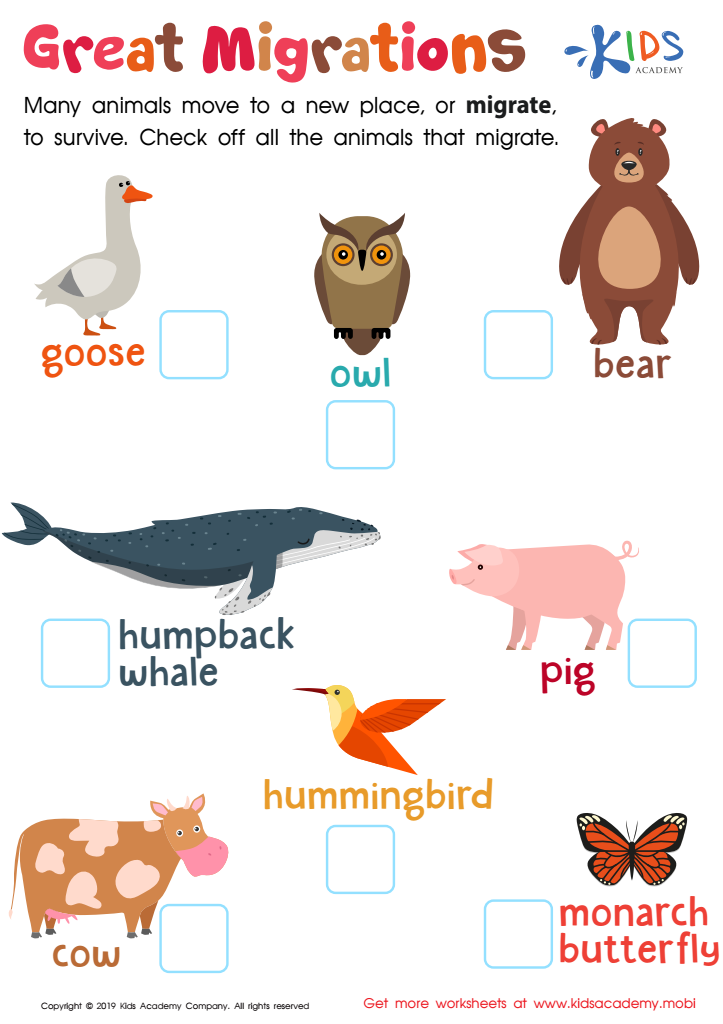
Great Migrations Worksheet
 Assign to My Students
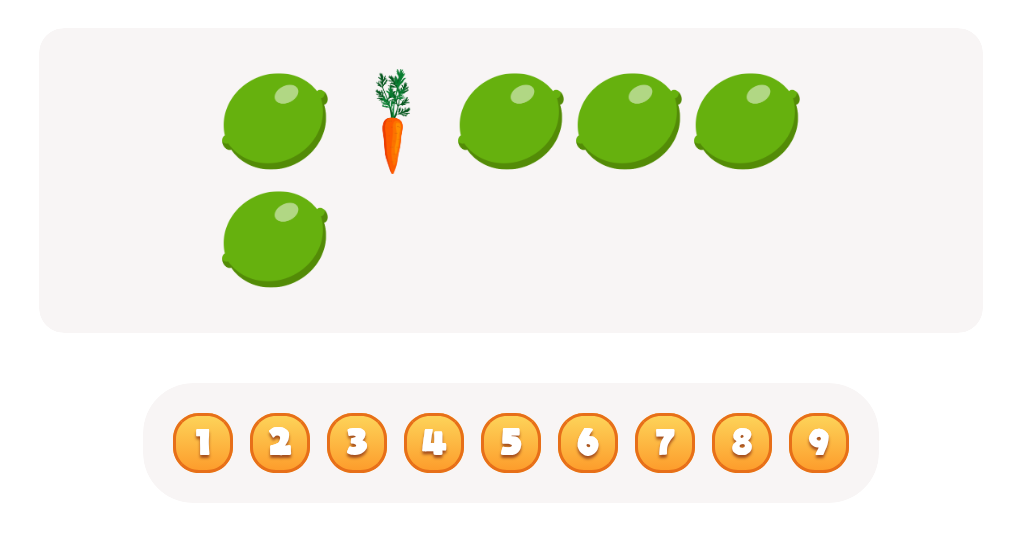

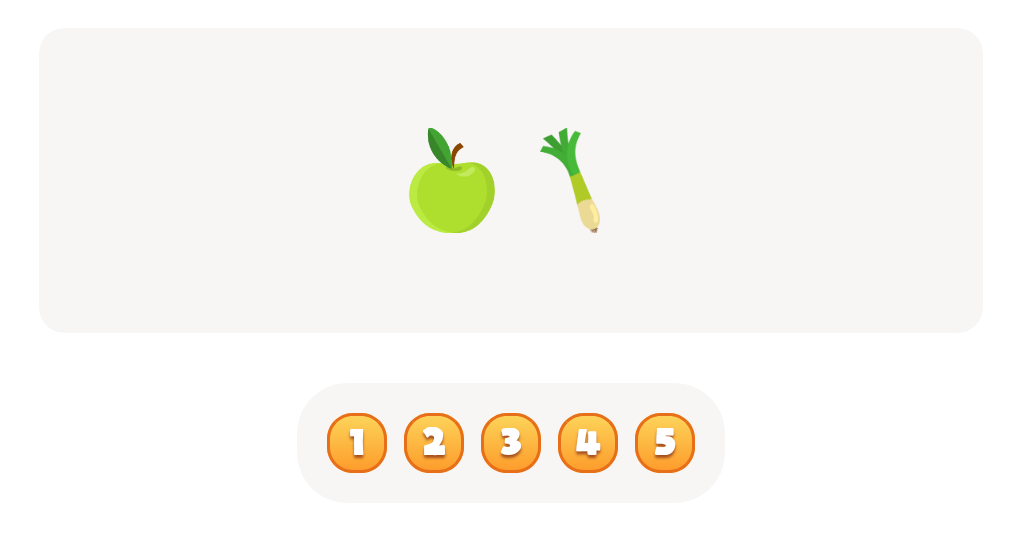
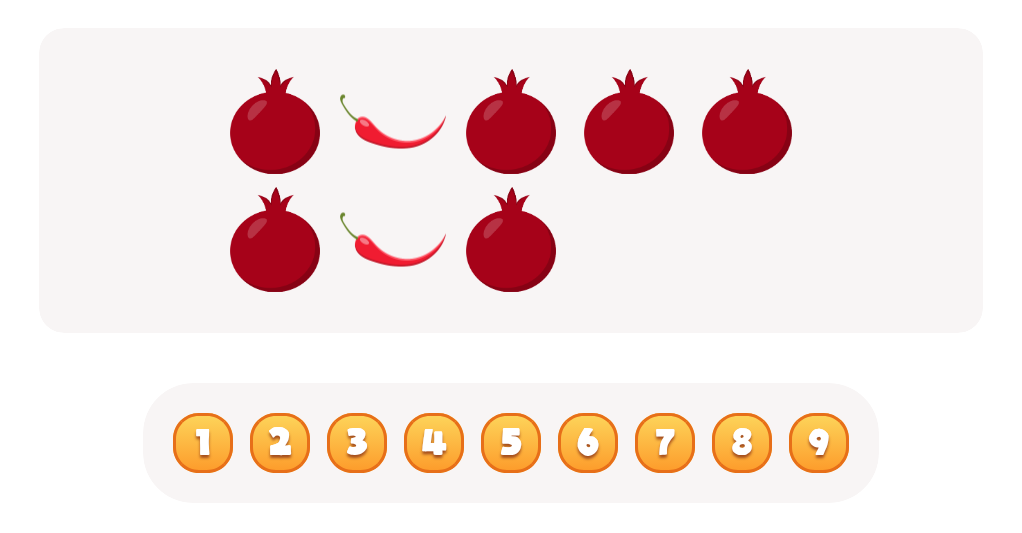
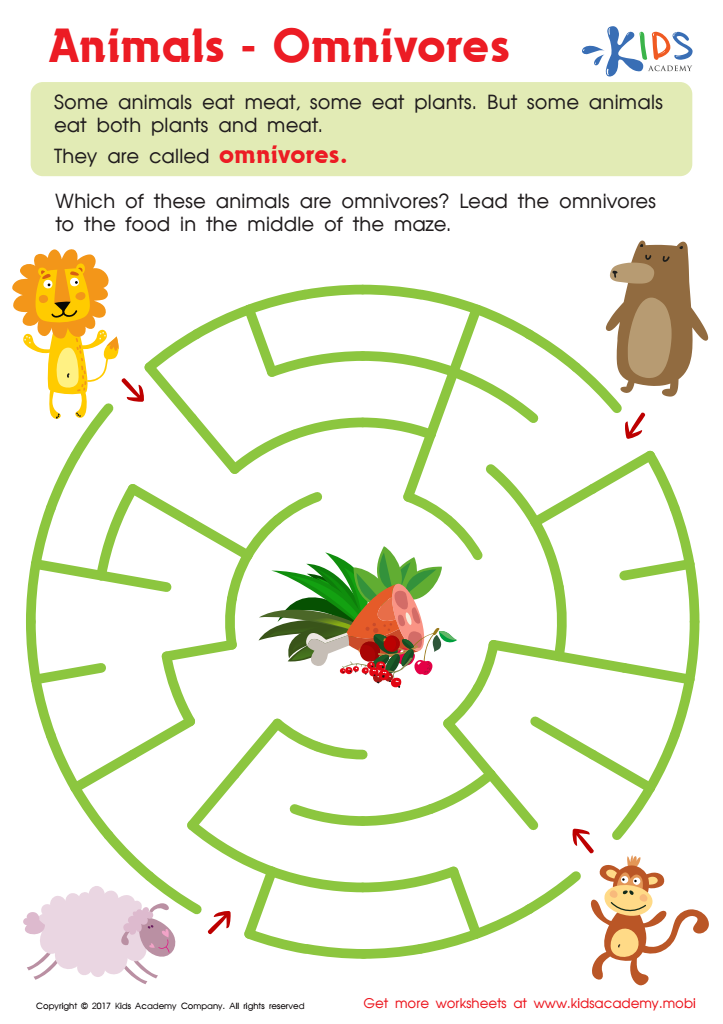
Omnivores Animals Worksheet
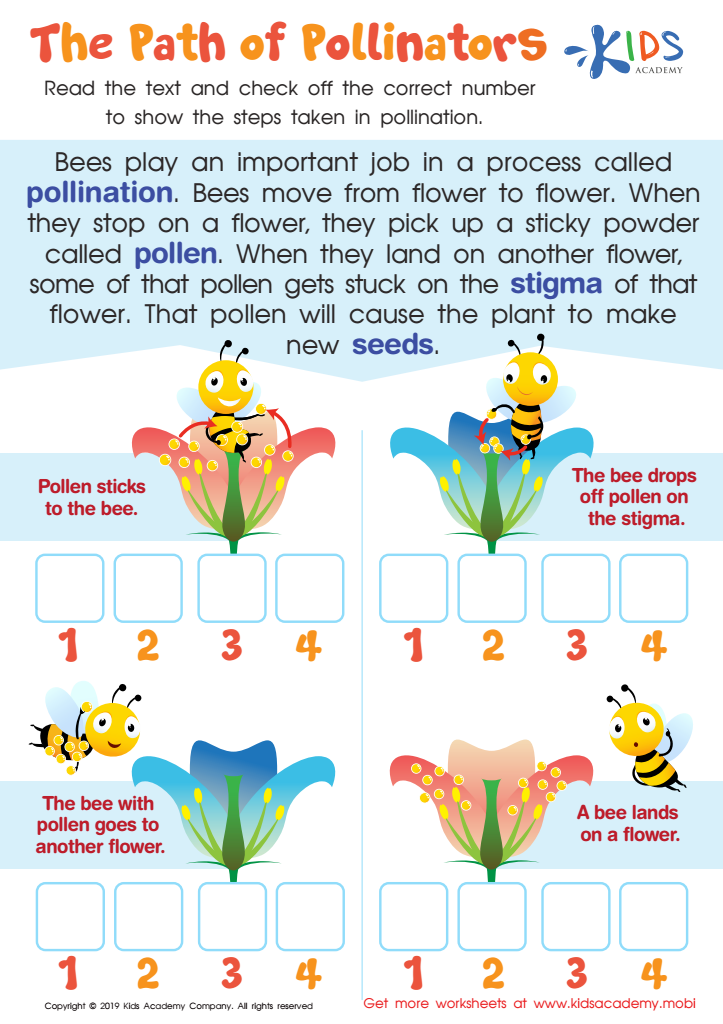
The Path of Pollinators Worksheet
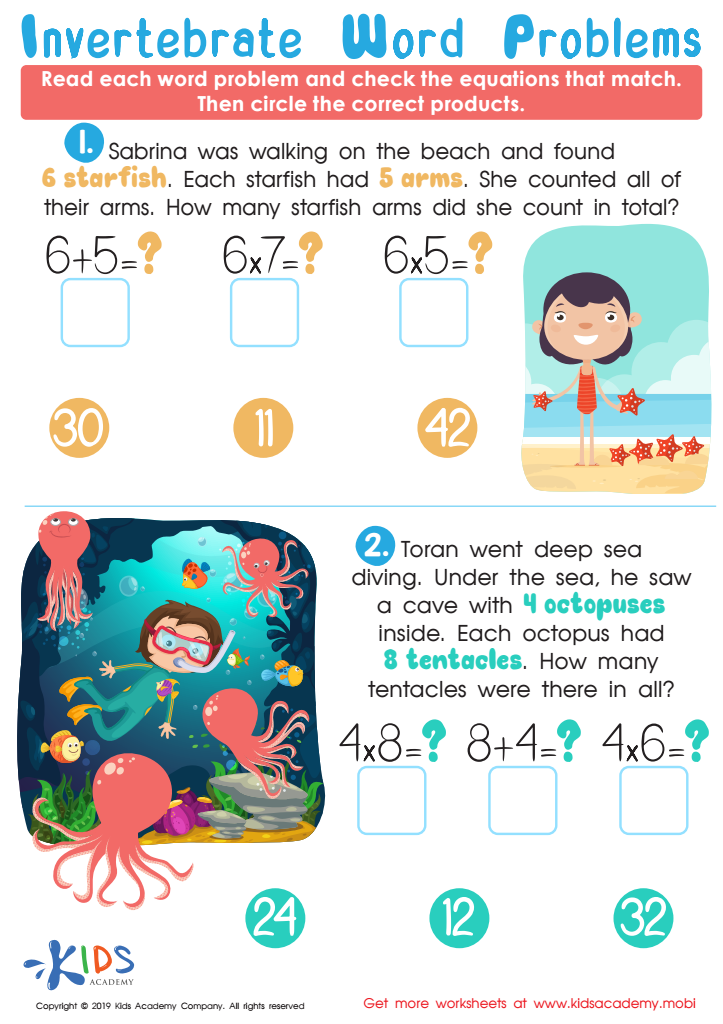
Invertebrate Problems Worksheet







Enhancing reading skills in the context of plants and animals for ages 4-8 is crucial for several reasons. First, early literacy is foundational; reading proficiency by third grade predicts future academic success. Using engaging content about plants and animals can captivate young learners' interest, making reading more enjoyable and effective. This age group is naturally curious about the world, and lessons on nature tap into this curiosity, strengthening their motivation to read.
Second, understanding plants and animals fosters a deeper appreciation for science, promoting critical thinking and observational skills. When children read about different species, their habitats, and lifecycles, they develop a respect for nature and understand the concepts of biodiversity and ecosystems. This knowledge forms a base for future science education, making complex subjects more accessible.
Third, discussing plants and animals in reading material can nurture empathy and environmental stewardship. Stories and facts about Earth's flora and fauna can encourage positive attitudes toward conservation and sustainability from a young age.
Finally, diverse content about plants and animals can also introduce new vocabulary and concepts, improving language skills and comprehension. This integrated approach enhances not only reading abilities but also cognitive, social, and emotional development, equipping children with essential skills for lifelong learning.








