Learning about ecosystems Plants and Animals Worksheets for Ages 4-8
4 filtered results
-
From - To
Discover a fun way to learn about ecosystems with our "Learning about Ecosystems: Plants and Animals Worksheets for Ages 4-8." Tailored for young learners, these engaging worksheets introduce kids to the wonders of nature, teaching them about various plants, animals, and their habitats. Through interactive activities, children will develop essential observation and comparison skills, while fostering a love for science and the natural world. Perfect for both classroom and at-home learning, our worksheets make understanding ecosystems an exciting adventure. Help your child or students build a solid foundation in science with Kid’s Academy printables!
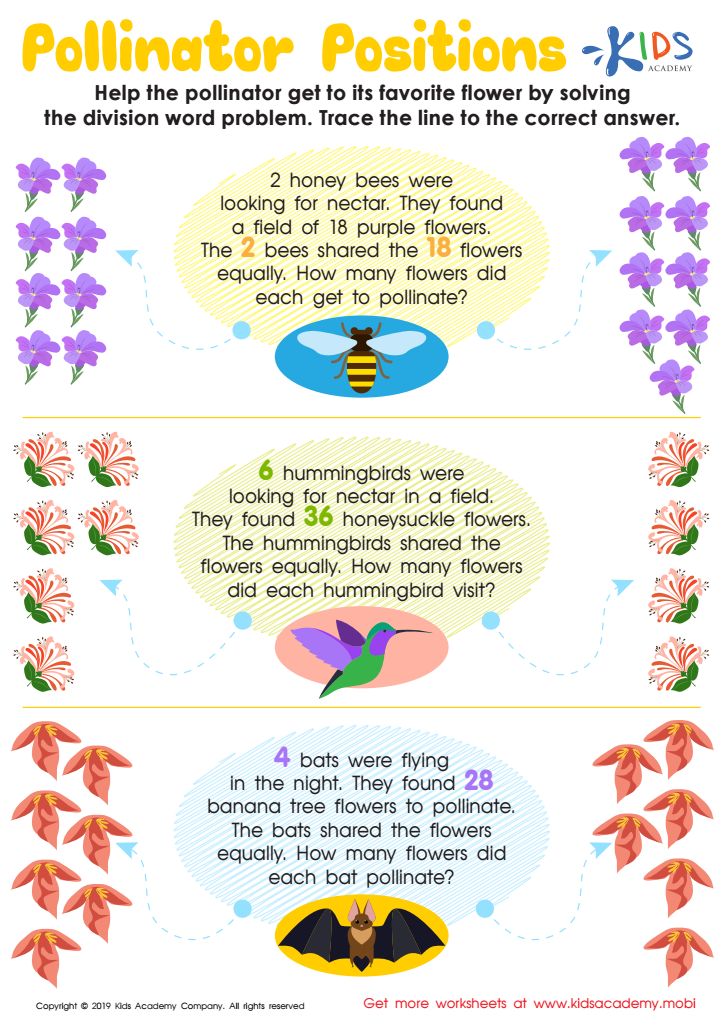
Pollinator Positions Worksheet
 Assign to My Students

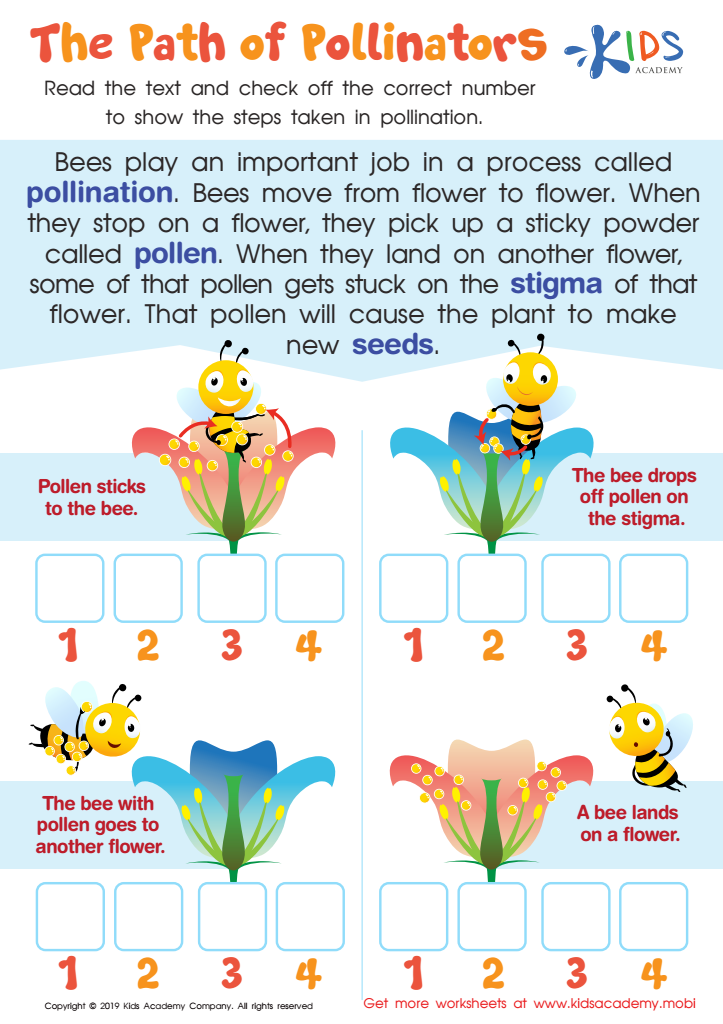
The Path of Pollinators Worksheet
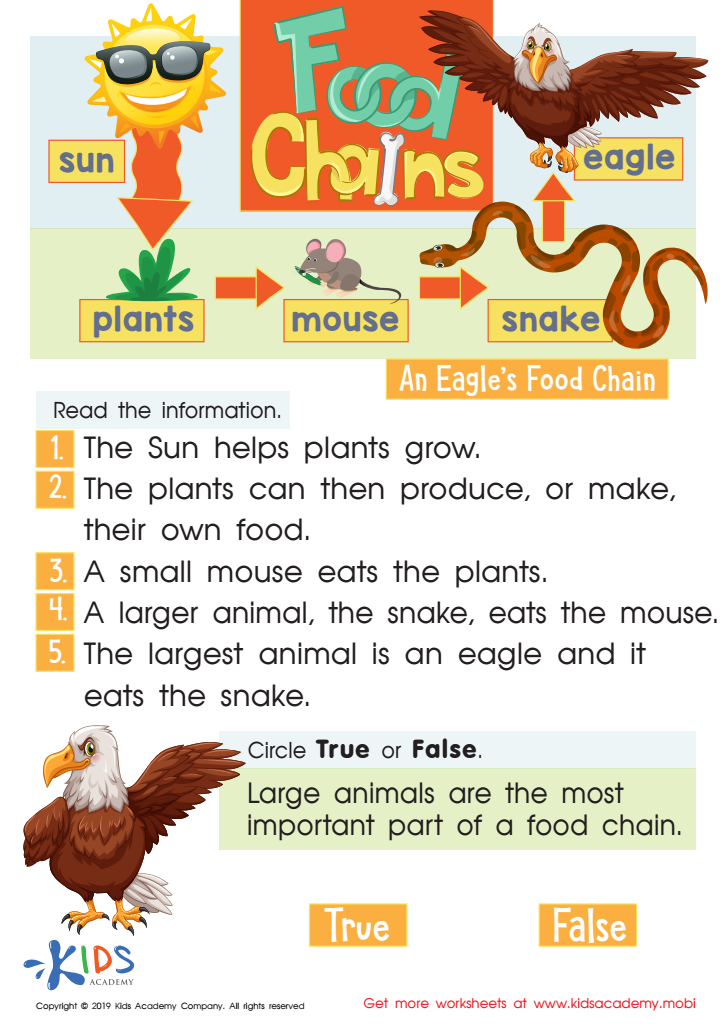
Food Chains Worksheet
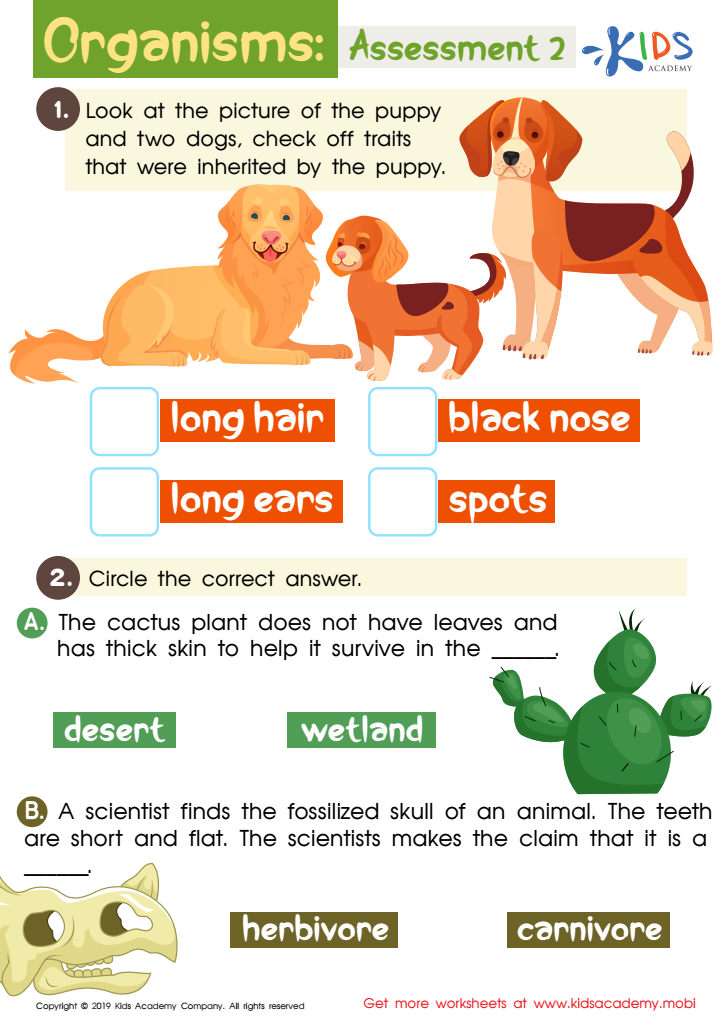
Organisms: Assessment 2 Worksheet








Understanding ecosystems, plants, and animals is crucial for young children as it fosters their cognitive and emotional development. Introducing these concepts to kids ages 4-8 helps cultivate a sense of curiosity and a love for nature at an early age. This foundational knowledge can spark lifelong interests in science, ecology, and environmental stewardship.
Learning about ecosystems teaches children how different living organisms coexist and depend on each other and their environment. It provides them with the vital perspective that all life forms are interconnected, which promotes empathy towards both nature and their peers. Additionally, this learning can enhance critical thinking and problem-solving skills as children explore the balance of natural systems and consider the impacts of human activities on these delicate complexes.
Moreover, outdoor activities and hands-on exploration associated with studying ecosystems can enhance physical health and improve motor skills. Interaction with nature also has psychological benefits, including reduced stress and increased attention span.
For teachers and parents, engaging children in these topics helps instill values such as responsibility, conservation, and respect for all living things. Investing in this knowledge at an early age sets the stage for the product of informed, environmentally-conscious individuals who can contribute positively to the community and the planet.