Color Identification Community Worksheets for Ages 4-8
3 filtered results
-
From - To
Introduce young learners to the vibrant world of color with our Color Identification Community Worksheets designed for ages 4-8. These engaging, educational worksheets from Kids Academy help children recognize and differentiate colors while exploring various community-themed scenarios—perfect for early social studies exploration. With fun activities such as coloring in community helpers, identifying colors in everyday objects, and matching similar hues, kids enhance their cognitive and fine motor skills. Ideal for both classroom and home use, these worksheets make learning an enjoyable adventure in the world around us. Foster your child's visual learning with our meticulously designed resources.
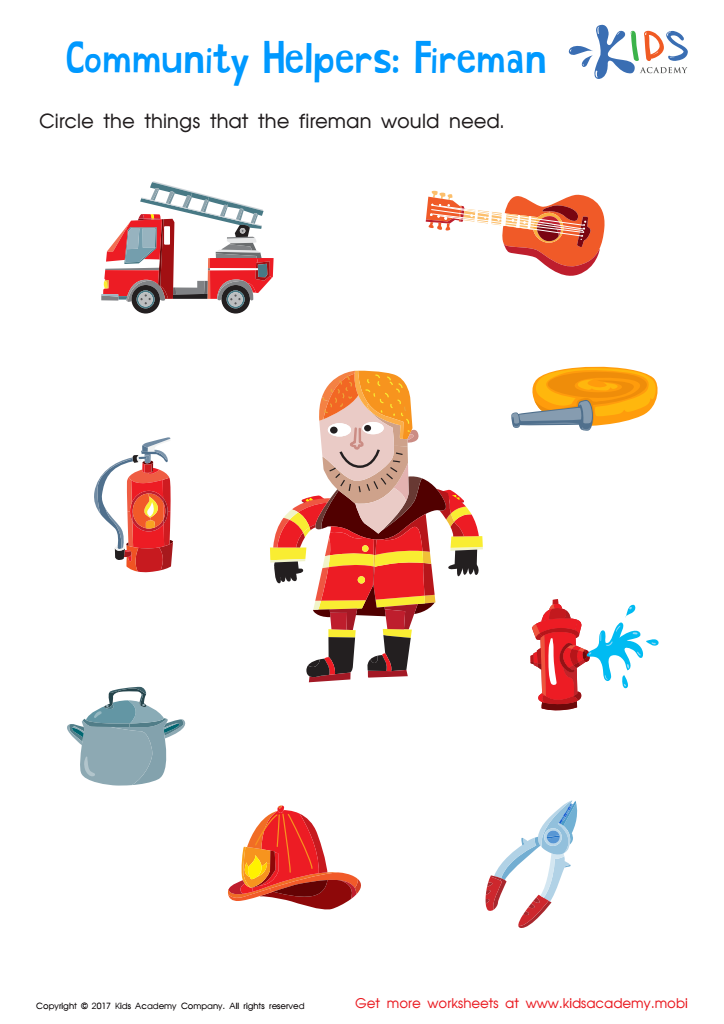
Fireman Worksheet
 Assign to My Students
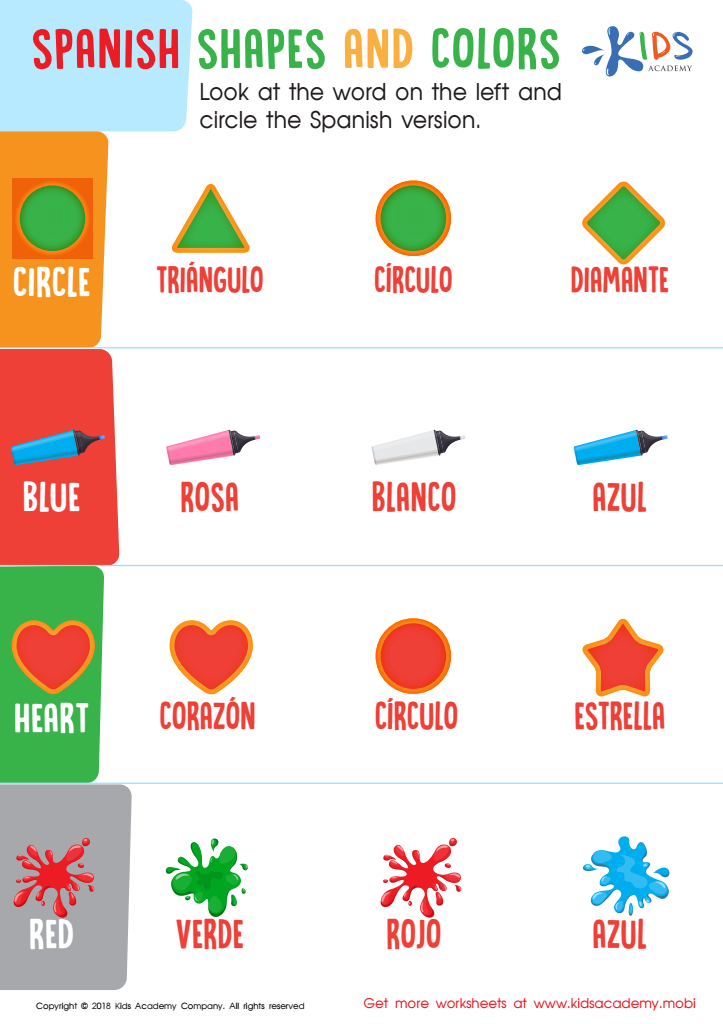
Spanish Shapes and Colors Worksheet
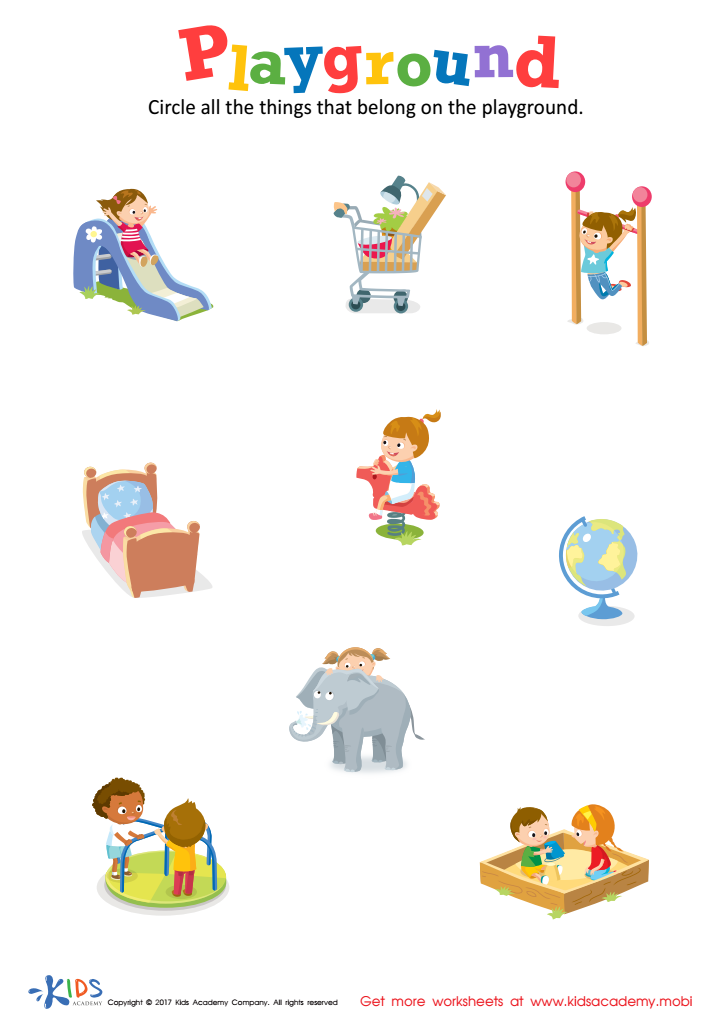
Playground Worksheet








Color Identification Community is crucial for children aged 4-8 because it nurtures their cognitive and social development. Firstly, recognizing and naming colors enhances linguistic skills. As children learn color names, they broaden their vocabulary and improve their descriptive language. This is foundational for reading and writing skills.
Learning colors also sharpens memory and observation. Activities like sorting objects by color improve their ability to notice details and categorize information. This cognitive organization is a baseline for mathematical concepts such as counting and pattern recognition.
Furthermore, color games and collaborative activities in a community setting foster social skills. When children participate in color-based team activities, they learn to cooperate, share, and communicate with peers. It's an excellent opportunity for them to work towards common goals, promoting a sense of belonging and empathy.
From an emotional perspective, identifying and naming colors enables children to express their feelings creatively. This emotional intelligence is pivotal for managing their feelings and understanding others.
In essence, a focus on color identification during ages 4-8 equips children with fundamental skills in language, cognition, social interaction, and emotional intelligence. Parents and teachers who prioritize these activities are investing in well-rounded development that sets the stage for future academic and personal success.








