Cursive Writing Worksheets for Ages 4-8 - Page 2
26 filtered results
-
From - To
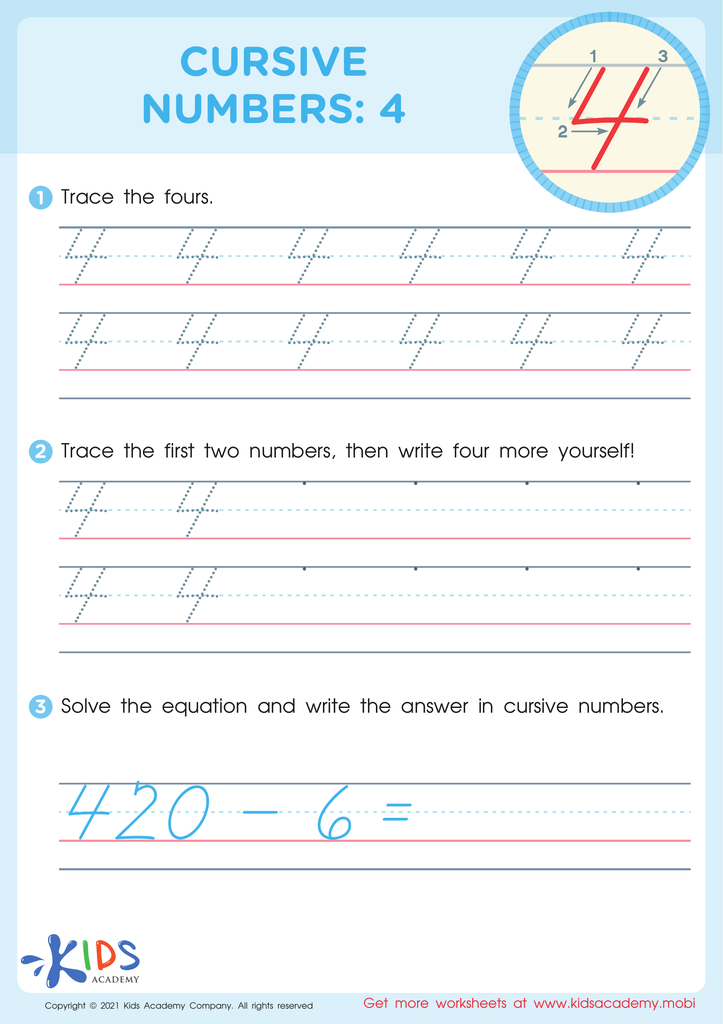
Cursive Numbers: 4 Worksheet
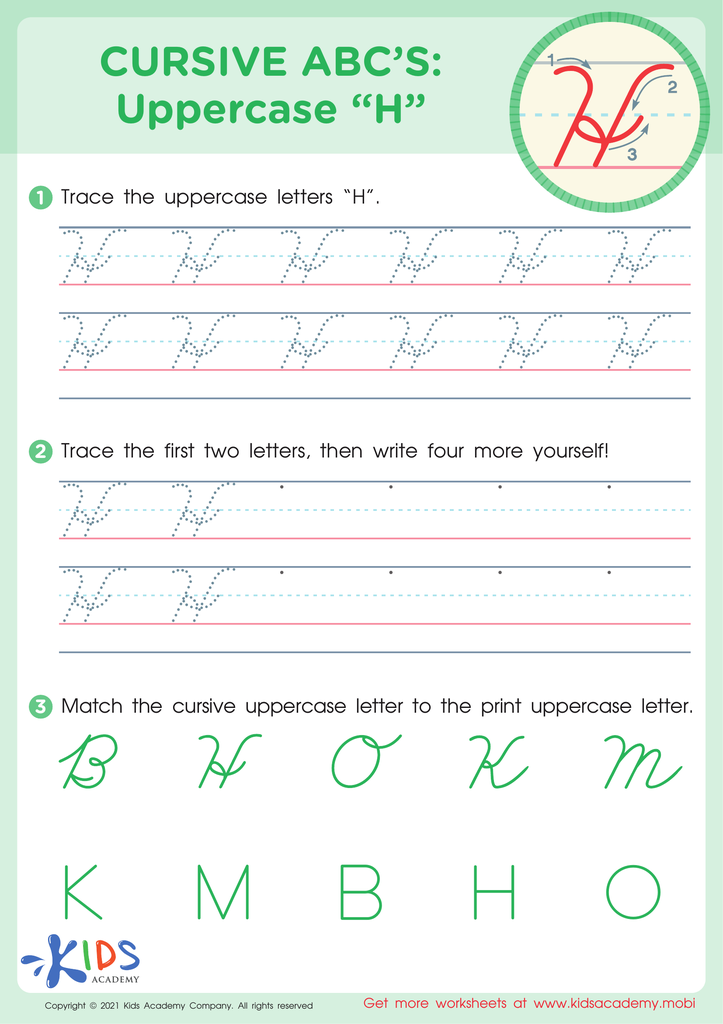
Cursive ABCs: Uppercase H







Caring about cursive writing for children ages 4-8 is crucial for several key reasons. Firstly, cursive writing enhances fine motor skills and hand-eye coordination, which are foundational for many learning activities. The fluid, connected letter formations promote better muscle memory and precision, which can translate into improved overall handwriting.
Secondly, cursive writing encourages cognitive development. Learning cursive involves recognizing patterns and tackling complex motor tasks, stimulating brain regions associated with thinking, language, and working memory. This cognitive engagement supports other academic skills, including reading and math.
Additionally, cursive writing fosters spelling and composition skills. Because letters in cursive are connected, children develop a greater understanding of word formation and can more easily grasp patterns in English spelling. This integrated approach may lead to improved writing fluency and legibility, benefitting their ability to express ideas clearly and effectively.
Lastly, cursive writing has historical and practical relevance. Being able to read and write in cursive broadens access to historical documents and personal communication items like letters. This skill not only preserves the richness of past generations but also provides a sense of personal achievement and self-esteem in students.
Investing in cursive writing for early learners enriches their academic journey, supports neurological development, and connects them with cultural literacy, creating well-rounded, capable individuals.








