
Improving spelling skills Writing Worksheets for Ages 4-8
6 filtered results
Difficulty Level
Grade
Age
-
From - To
Subject
Activity
Standards
Boost your child's spelling skills with our engaging writing worksheets designed for ages 4-8! Our meticulously crafted exercises encourage young learners to strengthen their phonetic understanding and improve their vocabulary. Each worksheet features fun activities, including word tracing, fill-in-the-blank exercises, and creative writing prompts that captivate children's interest. By practicing with these interactive tools, kids will build confidence in their spelling abilities while developing essential writing skills. Ideal for both classroom settings and at-home learning, our resources support educators and parents alike in their mission to foster literacy development. Start your child's spelling journey today for a brighter learning future!
Favorites
With answer key
Interactive
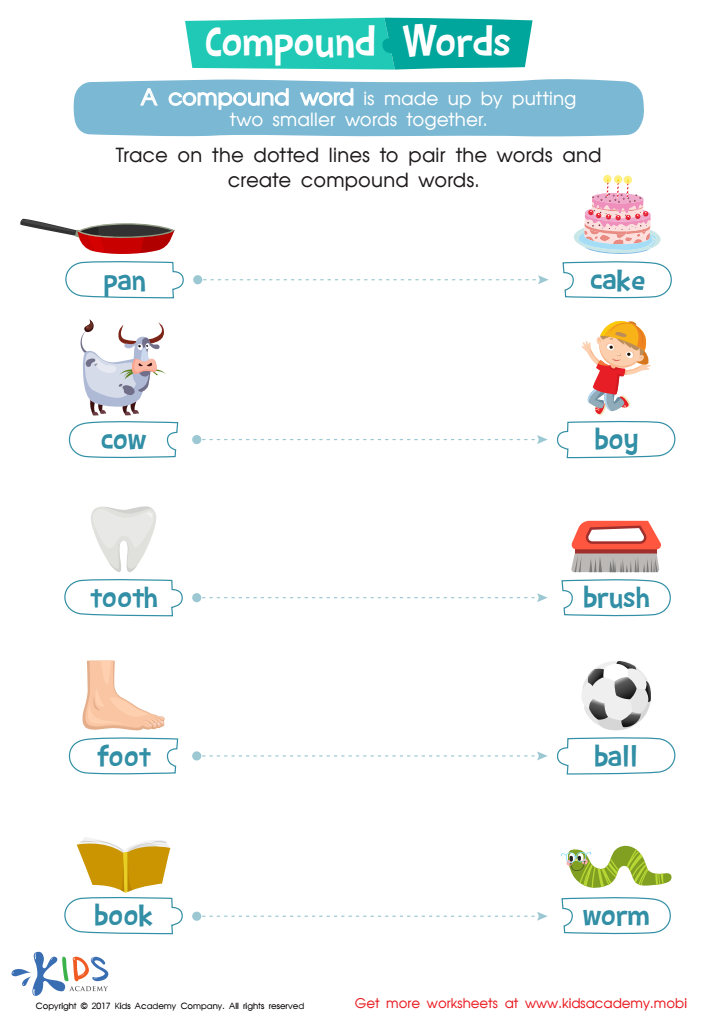
Compound Words Word Structure Worksheet
Studying compound words is a great way to improve reading and writing skills! Try this fun worksheet: Compound Words – trace the lines to make new words! It's an easy and enjoyable way to get better at English.
 Assign to My Students
Compound Words Word Structure Worksheet
Worksheet
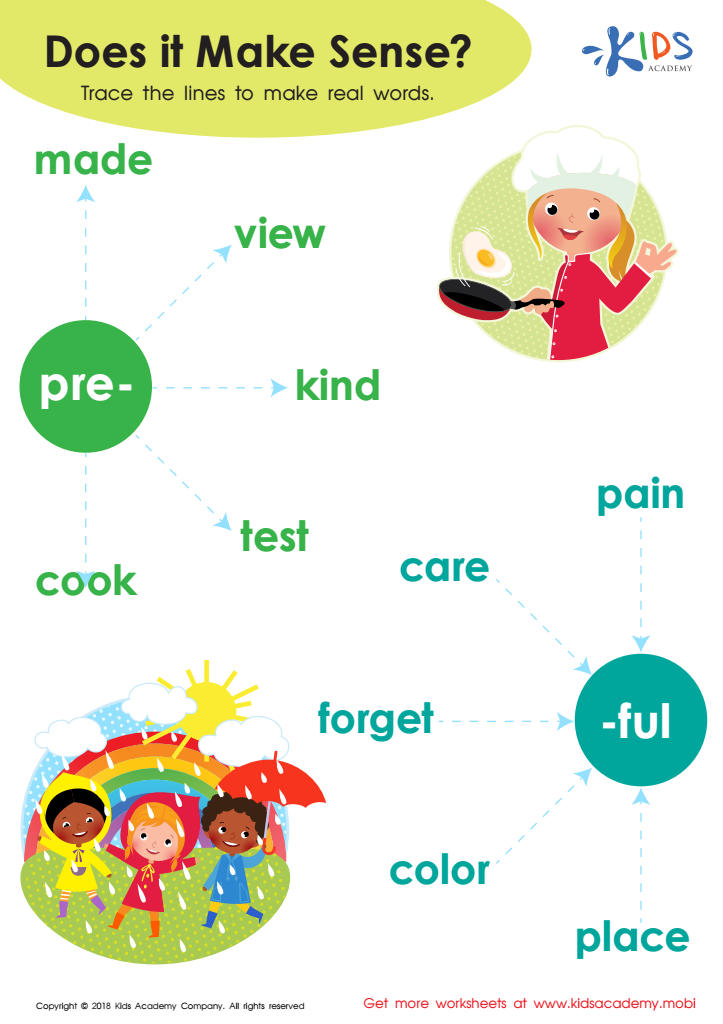
Prefix pre– and Suffix ful– Worksheet
Can't preforget something! This worksheet helps kids learn how to attach prefixes and suffixes to root words, forming new words that make sense. With this activity, they'll evaluate how the root words change when adding the prefix or suffix.
Prefix pre– and Suffix ful– Worksheet
Worksheet
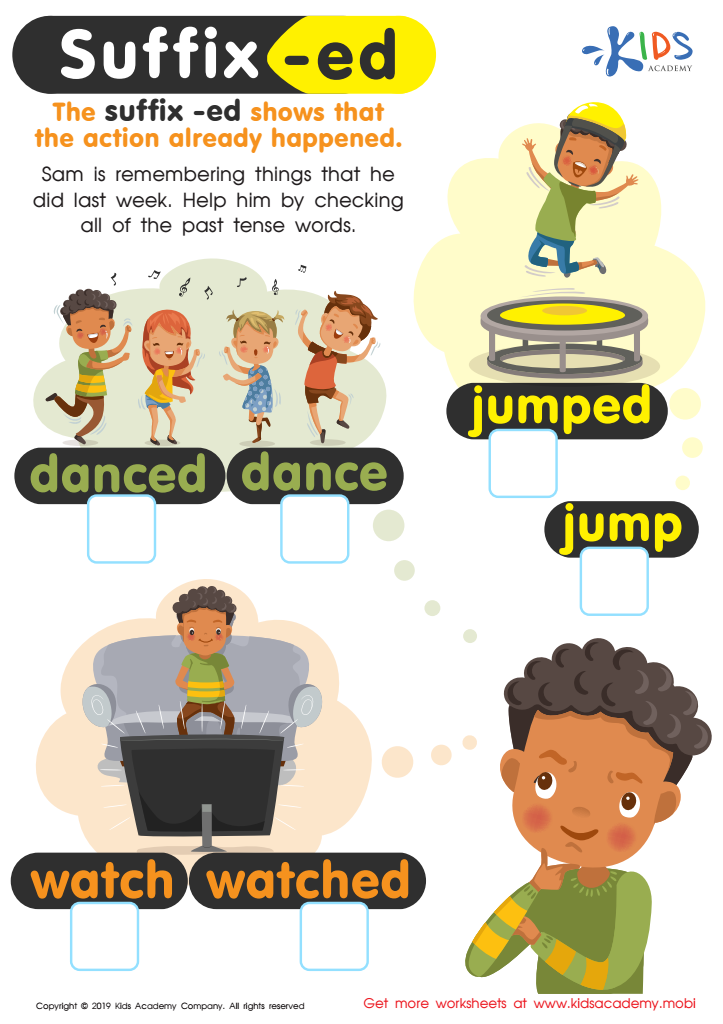
Suffix-ed Worksheet
Ask your kids if they know what suffixes are, and explain they are words added to the end of another word which changes the meaning. This worksheet focuses on the suffix -ed which shows something already happened. Help the kid in the picture find the past tense words.
Suffix-ed Worksheet
Worksheet
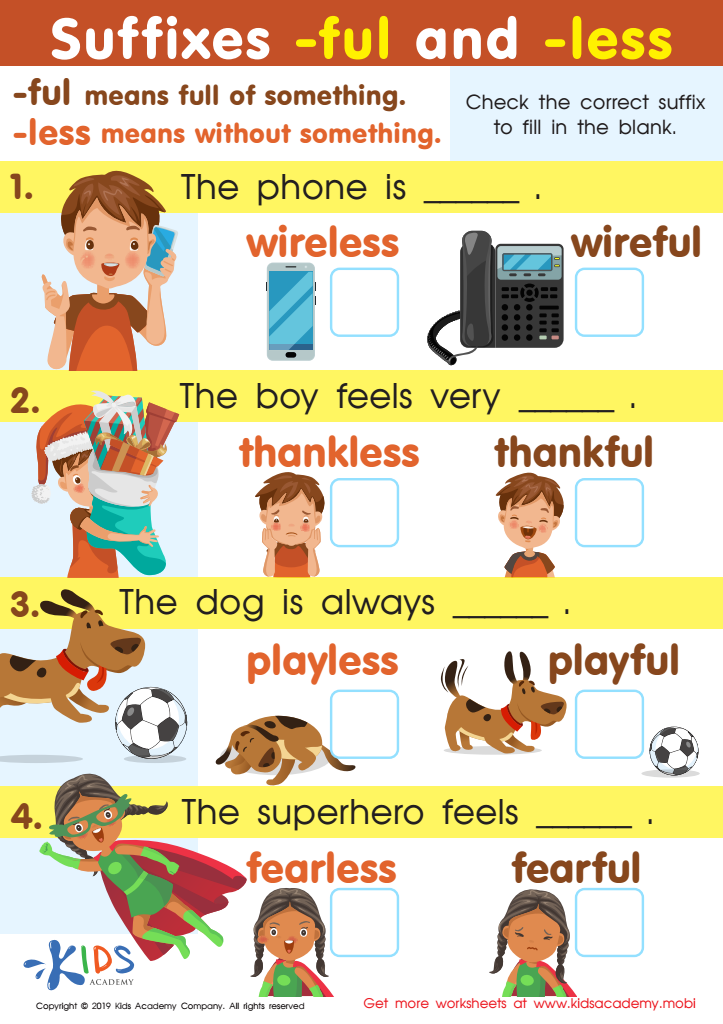
Suffixes –ful and –less Worksheet
Before you start this worksheet, make sure your kids know about suffixes. Explain that they're added to the end of words to change their meaning. In the worksheet, kids will learn about the suffixes –ful and –less. Look at the sentences in the picture with them, and help them to choose the right one for each blank.
Suffixes –ful and –less Worksheet
Worksheet
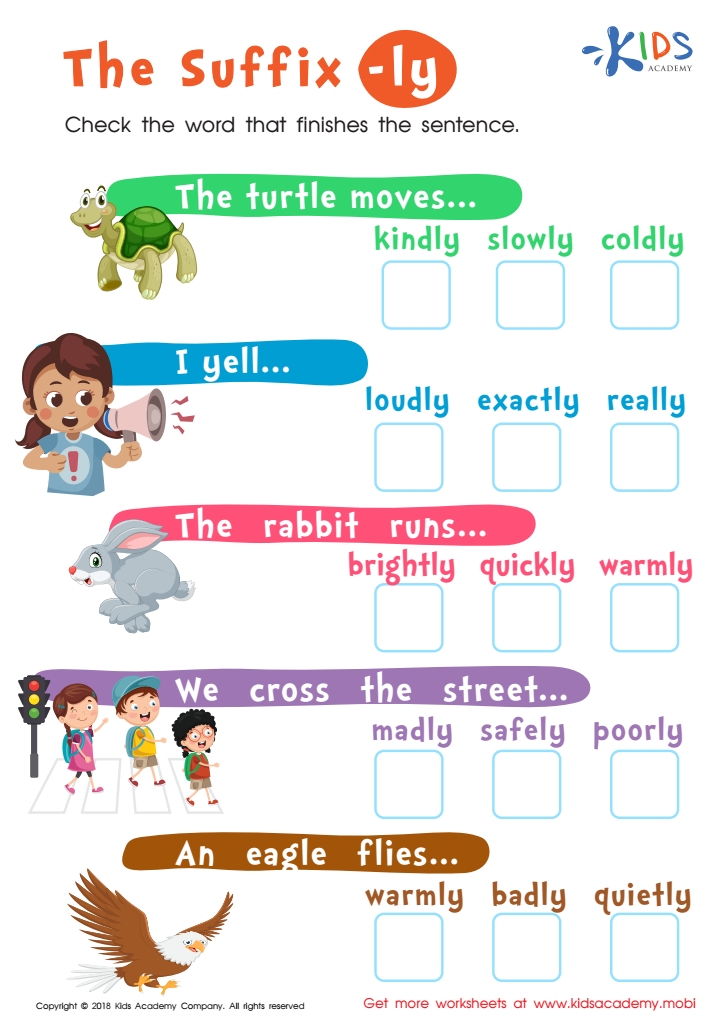
The Suffix -Ly Worksheet
Suffixes change the meaning of words: the -ly suffix usually describes how an action is done (e.g. slowly, quickly, loudly). Help your child understand this and then check out the fun worksheet. Ask them to identify the animals and people in the pictures, then read the sentences out loud and have them check the ones that finish the sentence.
The Suffix -Ly Worksheet
Worksheet
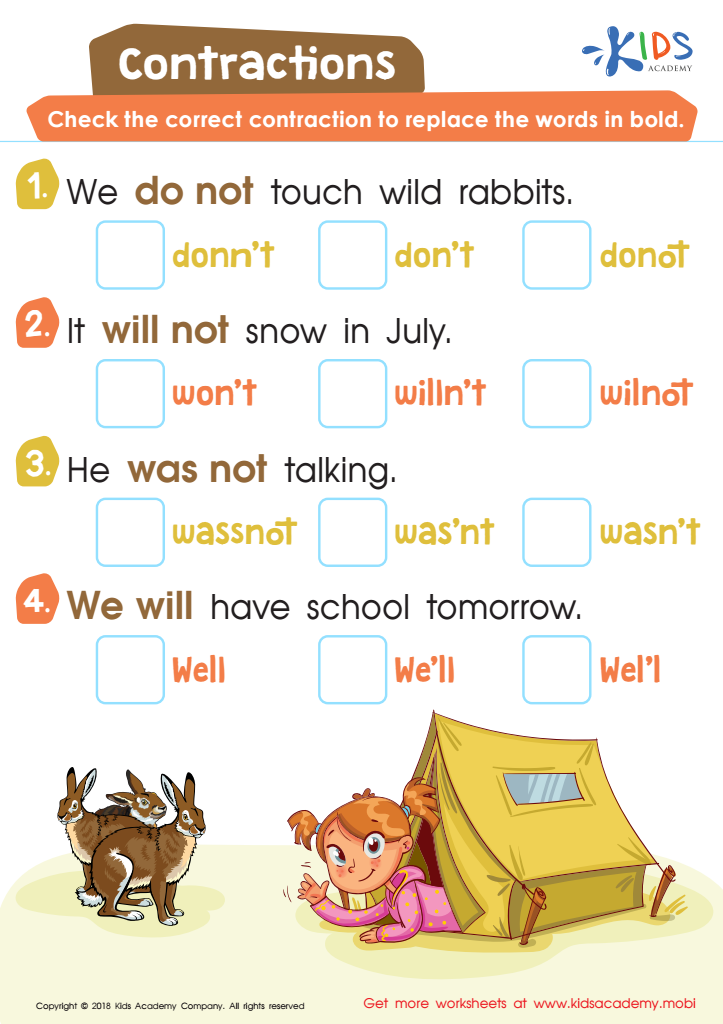
Contractions Worksheet
Contractions are popular in English and make writing/reading easier. For example: I'm, they're, she's. Ask your students to give more examples. Then, read the sentences in this worksheet and help them check the correct contraction to replace the words in bold.
Contractions Worksheet
Worksheet
Join Kids Academy for Free
Who is primarily going to use this learning content?






Improving spelling skills in children aged 4-8 is crucial for their overall academic development and self-expression. At this formative stage, mastering spelling lays the foundation for effective communication. As children learn to connect sounds with letters, they enhance their phonetic understanding, which is instrumental in developing reading skills. Strong spelling abilities support literacy skills, enabling children to decipher new words and thereby expanding their vocabulary.
Furthermore, spelling proficiency empowers children to express their thoughts and ideas clearly in writing. When children are confident in their spelling, they can focus more on creativity and structure rather than getting bogged down by the mechanics of writing. This encourages a positive attitude towards writing, fostering a love for storytelling and written expression.
Additionally, better spelling can boost children's self-esteem and motivation. Achievements in spelling can lead to a sense of accomplishment, inspiring them to take on new learning challenges. For parents and teachers, fostering strong spelling skills involves creating an engaging and supportive environment that blends fun activities with direct instruction. This partnership ensures children acquire the essential skills needed for successful communication, boosting their confidence and readiness for future academic pursuits.








