Middle Vowel Worksheets for Ages 4-9
4 filtered results
-
From - To
Unlock the magic of reading with our engaging Middle Vowel Worksheets designed for ages 4-9. At Kids Academy, we offer a varied collection of printable worksheets focused on mastering the middle vowel sounds essential for young learners. Featuring fun activities and vibrant illustrations, these sheets help boost phonemic awareness and reading fluency. Perfect for classroom use or at-home practice, they assist children in recognizing and pronouncing middle vowel sounds within words, forming a strong language foundation. Equip your child with the tools they need to excel in reading while keeping learning enjoyable and interactive. Download now and watch them succeed!
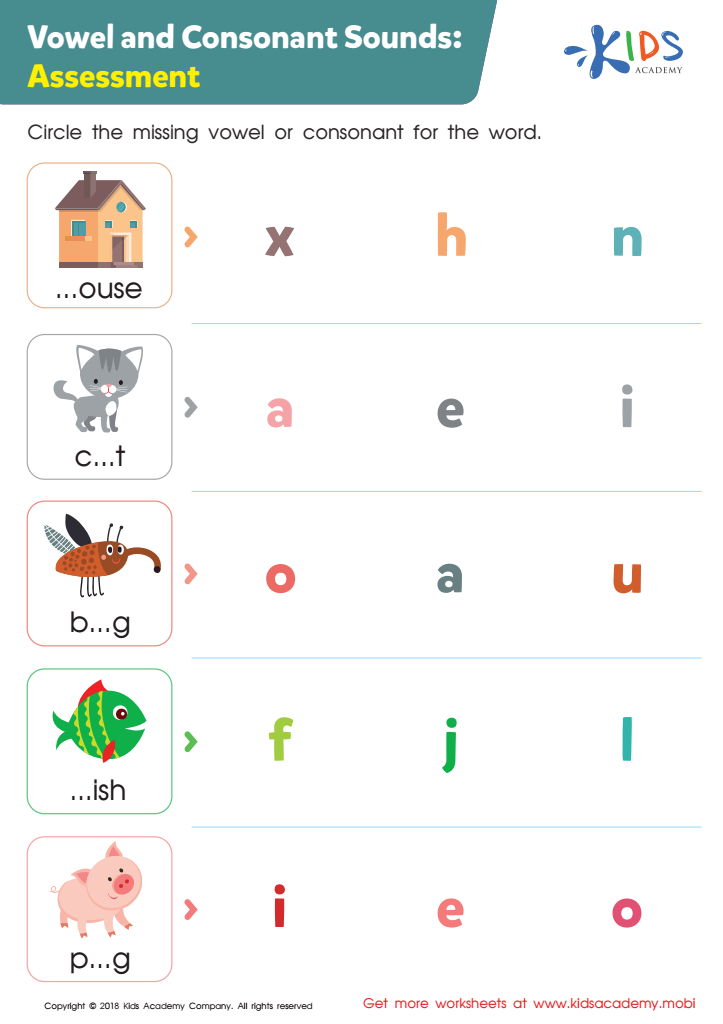
Vowel and Consonant Sounds: Assessment Worksheet
 Assign to My Students
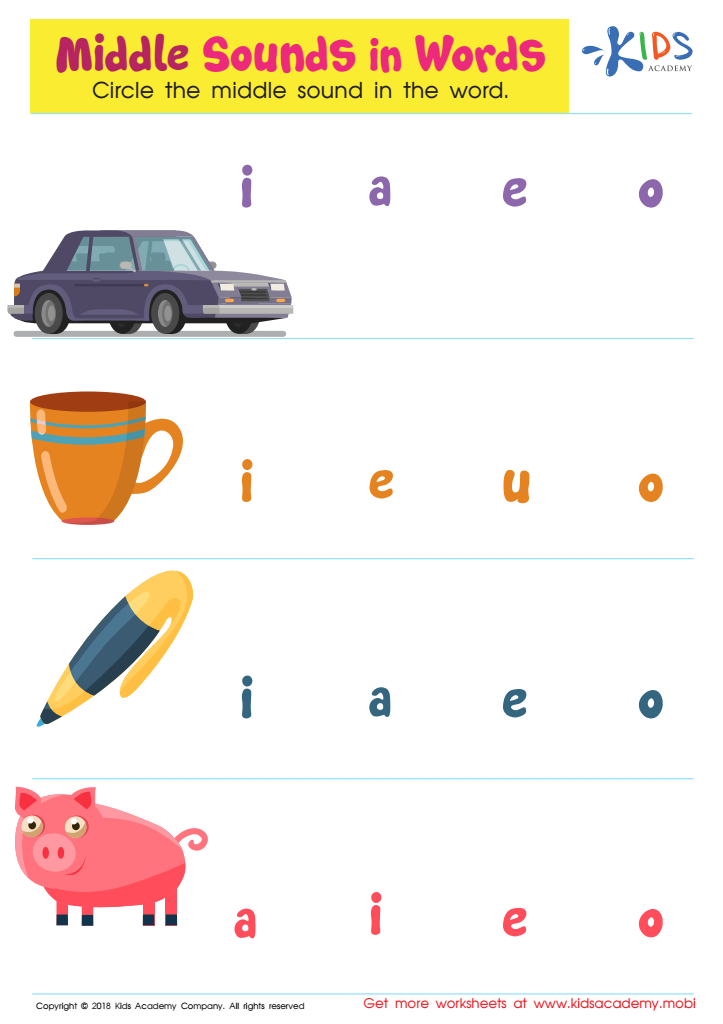
Middle Sounds in Words Worksheet
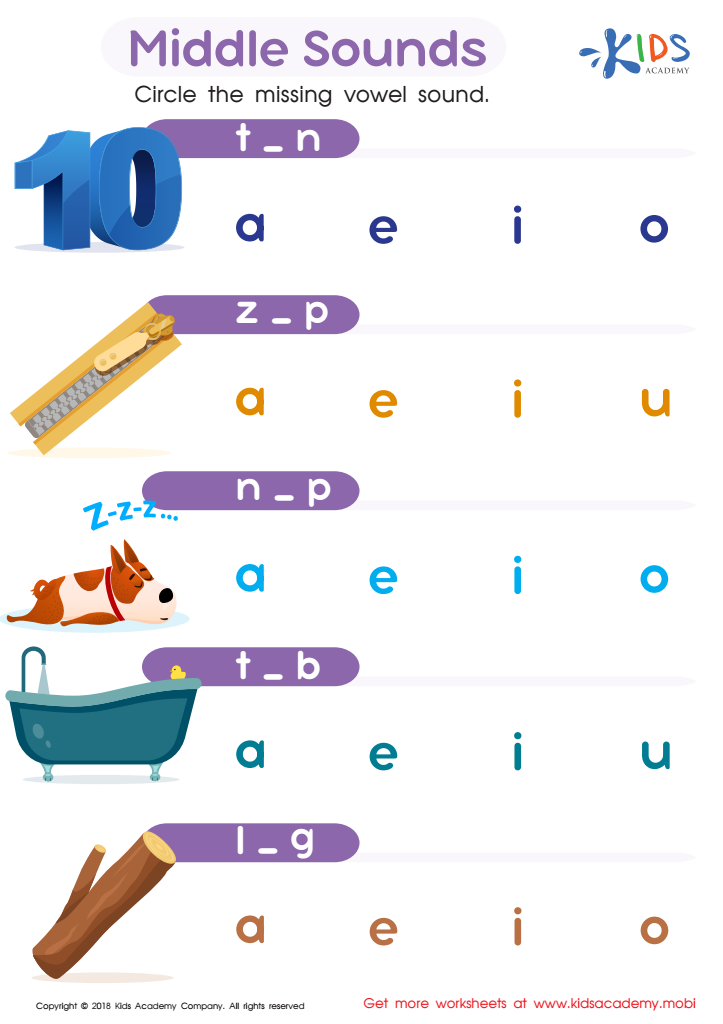
Middle Sounds Worksheet
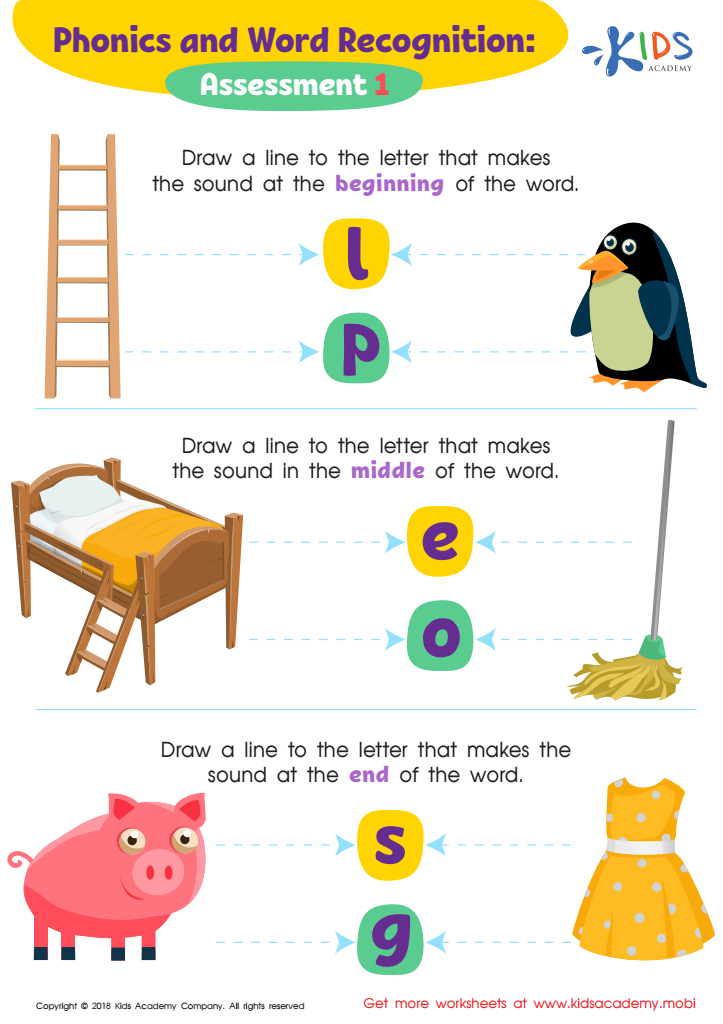
Phonics and Word Recognition: Assessment 1 ELA Worksheet



Middle vowels play a crucial role in the literacy development of children aged 4-9, a pivotal phase for acquiring foundational reading and writing skills. Understanding and mastering middle vowels—present in the middle of word structures like "cat" (a), "bed" (e), "sit" (i), "hot" (o), and "cut" (u)—reinforces phonemic awareness, which is essential for decoding new words. Middle vowels can sometimes be tricky because they often appear in shorter words and are essential for understanding more complex spelling patterns later.
For parents and teachers, focusing on middle vowel sounds ensures that kids develop accurate pronunciation and spelling. By honing in on these vowels, children learn to differentiate between similar-sounding words, improving both their reading fluency and comprehension. As students become more proficient in recognizing and utilizing middle vowels, their overall confidence in reading can grow. This foundational skill not only helps with immediate academic tasks but also sets the stage for ongoing literacy development and effective communication skills in higher grades.
Additionally, engaging activities such as phonics games, read-aloud sessions, and interactive exercises can make learning middle vowels enjoyable and appealing, thus retaining the child's interest and motivation. In summary, prioritizing middle vowel proficiency is key in shaping proficient, confident, and eager young readers and writers.