Rhyming Worksheets for Ages 4-9
18 filtered results
-
From - To
Discover our collection of engaging rhyming worksheets designed specifically for ages 4-9! These educational resources foster early literacy skills by helping children identify, create, and match rhyming words in a fun, interactive way. Perfect for classroom or home learning, our worksheets enhance phonemic awareness, vocabulary, and listening skills. With various activities, including games, puzzles, and creative exercises, students will enjoy developing their love for language while building essential reading foundations. Dive into a world of rhyme and rhythm, and watch your young learners thrive with our carefully curated worksheets that spark imagination and promote foundational skills in an enjoyable format!
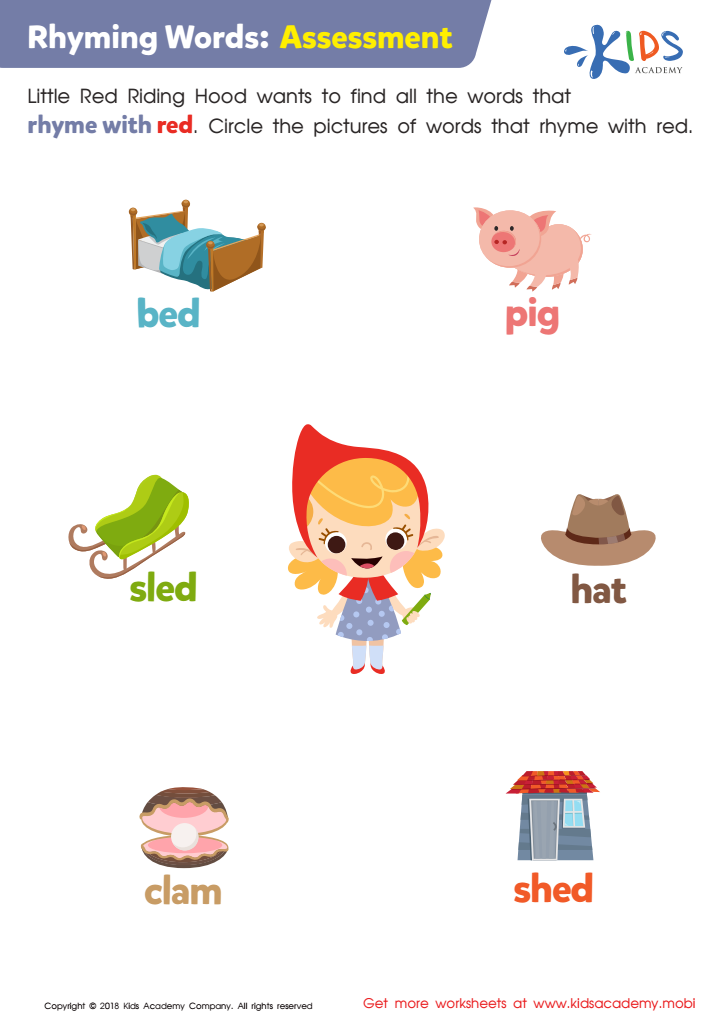
Rhyming Words: Assessment Worksheet
 Assign to My Students
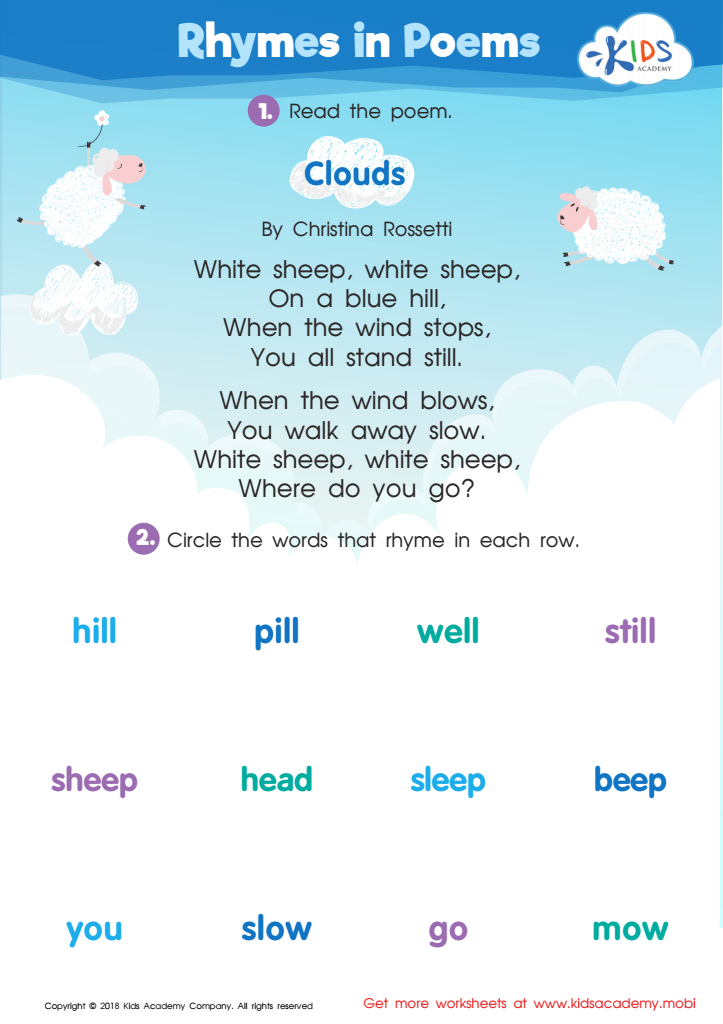
Rhymes in Poems Worksheet
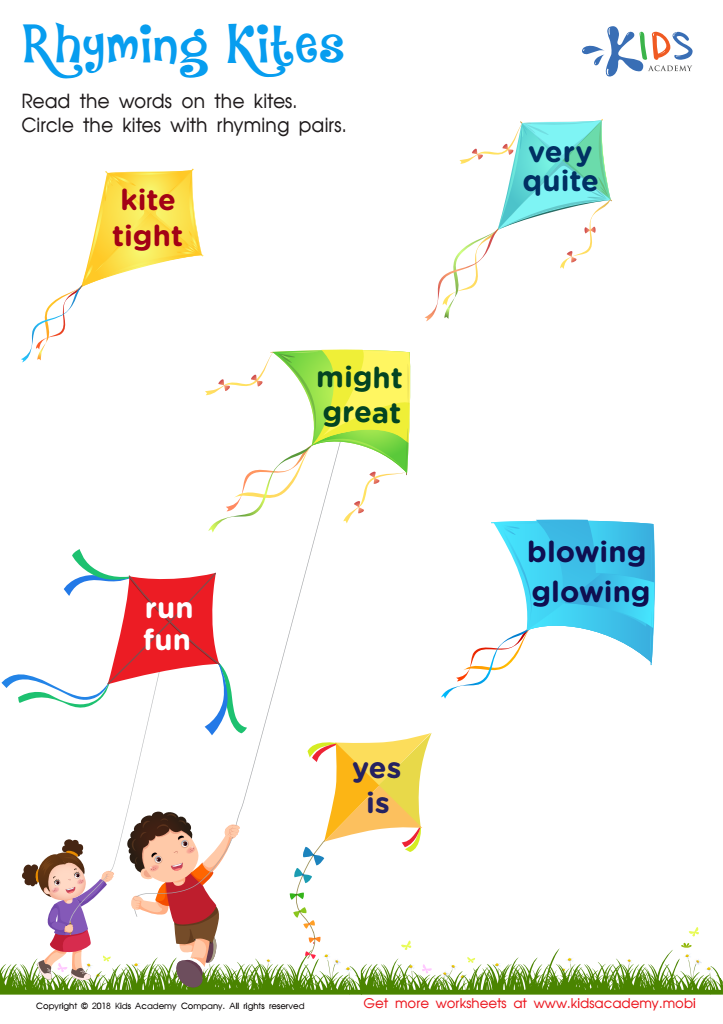
Rhyming Kites Worksheet
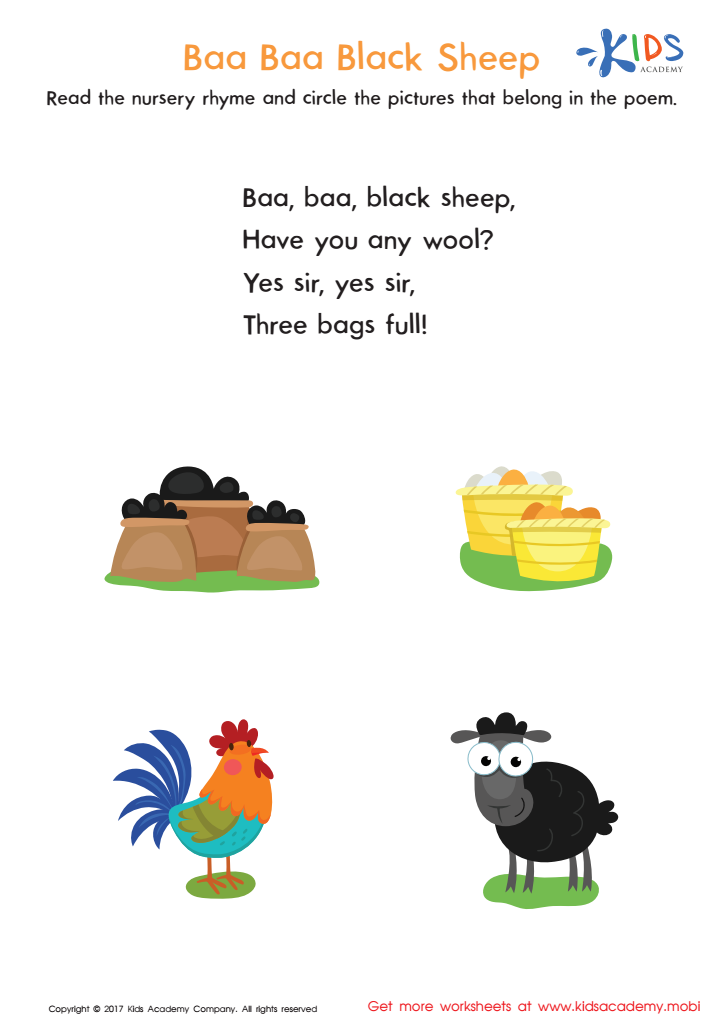
Baa Baa Black Sheep Printable
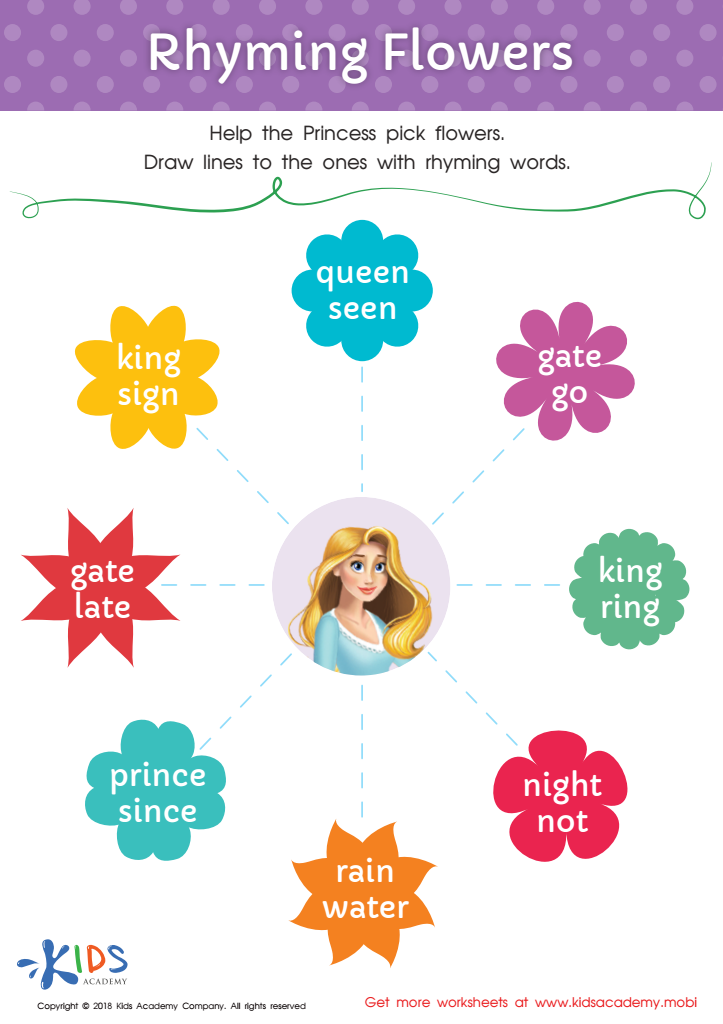
Rhyming Flowers Worksheet

Rhyming Words Rhyming Worksheet
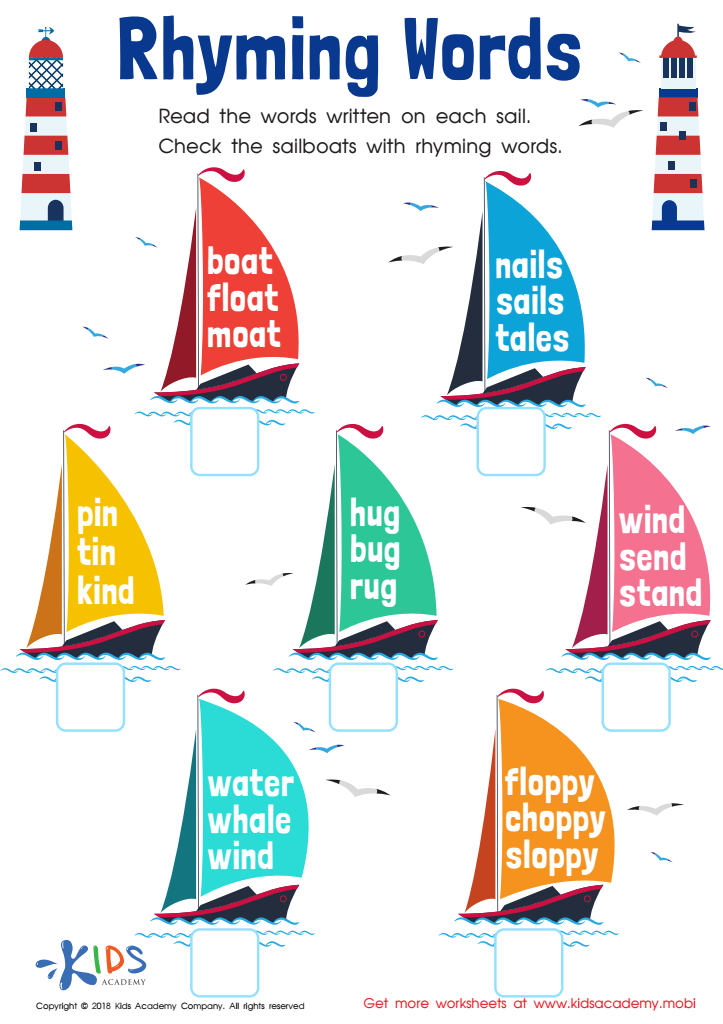
Rhyming Words Worksheet
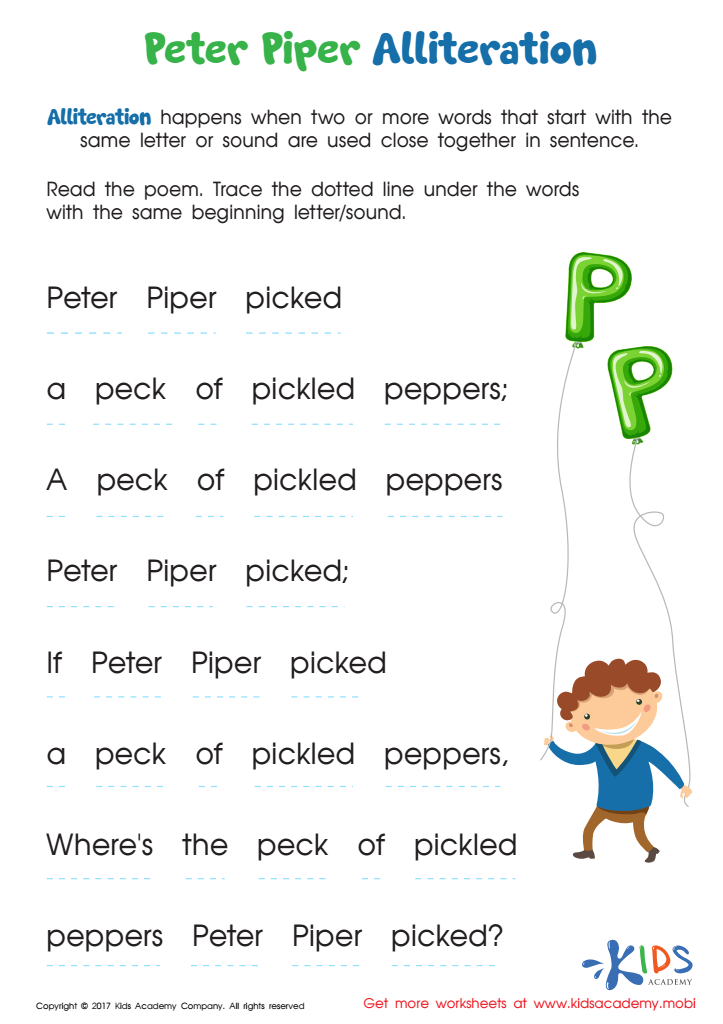
Peter Piper Alliteration Worksheet
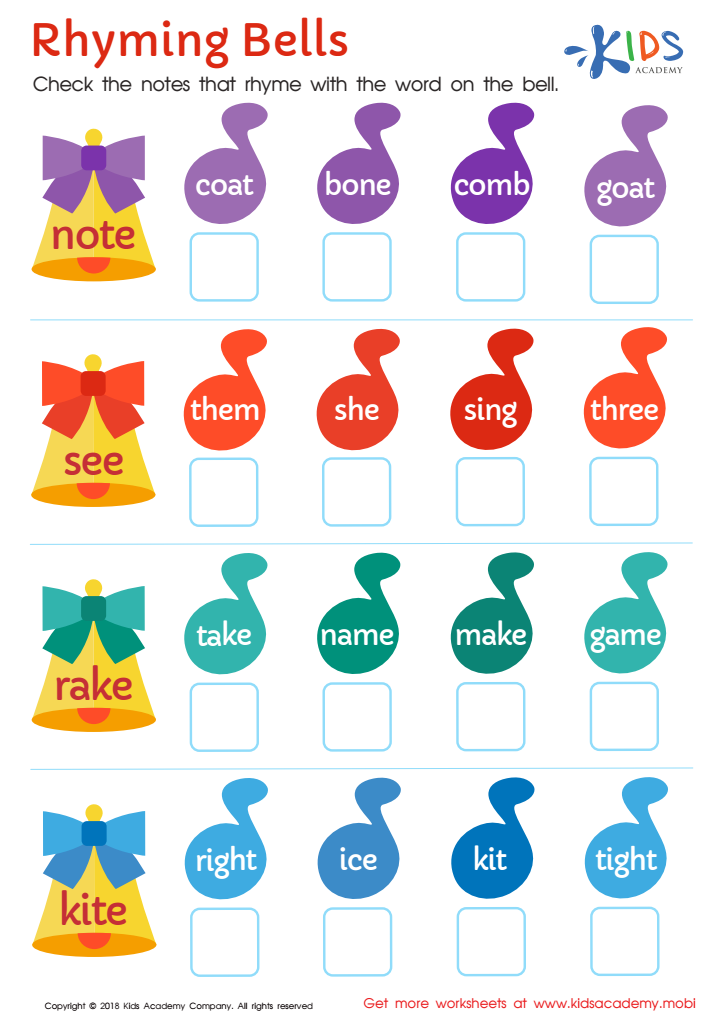
Rhyming Bells Worksheet
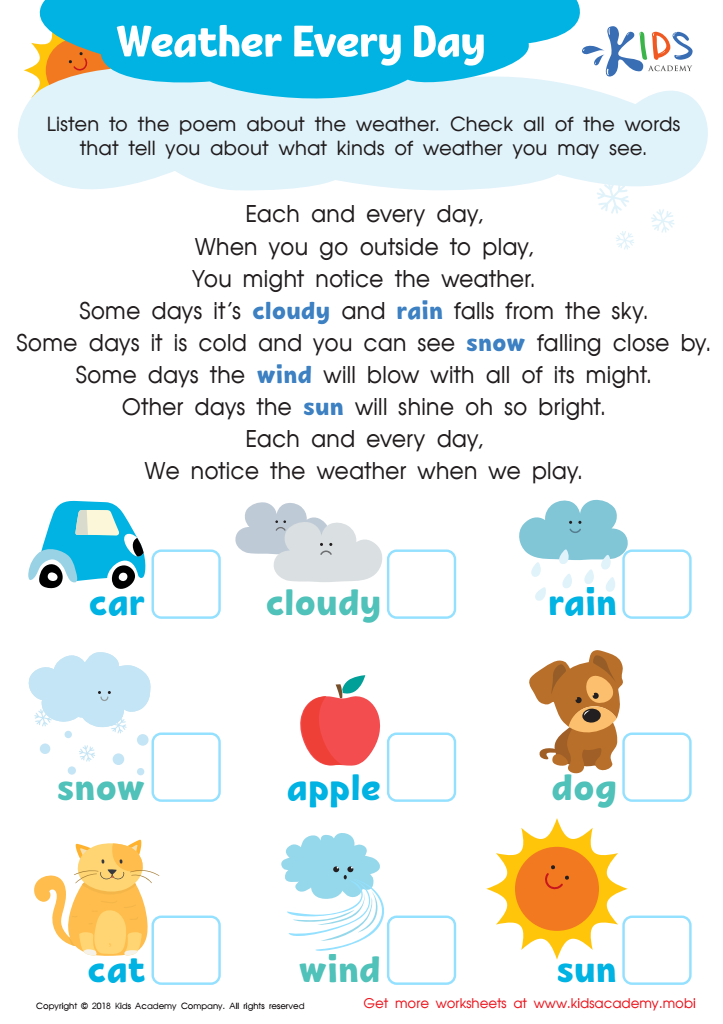
Weather Every Day Worksheet

First Words: Picture Rhymes Worksheet
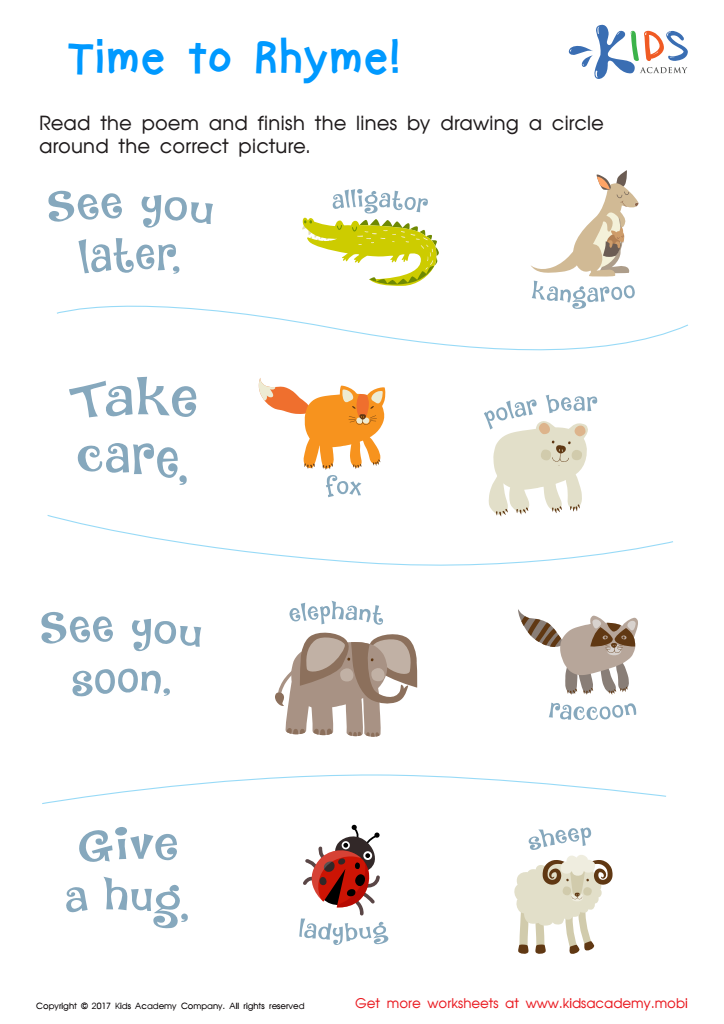
Time to Rhyme Rhyming Worksheet
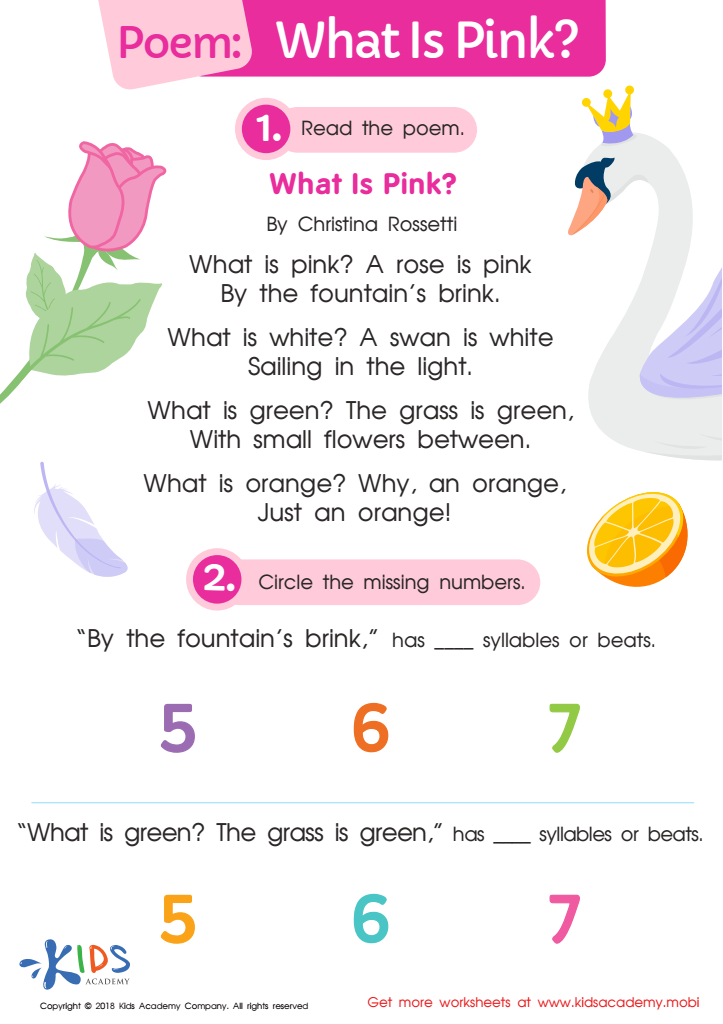
Poem: What Is Pink? Worksheet
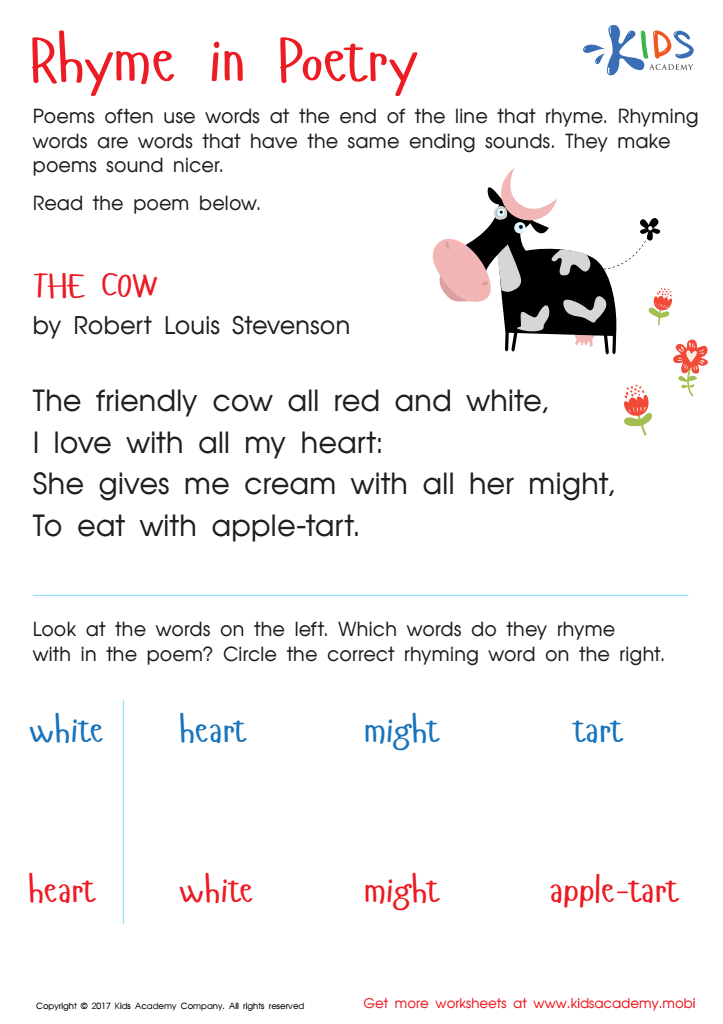
Rhyme In Poetry Worksheet
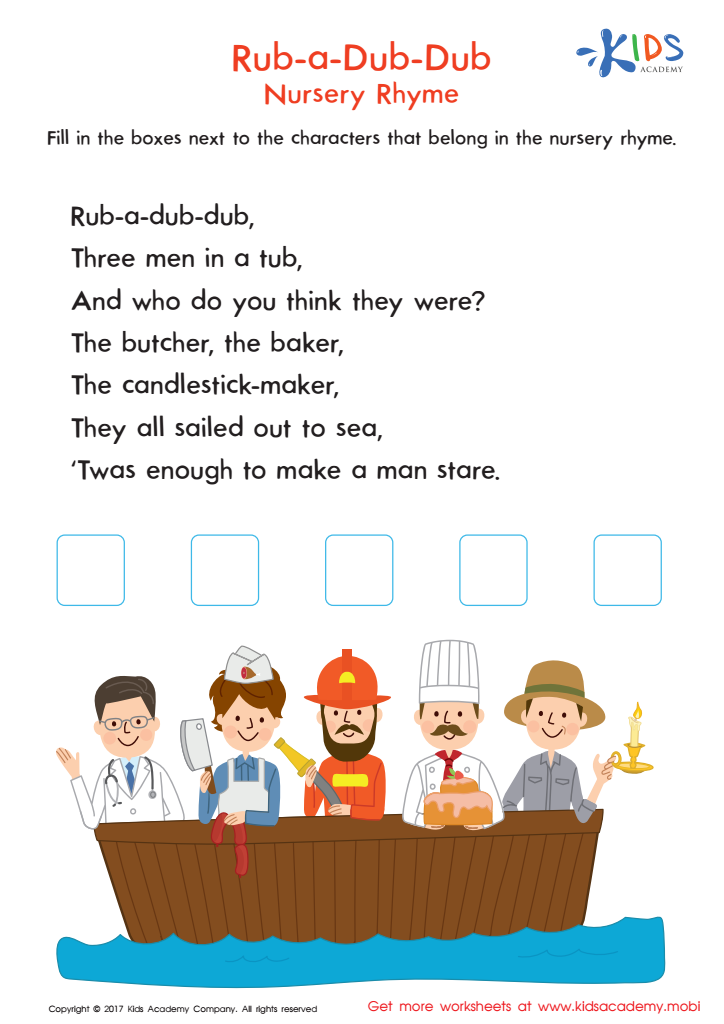
Rub a Dub Dub Printable
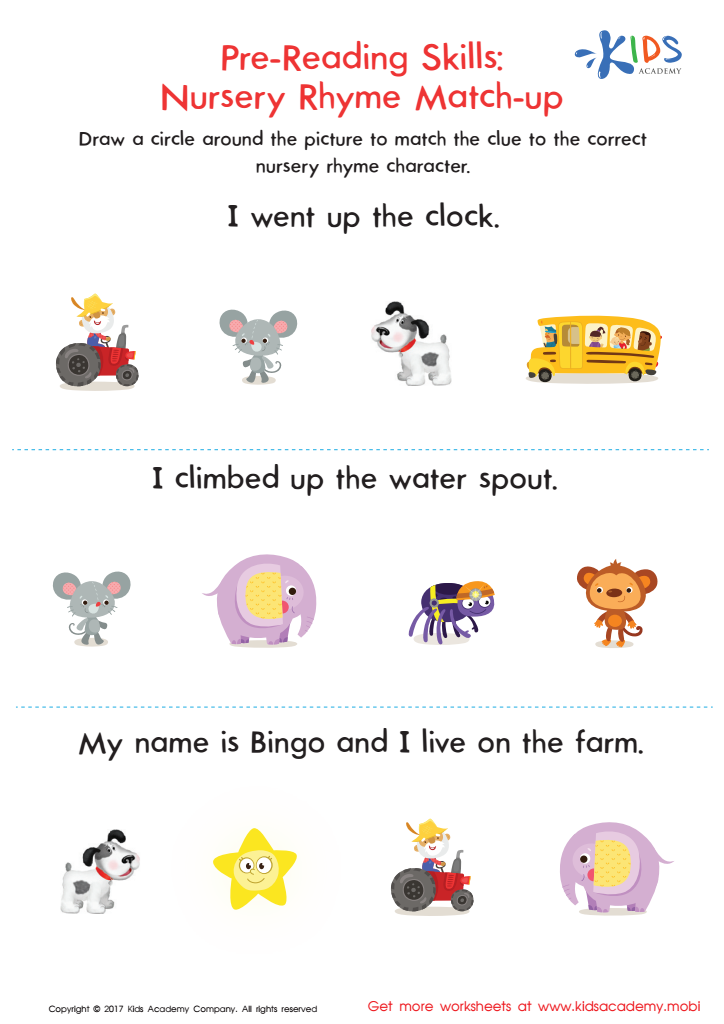
Nursery Rhyme Match–Up Worksheet
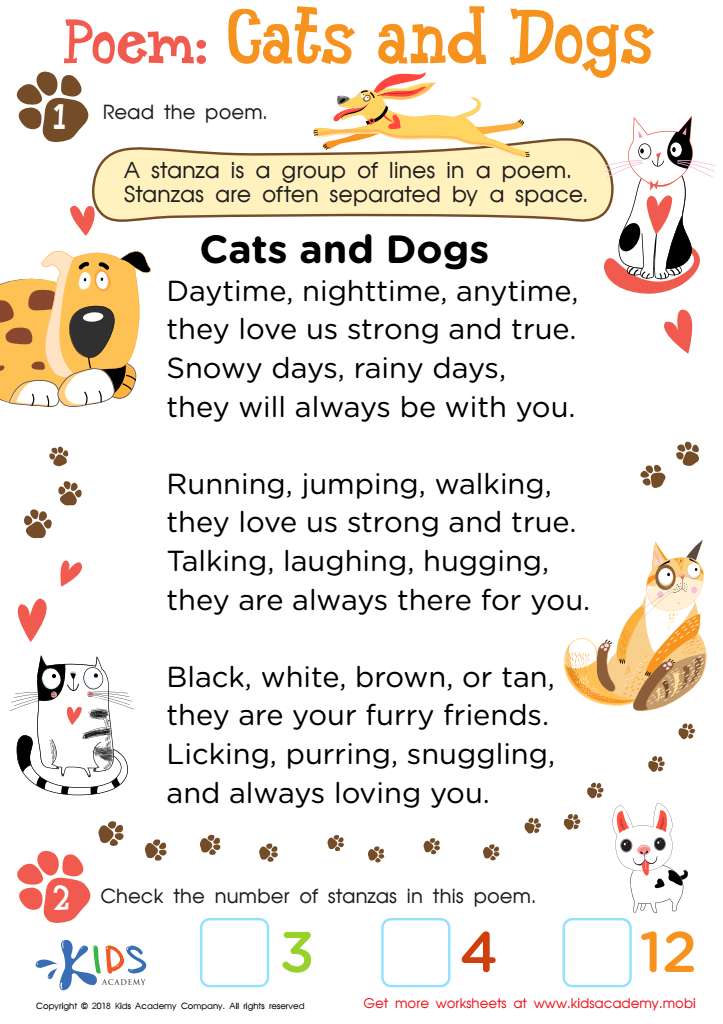
Poem: Cats and Dogs Worksheet








Rhyming is an essential aspect of early literacy development for children aged 4-9, making it crucial for parents and teachers to prioritize this skill. First, rhyming enhances phonemic awareness, a foundational skill that allows children to understand the sounds within words. This awareness aids in reading and spelling, as children learn to decode and manipulate sounds more effectively.
Furthermore, rhyming contributes to vocabulary development, as it introduces children to new words in a playful and engaging manner. Rhyming words can improve a child's memory and recall, making it easier for them to learn complex language concepts.
Moreover, rhyming fosters creativity and encourages language play, helping children express themselves artistically while building confidence in their speaking abilities. It can also improve listening skills, as children learn to identify and appreciate sound patterns in language.
In addition to cognitive benefits, practicing rhymes can strengthen the bond between parents, teachers, and children as they engage in fun, interactive activities like singing or storytelling. Overall, promoting rhyming is vital for developing critical literacy skills while also enhancing the joy of learning. Thus, parents and teachers should actively incorporate rhyming activities into everyday interactions.







