Upper & Lowercase Letters Worksheets for Ages 4-9 - Page 3
50 filtered results
-
From - To
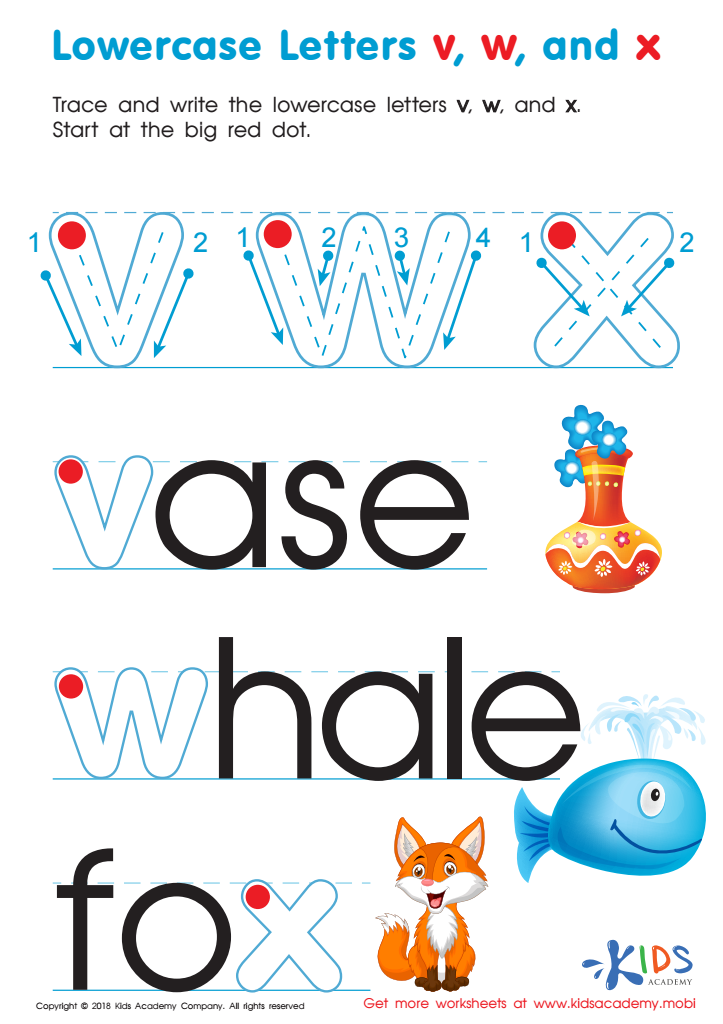
Lowercase Letters v w x Worksheet
 Assign to My Students


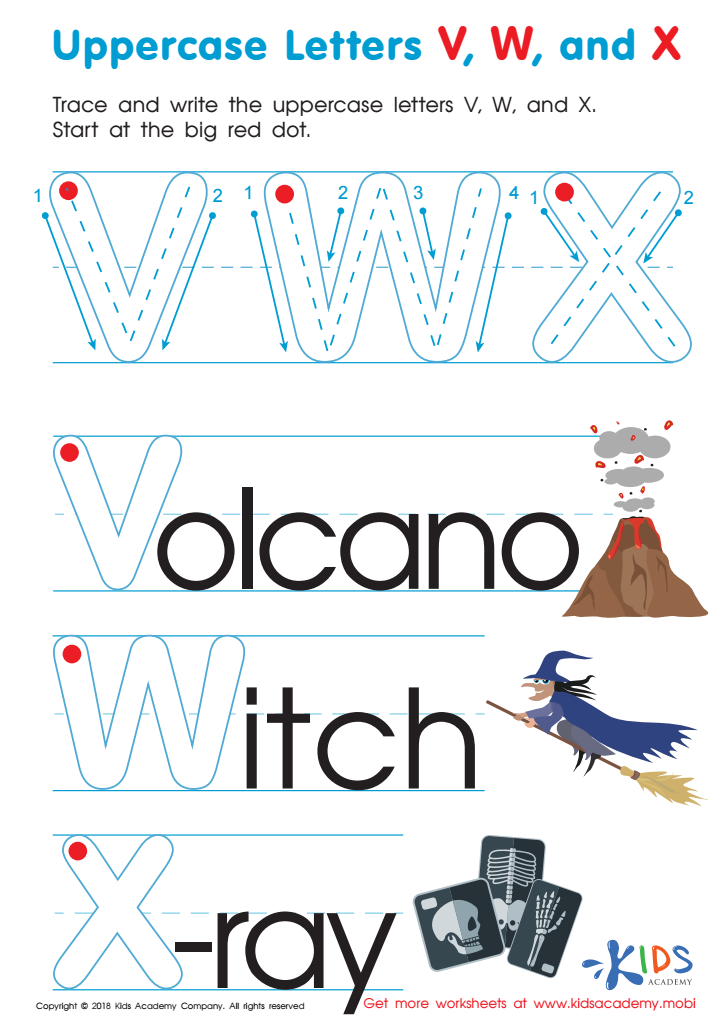
Uppercase Letters V, W, and X Worksheet






Understanding uppercase and lowercase letters is fundamental for children aged 4-9, as it lays the groundwork for their reading and writing skills. Recognizing the distinction between the two forms helps children develop phonemic awareness, an essential skill for decoding words. Additionally, this knowledge aids in understanding vocabulary and grammar. For instance, children learn that uppercase letters often signal the start of sentences or proper nouns, thus enhancing their reading fluency.
Moreover, familiarity with both uppercase and lowercase letters empowers children to write effectively. In writing exercises, young learners experiment with letter formation, which builds their fine motor skills and fosters confidence in their abilities. It’s also important for self-expression; being able to correctly use letters helps children convey messages clearly.
Parents and teachers play a significant role in this learning process. By creating engaging activities that focus on letter recognition and usage—like games, crafts, and mobile apps—they can make the practice enjoyable. Supporting this literacy foundation not only aids academic success but also inspires a love for reading and writing, crucial for lifelong learning. In sum, understanding uppercase and lowercase letters is pivotal in nurturing early literacy, enhancing communication skills, and building self-confidence in young learners.







