English for Beginners Worksheets for Ages 4-9 - Page 7
148 filtered results
-
From - To
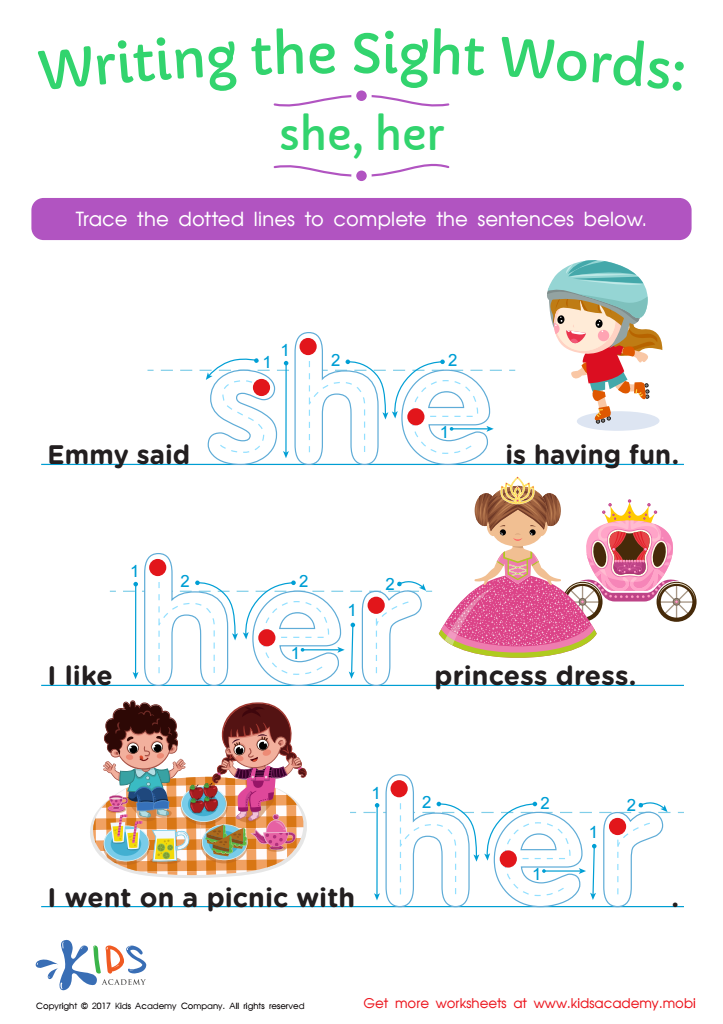
She, Her Printable Sight Words Worksheet
 Assign to My Students
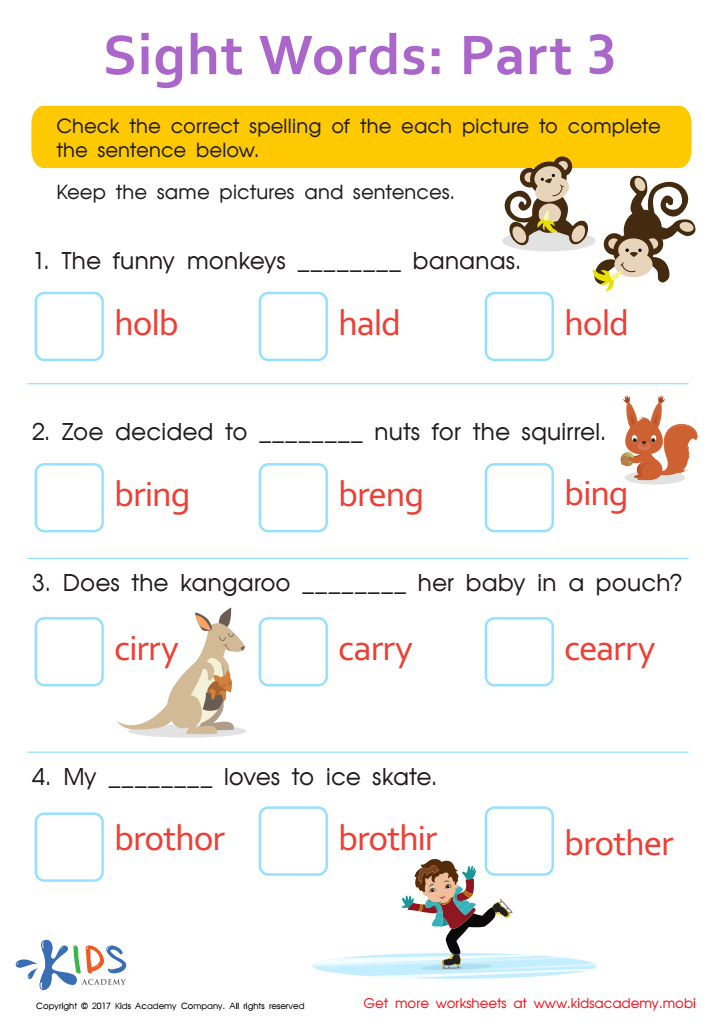
Hold, Bring, Carry, Brother Sight Words Worksheet
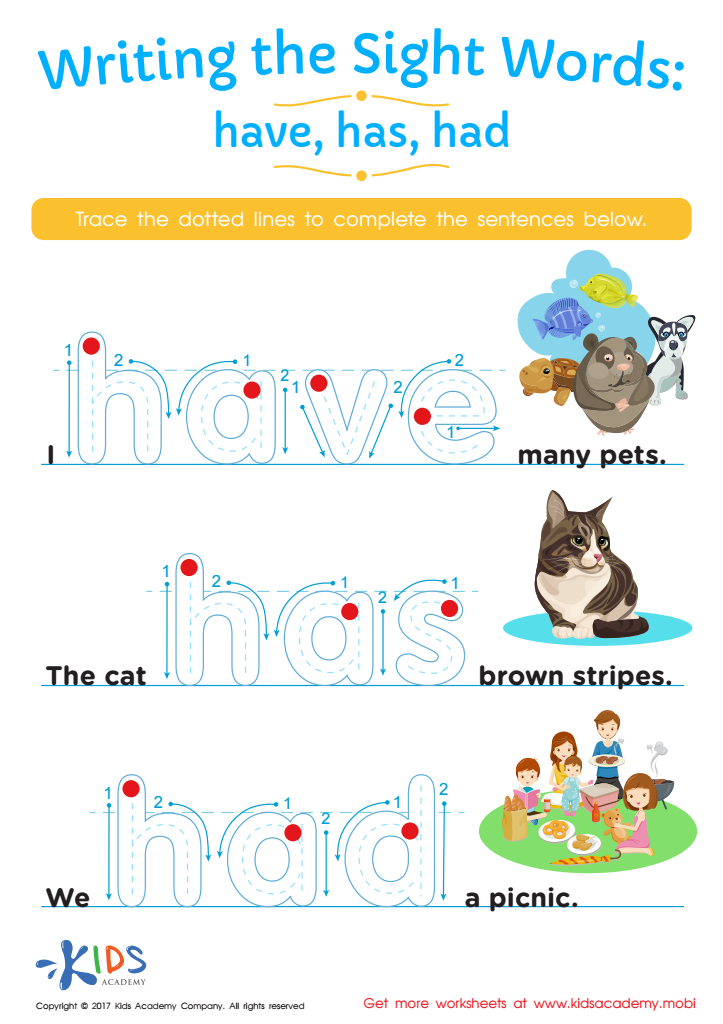
Have, Has, Had Worksheet Sight Words Worksheet
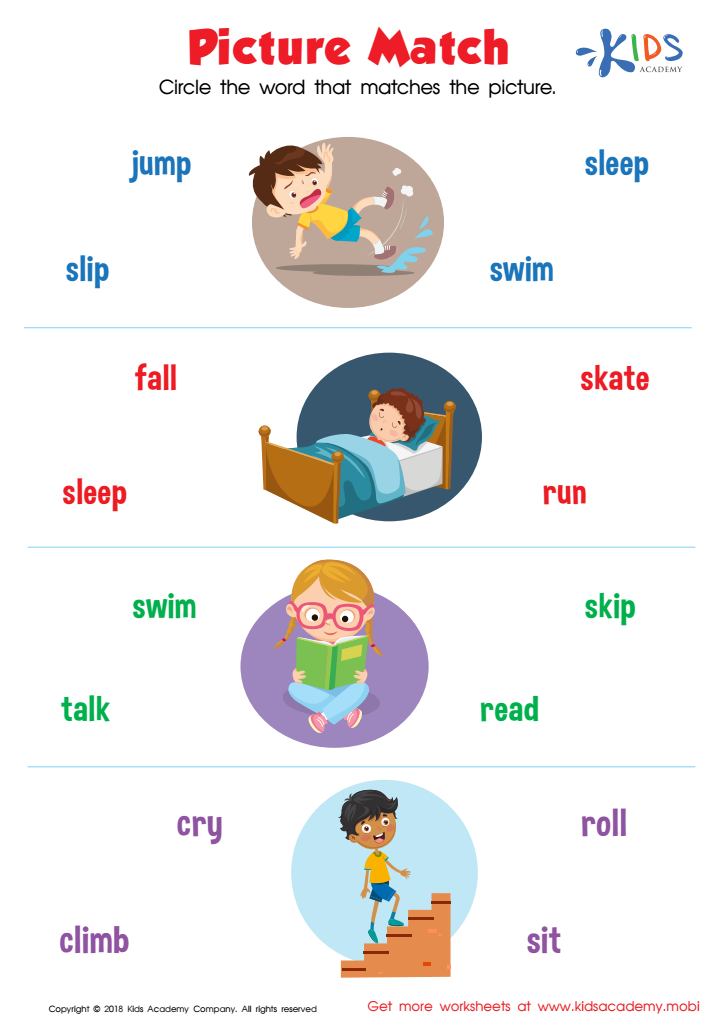
Picture Match Worksheet





Parents and teachers should care about English for Beginners for ages 4-9 because early language development is crucial for cognitive growth and overall academic success. During these formative years, children are most receptive to learning new languages, and introducing them to English establishes a solid foundation for future communication skills. Proficiency in English enhances their ability to understand instructions, engage with peers, and participate in classroom activities.
Moreover, English is often a global lingua franca, opening doors to diverse opportunities in education, travel, and career prospects. By learning English early, children not only gain language skills but also develop critical thinking, creativity, and confidence. These skills encourage participation in discussions and foster social connections.
Additionally, teaching English at a young age can cultivate a love for reading, storytelling, and exploration of different cultures, enriching their educational experience. This early exposure also boosts cognitive flexibility, allowing children to adapt and think in various contexts.
In a multicultural world, being proficient in English is an invaluable asset, allowing children to communicate effectively in an increasingly interconnected society. Therefore, prioritizing English for beginners can significantly benefit a child’s personal, academic, and professional growth.