2D Shapes Worksheets for Ages 4-9 - Page 4
75 filtered results
-
From - To
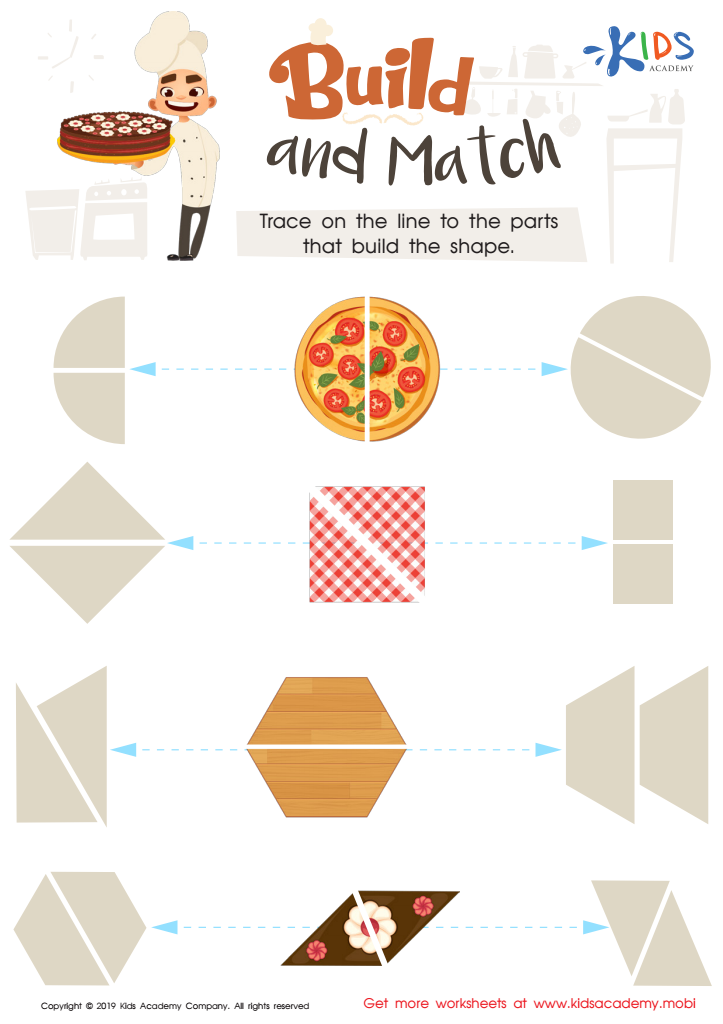
Build and Match Worksheet
 Assign to My Students

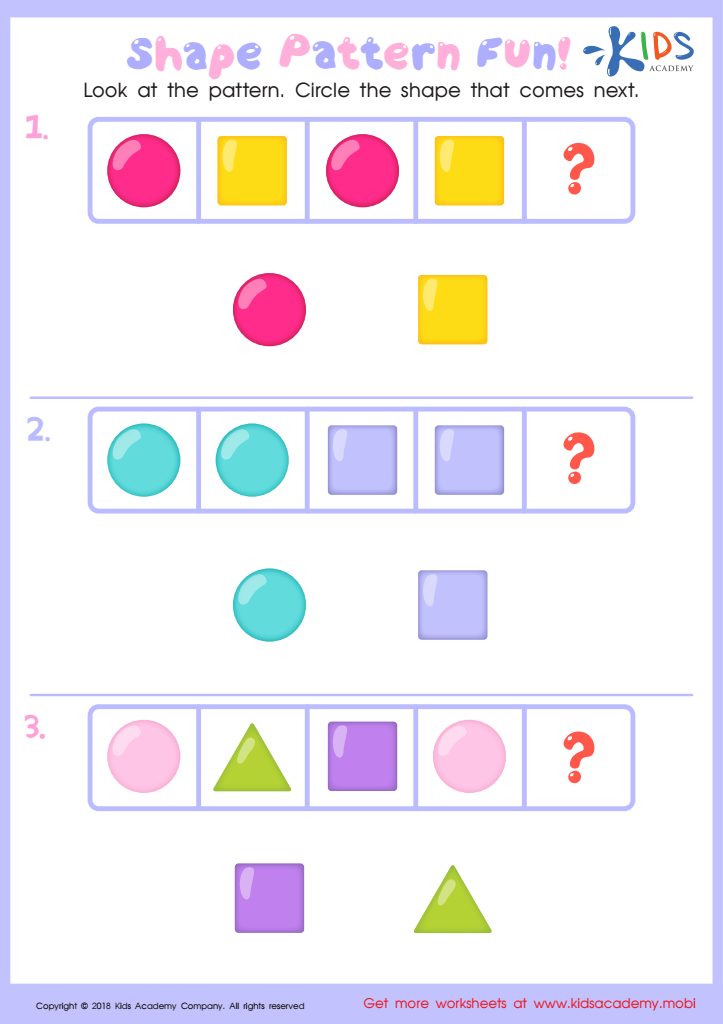
Shape Pattern Fun Worksheet
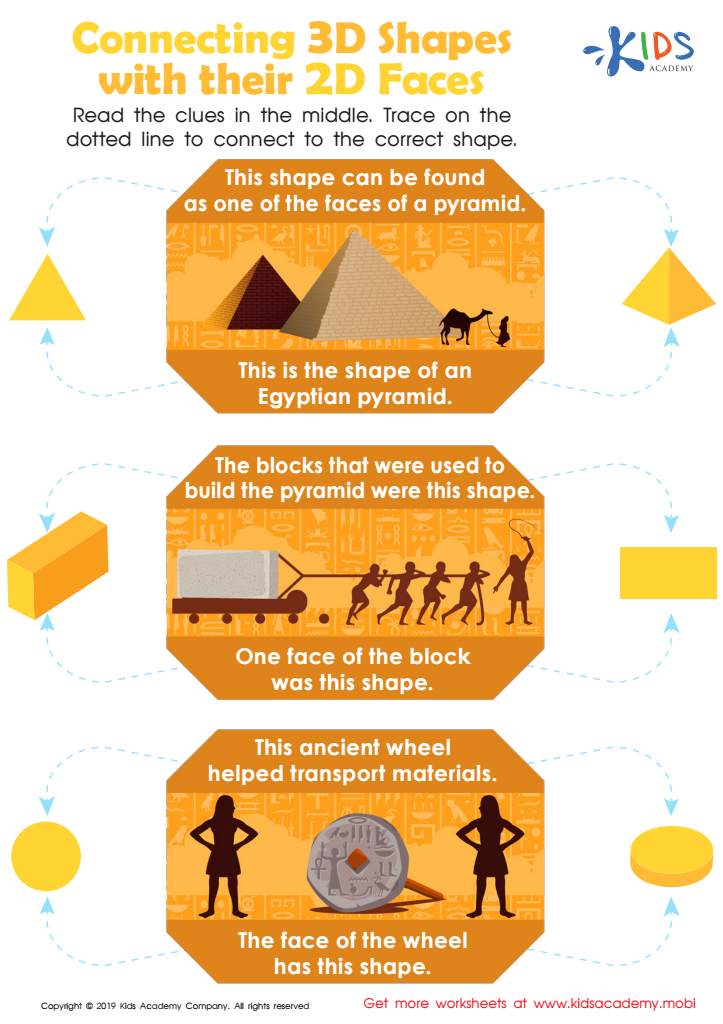
Connecting 3D Shapes with Their 2d Faces Worksheet








Understanding 2D shapes is fundamental for young children aged 4-9 as it lays a solid foundation for later mathematical learning and cognitive development. At this age, children are naturally curious and developing essential cognitive skills such as reasoning, problem-solving, and spatial awareness.
Learning about 2D shapes helps children recognize and categorize the world around them, improving their observational skills. For example, when they identify circles, squares, and triangles in everyday objects, they're enhancing their ability to notice details and similarities and differences between objects. This is foundational for more complex geometry and mathematical concepts they'll encounter later in education.
Moreover, familiarity with 2D shapes encourages language development. Children learn specific terms like "vertices," "edges," and names of various shapes, enriching their vocabulary. Discussing these shapes allows for interactive and engaging conversations between children and adults, fostering communication and language skills.
Understanding shapes is also integral for early literacy. Many letters and numbers have shapes that children recognize and interpret, aiding in reading and writing development. Activities involving 2D shapes can be fun and interactive—using puzzles, drawing, or constructing objects—all promoting fine motor skills and creativity.
Overall, prioritizing 2D shapes during early learning sets children on a successful path for academic achievement and everyday problem-solving.