Adding up to 1000 Without Regrouping Worksheets for Ages 4-9 - Page 3
73 filtered results
-
From - To
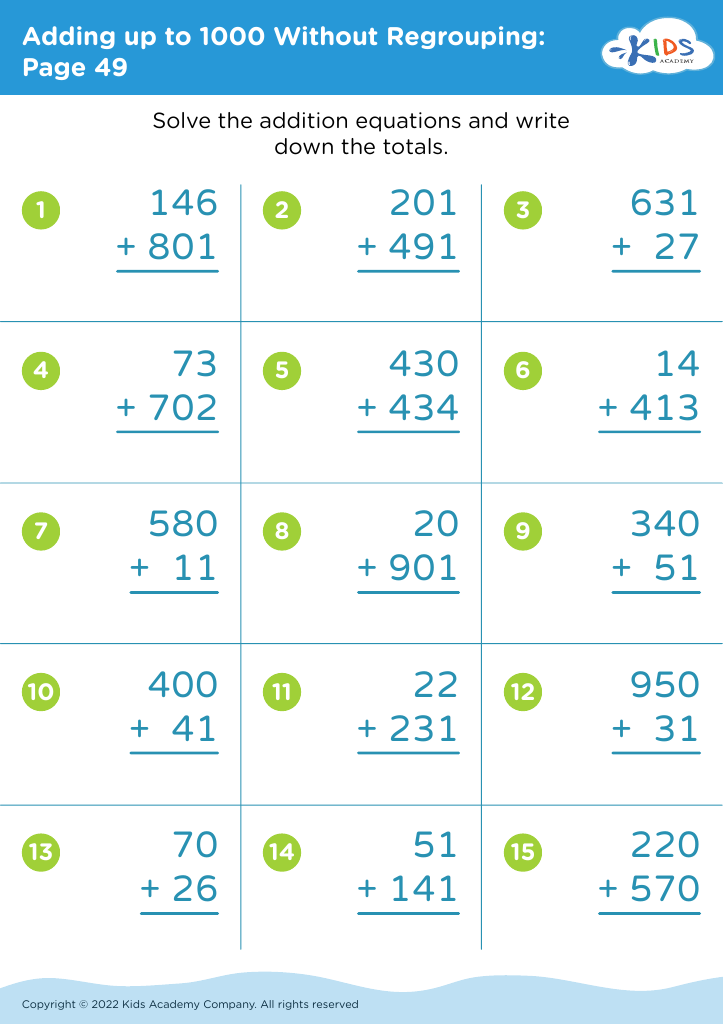
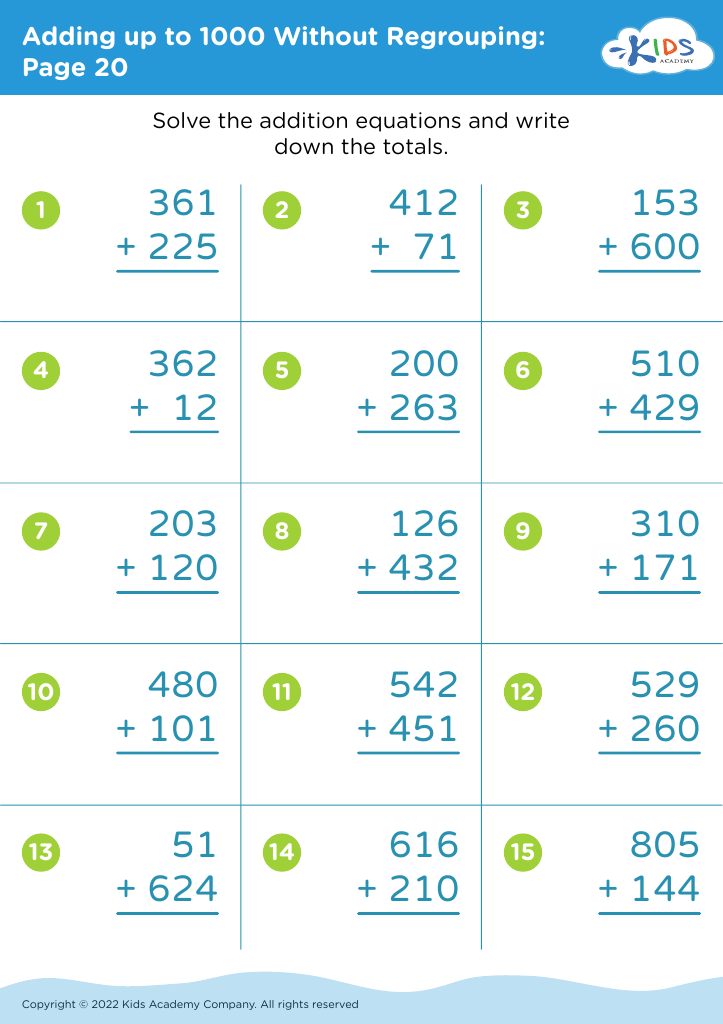
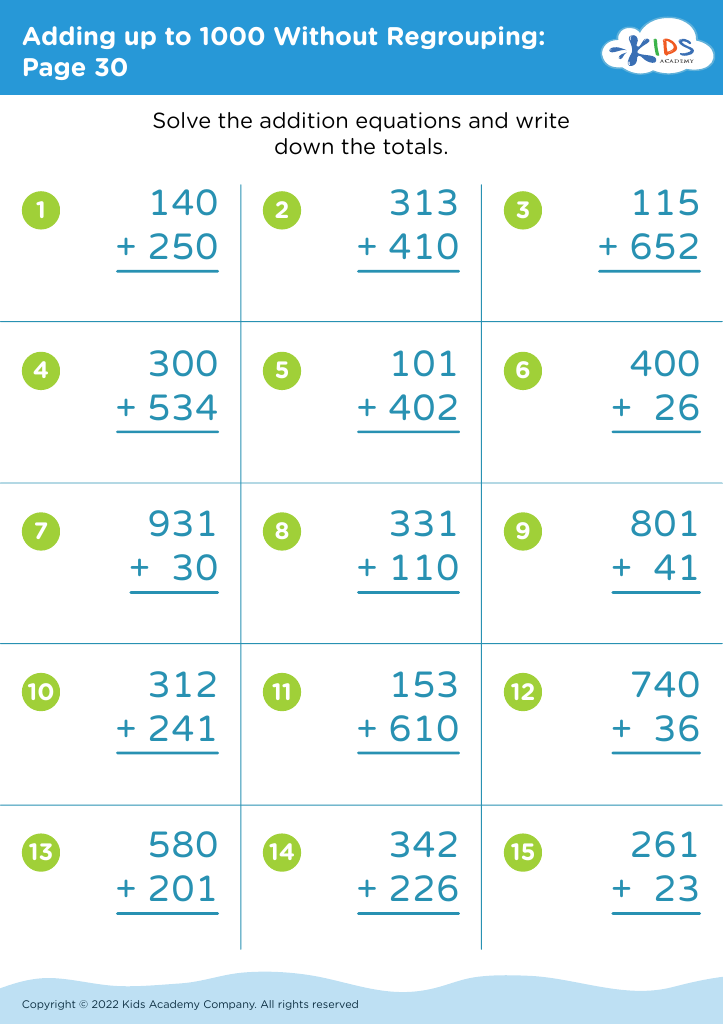
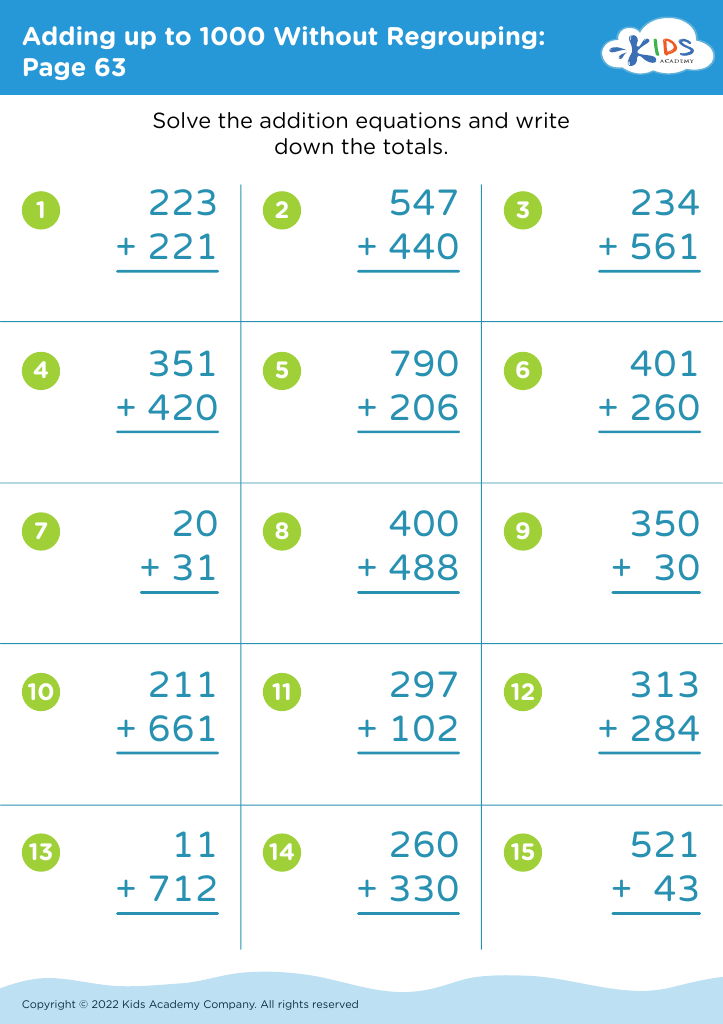
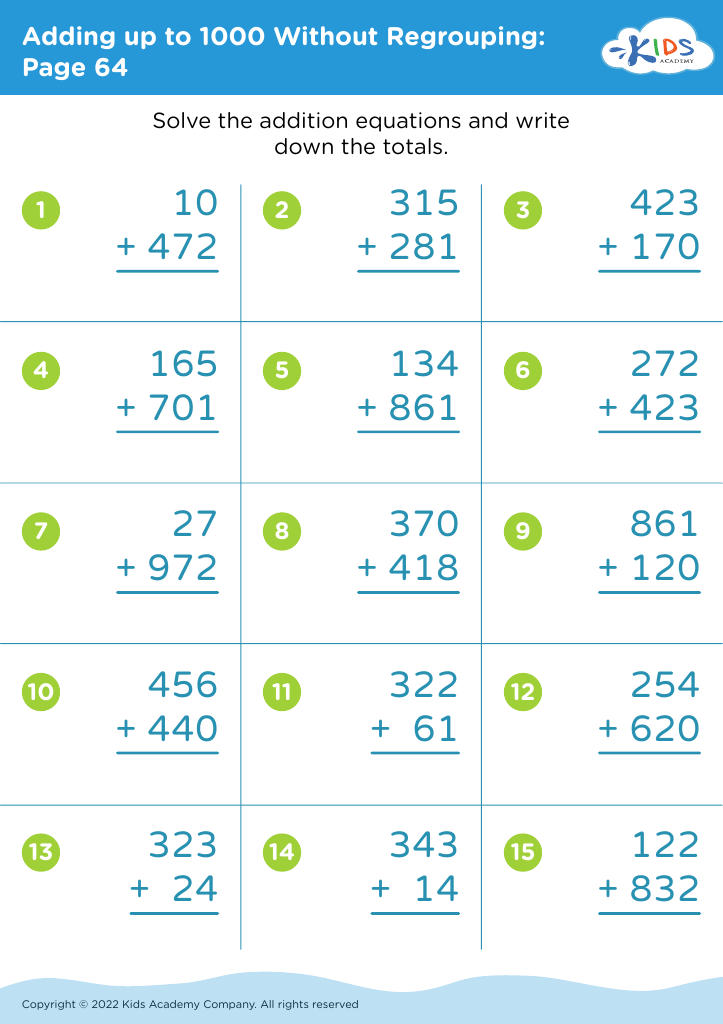
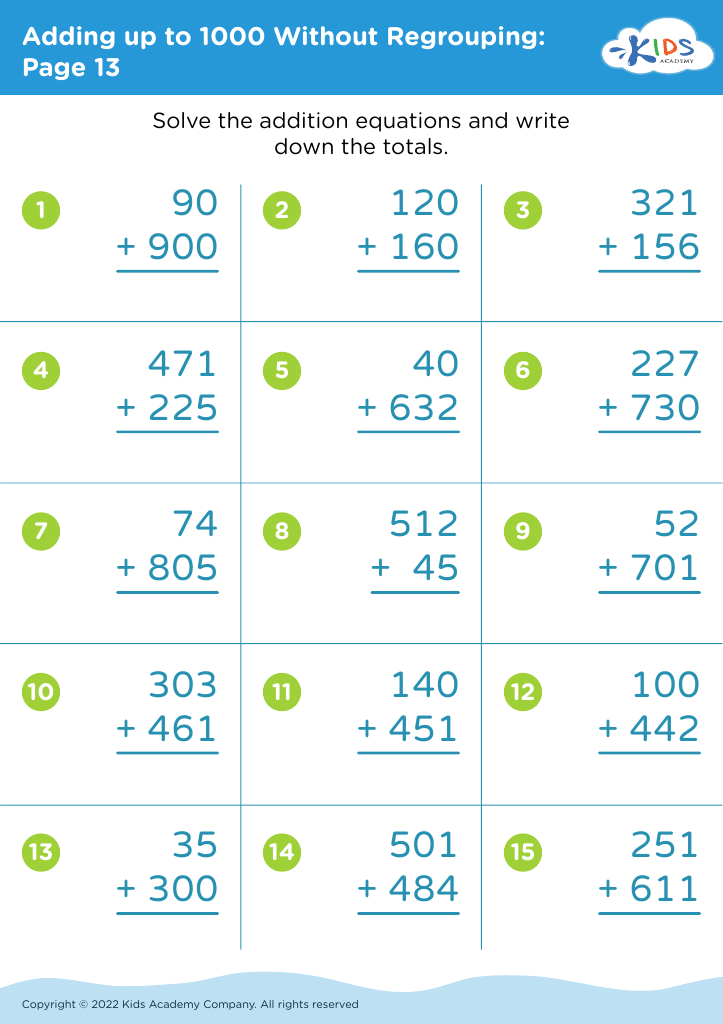
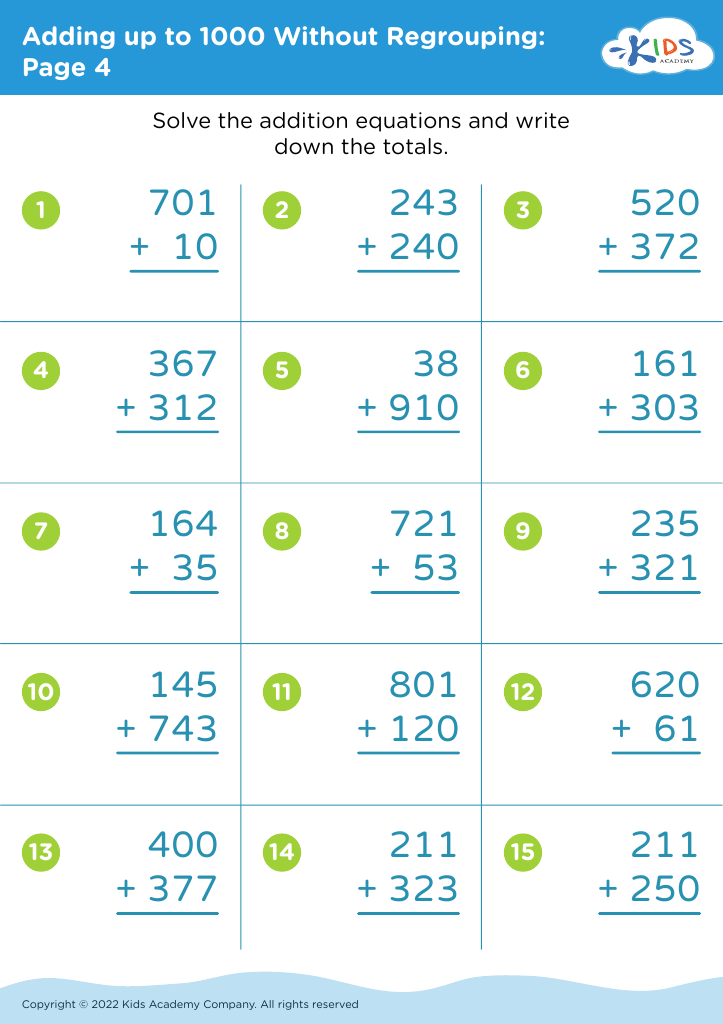
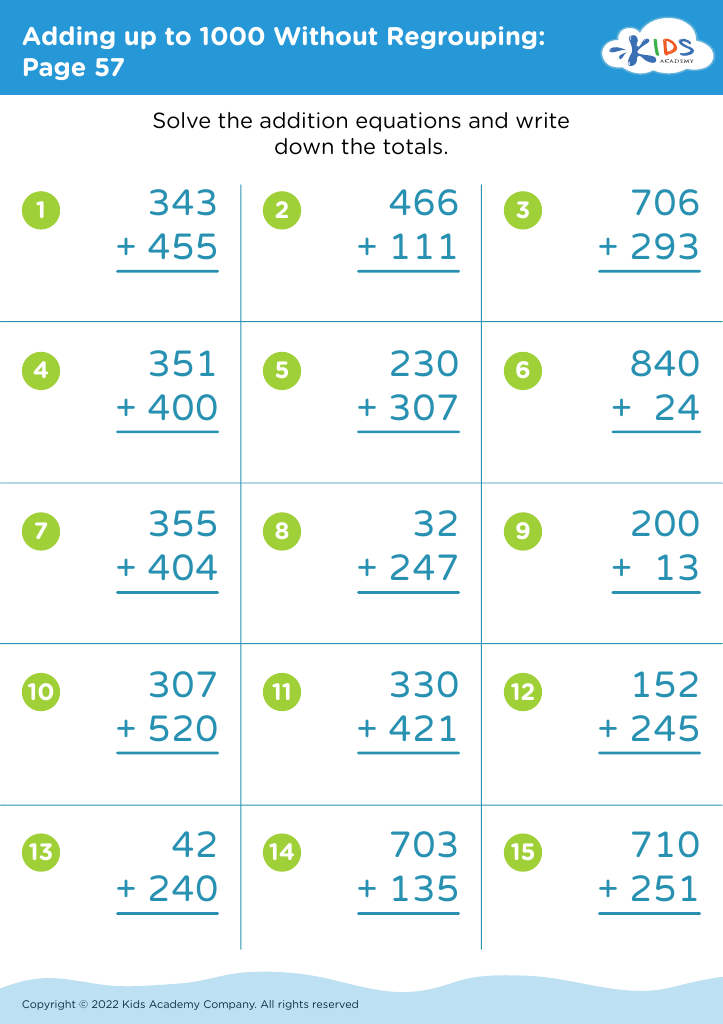
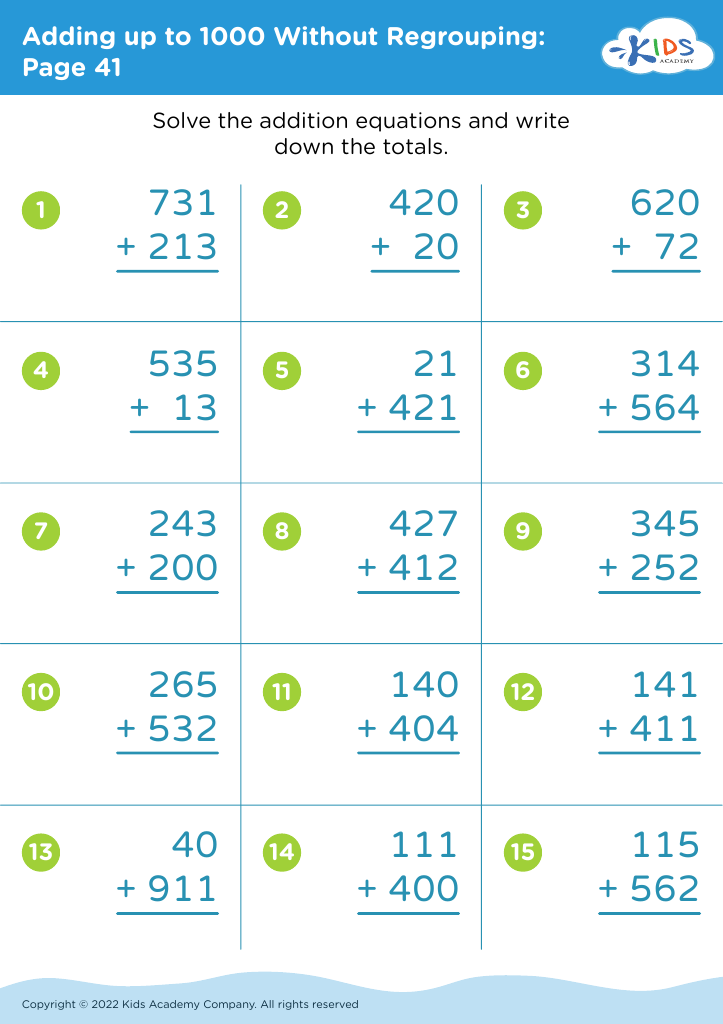
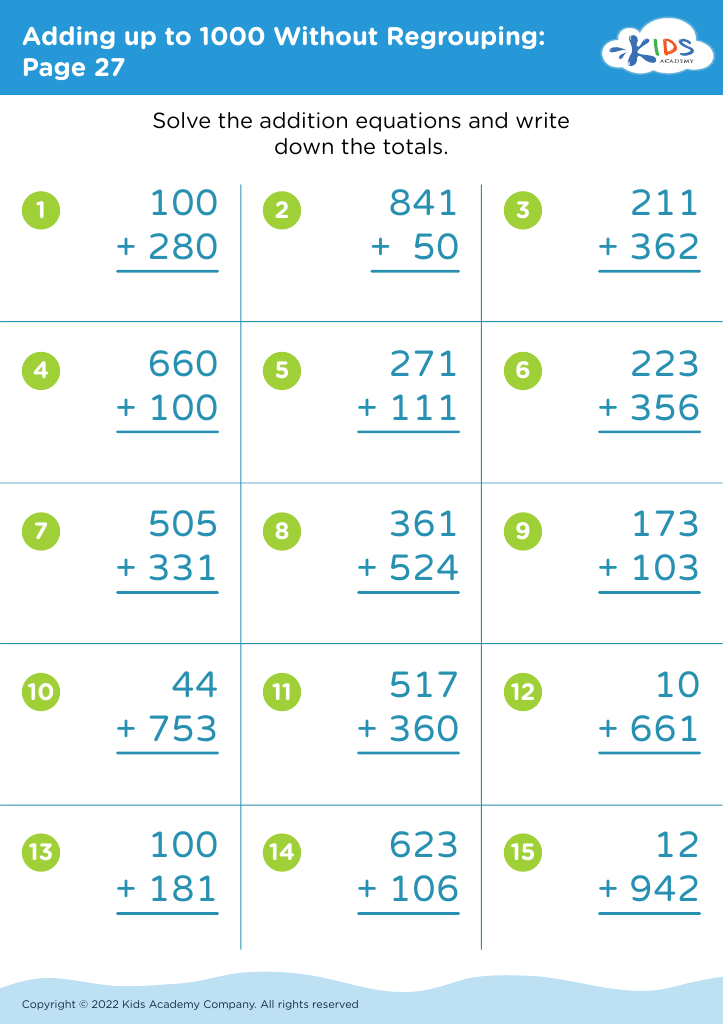
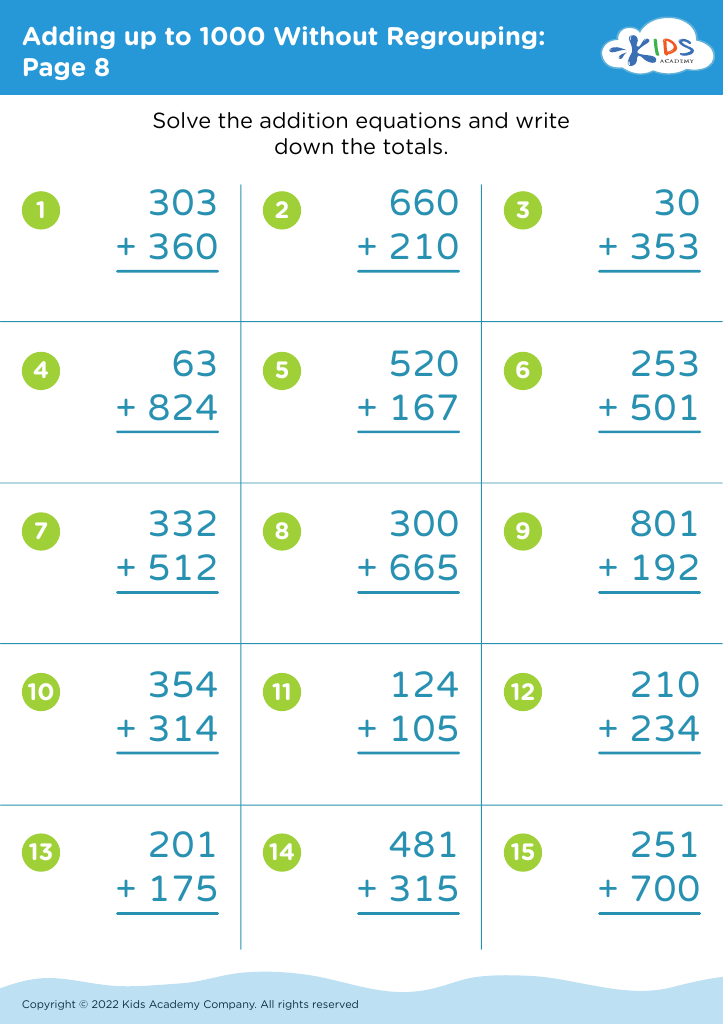
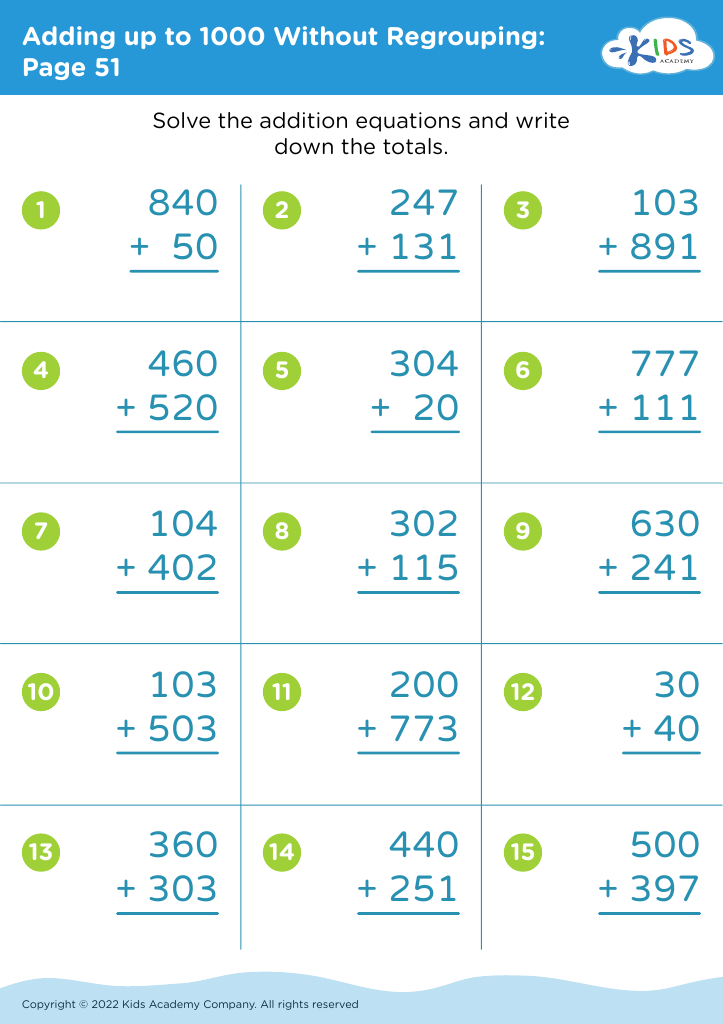
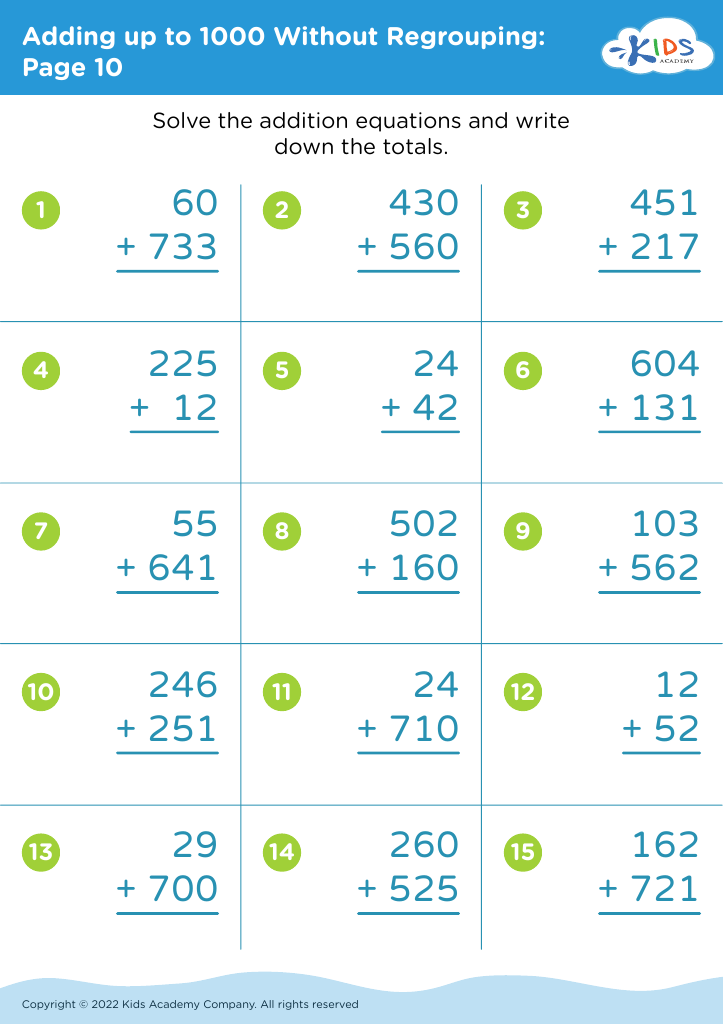
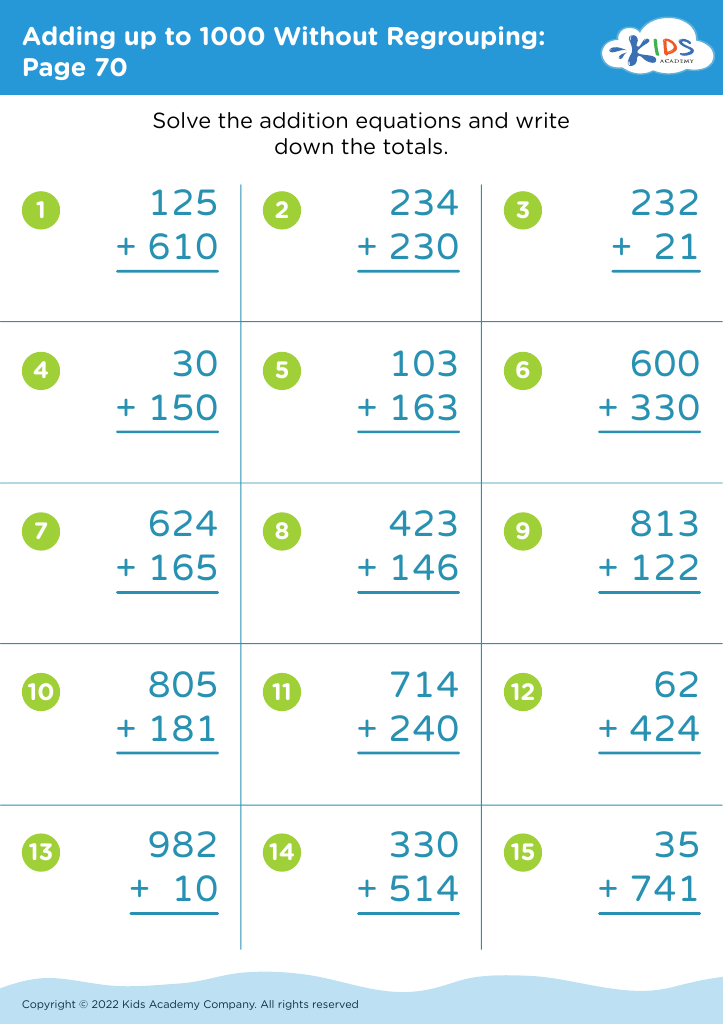
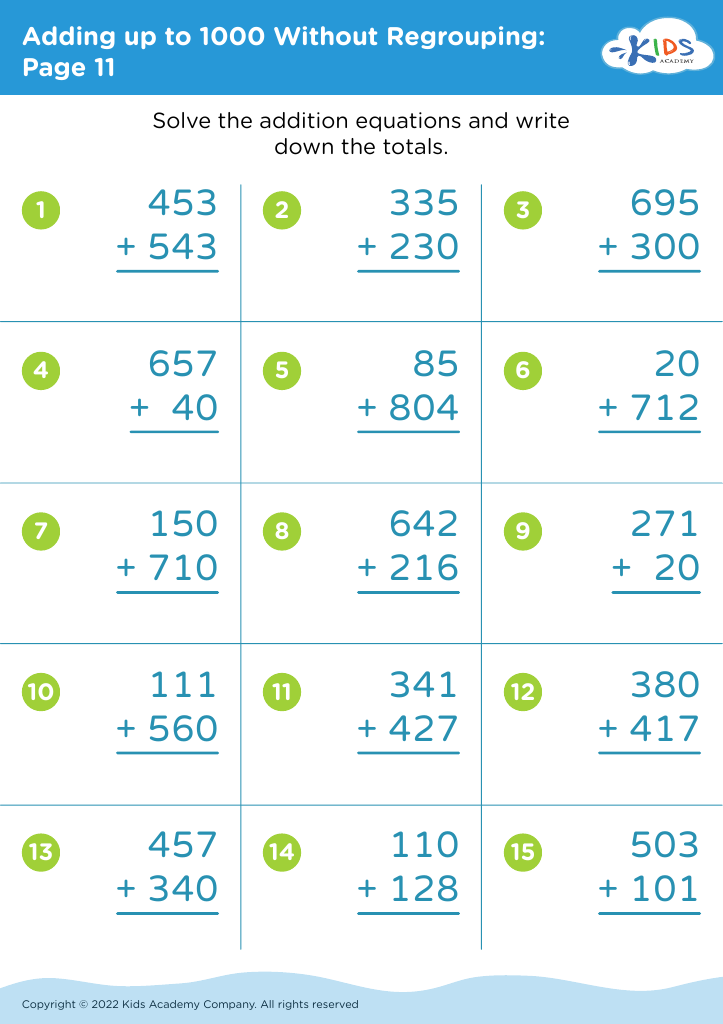
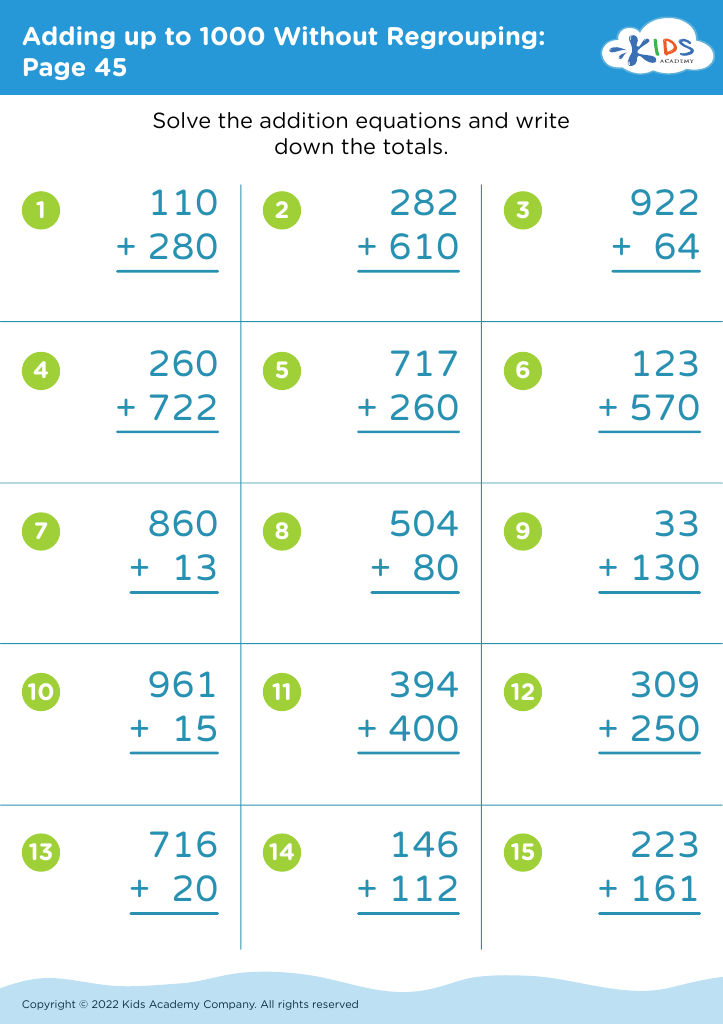
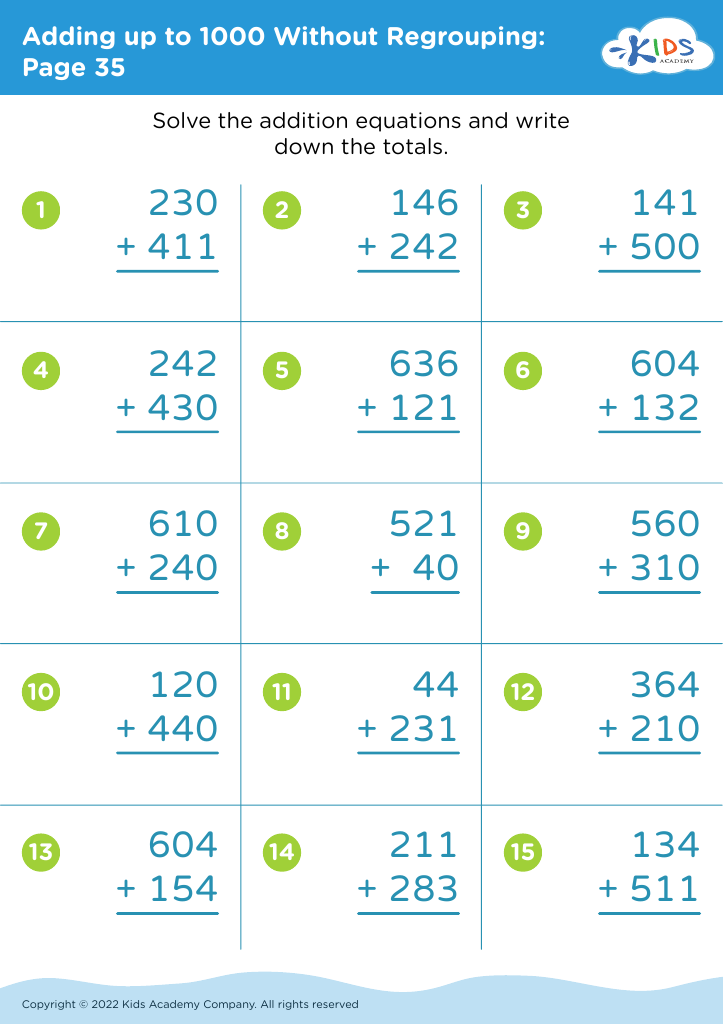
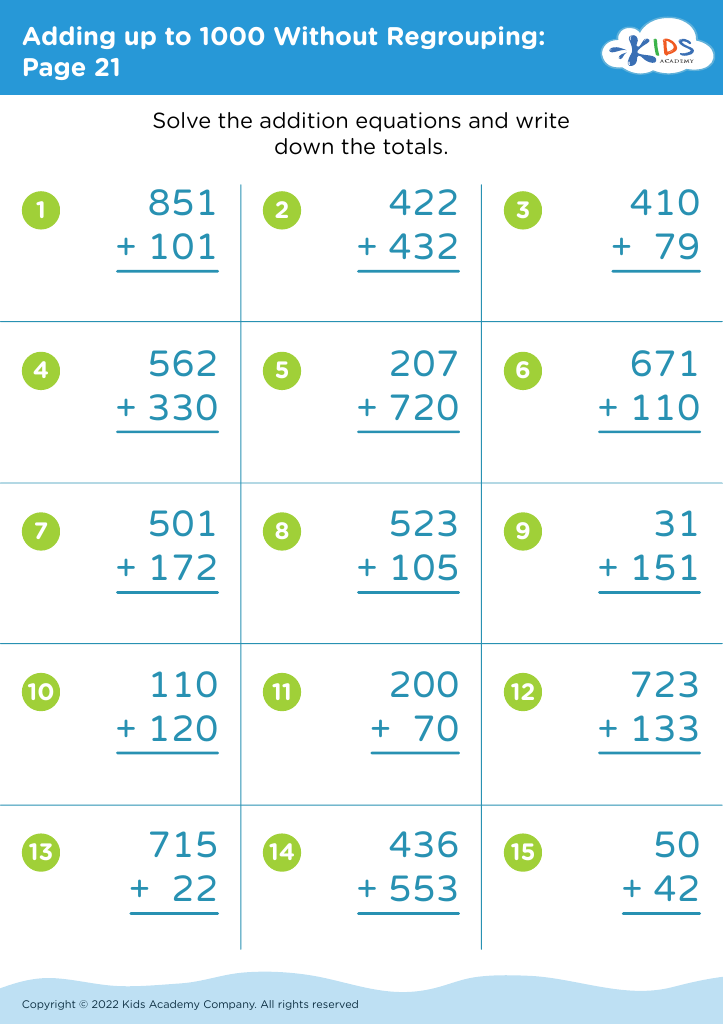
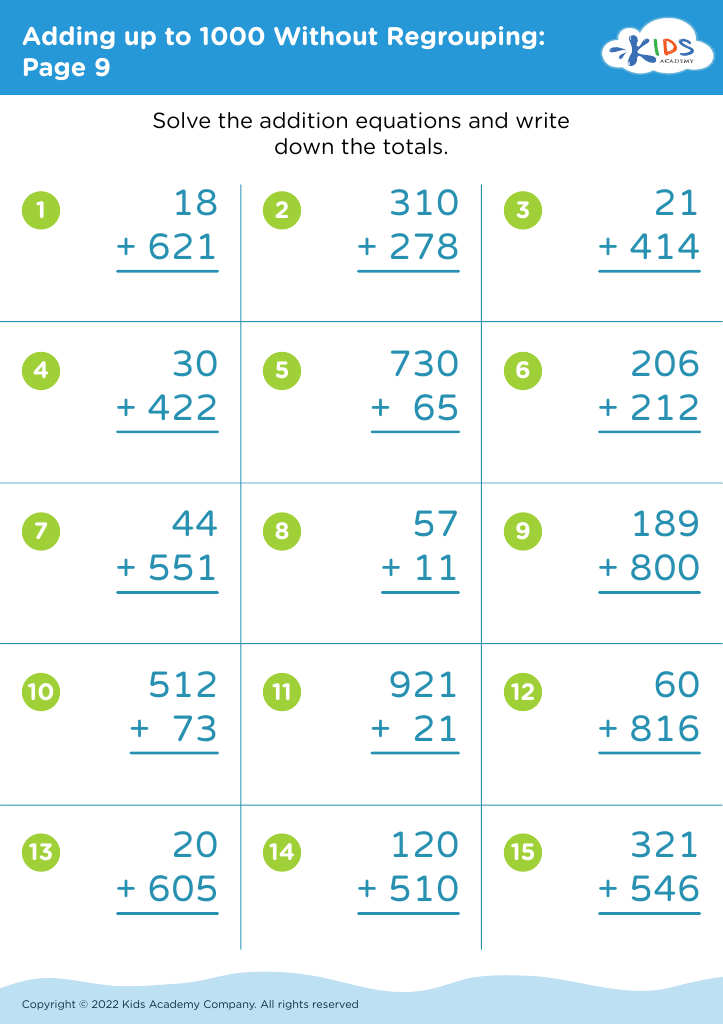
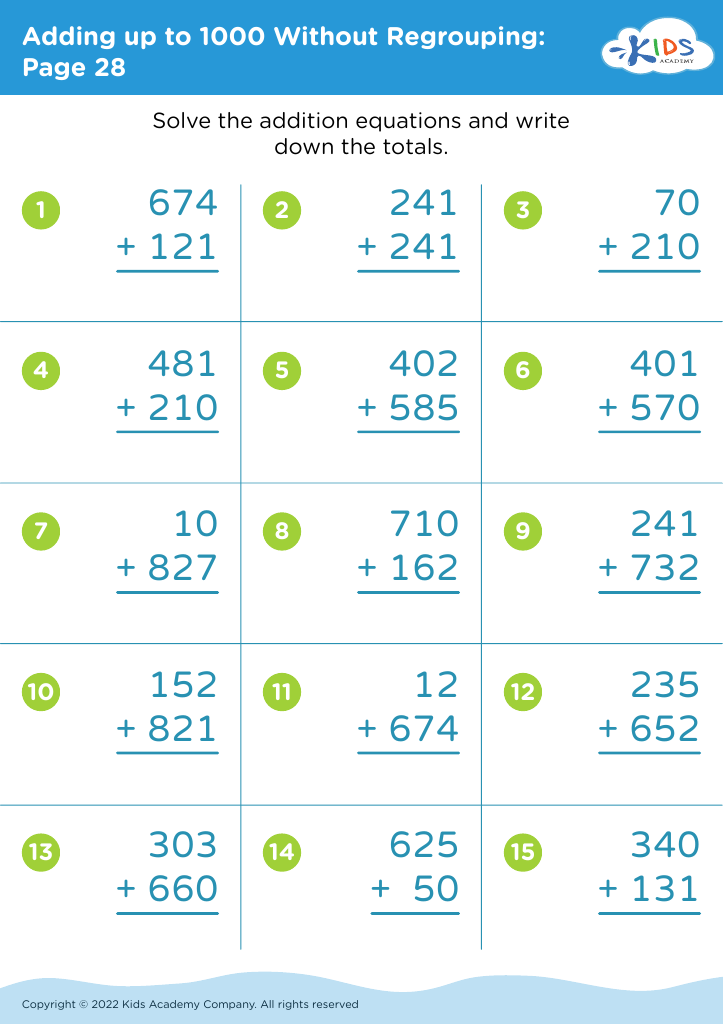
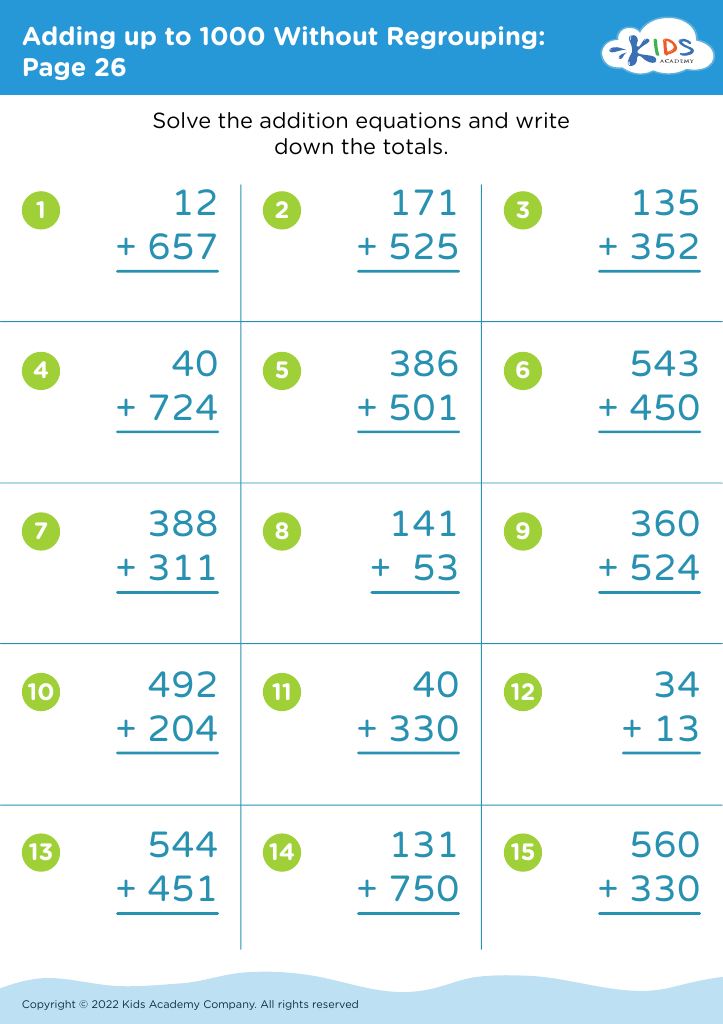
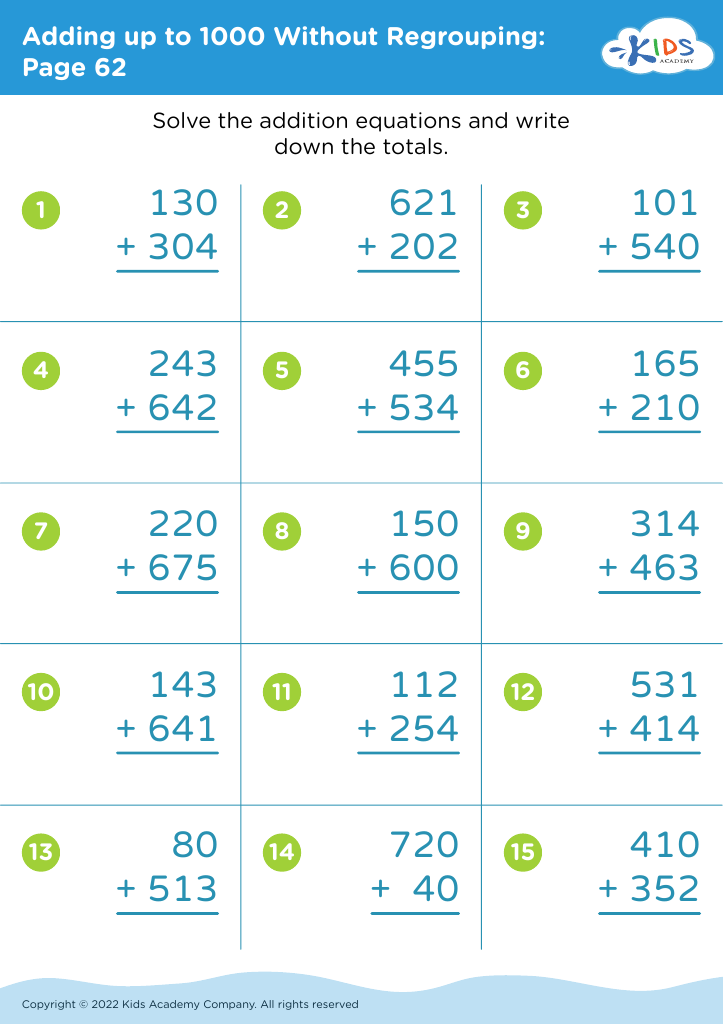
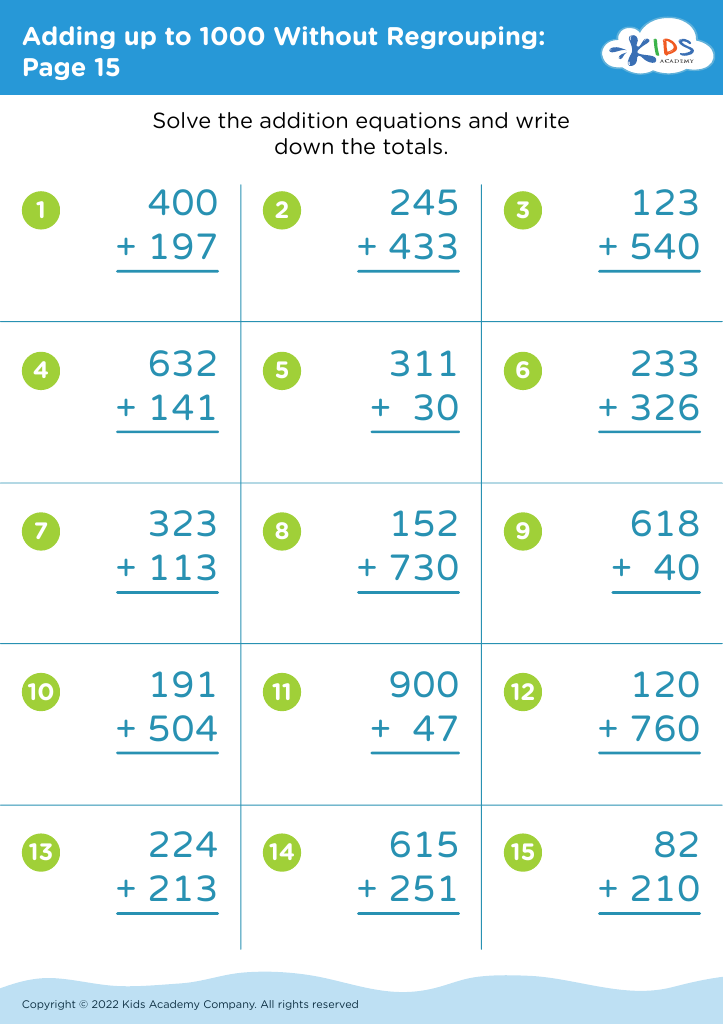
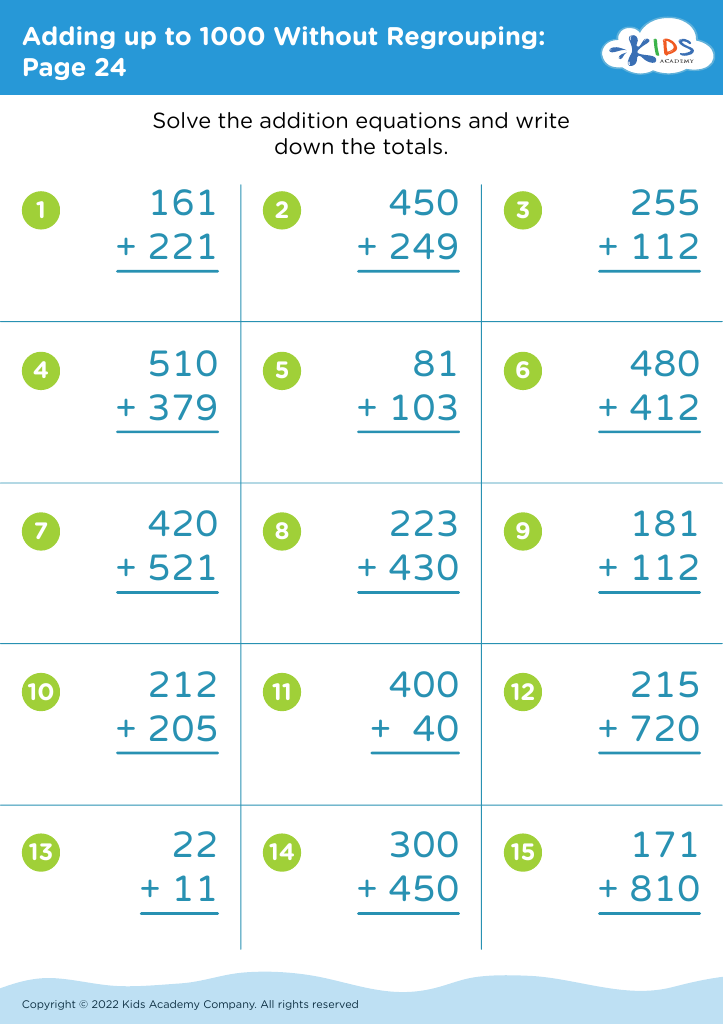



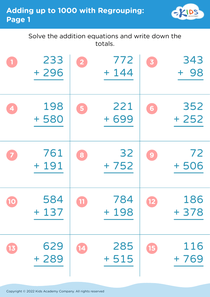
Understanding the concept of adding up to 1000 without regrouping is an important foundational math skill for young children, ages 4-9. This skill supports their overall numerical literacy and future academic success. Without the complication of regrouping, children can focus on mastering basic addition and building their confidence with larger numbers.
First, it helps children develop number sense—the understanding of how numbers work together within the number system—and makes them comfortable handling and manipulating numbers up to 1000. This introduces them to the broader place value system and reinforces their understanding of hundreds, tens, and units.
Second, early mastery of such skills forms the bedrock for more complex mathematical operations in the future. Without a good grasp of these basics, children can struggle as math becomes increasingly complex in later grades.
Additionally, this practice fosters critical thinking and problem-solving abilities. When children learn to add accurately and efficiently, they enhance their reasoning abilities and get better at approaching problems methodically.
Therefore, as parents and teachers, emphasizing this skill at a young age not only boosts arithmetic abilities but also strengthens the child’s overall cognitive development and nurtures a more positive attitude towards learning math. With these skills, children enter higher grades with confidence and a solid foundation in mathematics.