Filters

385 filtered results

Clear all filters
Favorites
With answer key
Interactive

385 filtered results

Difficulty Level

Grade


Subject

    Check out this FREE Trial Lesson on Adding Up to 5 for age 4-9!

    Match Exactly the Same

    Favorites
    With answer key
    Interactive
    • 4-9
    • Adding Up to 5
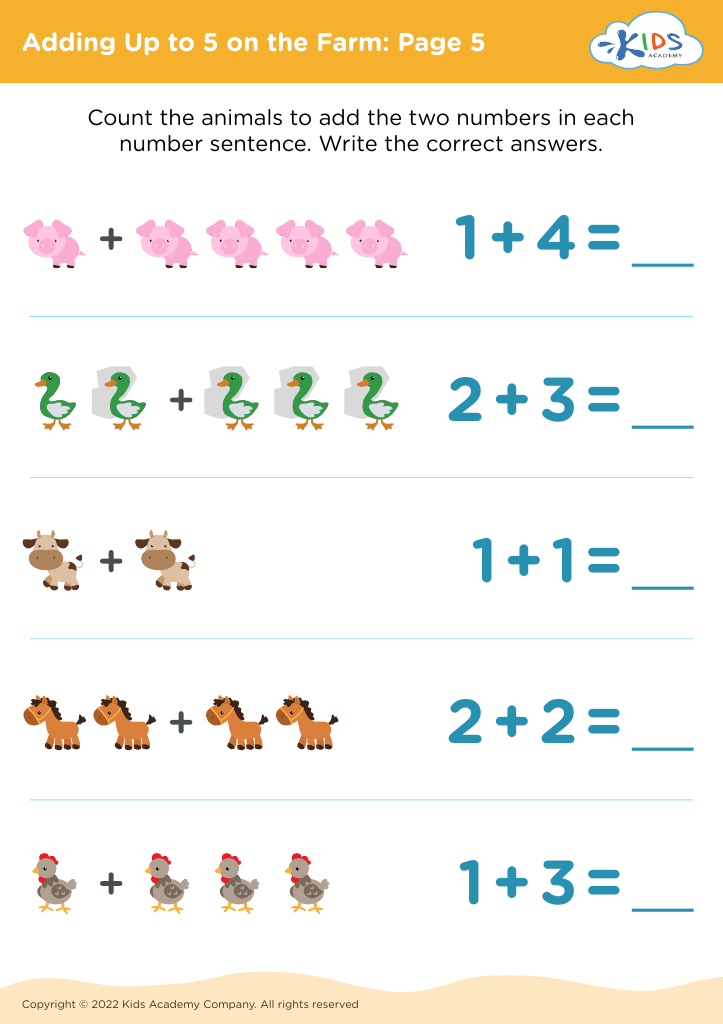
    Adding Up to 5 on the Farm: Page 5
    Adding Up to 5 on the Farm: Page 5
    Adding Up to 5 on the Farm: Page 5
    Worksheet
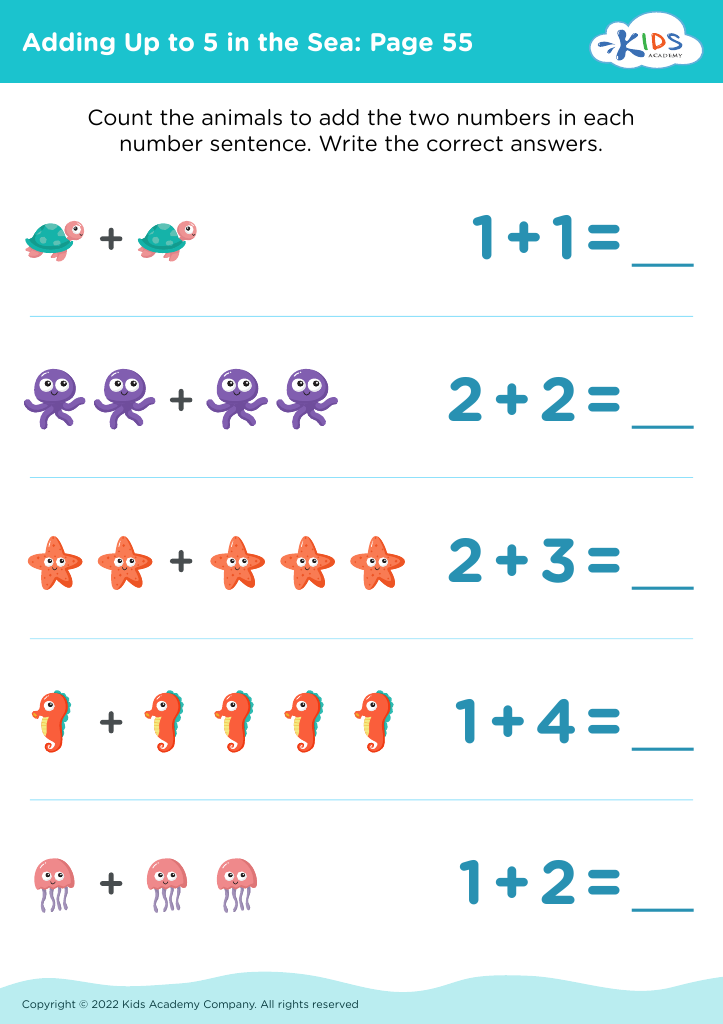
    Adding Up to 5 in the Sea: Page 55
    Adding Up to 5 in the Sea: Page 55
    Adding Up to 5 in the Sea: Page 55
    Worksheet
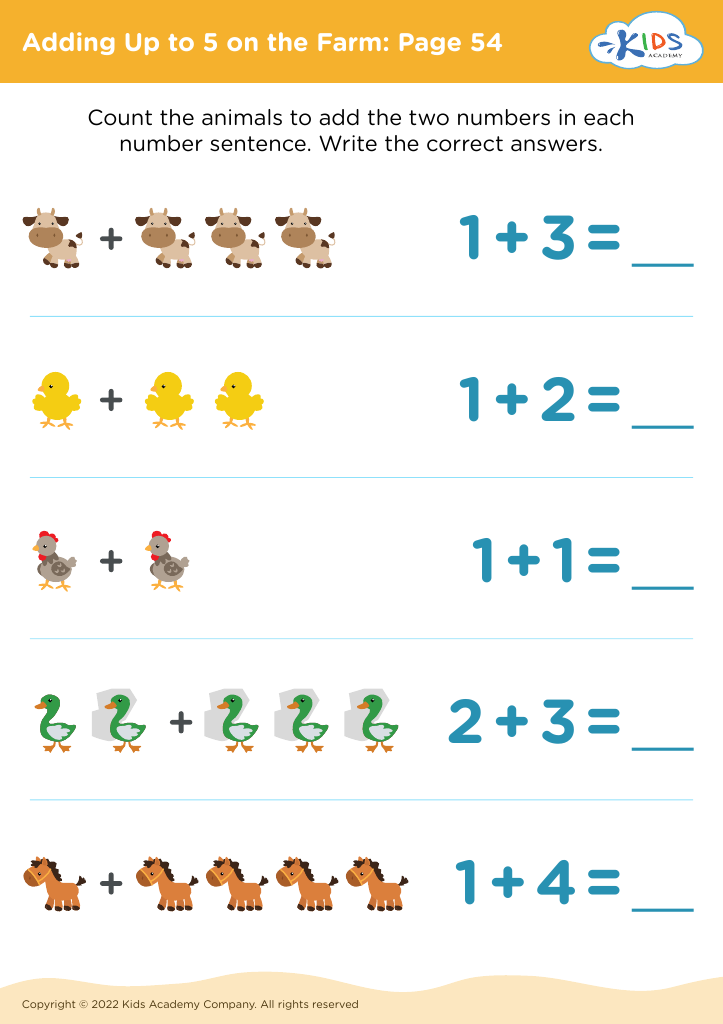
    Adding Up to 5 on the Farm: Page 54
    Adding Up to 5 on the Farm: Page 54
    Adding Up to 5 on the Farm: Page 54
    Worksheet
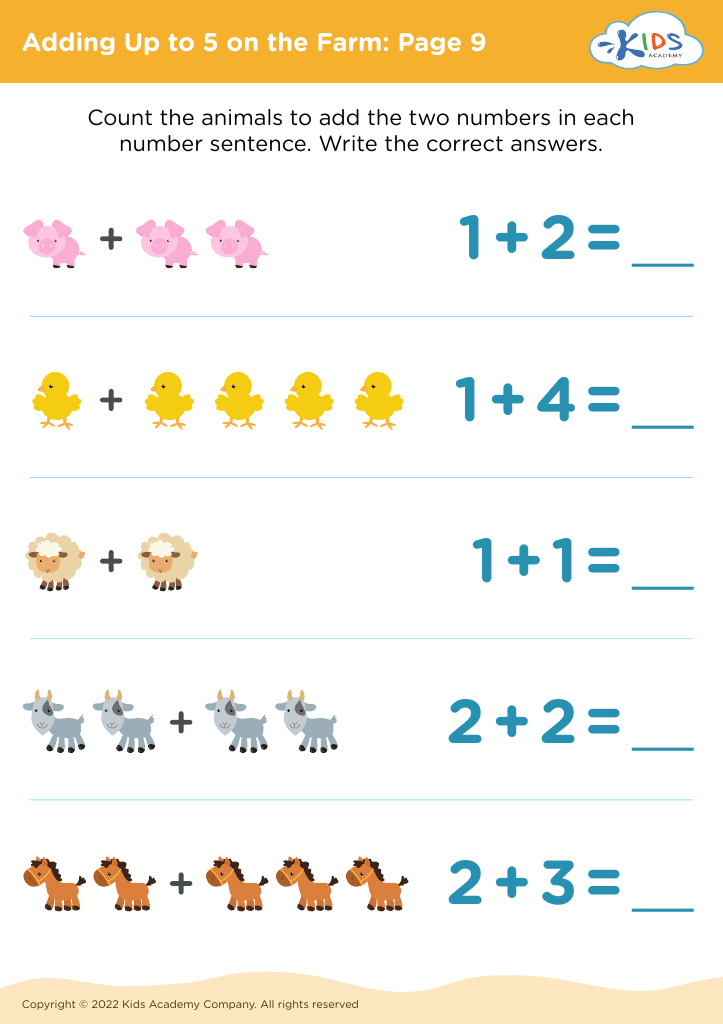
    Adding Up to 5 on the Farm: Page 9
    Adding Up to 5 on the Farm: Page 9
    Adding Up to 5 on the Farm: Page 9
    Worksheet
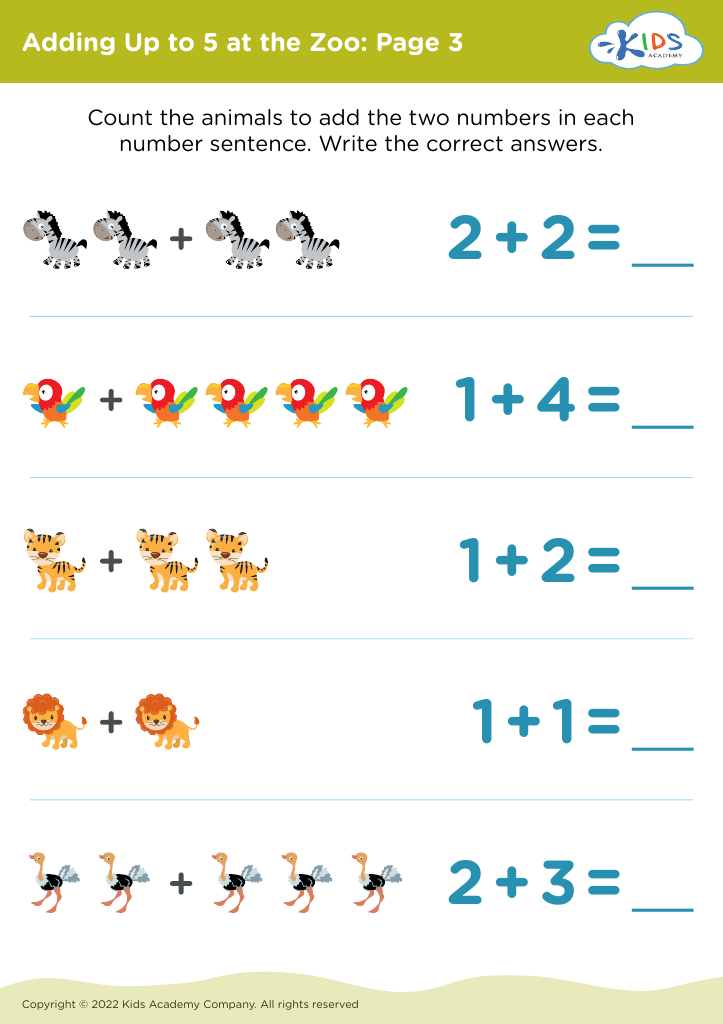
    Adding Up to 5 at the Zoo: Page 3
    Adding Up to 5 at the Zoo: Page 3

    Adding Up to 5 at the Zoo: Page 3

    Adding Up to 5 at the Zoo: Page 3
    Worksheet
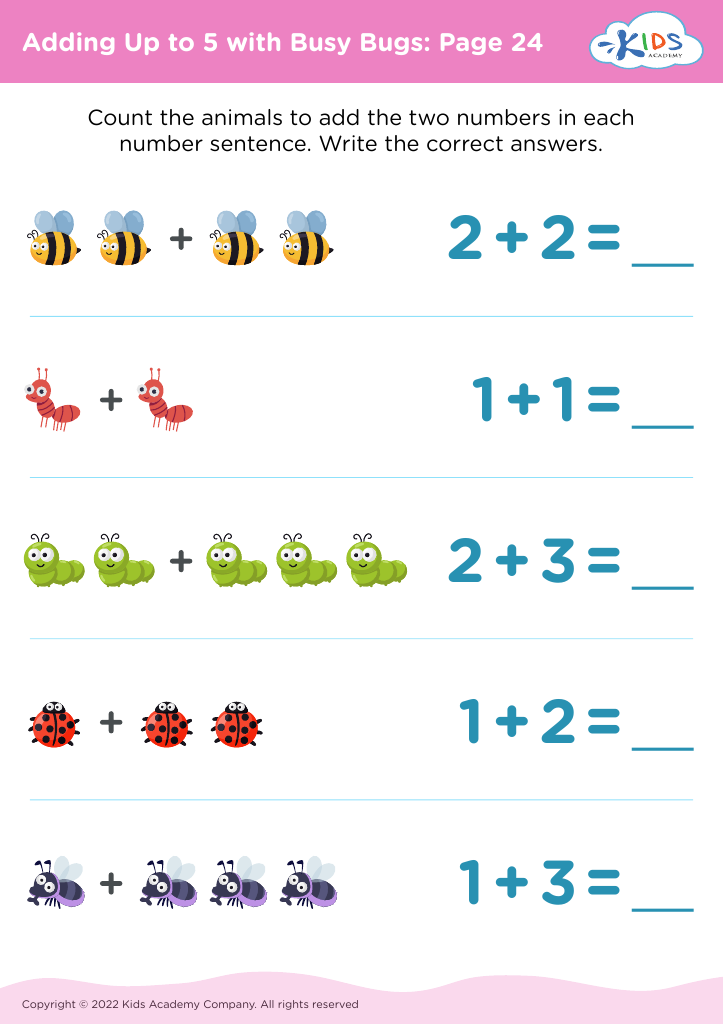
    Adding Up to 5 with Busy Bugs: Page 24
    Adding Up to 5 with Busy Bugs: Page 24
    Adding Up to 5 with Busy Bugs: Page 24
    Worksheet
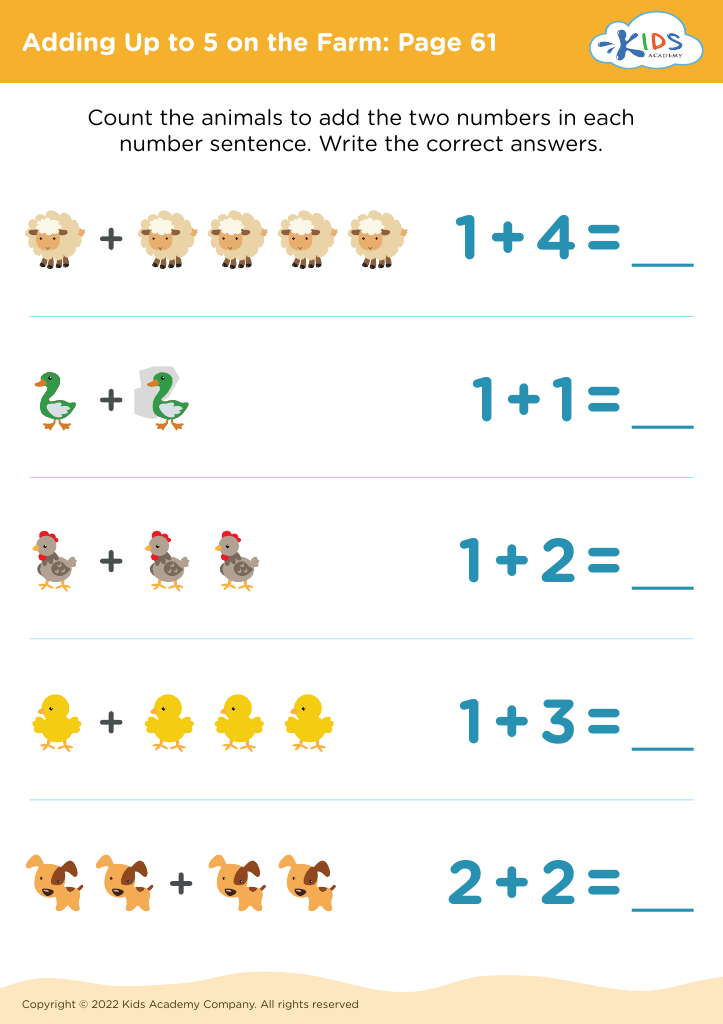
    Adding Up to 5 on the Farm: Page 61
    Adding Up to 5 on the Farm: Page 61
    Adding Up to 5 on the Farm: Page 61
    Worksheet
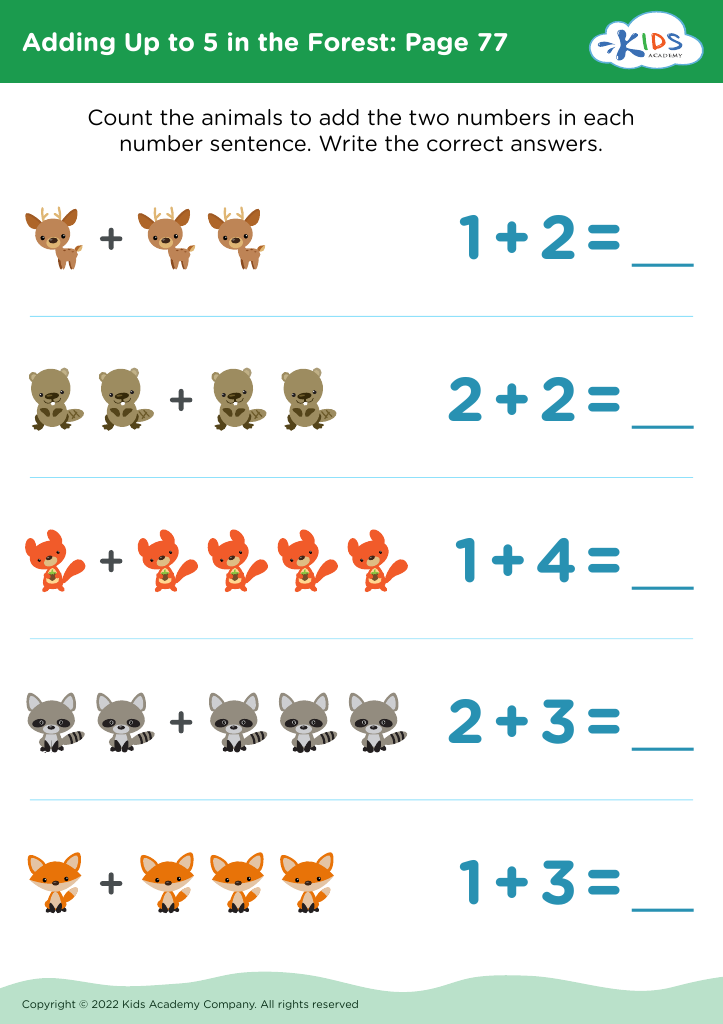
    Adding Up to 5 in the Forest: Page 77
    Adding Up to 5 in the Forest: Page 77
    Adding Up to 5 in the Forest: Page 77
    Worksheet
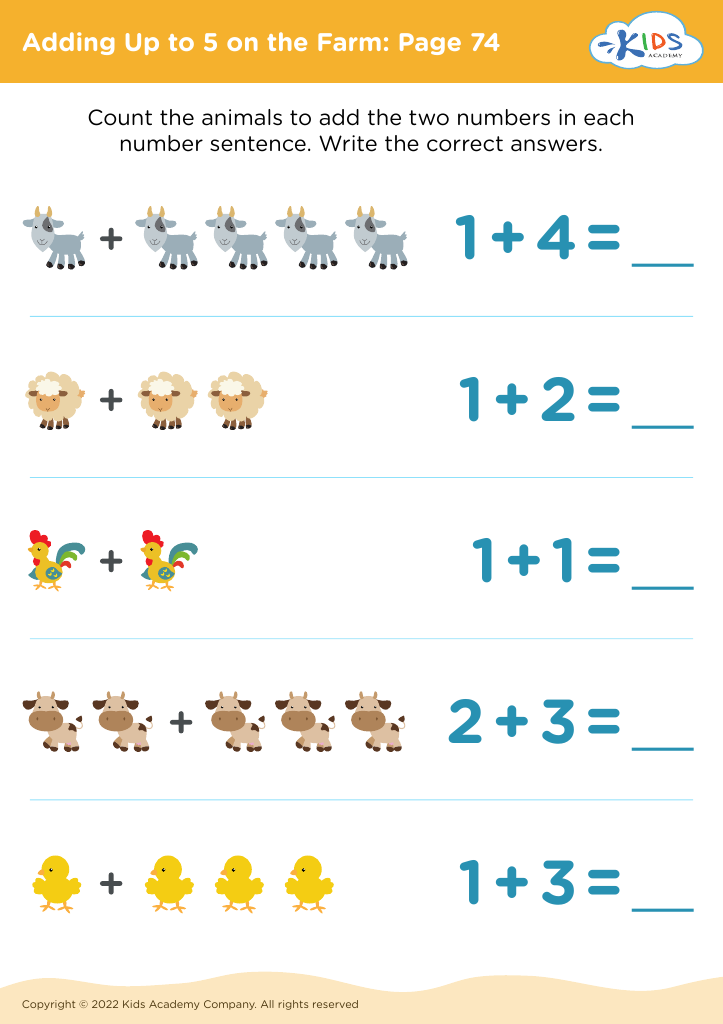
    Adding Up to 5 on the Farm: Page 74
    Adding Up to 5 on the Farm: Page 74
    Adding Up to 5 on the Farm: Page 74
    Worksheet
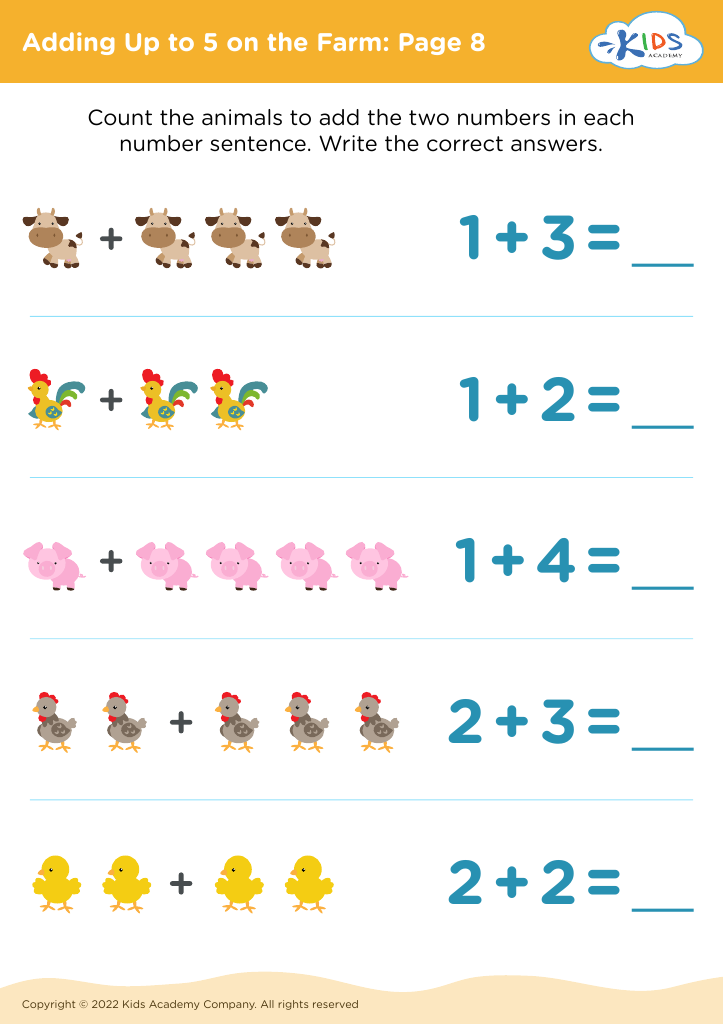
    Adding Up to 5 on the Farm: Page 8
    Adding Up to 5 on the Farm: Page 8
    Adding Up to 5 on the Farm: Page 8
    Worksheet
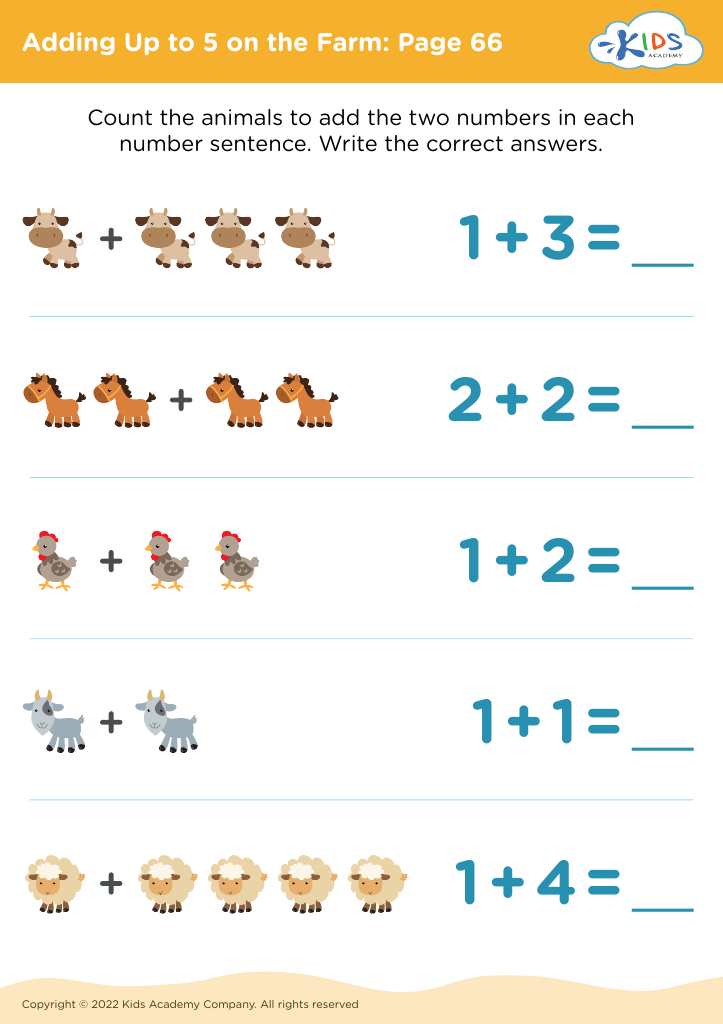
    Adding Up to 5 on the Farm: Page 66
    Adding Up to 5 on the Farm: Page 66
    Adding Up to 5 on the Farm: Page 66
    Worksheet
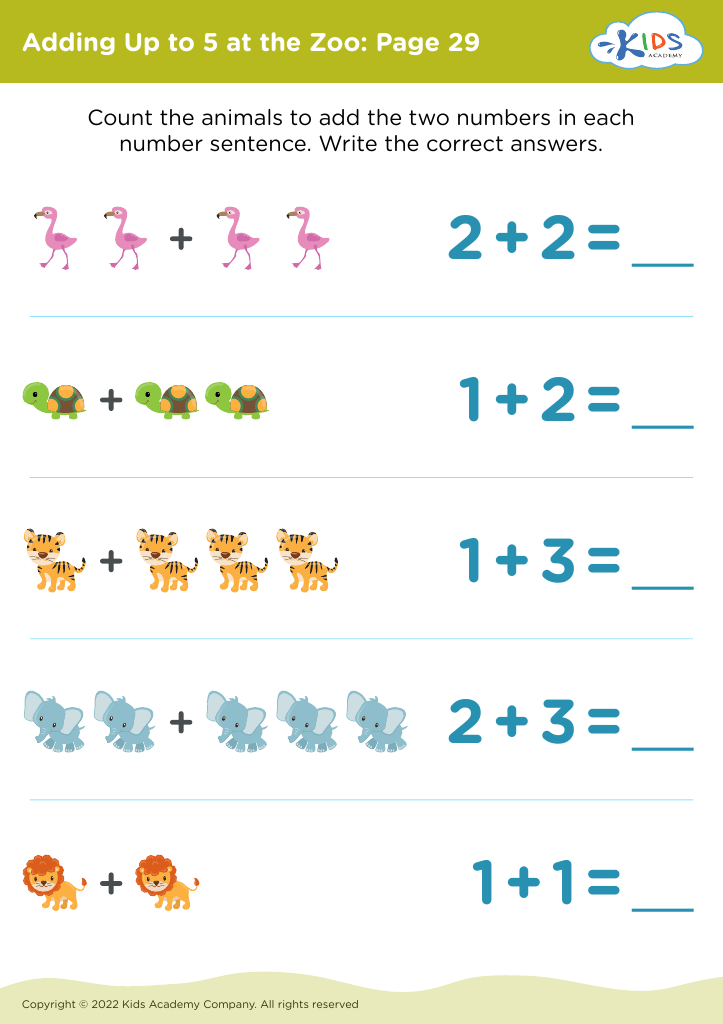
    Adding Up to 5 at the Zoo: Page 29
    Adding Up to 5 at the Zoo: Page 29
    Adding Up to 5 at the Zoo: Page 29
    Worksheet
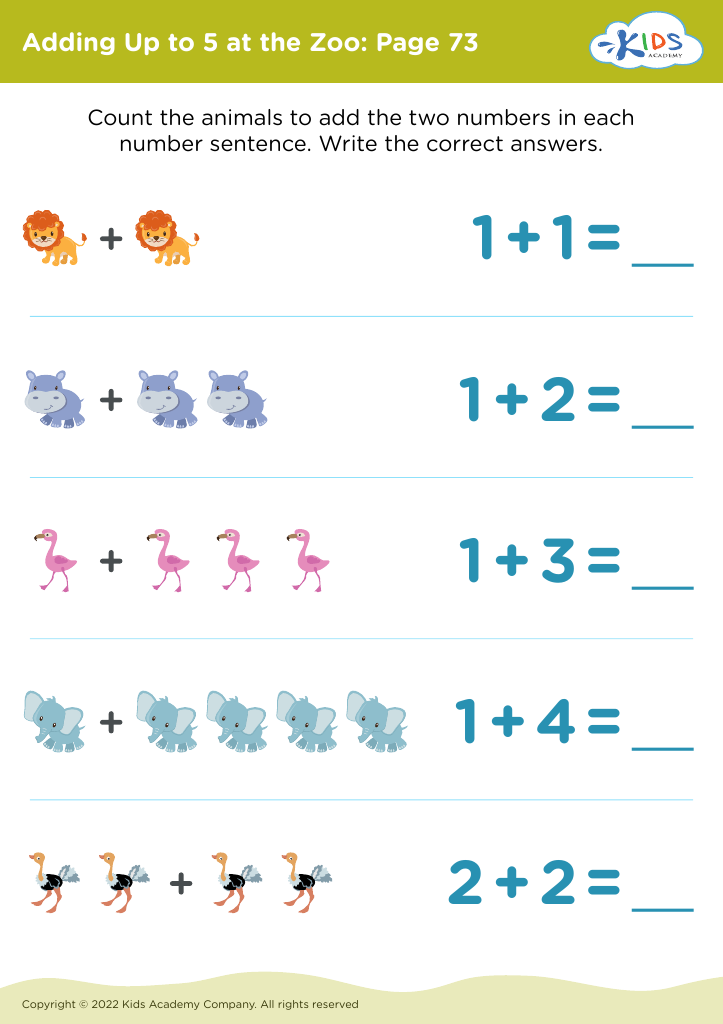
    Adding Up to 5 at the Zoo: Page 73
    Adding Up to 5 at the Zoo: Page 73
    Adding Up to 5 at the Zoo: Page 73
    Worksheet
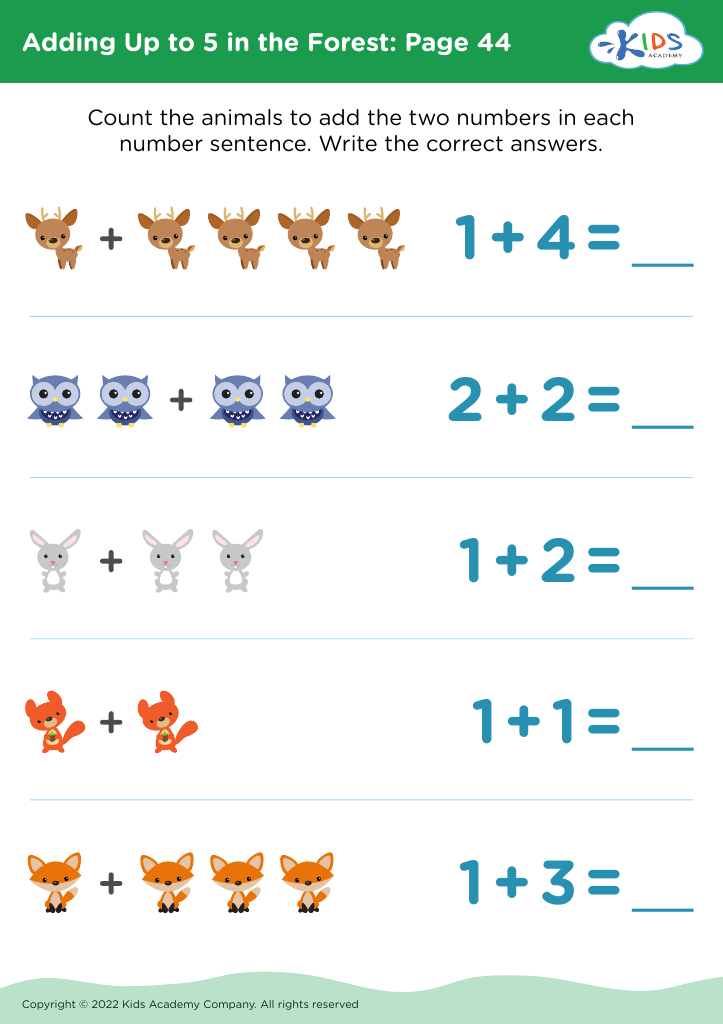
    Adding Up to 5 in the Forest: Page 44
    Adding Up to 5 in the Forest: Page 44
    Adding Up to 5 in the Forest: Page 44
    Worksheet
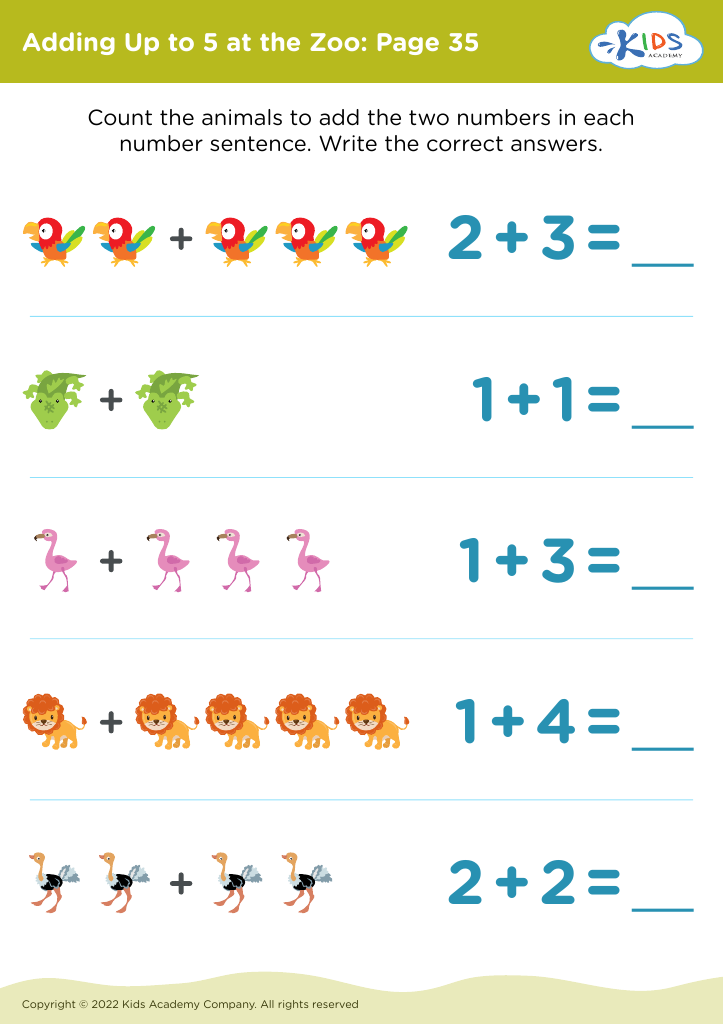
    Adding Up to 5 at the Zoo: Page 35
    Adding Up to 5 at the Zoo: Page 35
    Adding Up to 5 at the Zoo: Page 35
    Worksheet
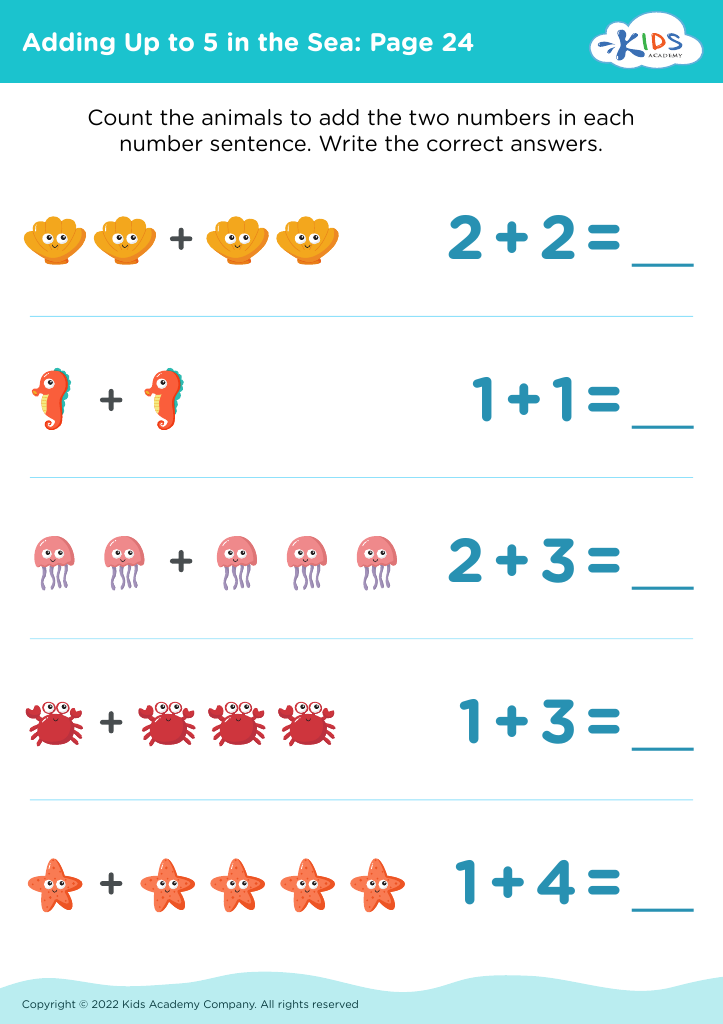
    Adding Up to 5 in the Sea: Page 24
    Adding Up to 5 in the Sea: Page 24
    Adding Up to 5 in the Sea: Page 24
    Worksheet
    Adding Up to 5 in the Forest: Page 55
    Adding Up to 5 in the Forest: Page 55
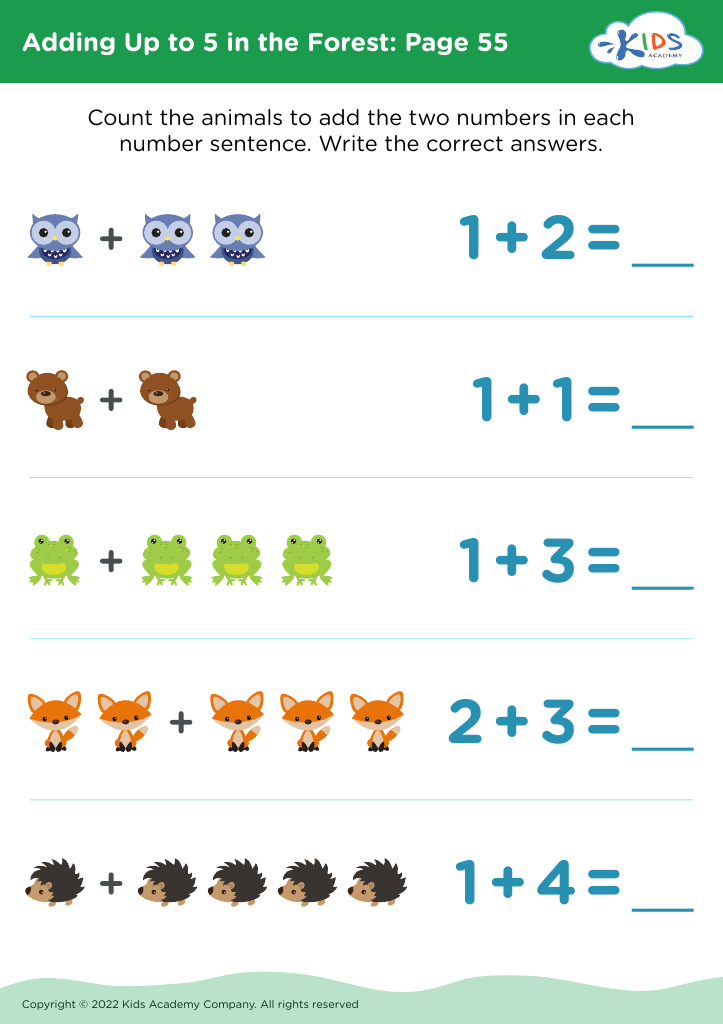
    Adding Up to 5 in the Forest: Page 55
    Worksheet
    Adding Up to 5 in the Sea: Page 27
    Adding Up to 5 in the Sea: Page 27
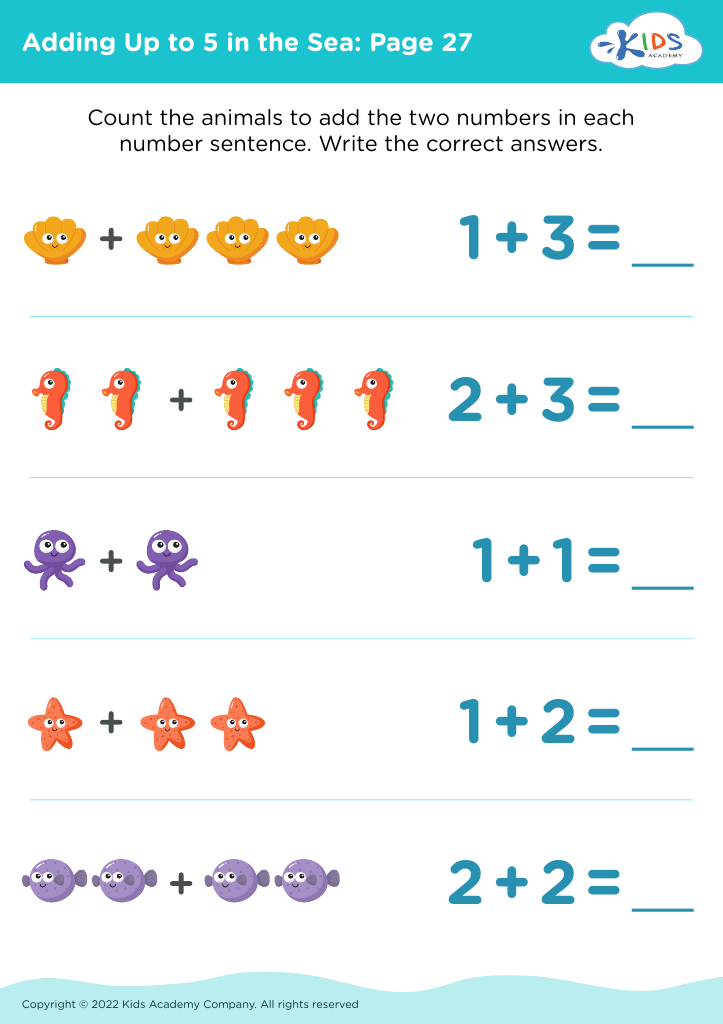
    Adding Up to 5 in the Sea: Page 27
    Worksheet
    Adding Up to 5 at the Zoo: Page 70
    Adding Up to 5 at the Zoo: Page 70
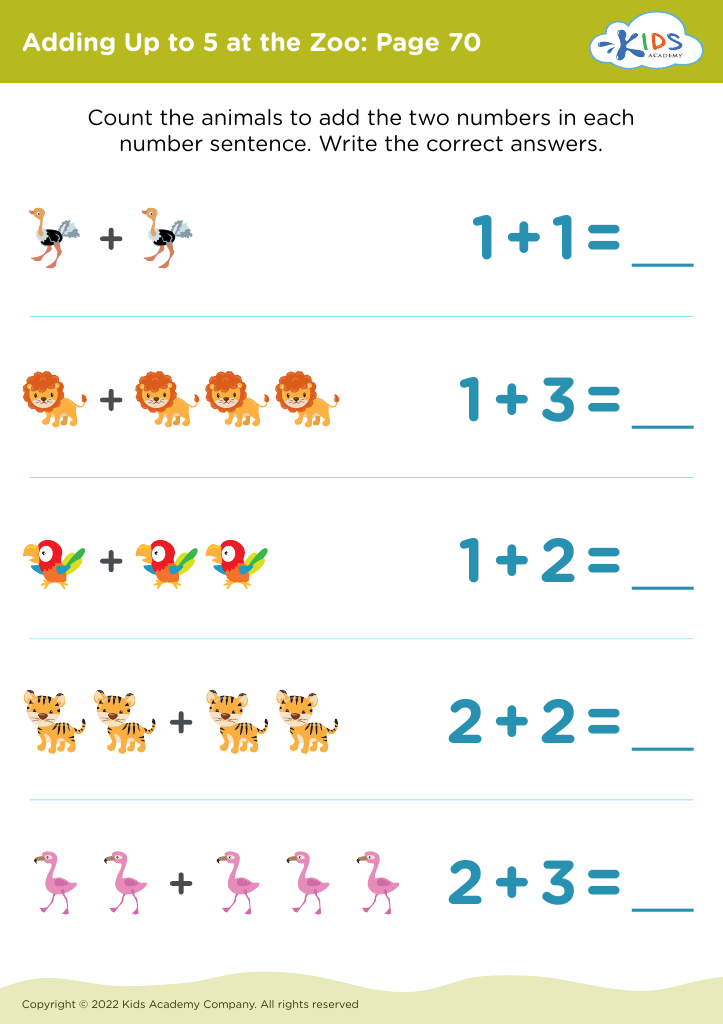
    Adding Up to 5 at the Zoo: Page 70
    Worksheet
    Adding Up to 5 with Busy Bugs: Page 48
    Adding Up to 5 with Busy Bugs: Page 48
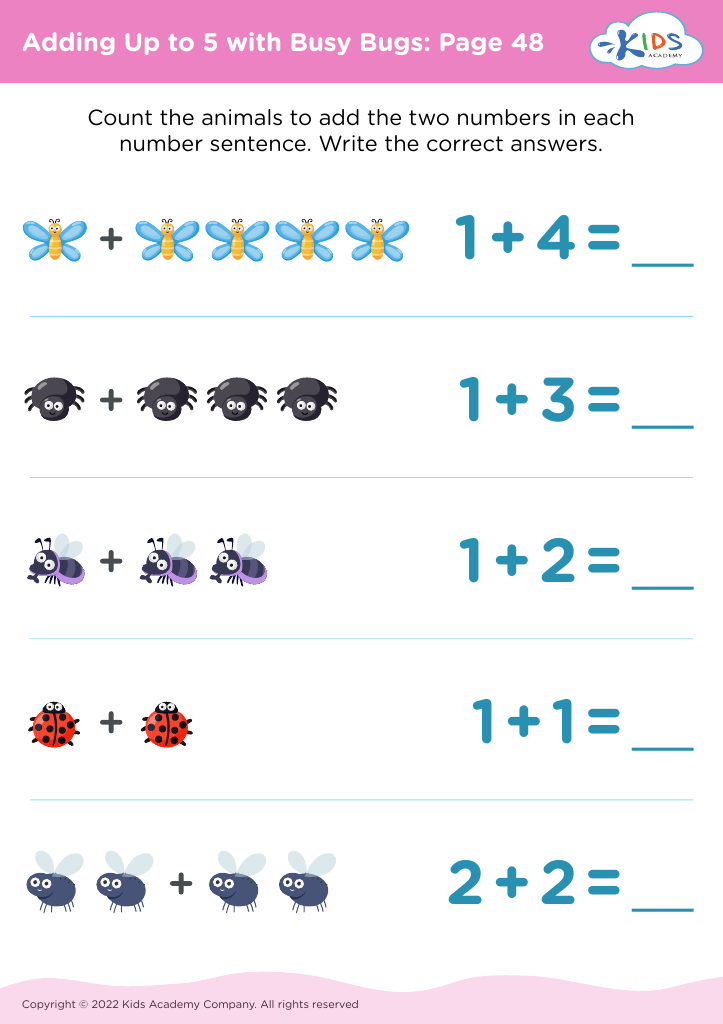
    Adding Up to 5 with Busy Bugs: Page 48
    Worksheet
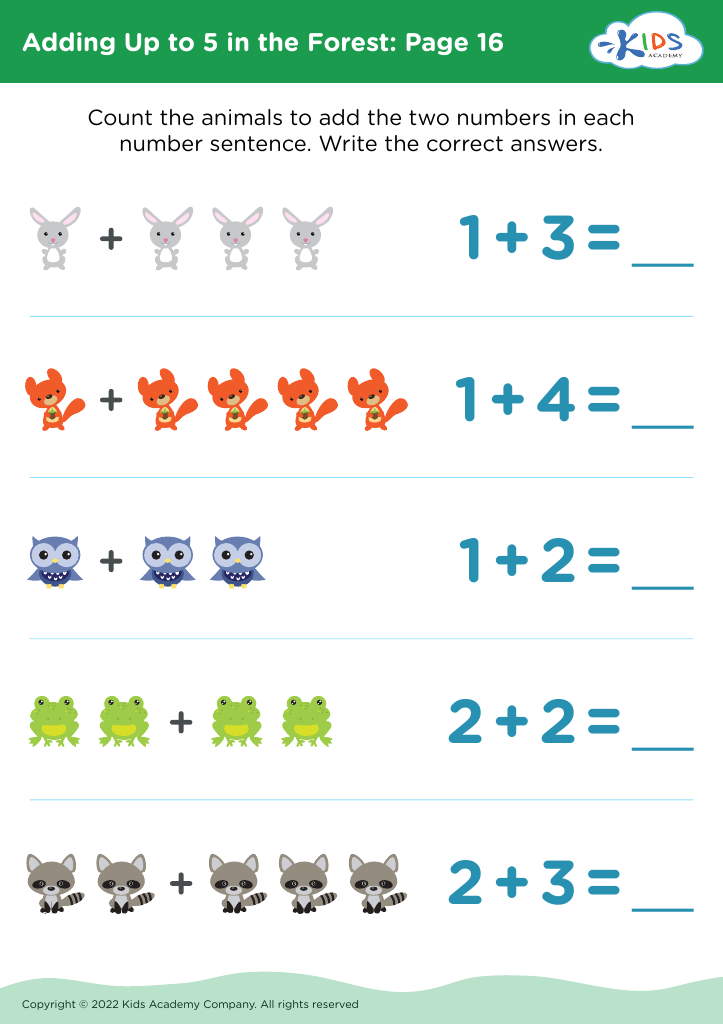
    Adding Up to 5 in the Forest: Page 16
    Adding Up to 5 in the Forest: Page 16
    Adding Up to 5 in the Forest: Page 16
    Worksheet
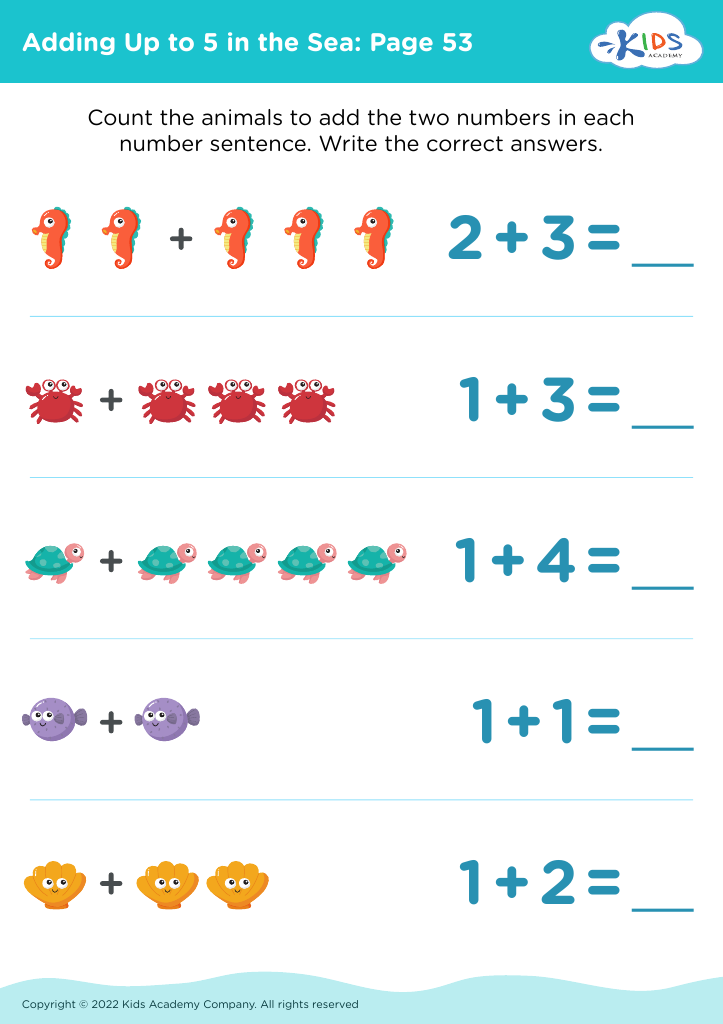
    Adding Up to 5 in the Sea: Page 53
    Adding Up to 5 in the Sea: Page 53
    Adding Up to 5 in the Sea: Page 53
    Worksheet
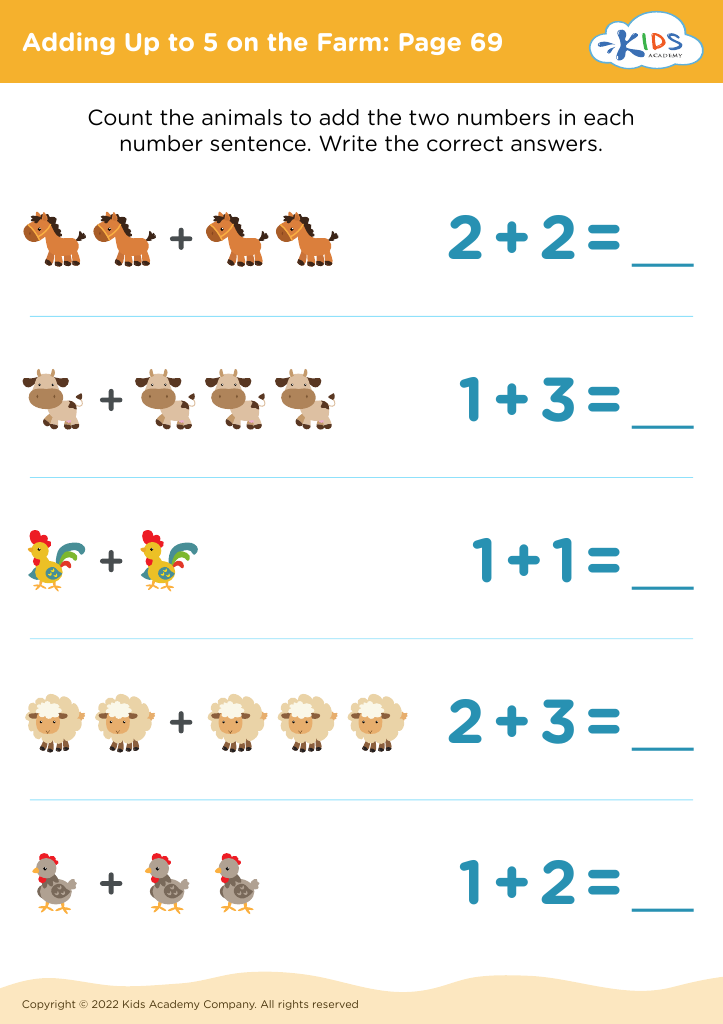
    Adding Up to 5 on the Farm: Page 69
    Adding Up to 5 on the Farm: Page 69
    Adding Up to 5 on the Farm: Page 69
    Worksheet
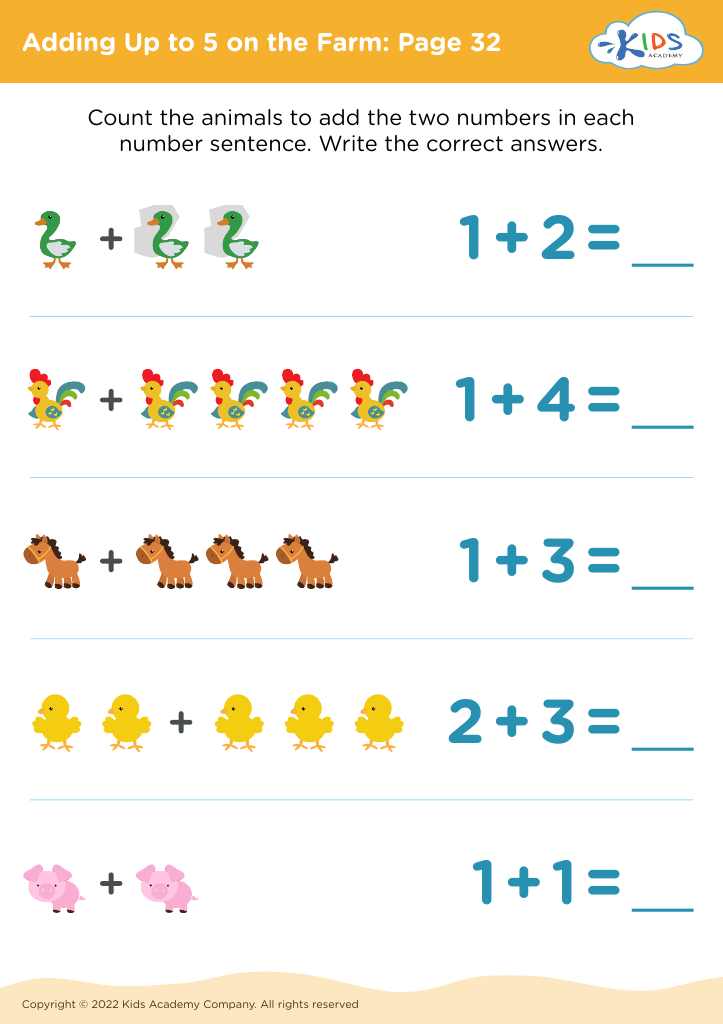
    Adding Up to 5 on the Farm: Page 32
    Adding Up to 5 on the Farm: Page 32
    Adding Up to 5 on the Farm: Page 32
    Worksheet


    Introducing the concept of adding up to 5 for children ages 4-9 holds immense significance for their academic and cognitive development. During these formative years, young minds are rapidly forming neural connections and building foundational skills. Understanding basic addition up to 5 is a crucial first step towards more complex math concepts that they will encounter in later grades.

    For parents and teachers, fostering an environment where children can grasp such simple arithmetic reinforces early math literacy, sparking curiosity and a positive attitude toward numbers. Being proficient in basic addition fosters confidence, which is fundamental for tackling further mathematical challenges. Additionally, early exposure to arithmetic helps develop problem-solving skills, logical reasoning, and critical thinking—skills that are essential beyond the math classroom.

    Moreover, early math skills are predictive of later academic success. Studies have shown that children with strong early math skills perform better not only in future math courses but also in subjects such as science and reading comprehension. By prioritizing skills such as adding up to 5, parents and teachers set the stage for a lifetime of learning and cognitive agility.

    In essence, early competence in simple addition empowers children, building a strong foundation upon which all future learning will rest—making it a priority for both parents and educators.