Subtraction practice Addition and Subtraction Word Problems Worksheets for Ages 4-9
19 filtered results
-
From - To
Boost your child's math skills with our Subtraction Practice Addition and Subtraction Word Problems Worksheets, ideal for ages 4-9. These engaging, age-appropriate worksheets help young learners grasp essential subtraction concepts and develop problem-solving abilities. Designed by educational experts, each worksheet provides fun and challenging activities to enhance critical thinking while keeping your child excited about learning math. Perfect for both home and classroom use, these printable resources offer a variety of lively scenarios that will make math practice enjoyable. Explore our comprehensive collection to support your child's mathematical journey and build a strong foundation in both addition and subtraction.
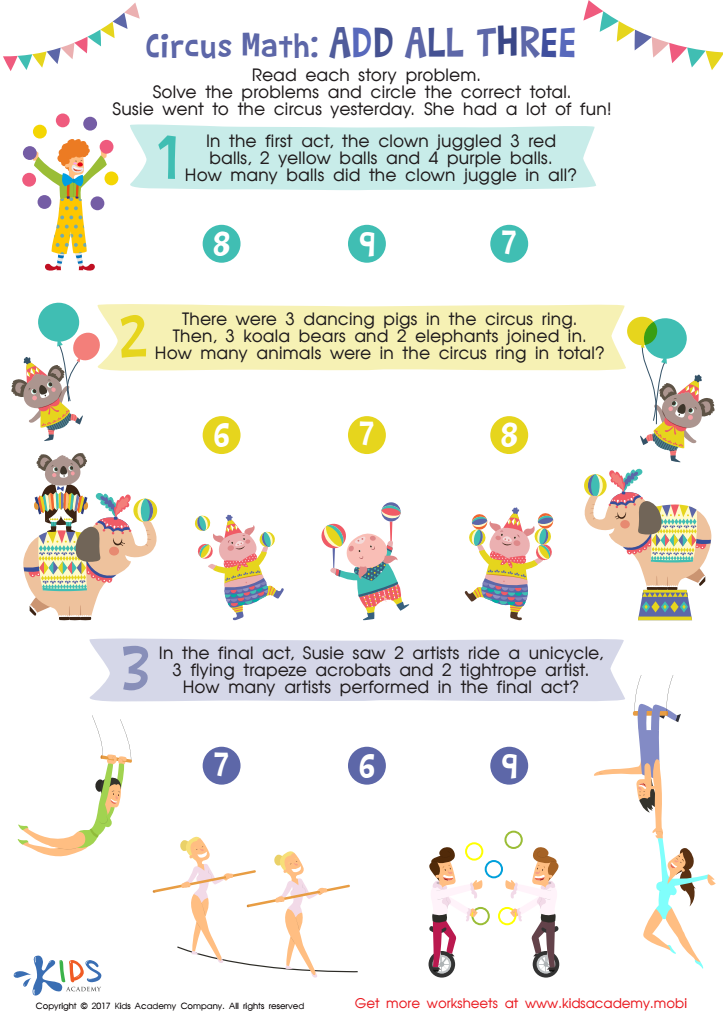
Circus Math Printable
 Assign to My Students
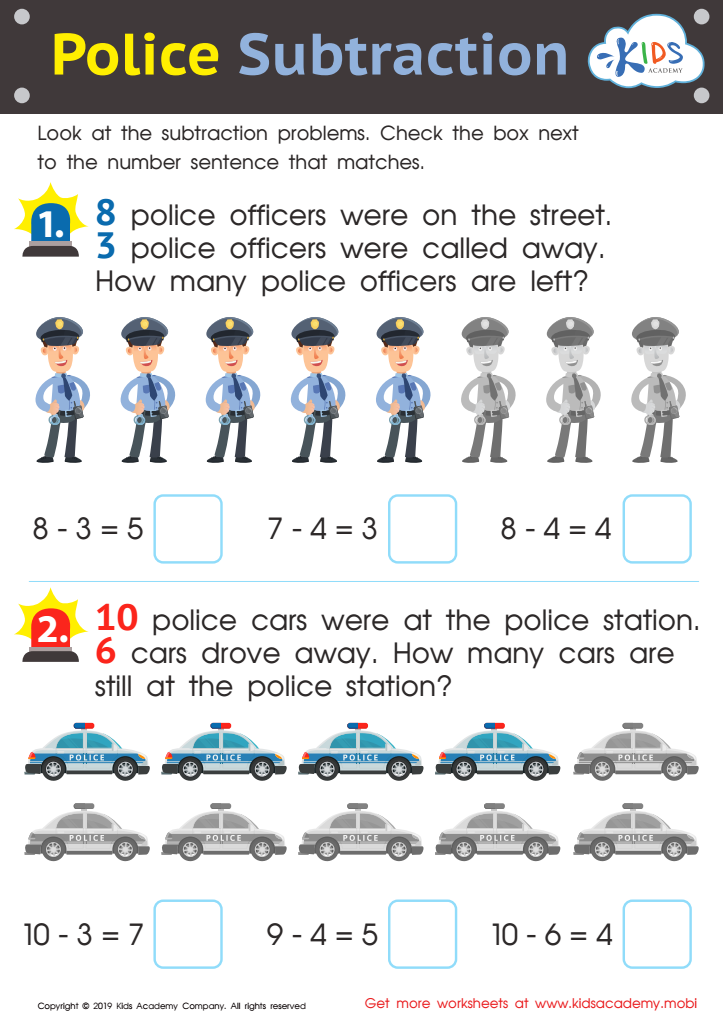
Police Subtraction Worksheet
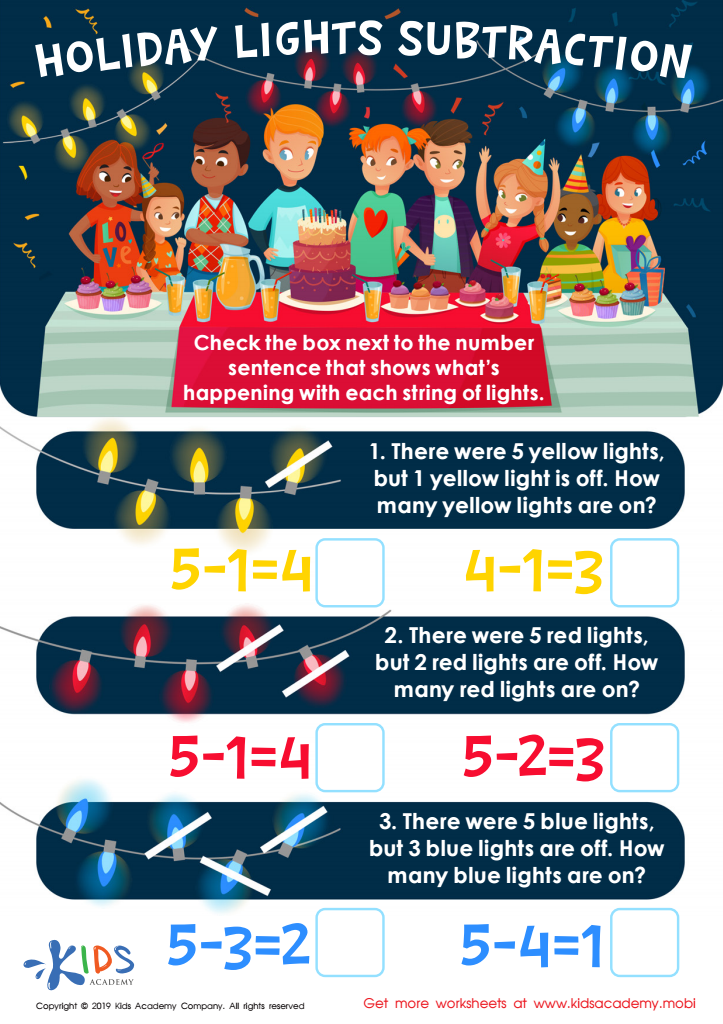
Holiday Lights Subtraction Worksheet
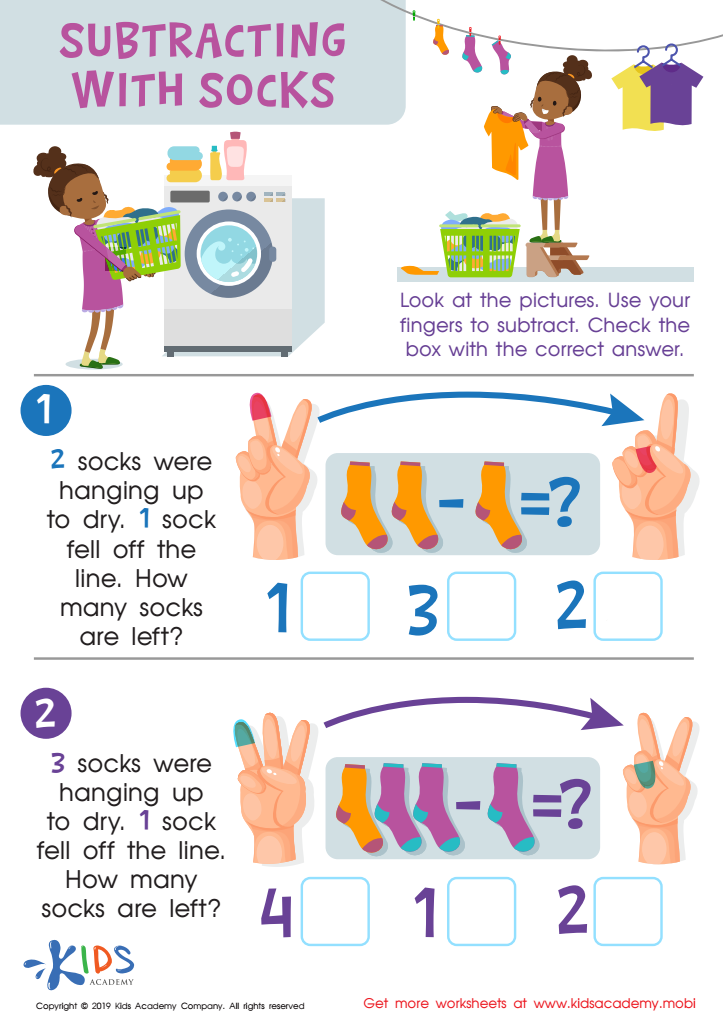
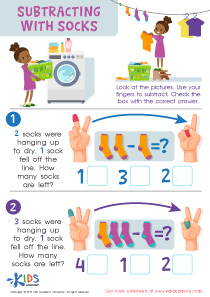
Subtracting Socks Worksheet
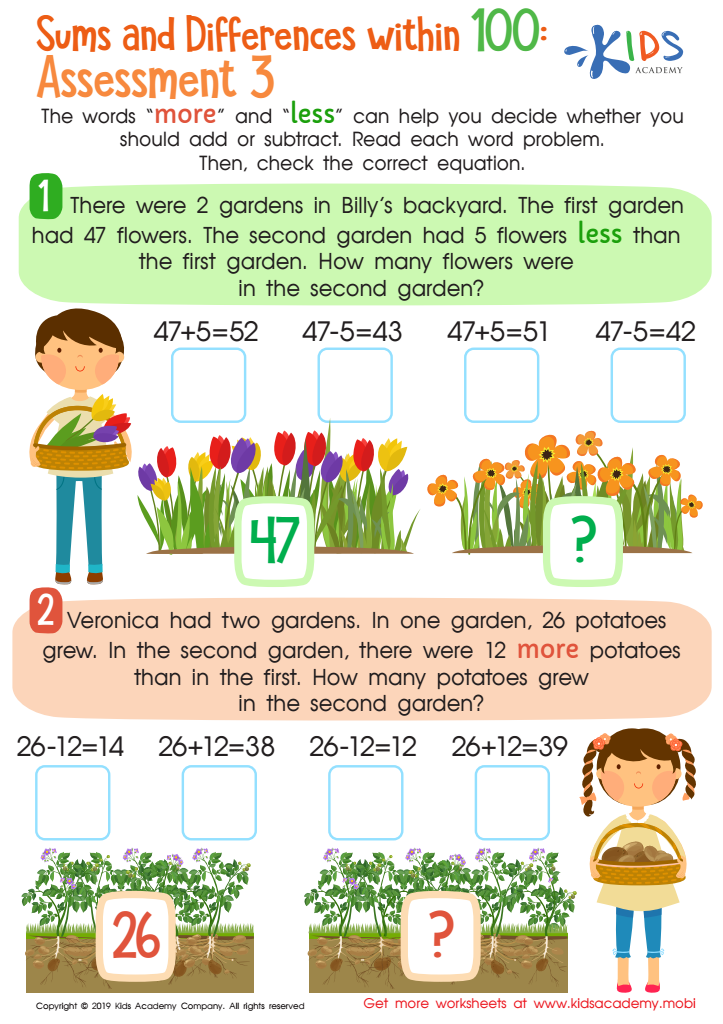
Sums and Differences Within 1 - Assessment 1 Worksheet
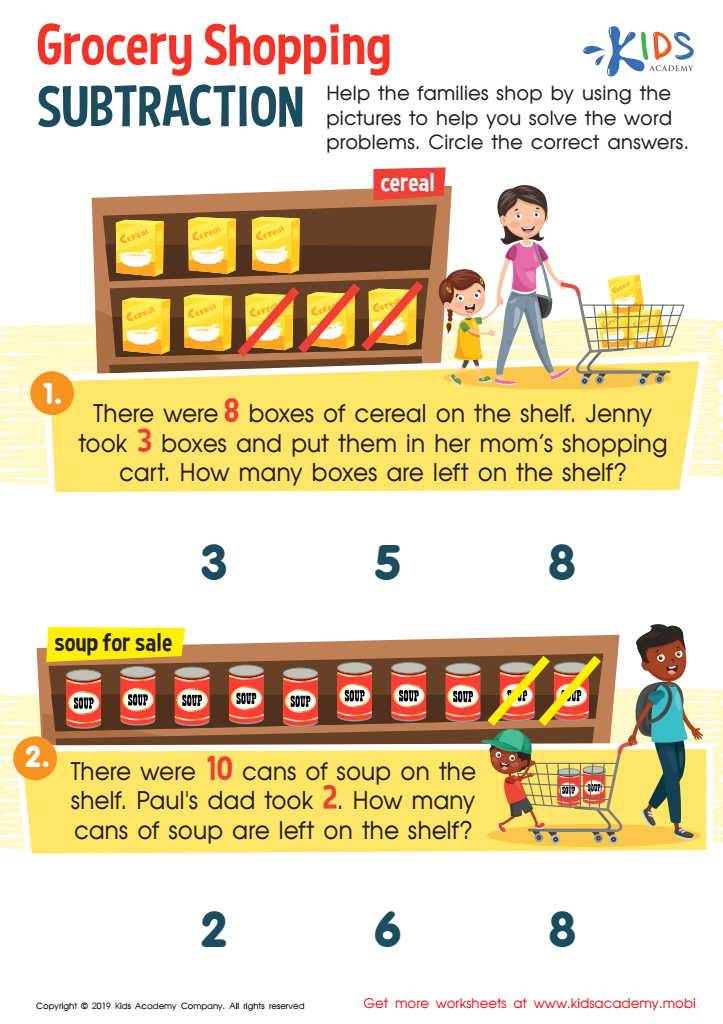
Grocery Shopping Subtraction Worksheet
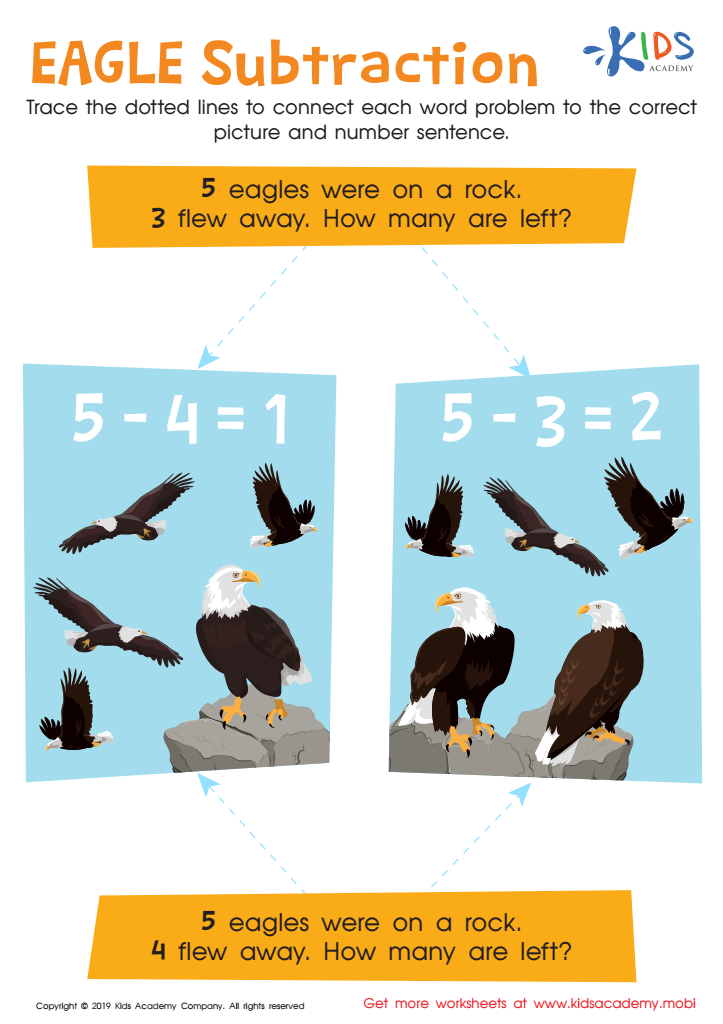
Eagle Subtraction Worksheet
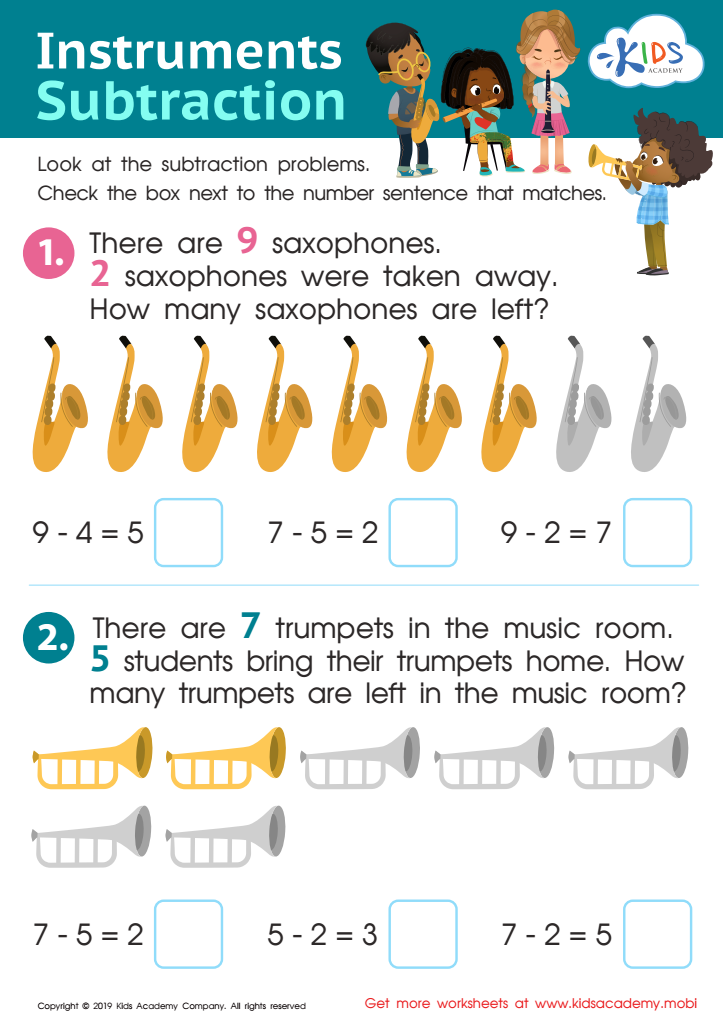
Instrument Subtraction Worksheet
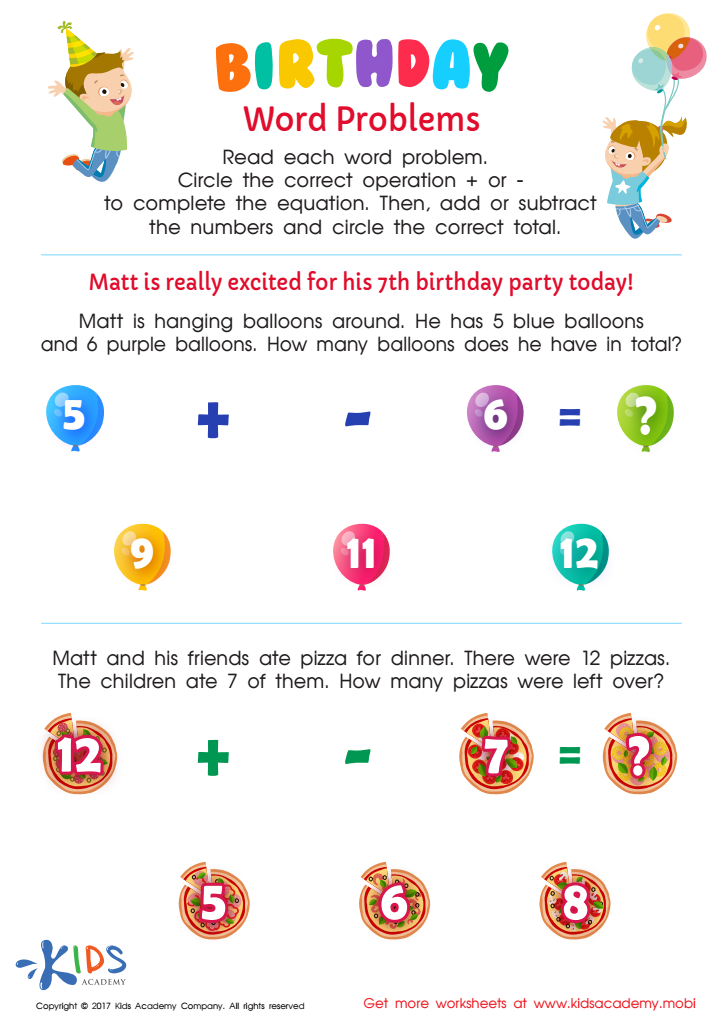
Birthday Word Problems Substraction Worksheet
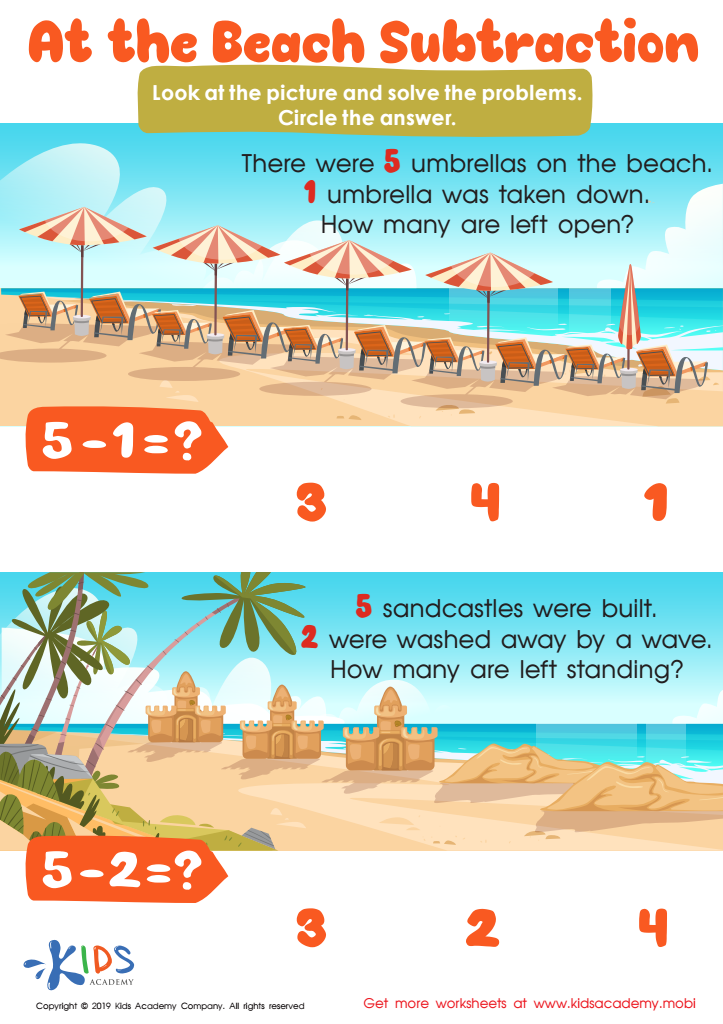
At the Beach Subtraction Worksheet
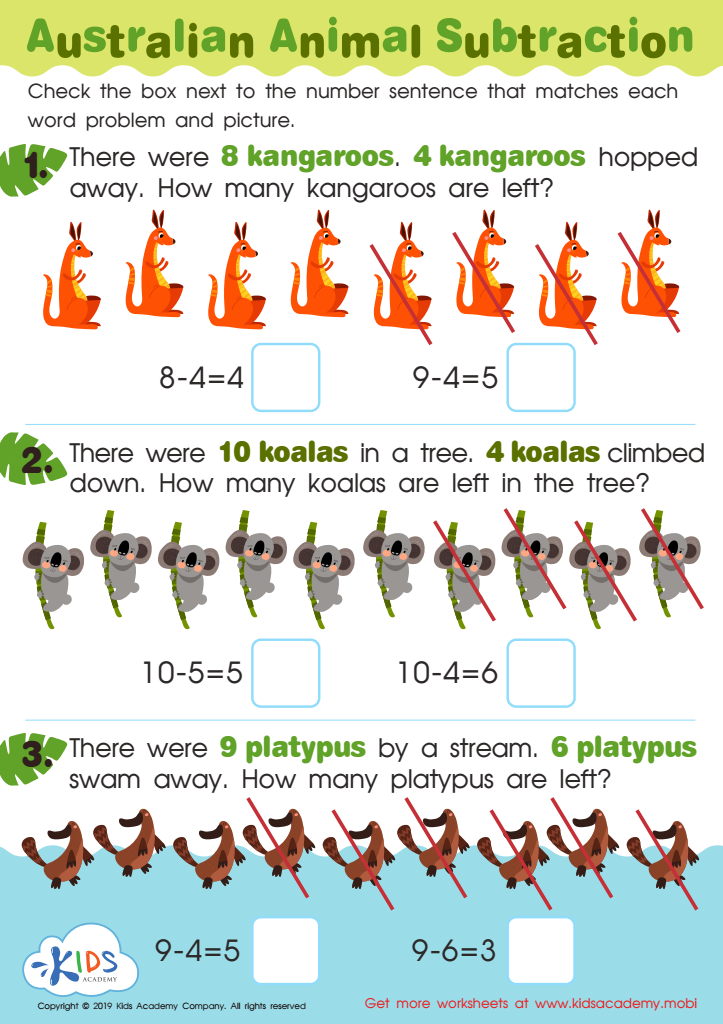
Australian Animal Subtraction Worksheet
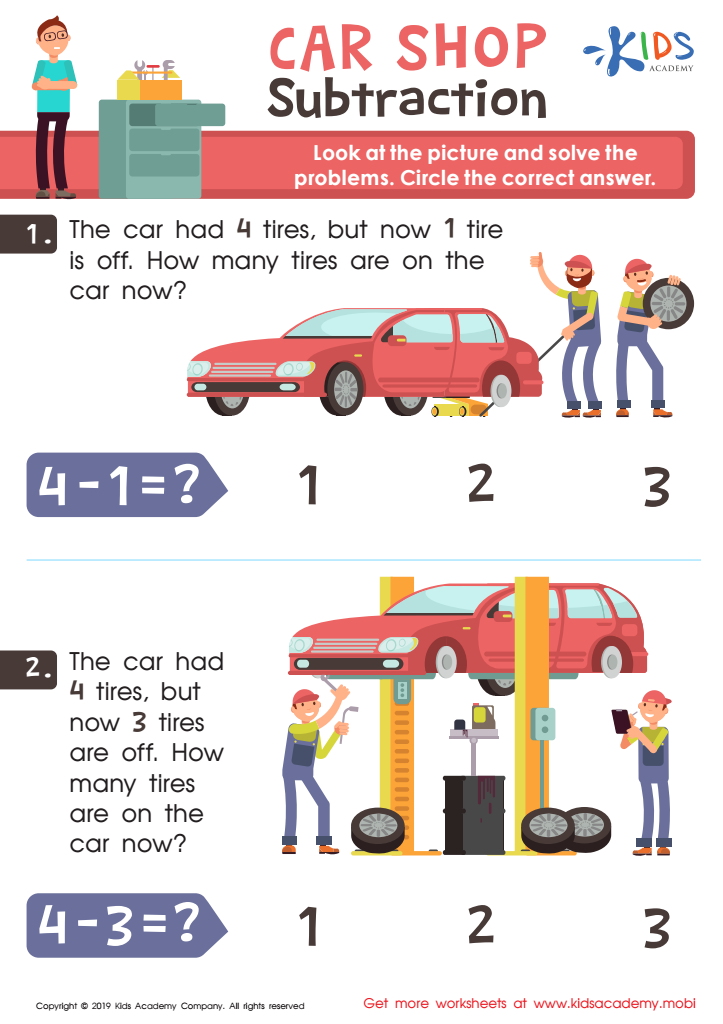
Car Shop Subtraction Worksheet
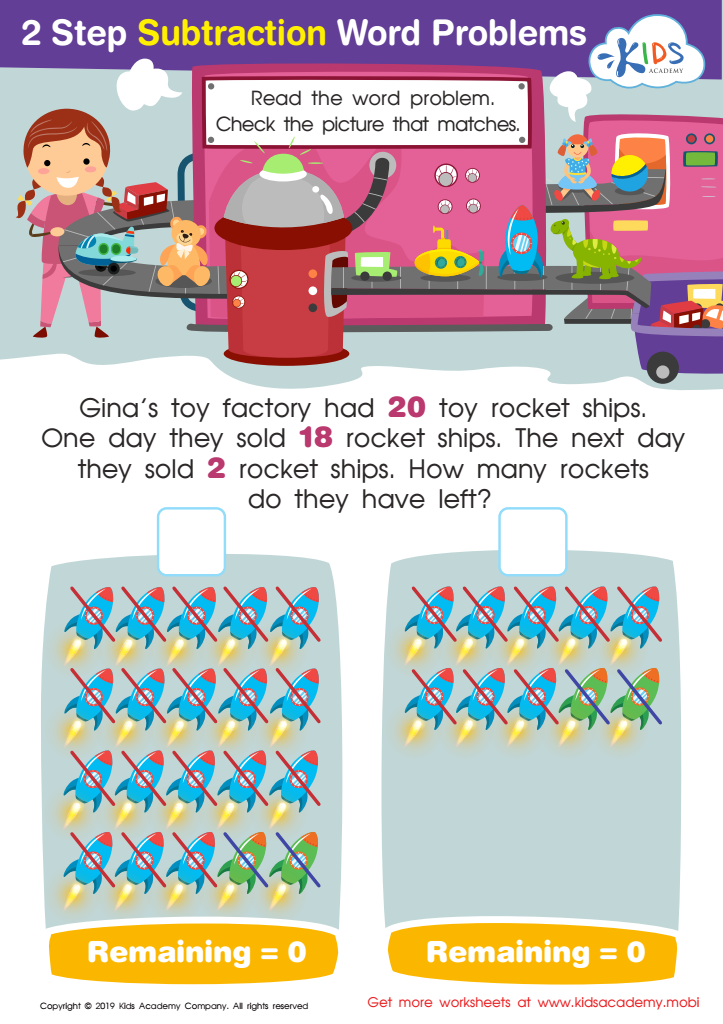
Step Subtraction Word Problems Worksheet
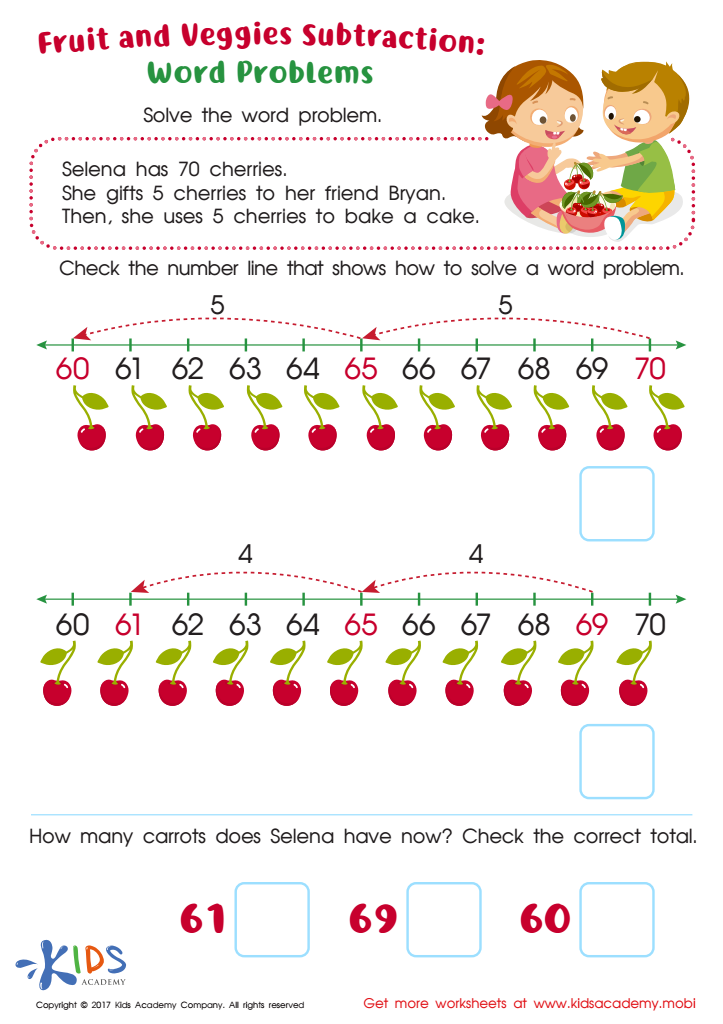
Subtraction Word Problems Free Printable
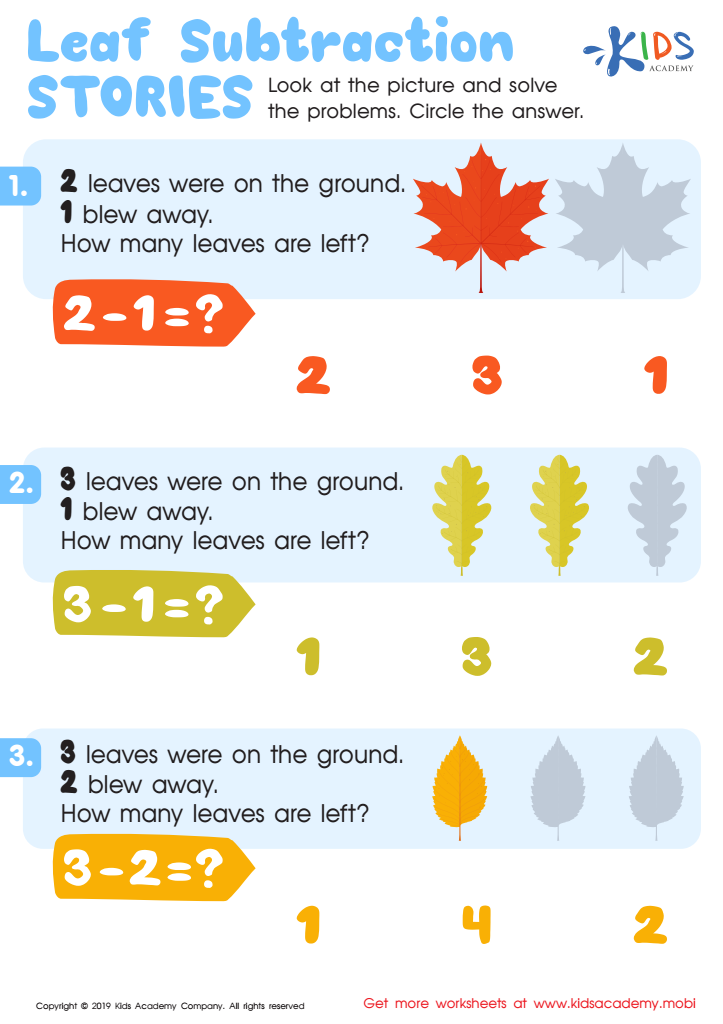
Leaf Subtraction Stories Worksheet
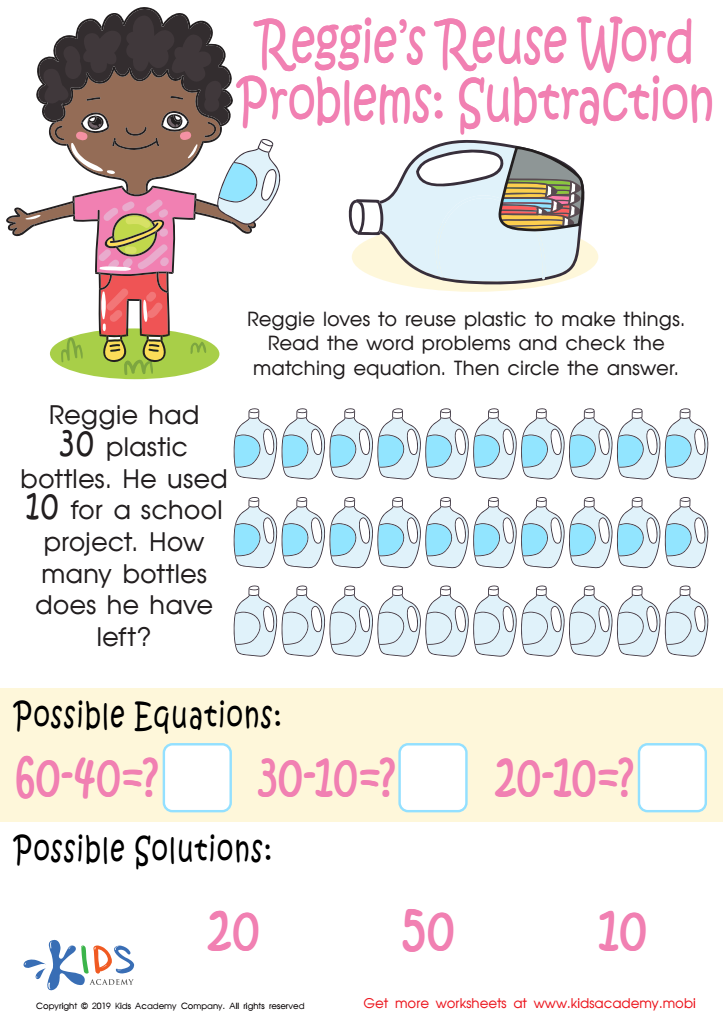
Reggie's Reuse Word Problems: Subtraction Worksheet
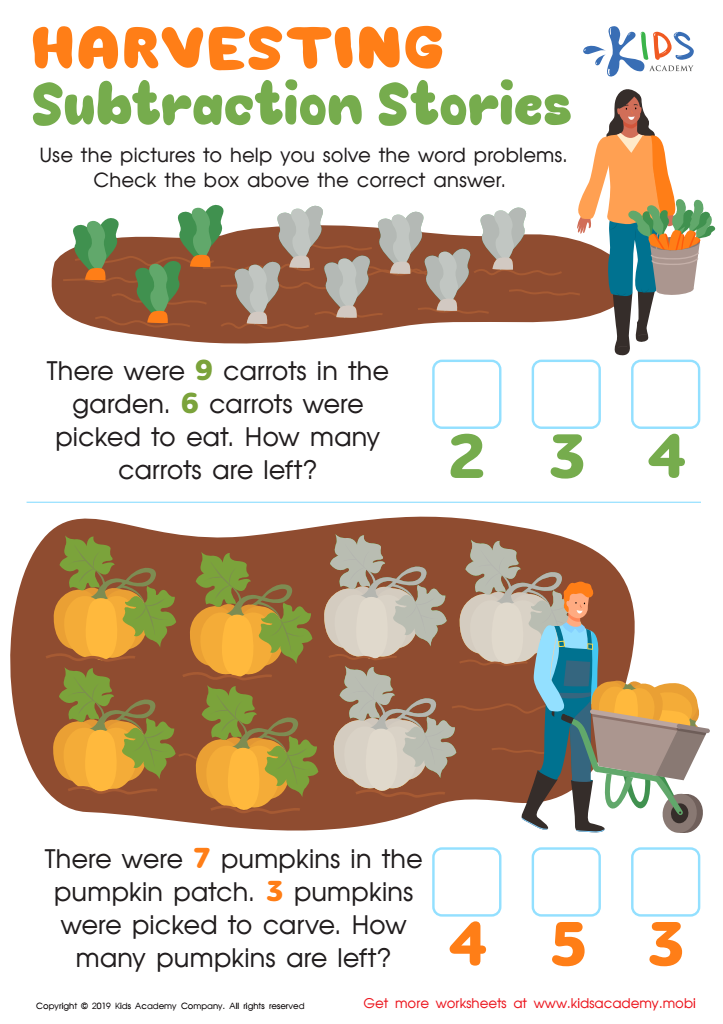
Harvesting Subtraction Stories Worksheet
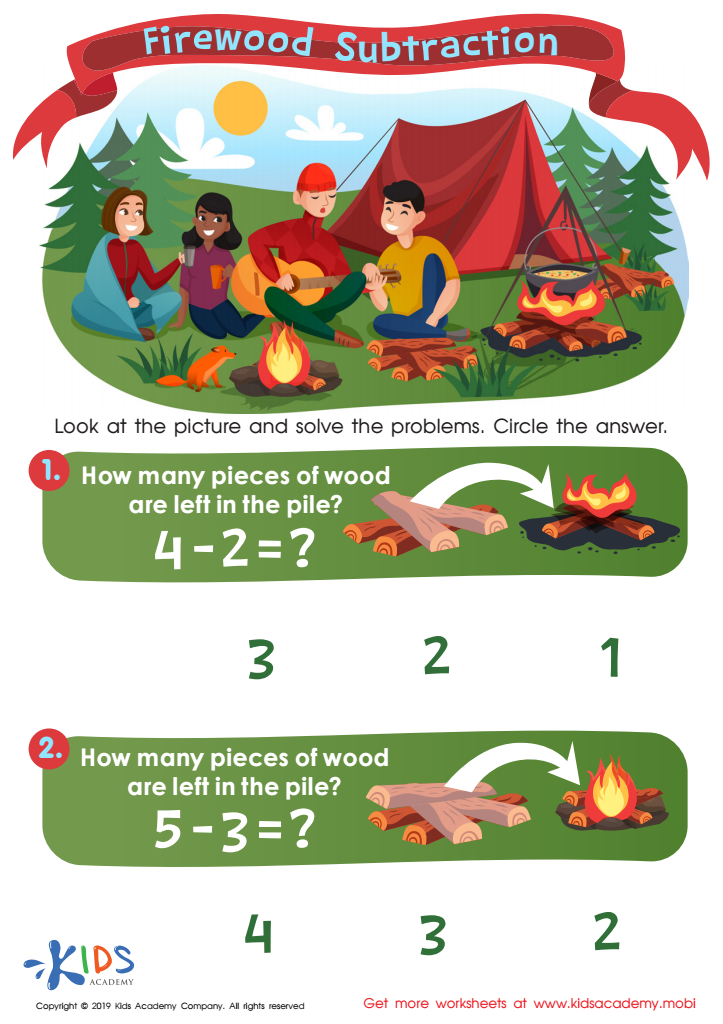
Firewood Subtraction Worksheet
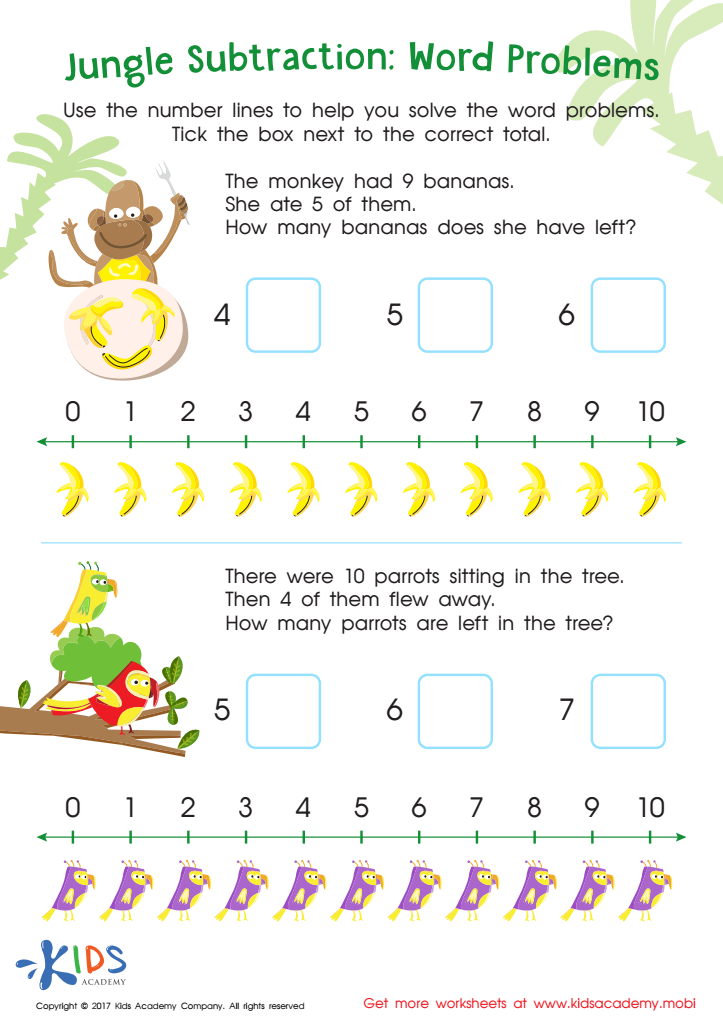
Jungle Subtraction Word Problems Substraction Worksheet








Parents and teachers should prioritize subtraction practice and addition and subtraction word problems for children aged 4-9 because these foundational skills are critical for their overall mathematical development. At this young age, children are in a pivotal stage where they form the basic building blocks for more complex math concepts they will encounter later in their academic journey. By mastering subtraction, alongside addition, children gain a better understanding of numerical relationships and develop strong problem-solving abilities.
Engaging in word problems further enhances their cognitive skills by connecting math to real-world contexts, making learning relevant and interesting. Word problems require children to read, interpret, and determine the steps needed to arrive at a solution, thus sharpening their critical thinking and comprehension skills.
Regular practice helps in building confidence and developing a positive attitude towards math, reducing math anxiety that can arise later. Additionally, this practice promotes patience and perseverance.
For parents, participating in their child's learning builds a strong educational foundation and strengthens their bonding time, showing children that their education is valued. For teachers, it provides insight into each student's comprehension and areas where more support may be needed. Ultimately, these early practices equate to academic success and foster lifelong learning skills.