Addition Practice Addition Worksheets for Ages 4-9 - Page 3
120 filtered results
-
From - To
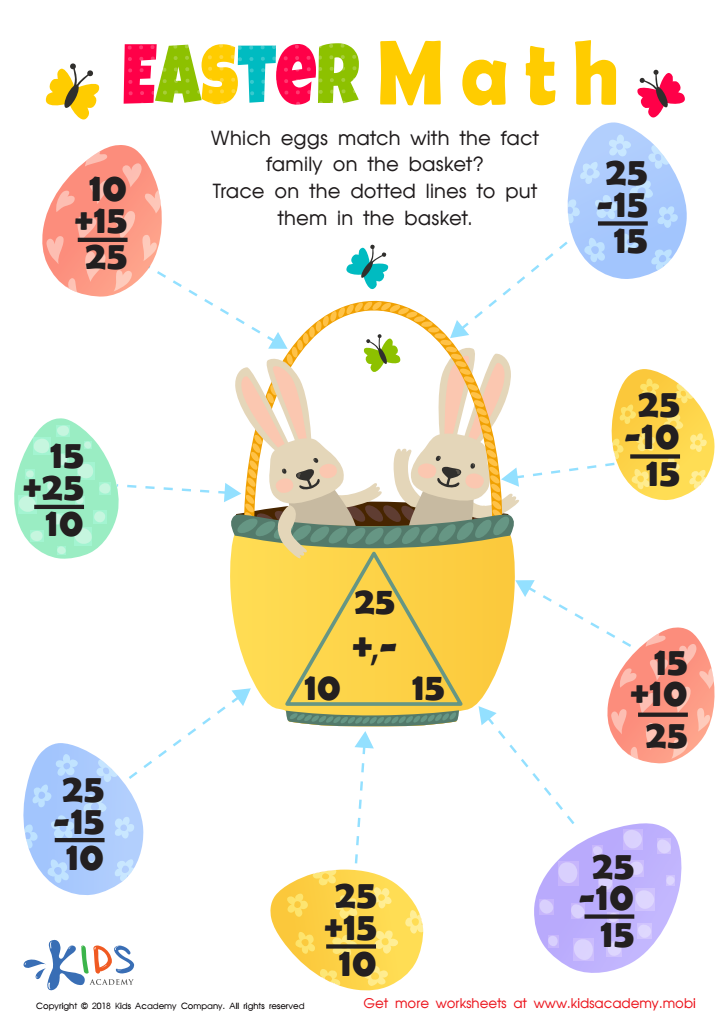
Fact Families: Easter Math Worksheet
 Assign to My Students
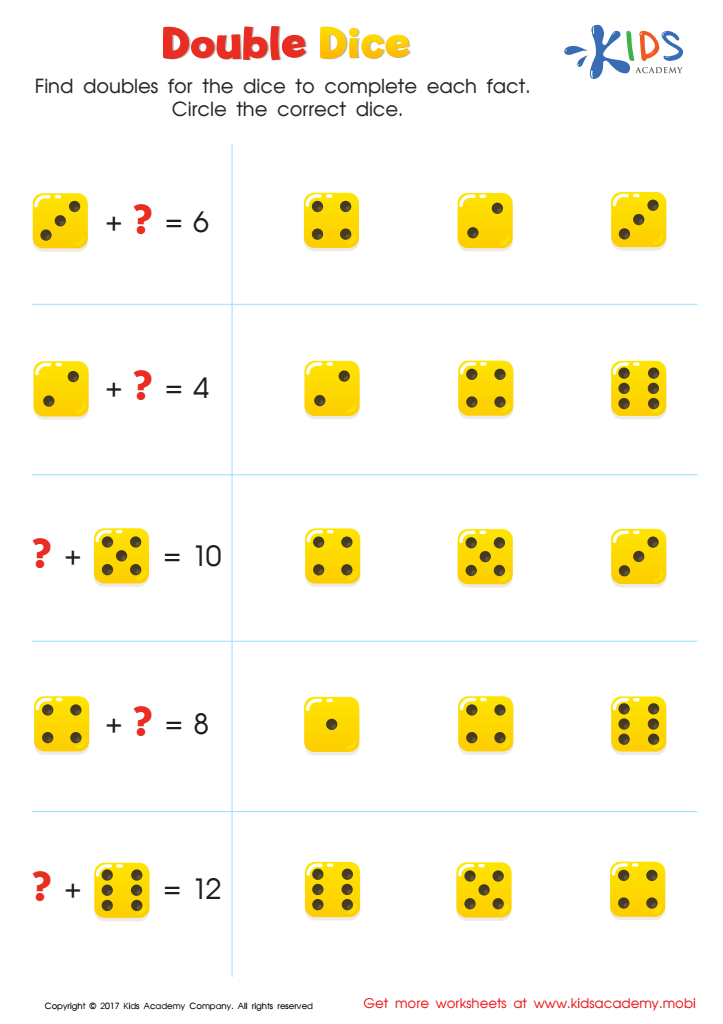
Addition Facts: Double Dice Worksheet
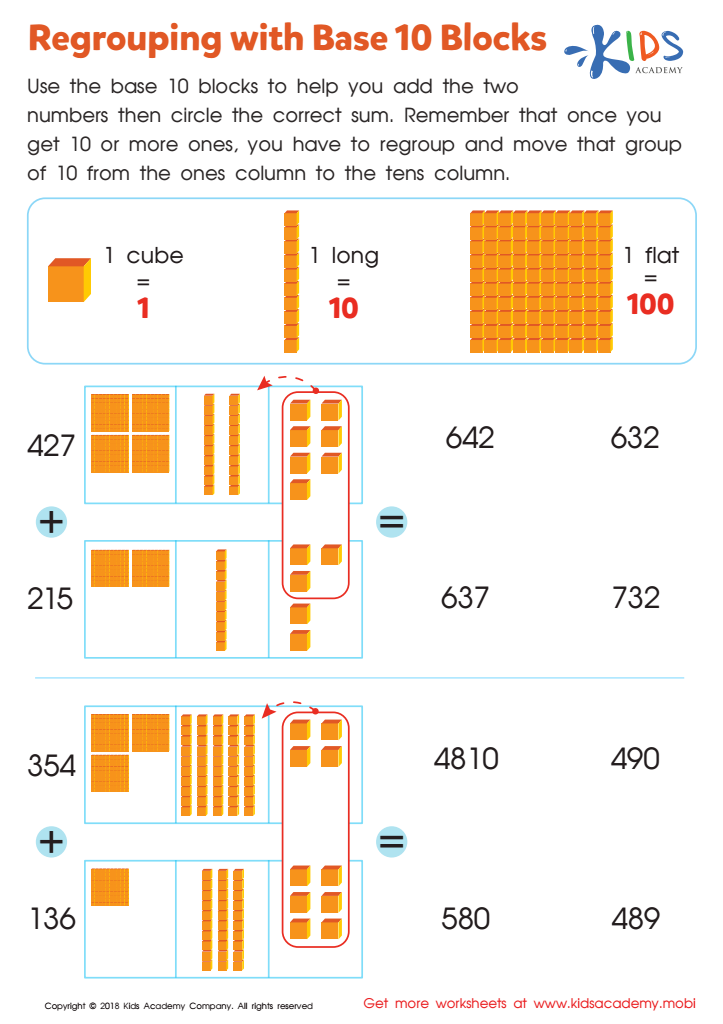
Regrouping with Base 10 Blocks Worksheet
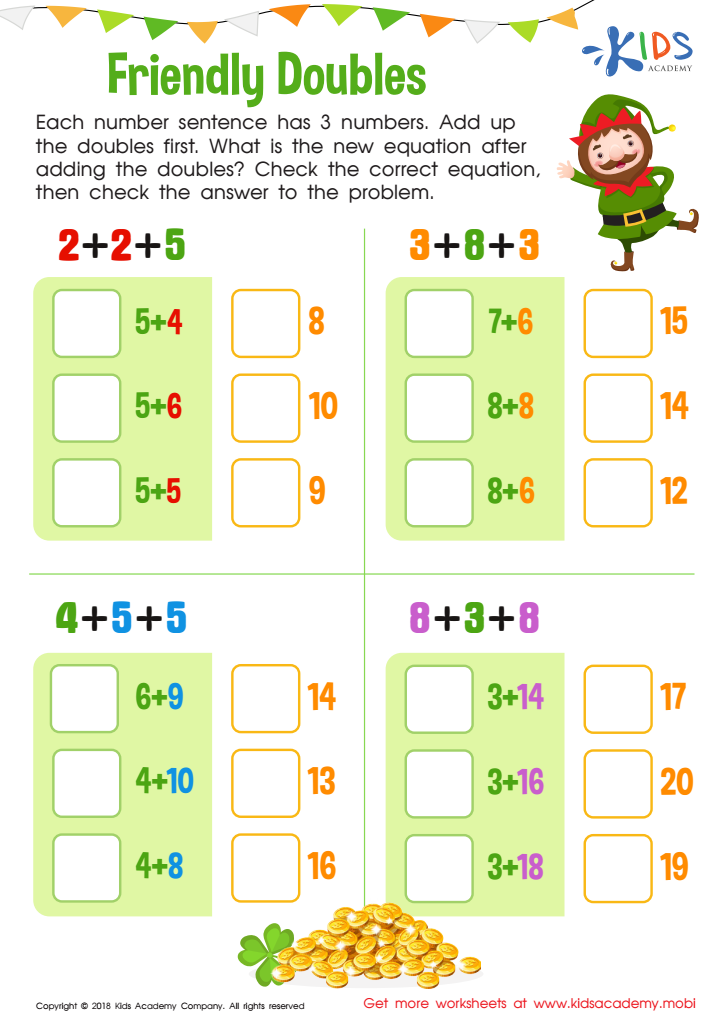
Friendly Doubles Worksheet
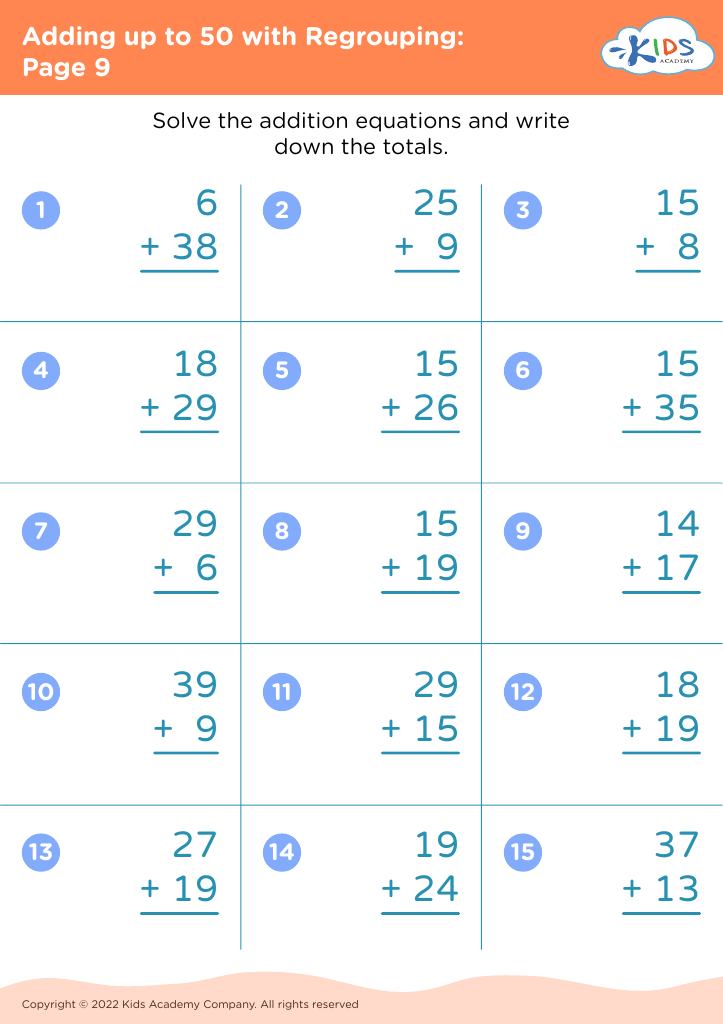
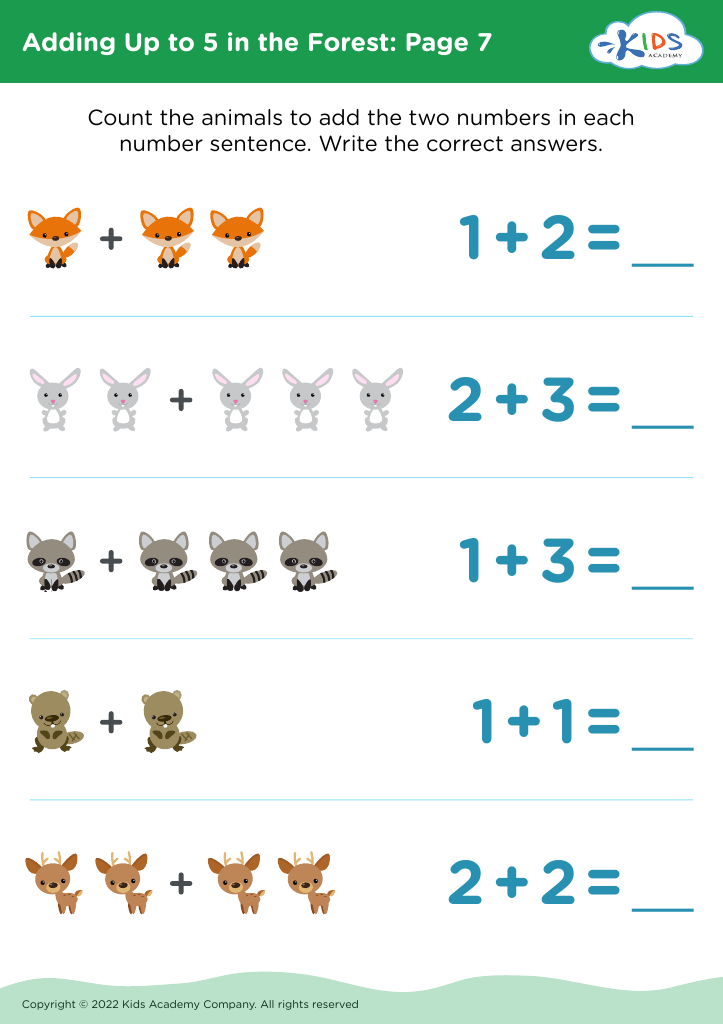
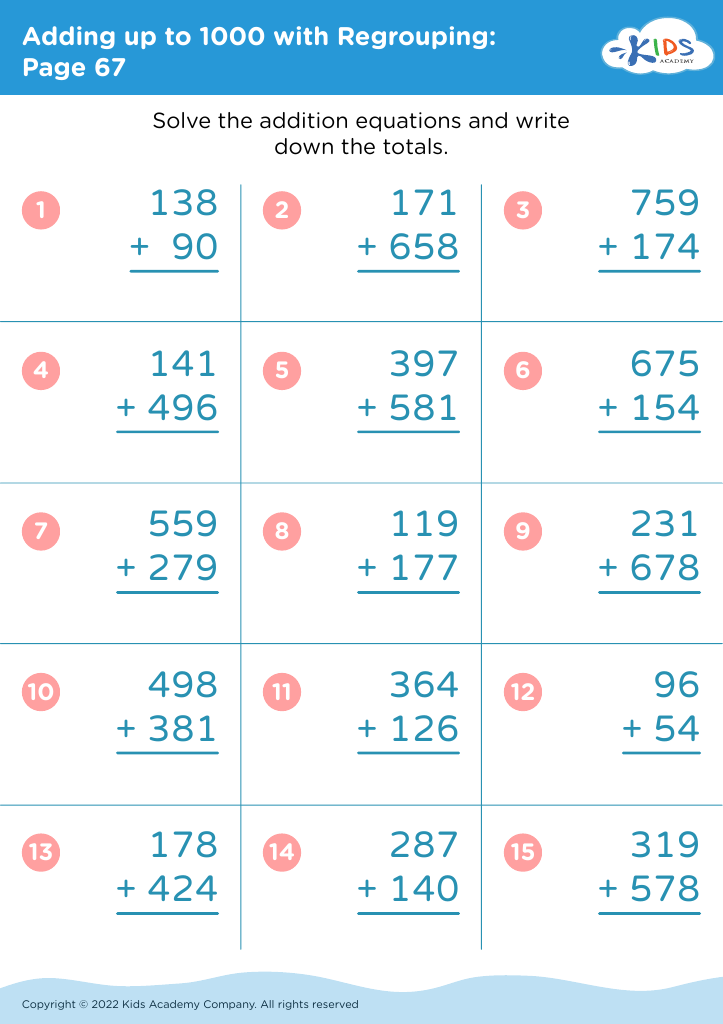
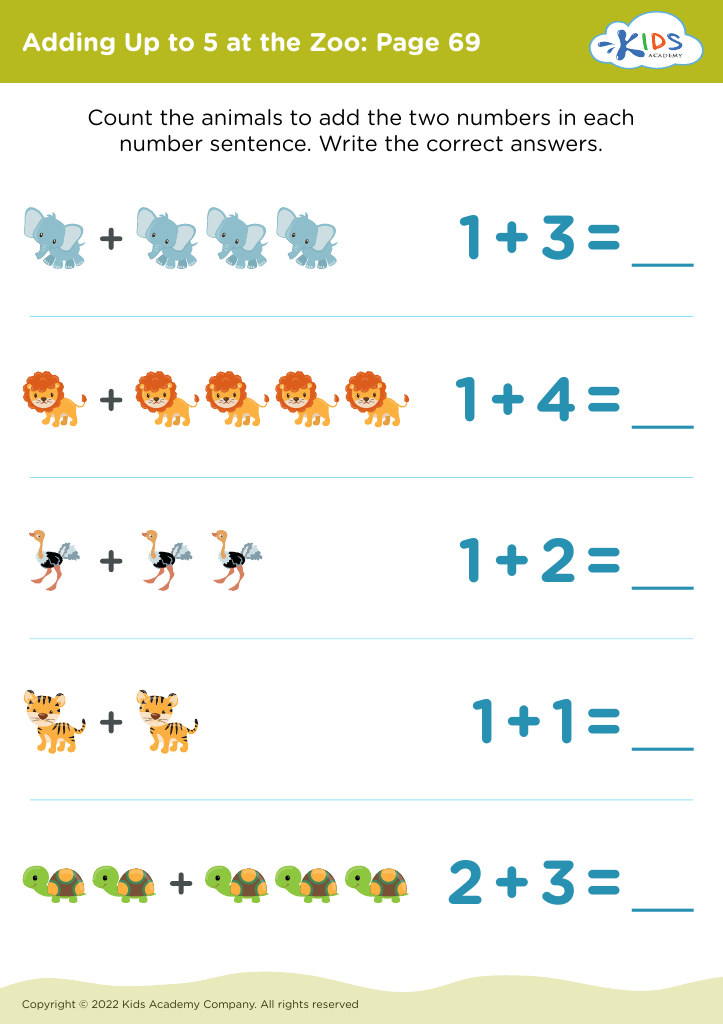
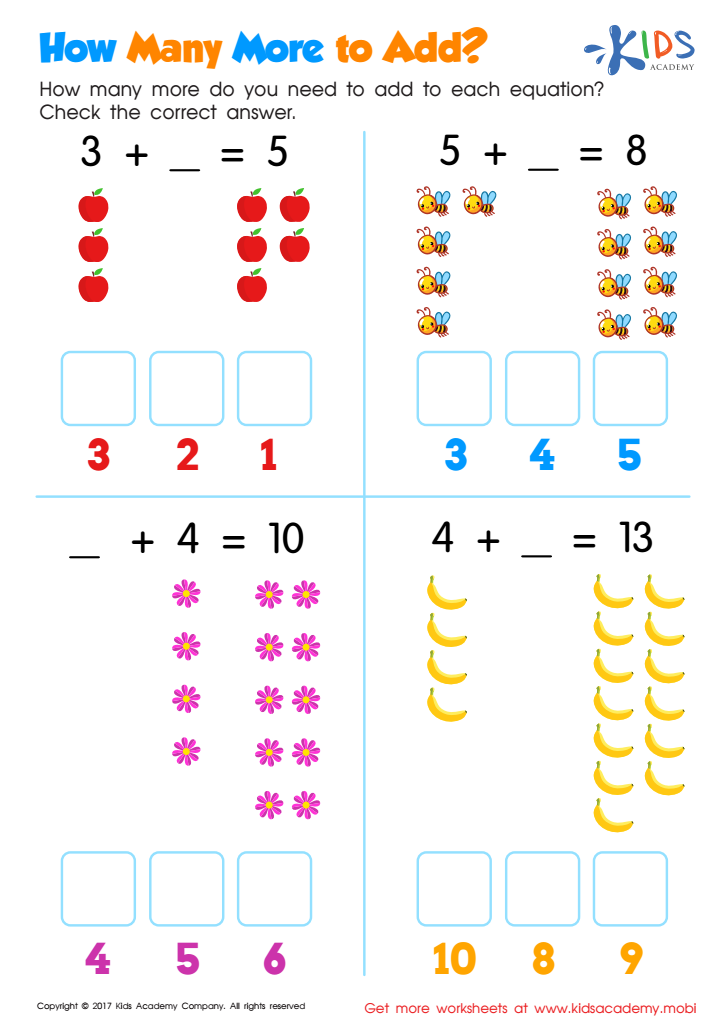
How Many More to Add Worksheet
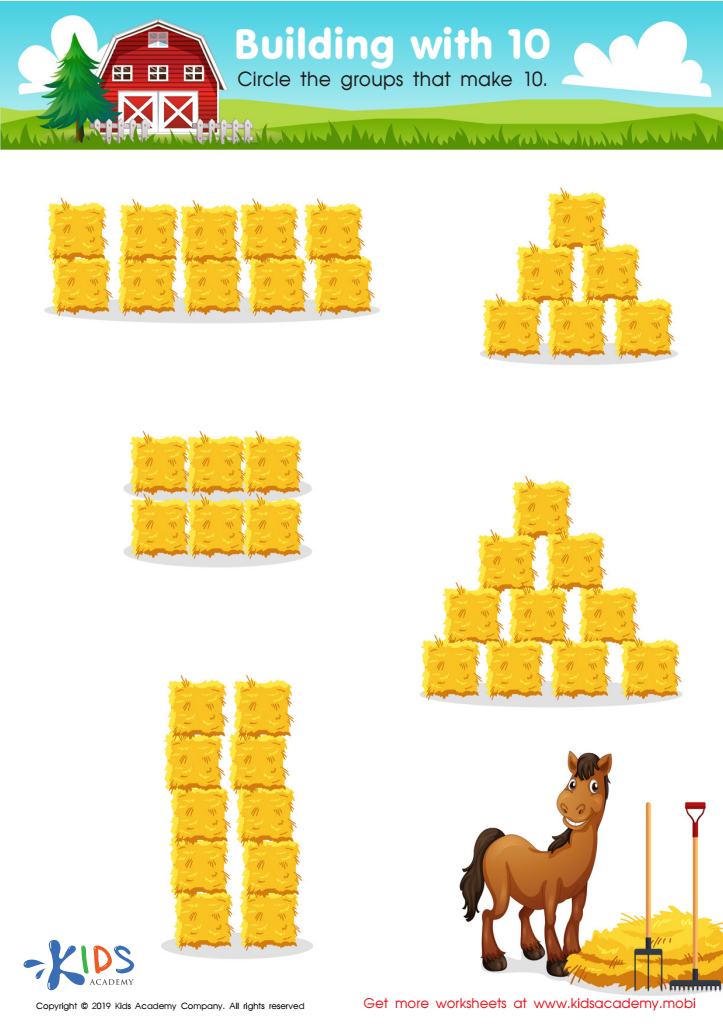
Building with 10 Worksheet
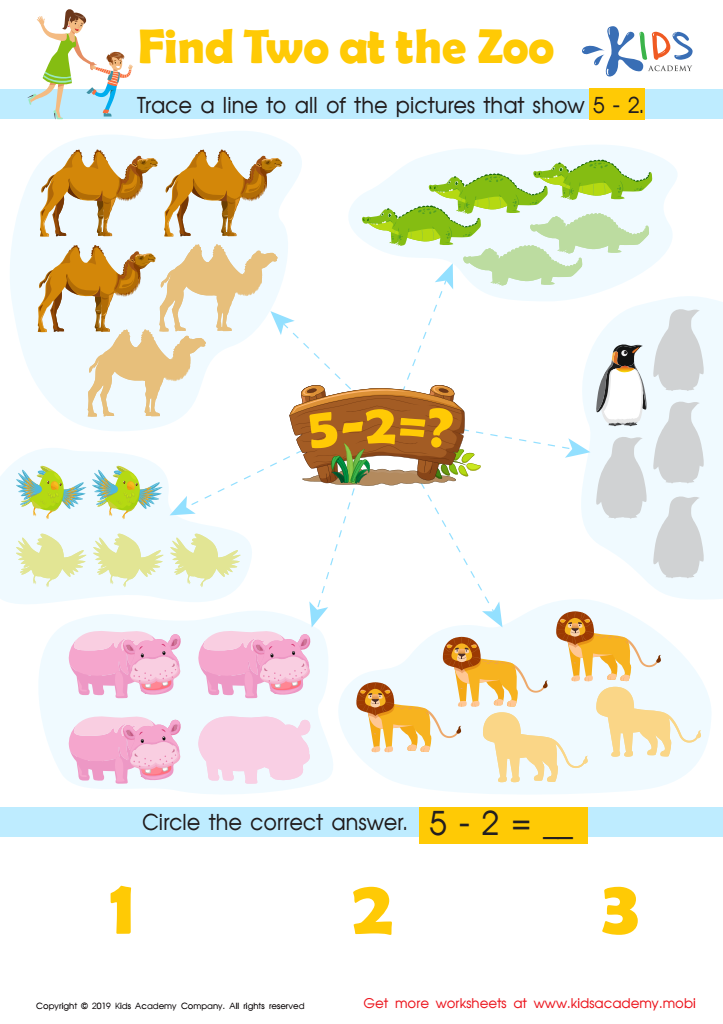
Find Two at the Zoo Worksheet
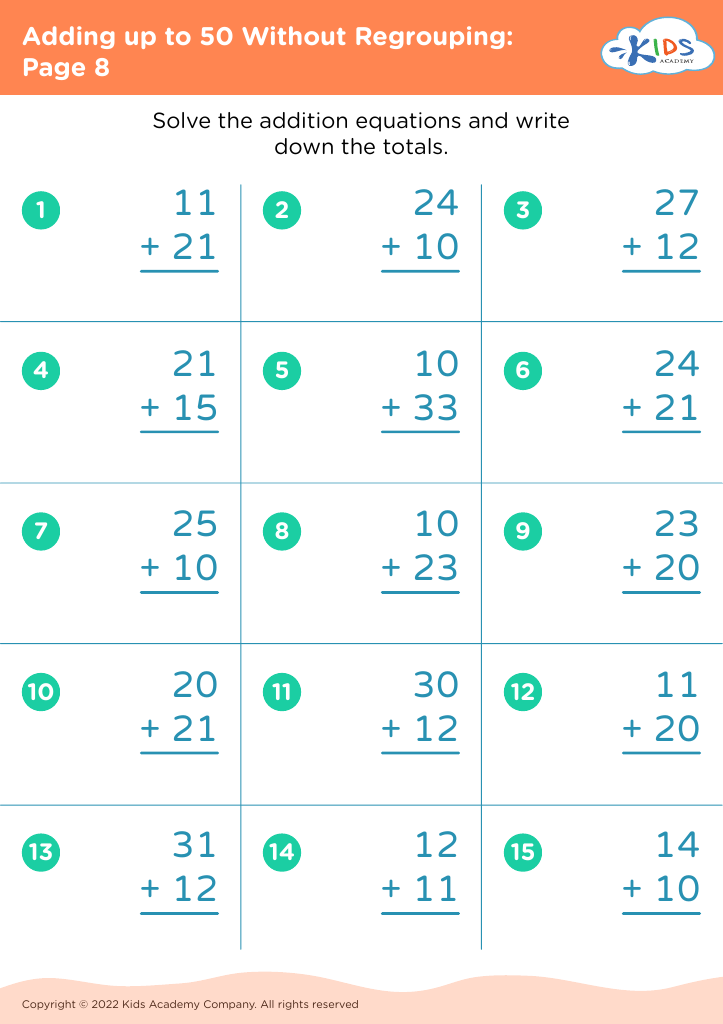
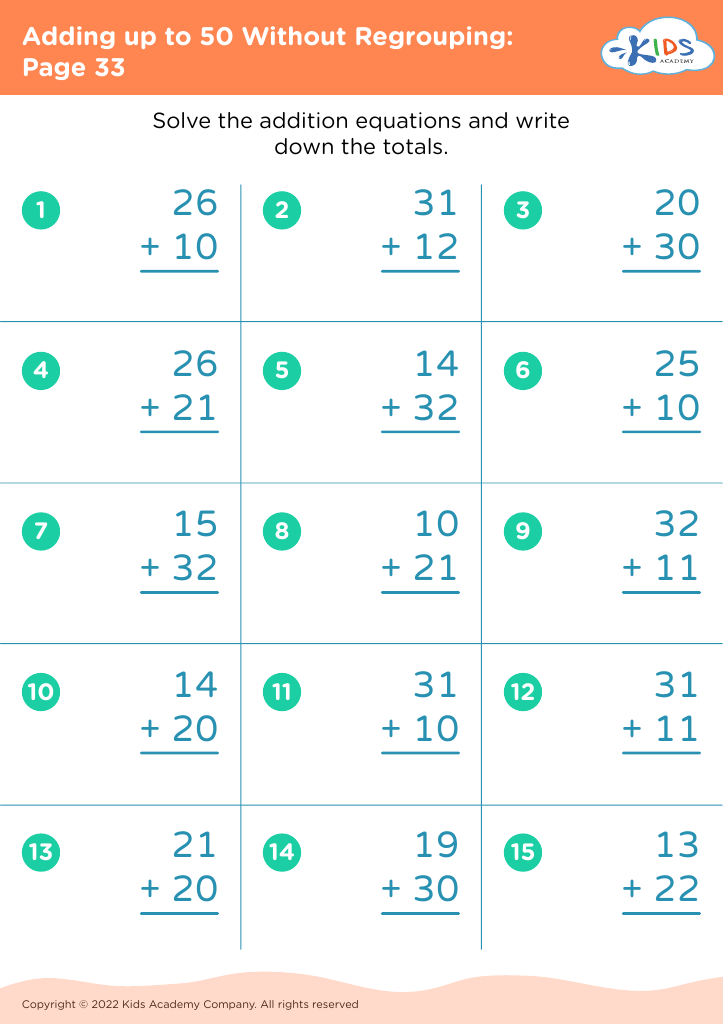
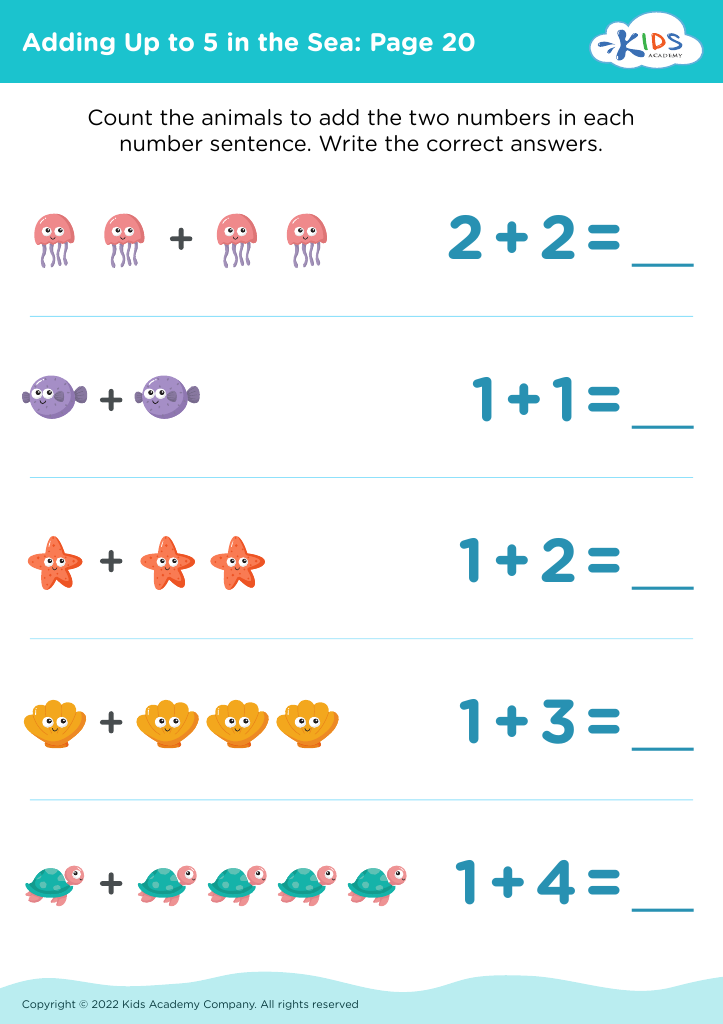
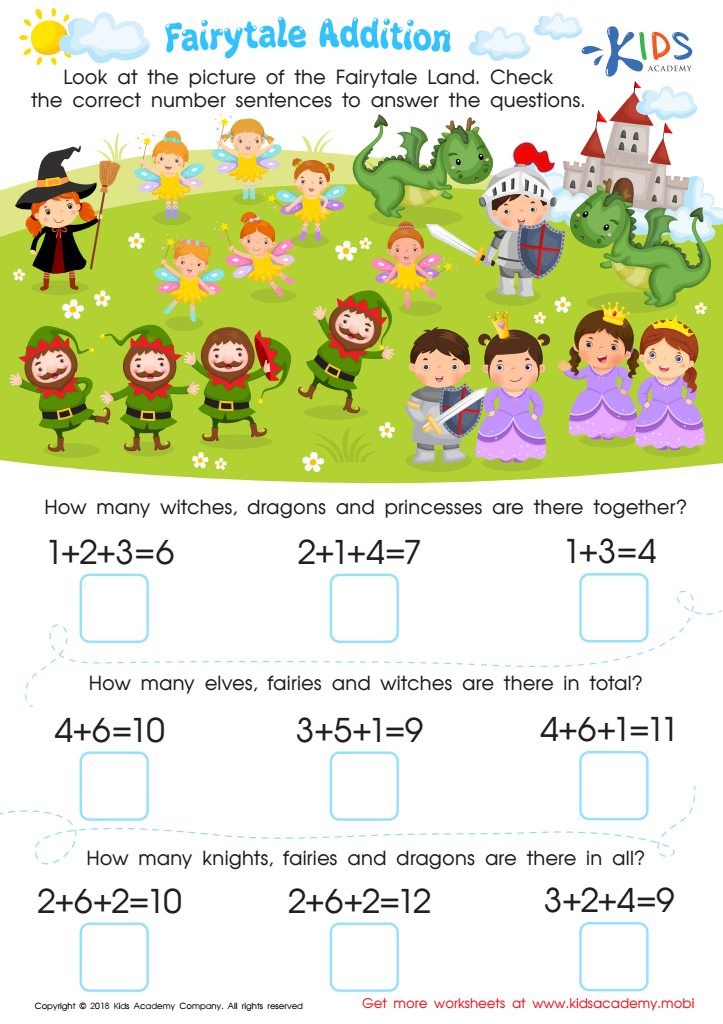
Fairytale Addition Worksheet
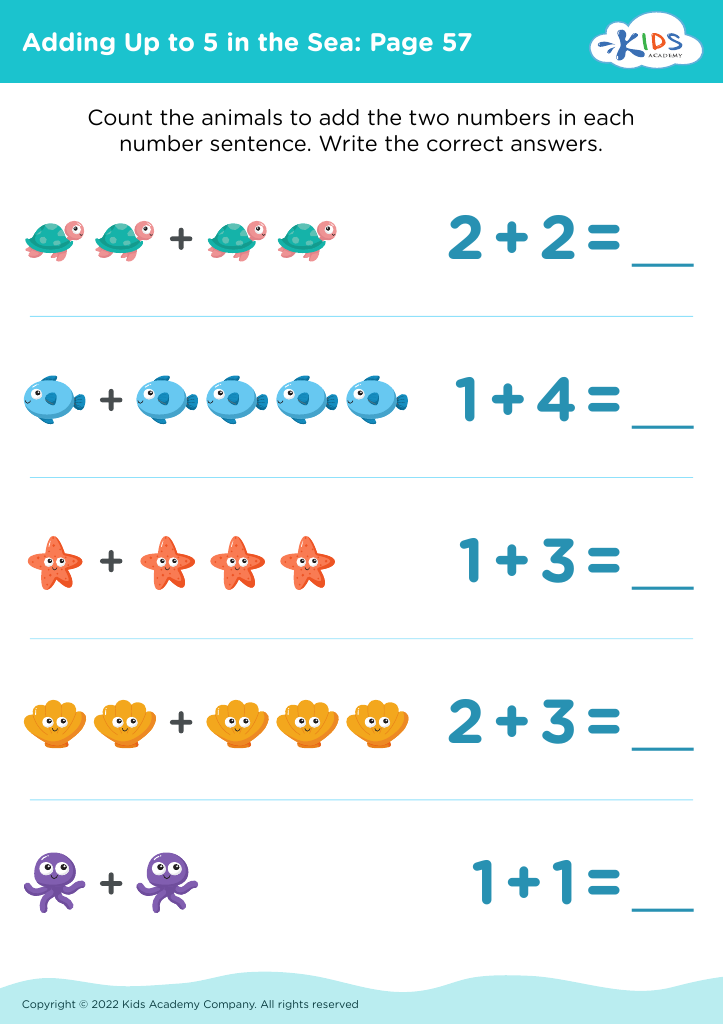
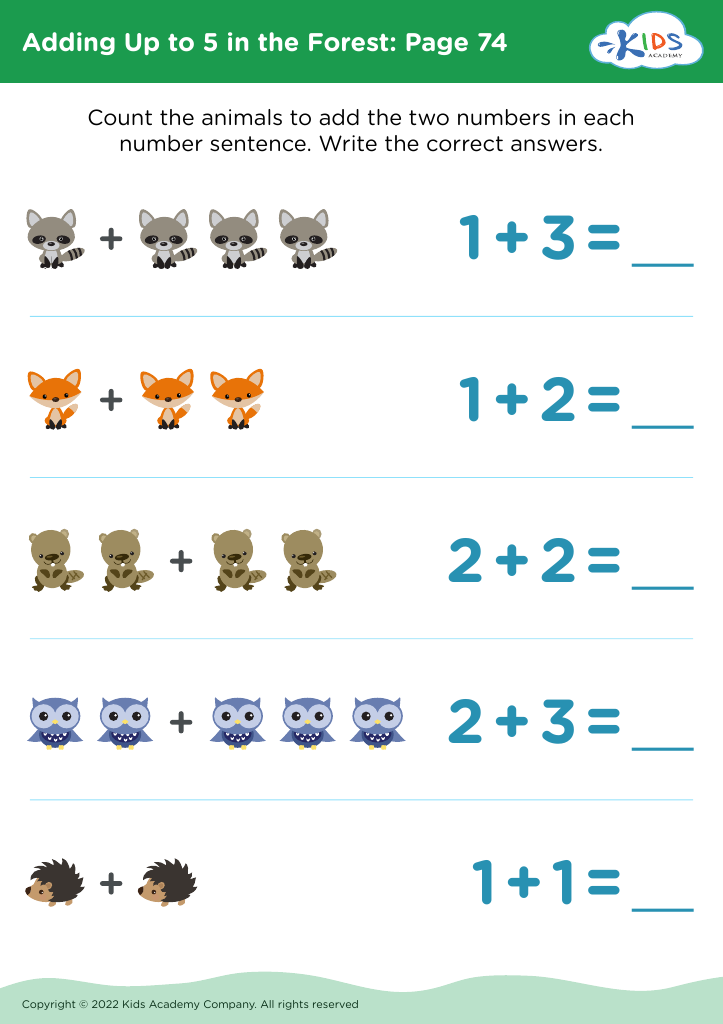
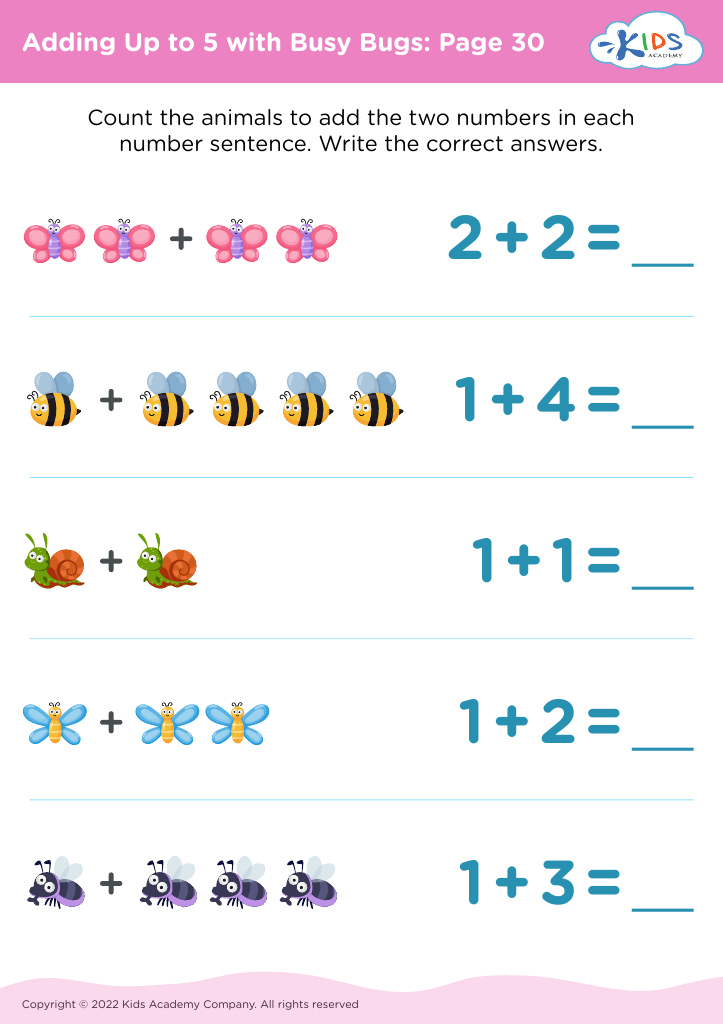
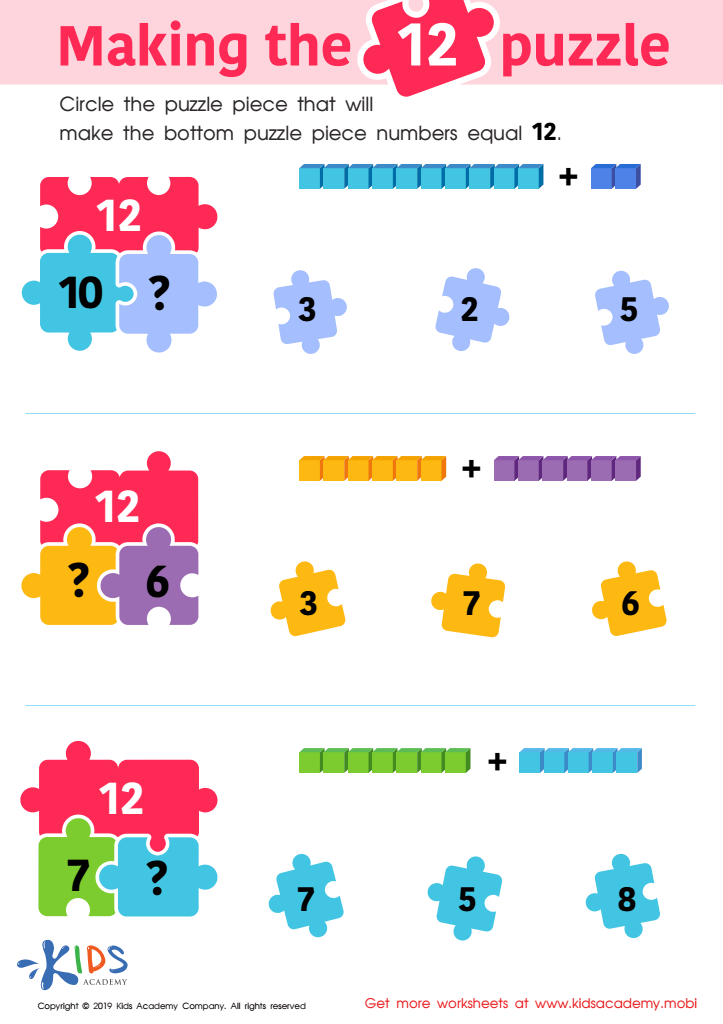
Making the 12 Puzzle Worksheet








Parents and teachers should prioritize addition practice for children aged 4-9 because it lays the foundation for mathematical understanding and problem-solving skills. Mastering basic addition is crucial, as it supports future mathematical concepts like subtraction, multiplication, and division. Early familiarity with numbers fosters confidence and curiosity about math, making children more engaged learners.
Additionally, practicing addition helps develop cognitive skills, including critical thinking, pattern recognition, and memory. Through various addition exercises and games, children enhance their ability to focus, observe patterns, and implement strategies – skills that extend beyond mathematics into everyday life.
Regular addition practice also encourages a growth mindset, teaching children that mastery comes through practice and perseverance. When parents and teachers actively engage in this learning process, it provides opportunities for bonding and reinforces a supportive learning environment.
Lastly, early proficiency in addition contributes to long-lasting academic success, setting a positive trajectory for future learning and reducing math anxiety. By emphasizing the importance of addition practice, parents and teachers instill not only mathematical skills but also a love for learning that can benefit children throughout their educational journeys.








