Critical Thinking Geometry Worksheets for Ages 4-9
5 filtered results
-
From - To
Unlock your child's potential with our engaging Critical Thinking Geometry Worksheets designed for ages 4 to 9! These worksheets encourage young learners to explore geometric concepts through fun, creative challenges that promote problem-solving skills. Each activity fosters critical thinking by encouraging children to identify shapes, understand spatial relationships, and recognize patterns in a playful manner. Perfect for reinforcing classroom learning or as supplementary material at home, our geometry worksheets combine education with enjoyable practice. Get your little mathematicians excited about geometry and watch them build essential skills that lay the foundation for future learning. Start their journey to geometric mastery today!
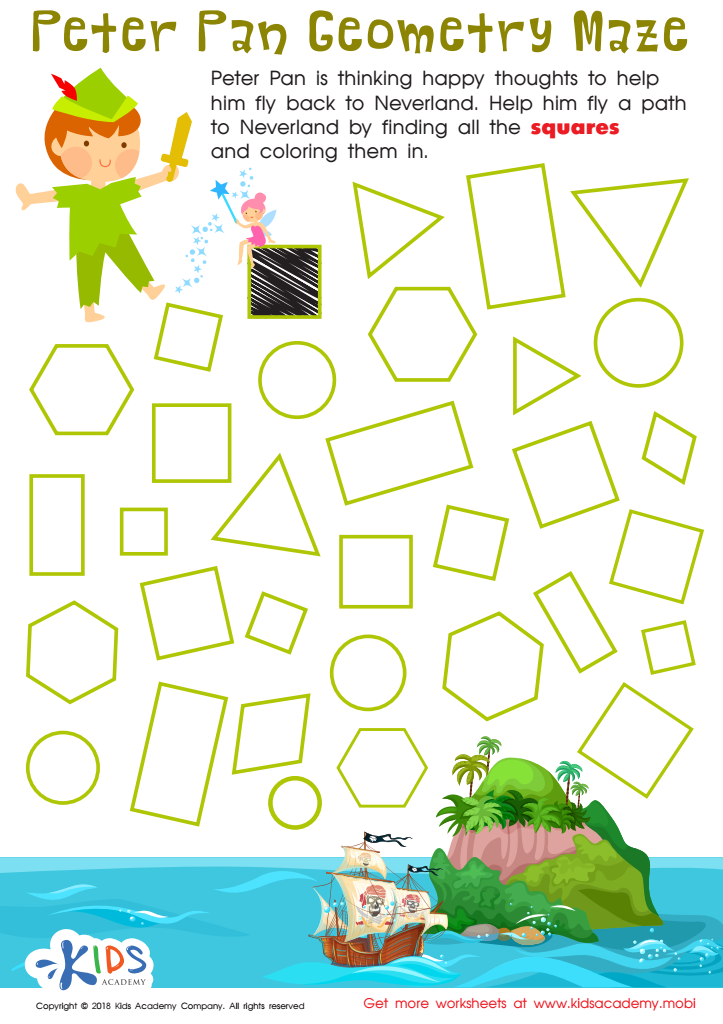
Peter Pan Worksheet
 Assign to My Students











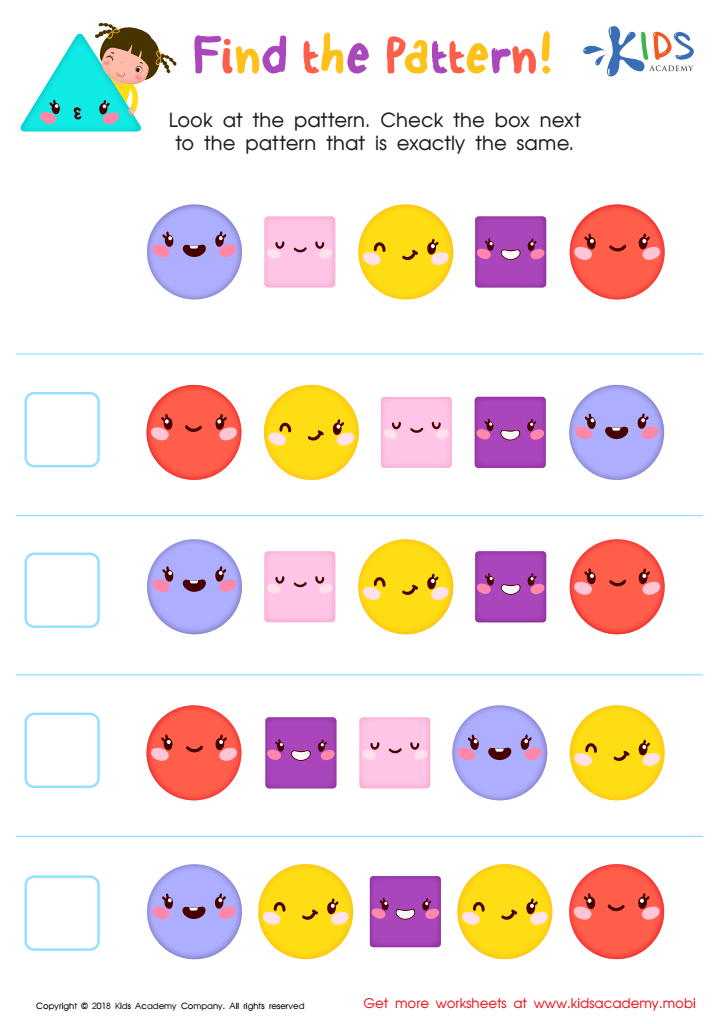
Find the Pattern Worksheet
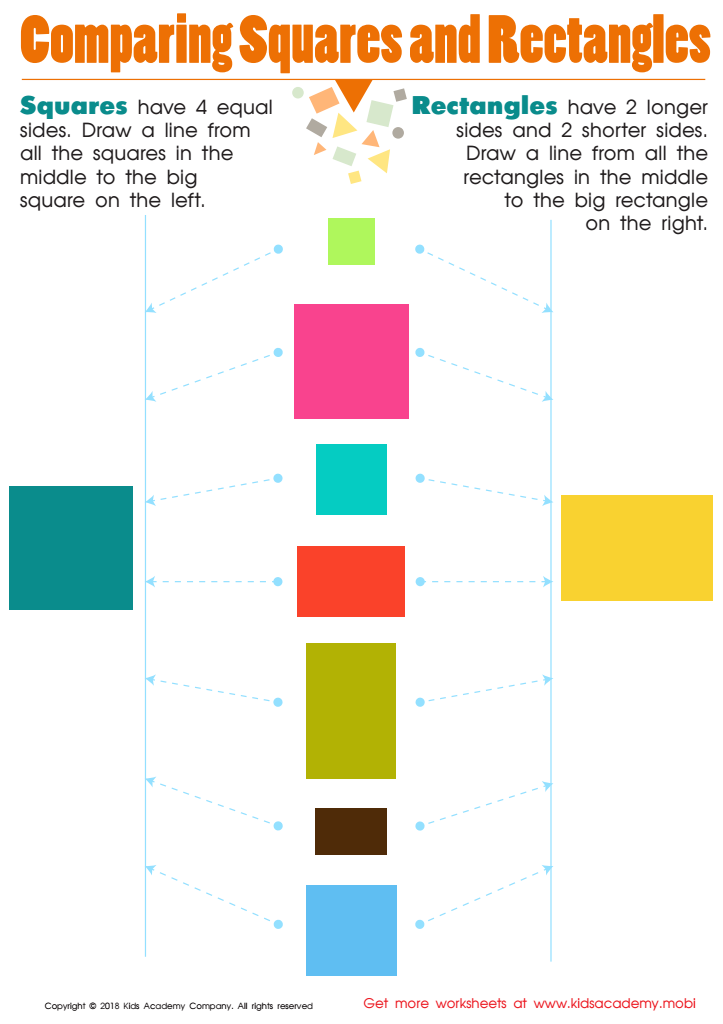
Comparing Squares Rectangles Worksheet
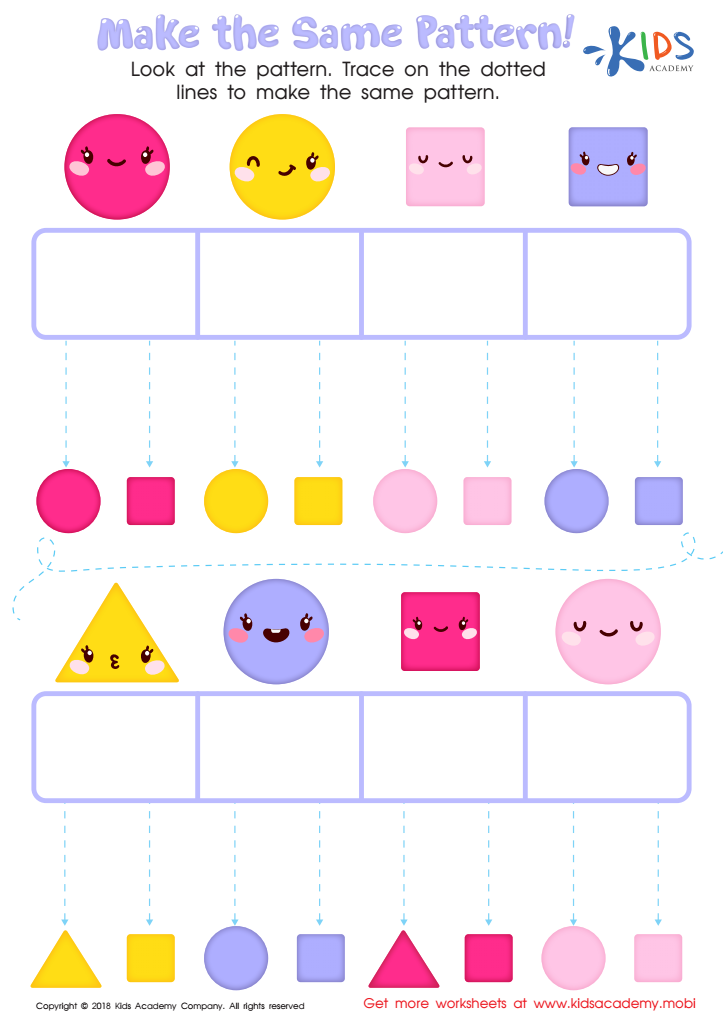
Make the Same Pattern Worksheet
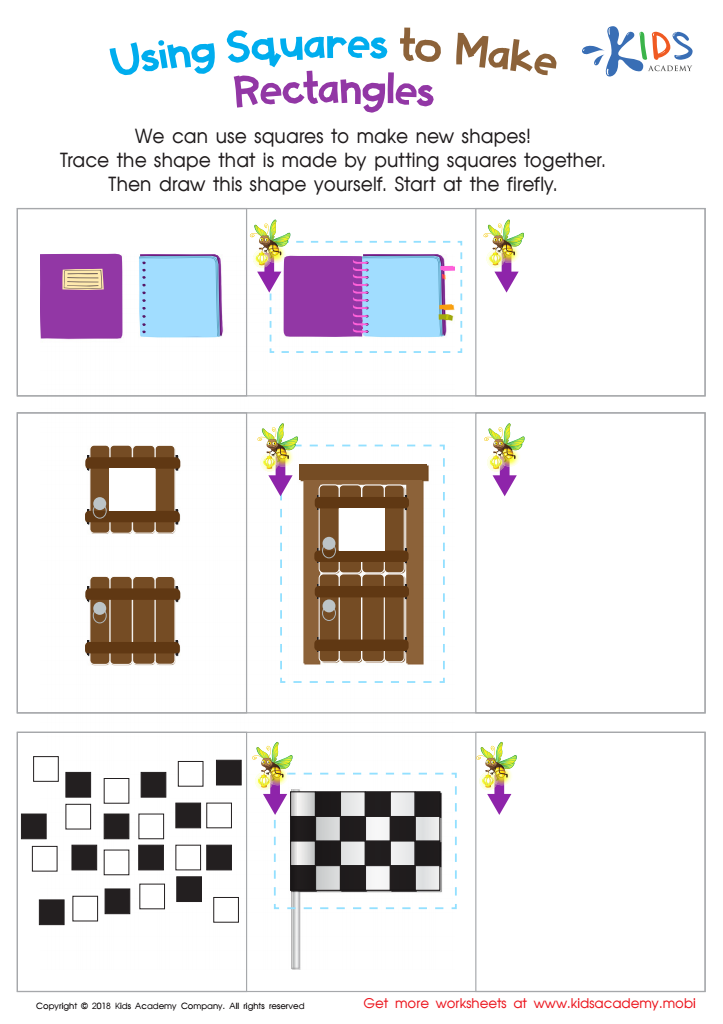
Using Squares to Make Rectangles Worksheet








Parents and teachers should prioritize Critical Thinking Geometry for children aged 4-9 because it serves as a foundational skill for problem-solving and analytical reasoning. At this developmental stage, children are naturally curious and eager to explore, making it the perfect time to cultivate their geometric thinking. Engaging with geometry helps young learners understand spatial relationships, develop visual perception, and recognize patterns, which are essential skills not only in mathematics but across all academic disciplines.
Promoting critical thinking in geometry encourages children to ask questions, make observations, and draw conclusions based on their experiences. It fosters creativity and imagination as they explore shapes and transformations in a hands-on and interactive manner. Additionally, these activities develop fine motor skills and improve mathematical vocabulary, which enhances overall cognitive development.
Moreover, early exposure to geometric concepts prepares children for more complex mathematical concepts in later years. Critical Thinking Geometry helps create a more comprehensive understanding of the world around them, enabling them to approach tasks and challenges with confidence and resilience. In today’s data-driven world, such skills are invaluable, ensuring that children are not just consumers of information but active thinkers ready to tackle real-life problems.








