
Following instructions Geometry Worksheets for Ages 4-9
8 filtered results
Difficulty Level
Grade
Age
-
From - To
Subject
Activity
Standards
Discover a fun and engaging collection of "Following Instructions Geometry Worksheets" designed for children ages 4-9. These worksheets help young learners enhance their geometric understanding while practicing essential listening and comprehension skills. Each activity encourages kids to follow simple instructions to create shapes, patterns, and designs, fostering both creativity and critical thinking. From drawing to coloring, these interactive exercises make geometry accessible and enjoyable. Ideal for homeschooling or classroom use, our worksheets support skill development in a playful, hands-on way. Let your child explore the world of geometry while honing their ability to follow directions with confidence and excitement!
Favorites
With answer key
Interactive
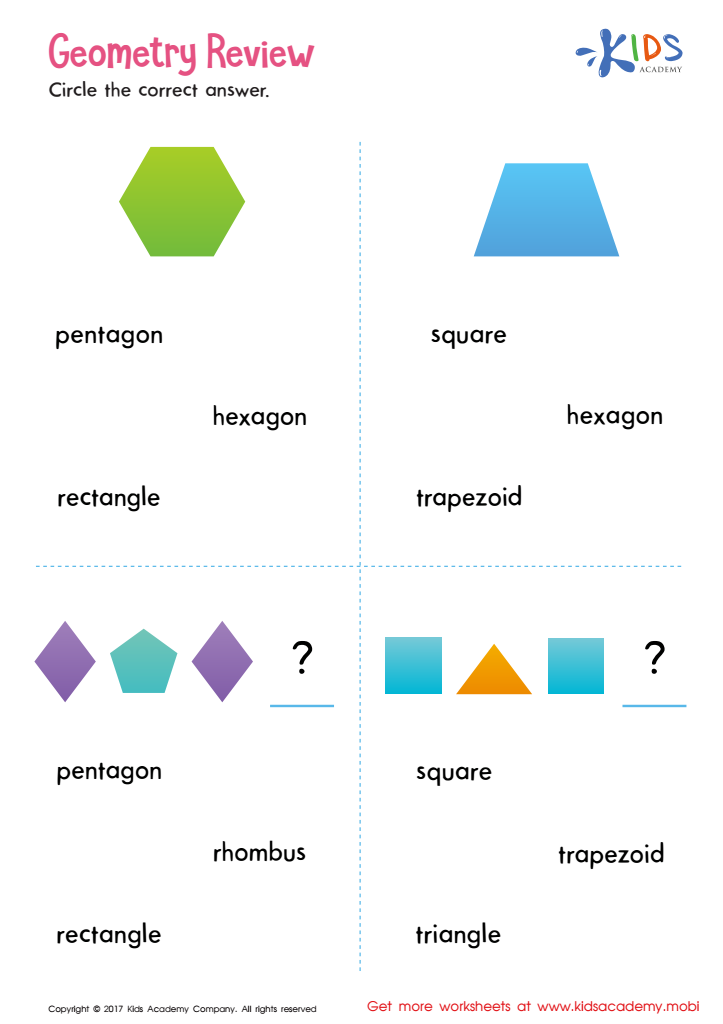
Geometry Review Printable
Repetition is key to success; give your child the practice they need with this geometry worksheet.
Geometry Review Printable
Worksheet











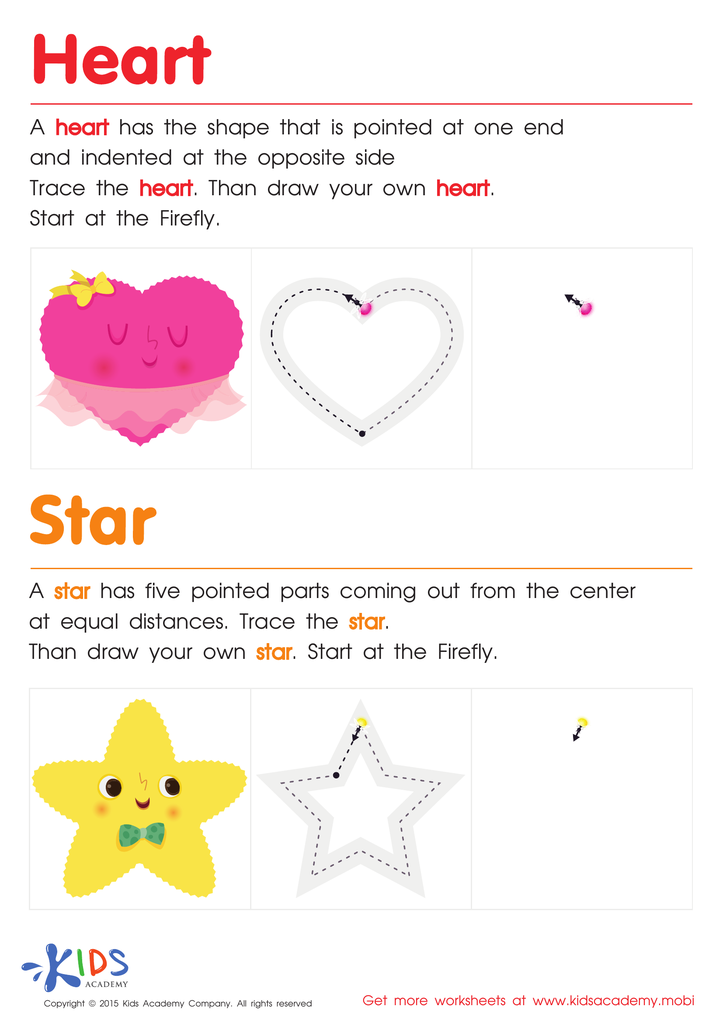
Let's Learn to Draw Hearts And Stars Printable
Trace and draw hearts and stars, learn their names and use them in your drawings. Start with the firefly and be creative!
Let's Learn to Draw Hearts And Stars Printable
Worksheet
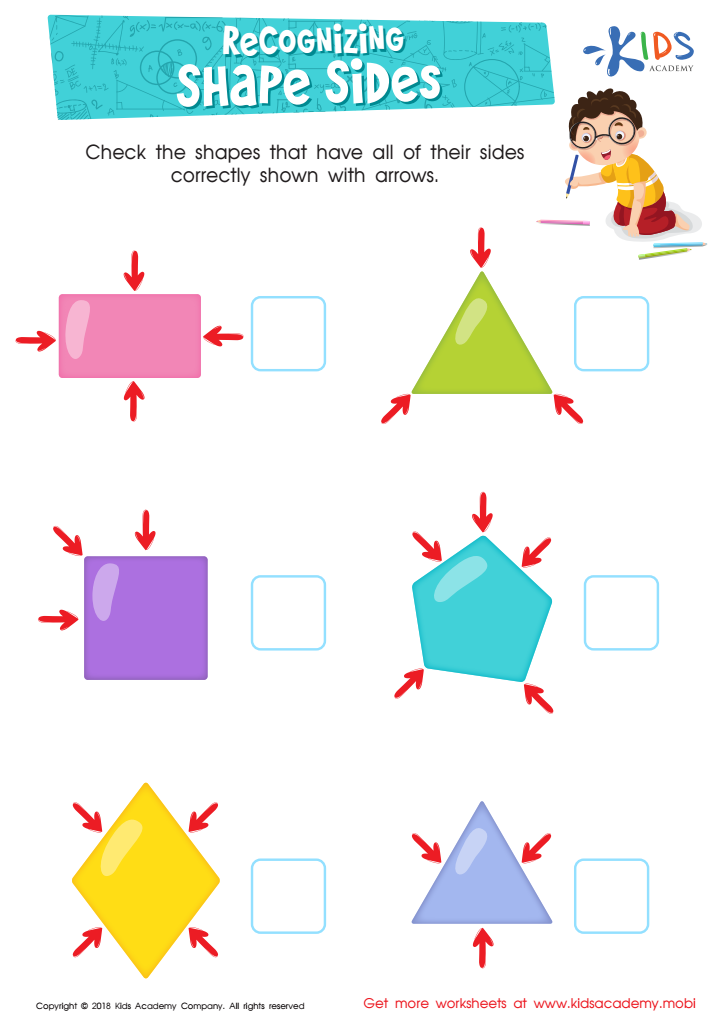
Recognizing Shape Sides Worksheet
This exercise will help your child recognize shape sides. Go over the difference between sides and angles first, then have them check the shapes with arrows to show the sides. They'll quickly get the hang of it and find it much easier after completing the colorful worksheet.
Recognizing Shape Sides Worksheet
Worksheet
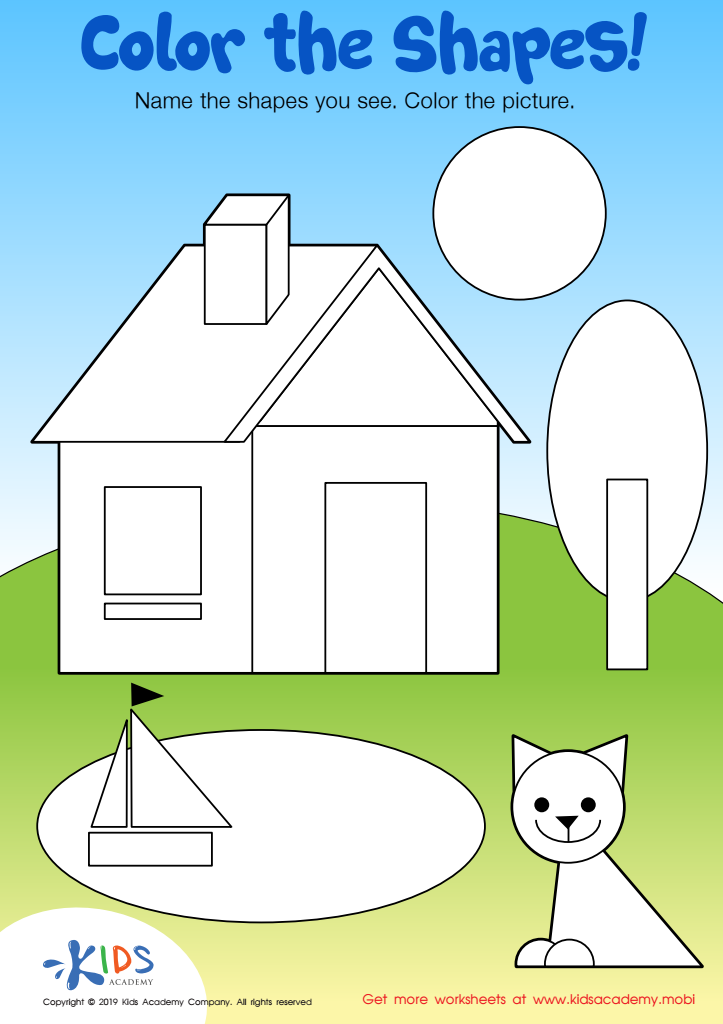
Color the Shapes Worksheet
Help your student master shape identification with this fun worksheet. Ask them to name the shapes in the picture, then color it! Ask questions like "How many squares do you see?" and "How many triangles?" to extend the learning. Identify squares, circles, triangles and rectangles with this enjoyable coloring page.
Download (PDF)
 Assign to My Students
Assign to My Students
Color the Shapes Worksheet
Worksheet
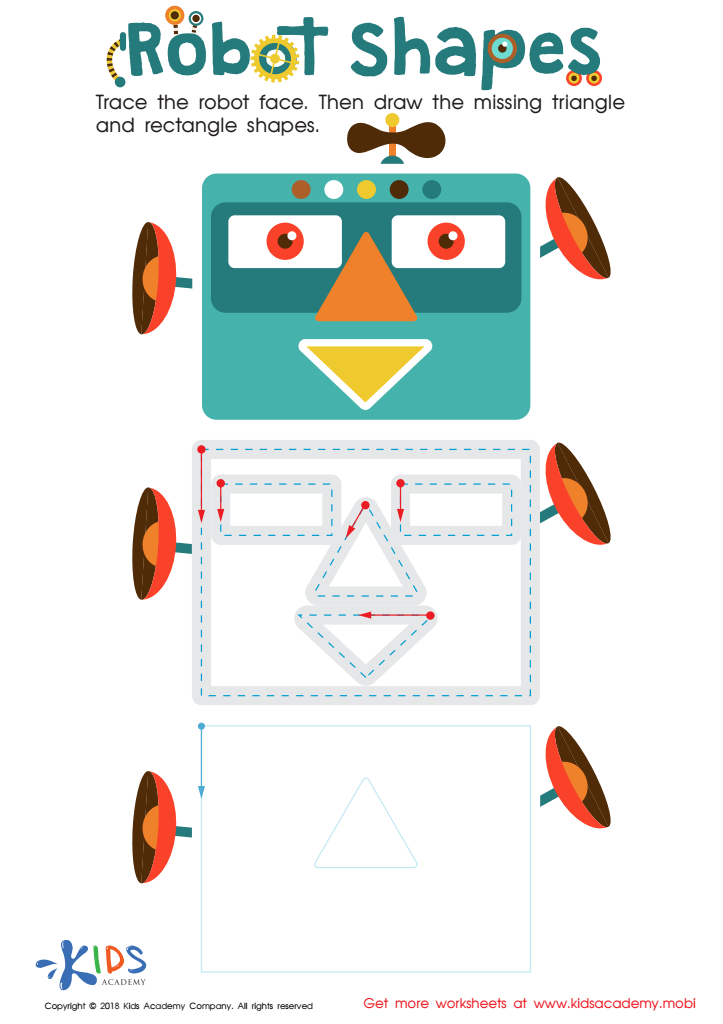
Robot Shapes Worksheet
Help your preschooler get started with math skills while having fun with this shape tracing worksheet featuring a cute robot! Ask them to study the first image, trace the dotted lines to draw the shapes in the second, and color the third. With this activity, they'll learn shapes while enjoying the funny robot pictures!
Robot Shapes Worksheet
Worksheet
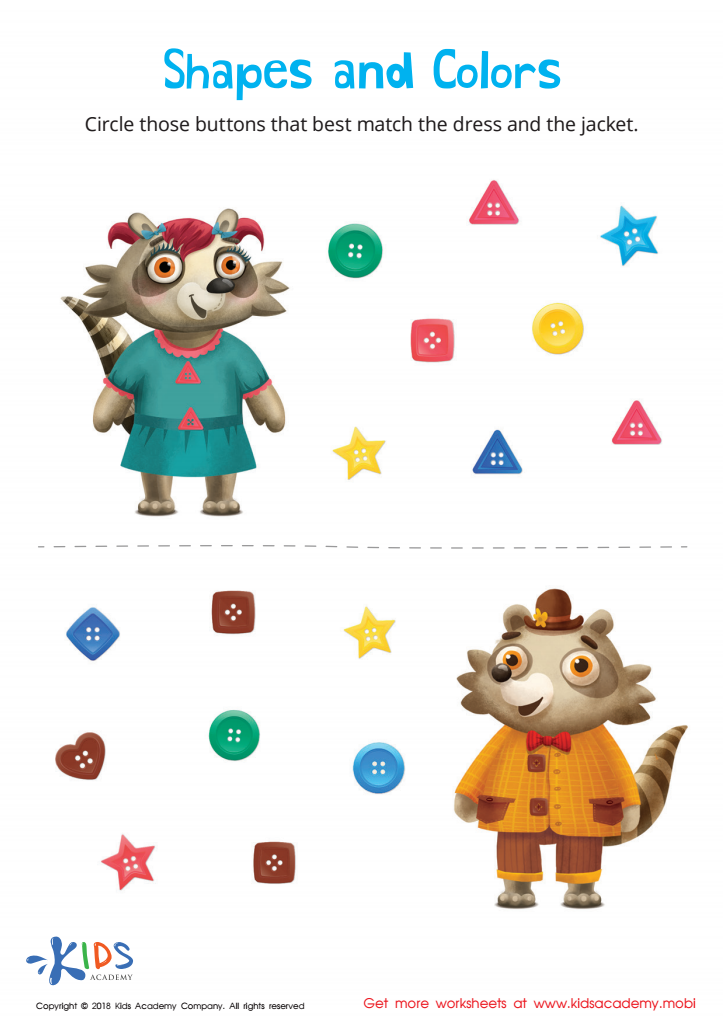
Shapes and Colors Worksheet
This worksheet is a fun way to teach toddlers shapes and colors! It has them match buttons on adorable racoon characters. Encourage your child to note the shape and color of the buttons then sort through and circle the matches. This helps build important attention to detail skills!
Shapes and Colors Worksheet
Worksheet
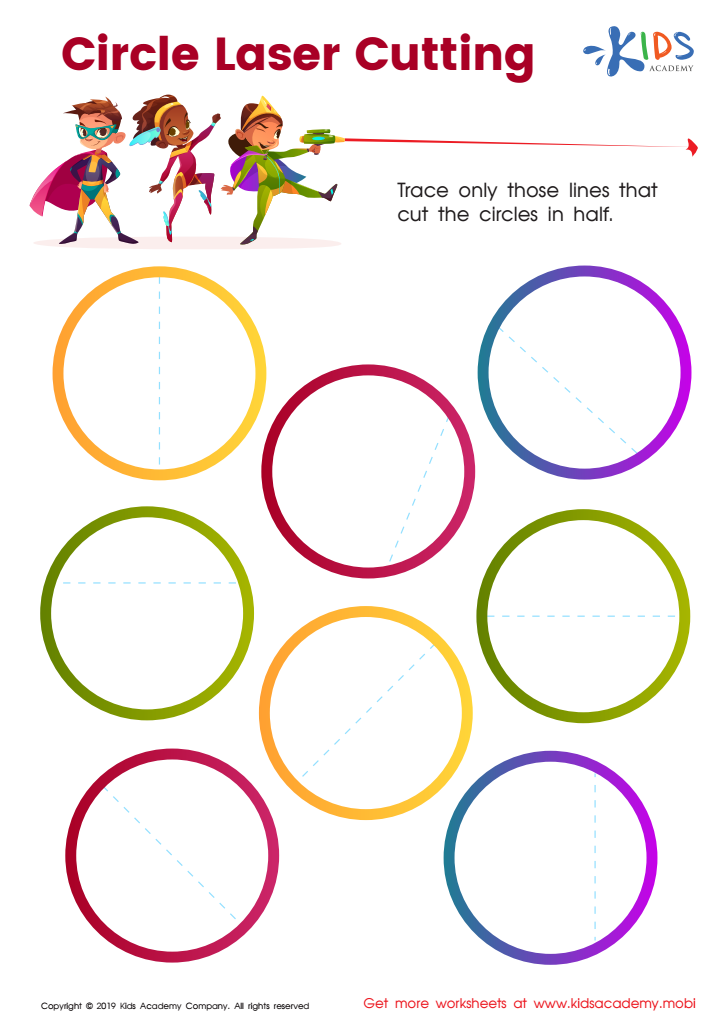
Circle Laser Cutting Worksheet
Encourage your kids to learn geometry! Remind them that when shapes are cut into two equal parts, they are called halves. Have them look at the circles in the worksheet, and trace the lines that cut the circles in half. Geometry is an essential part of education, and although it may not be exciting, it's a valuable skill to have.
Circle Laser Cutting Worksheet
Worksheet
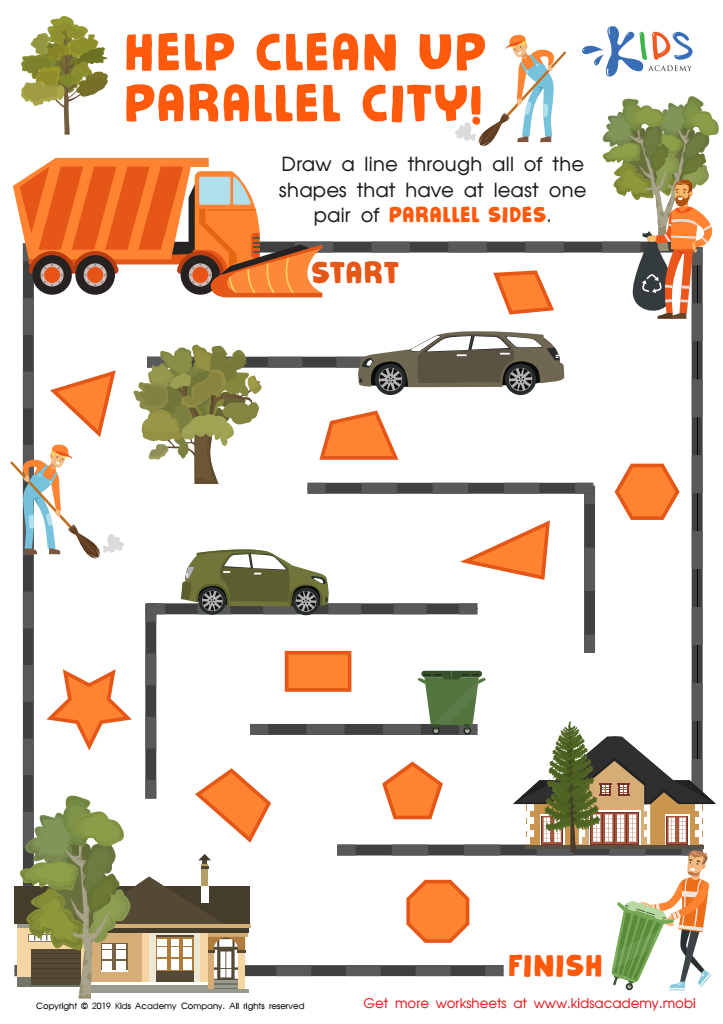
Help Clean Up Parallel City Worksheet
Explain to your kids what parallel sides are and have them identify the shapes with parallel sides in the picture. Then let them draw a line through all the shapes with at least one pair of parallel sides. This colorful worksheet will help them understand and practice this concept.
Help Clean Up Parallel City Worksheet
Worksheet
Join Kids Academy for Free
Who is primarily going to use this learning content?








Following instructions in geometry for ages 4-9 is essential for a child's cognitive and social development. At this young age, children are introduced to foundational concepts, such as shapes, sizes, and spatial awareness, which are integral to their overall mathematical understanding. When children practice following instructions in geometry activities, they learn to listen carefully, pay attention to details, and execute tasks step-by-step, all of which enhance their critical thinking and problem-solving skills—abilities crucial for academic success.
Additionally, these experiences promote fine motor skills through drawing shapes or building models, enhancing coordination and focus. Socially, group activities in geometry encourage teamwork and communication, teaching children to share ideas, negotiate, and cooperate with peers. For parents and teachers, guiding children in following instructions instills a sense of discipline and responsibility, paving the way for lifelong learning habits.
Moreover, early exposure to geometry lays the groundwork for advanced mathematical concepts that children will encounter later in their education. When children master these early skills, they gain confidence, reinforcing their interest in math as a subject and helping them achieve greater success in school. Ultimately, supporting proper instruction in geometry fosters both academic growth and a positive learning experience.








