
Fraction Addition Numbers Worksheets for Ages 4-9
3 filtered results
Difficulty Level
Grade
Age
-
From - To
Subject
Activity
Standards
Welcome to our Fraction Addition Numbers Worksheets designed for children aged 4-9! These engaging and colorful worksheets help young learners enhance their understanding of fractions through interactive and enjoyable math activities. Our carefully crafted exercises encourage kids to practice adding fractions in a fun and approachable way, building solid foundational skills that will benefit them as they continue their mathematical journey. Perfect for classroom use or at-home practice, these worksheets cater to various learning levels, ensuring every child can succeed. Download your free worksheets today and watch your child gain confidence and mastery in fraction addition while having fun!
Favorites
With answer key
Interactive
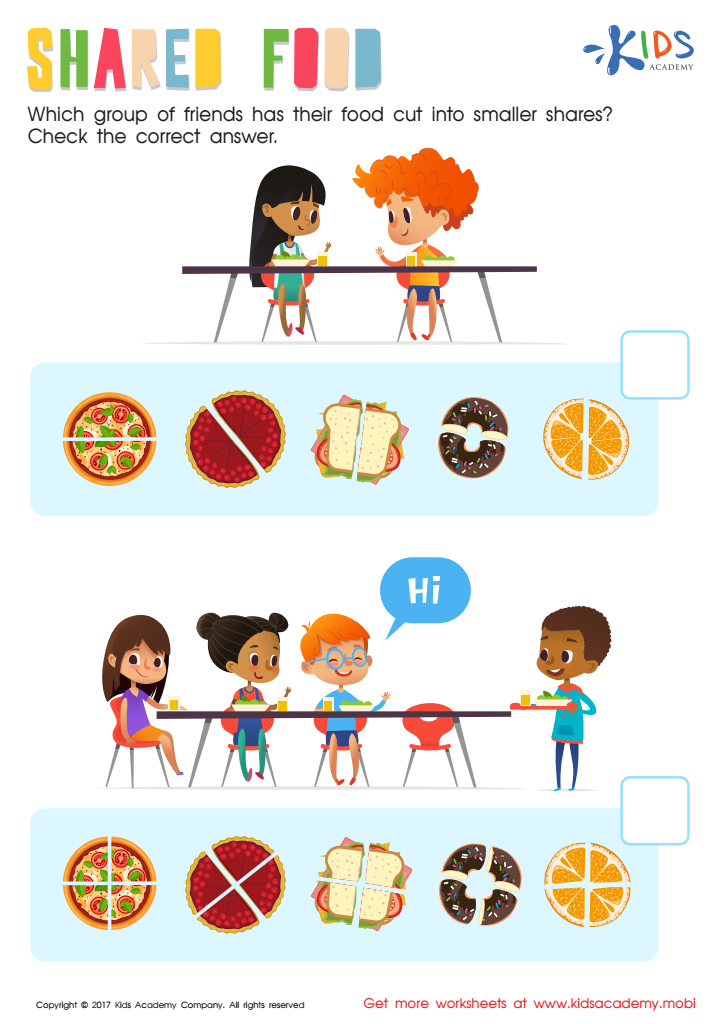
Shared Food Worksheet
In this worksheet, kids learn about sharing and cutting shapes into equal parts. There are two groups of friends: one with two, the other with four. Ask your child which group has their food cut into smaller shares, and help them find the right answer.
 Assign to My Students
Shared Food Worksheet
Worksheet
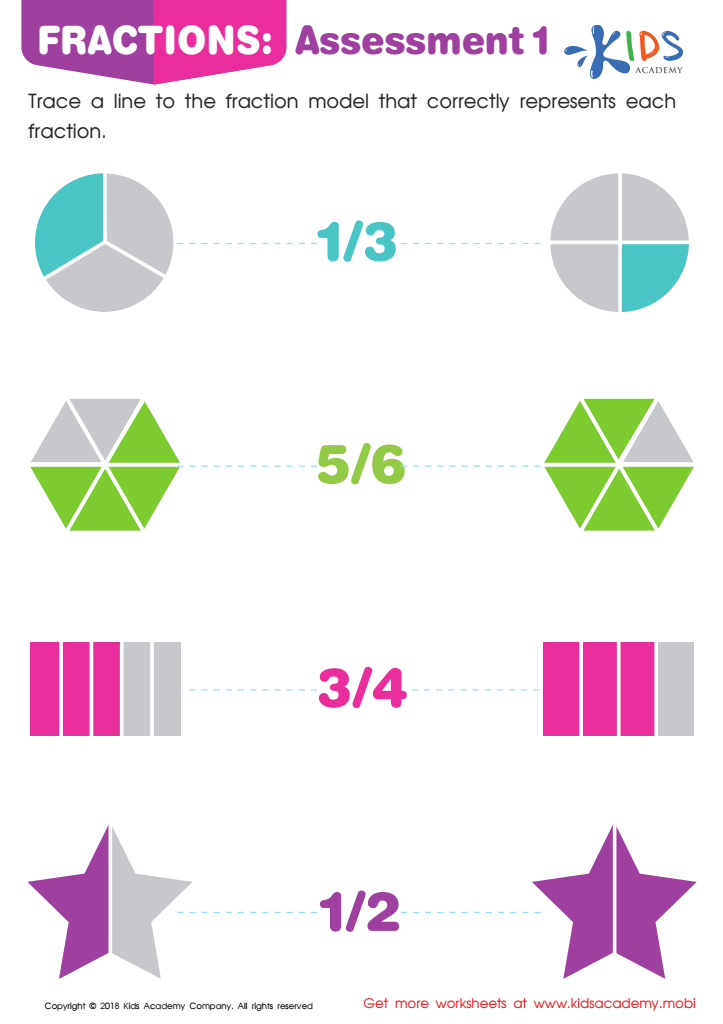
Fractions: Assessment 1 Worksheet
Master fractions easily with this worksheet! It has four sets of fraction models and fraction equations with two models each. Guide your kids to trace a line to the correct fraction model for each equation.
Fractions: Assessment 1 Worksheet
Worksheet
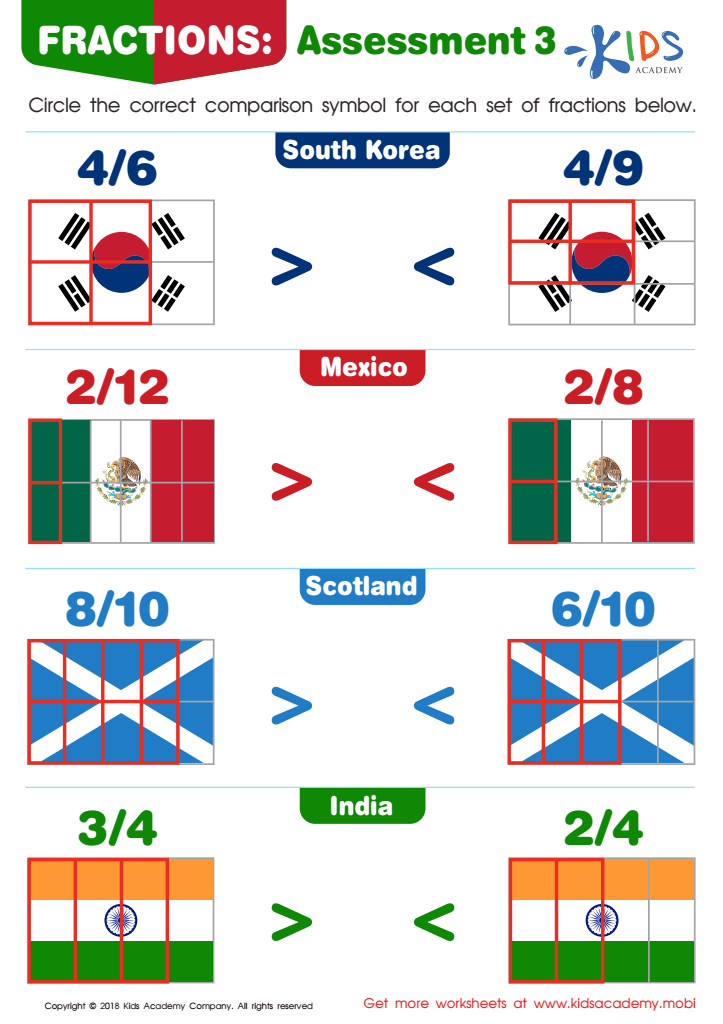
Fractions: Assessment 3 Worksheet
This worksheet helps teach kids about fractions and introduces them to countries and their flags. Have them read the country names and point to the flags. Then help them assess the fractions, and ask them to circle the symbol that shows their values.
Fractions: Assessment 3 Worksheet
Worksheet
Join Kids Academy for Free
Who is primarily going to use this learning content?







Fraction addition serves as a foundational skill for young learners, making it crucial for parents and teachers to prioritize understanding this concept between ages 4-9. First and foremost, grasping fractions lays the groundwork for mathematical comprehension in later grades, as students must have a solid understanding of part-whole relationships to excel in more advanced topics, such as algebra and geometry.
Additionally, introducing fraction addition at an early age promotes critical thinking and problem-solving skills. Engaging with fractions helps children learn to recognize patterns and make connections, not just in mathematics, but in real-life situations where fractions play a significant role—cooking, sharing, and dividing things equally, for instance.
Moreover, developing a positive association with math through hands-on and enjoyable fraction activities can enhance a child's confidence and motivation. As students become comfortable with adding fractions, they will likely perform better academically, mitigating future struggles.
Lastly, consistent parental and teacher involvement can create a nurturing environment that emphasizes the importance of math, encouraging collaborative learning and communication. By focusing on fraction addition early, we can foster enthusiastic learners who appreciate and value mathematics throughout their educational journey.








