
Improving mathematical skills Math Worksheets for Ages 4-9
8 filtered results
Difficulty Level
Grade
Age
-
From - To
Subject
Activity
Standards
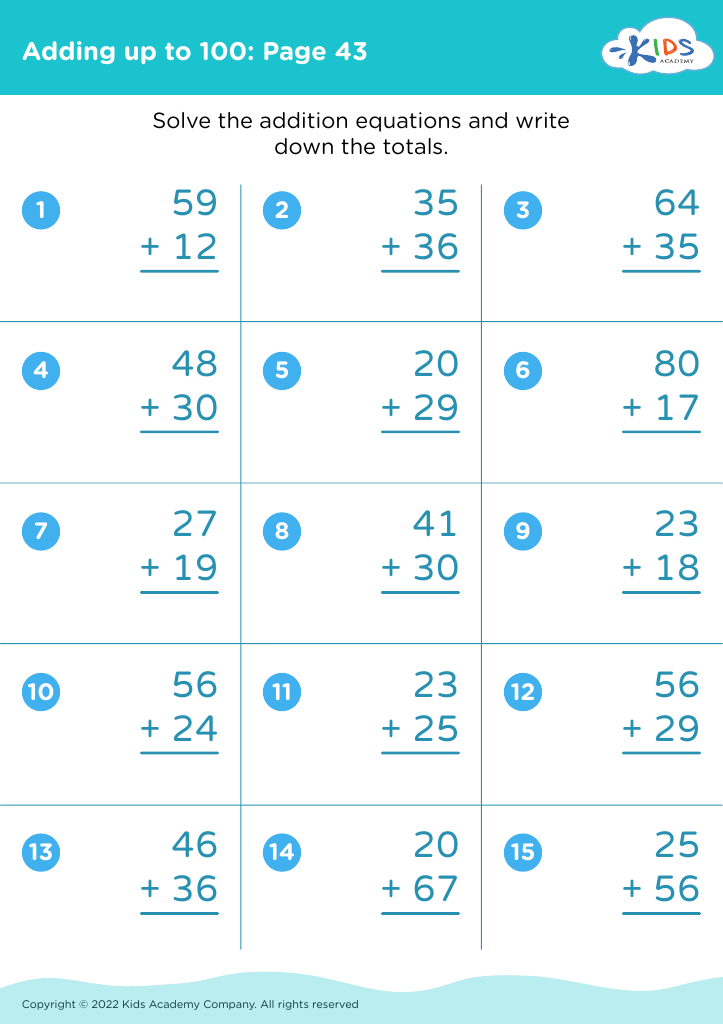
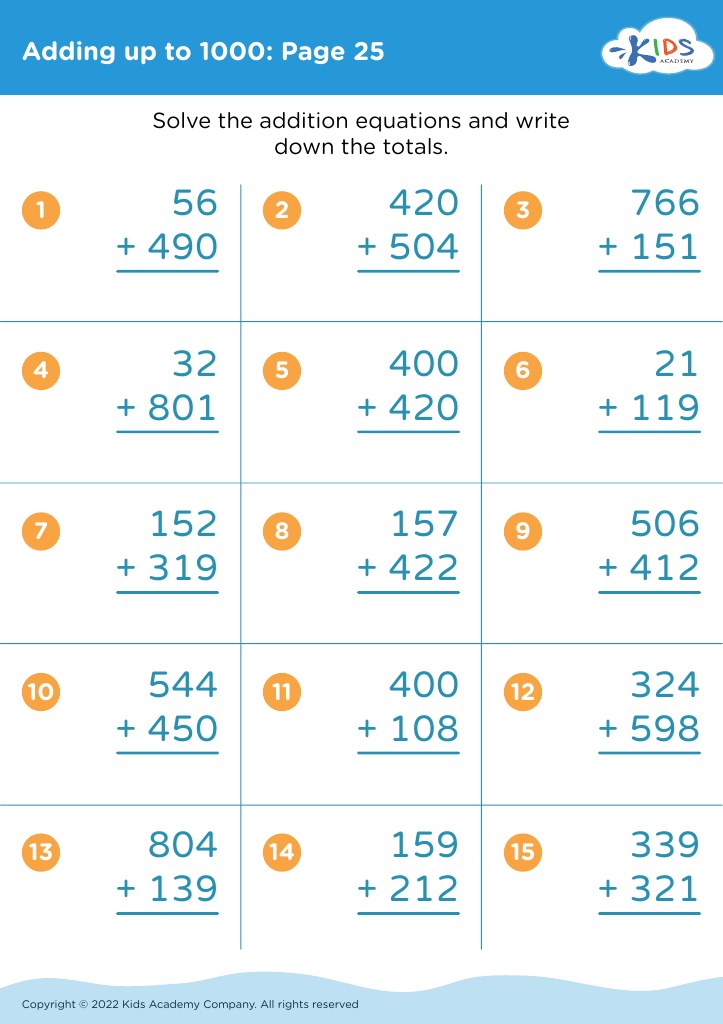
Enhance your child's math abilities with our "Improving Mathematical Skills Math Worksheets for Ages 4-9." These engaging, expertly designed printables cover essential topics like addition, subtraction, multiplication, and division, making learning fun and effective. Tailored for young learners, our worksheets build a strong foundation, boost confidence, and foster a love for math. With colorful illustrations and age-appropriate challenges, kids develop critical thinking and problem-solving skills. Perfect for both classroom use and homeschooling, our resources make math accessible and enjoyable, ensuring every child excels. Help your little one thrive in math today!
Favorites
With answer key
Interactive
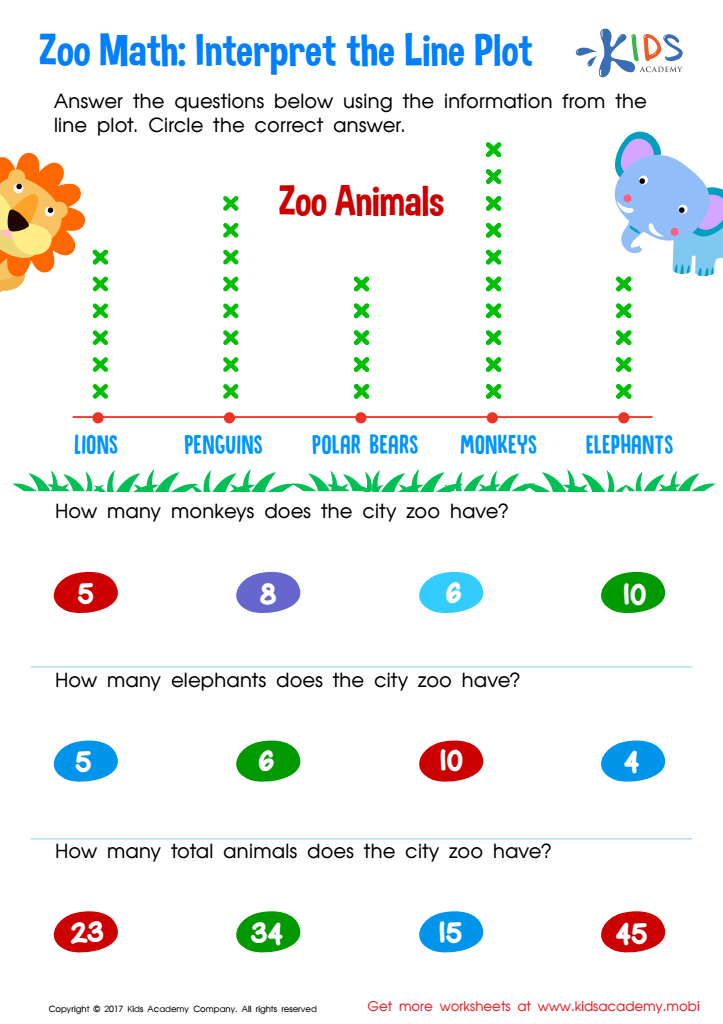
Interpret Line Plot Worksheet
Kids can learn to read graphs and analyze data easily with line plots. A fun zoo animal worksheet motivates kids to answer questions by reading the line plot and finding out how many animals a local zoo has.
 Assign to My Students
Interpret Line Plot Worksheet
Worksheet
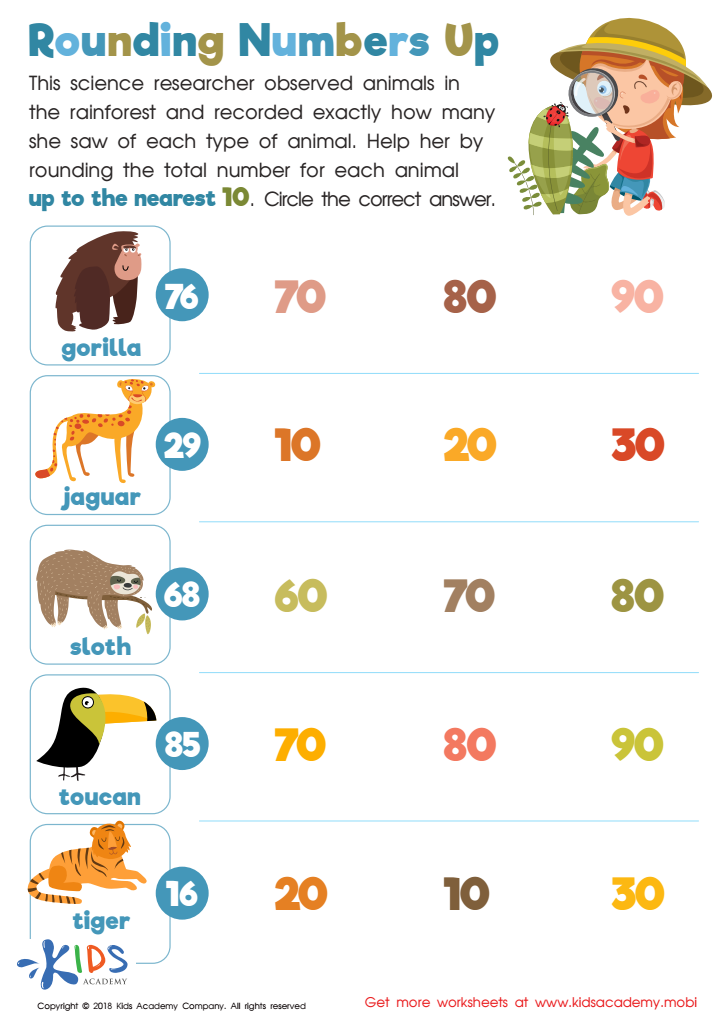
Rounding Numbers Up Worksheet
Does your child want to be a science researcher? If so, they share something in common with the person in this worksheet. She observed rainforest animals and counted them. Your child can help by rounding the totals to the nearest 10 and circling the correct answer for each type.
Rounding Numbers Up Worksheet
Worksheet
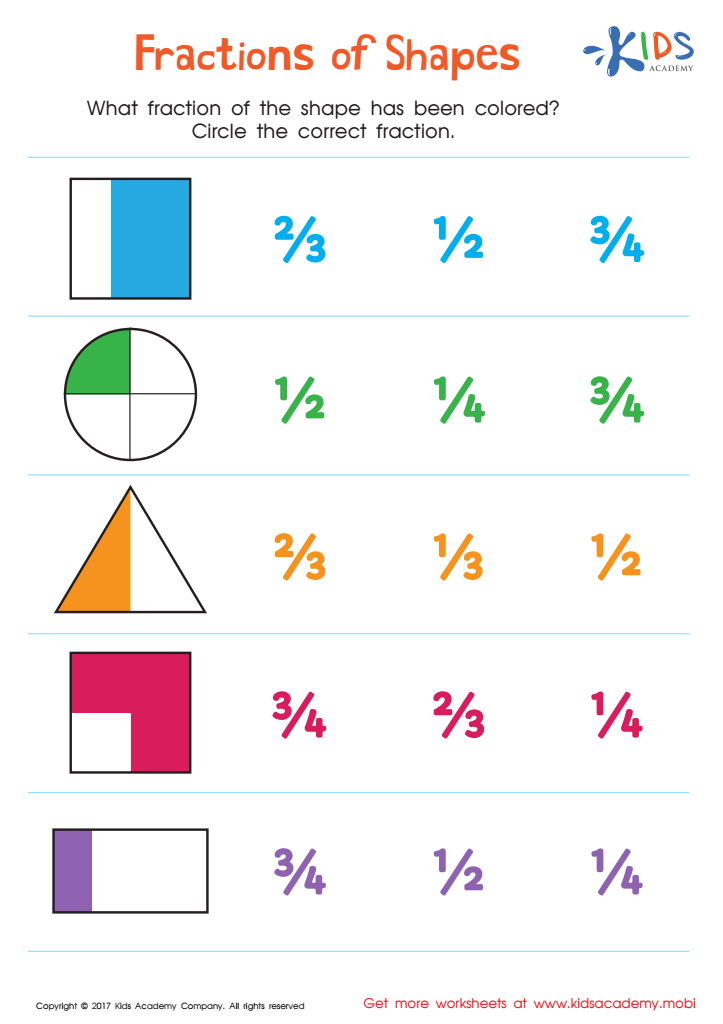
Fractions of Shapes: Math Concept Worksheet
Fractions can be tricky, but with pictures to illustrate them, they become much easier to understand. Our fractions of shapes worksheet is a great way to help children visualize fractions and gain a better understanding of them.
Fractions of Shapes: Math Concept Worksheet
Worksheet
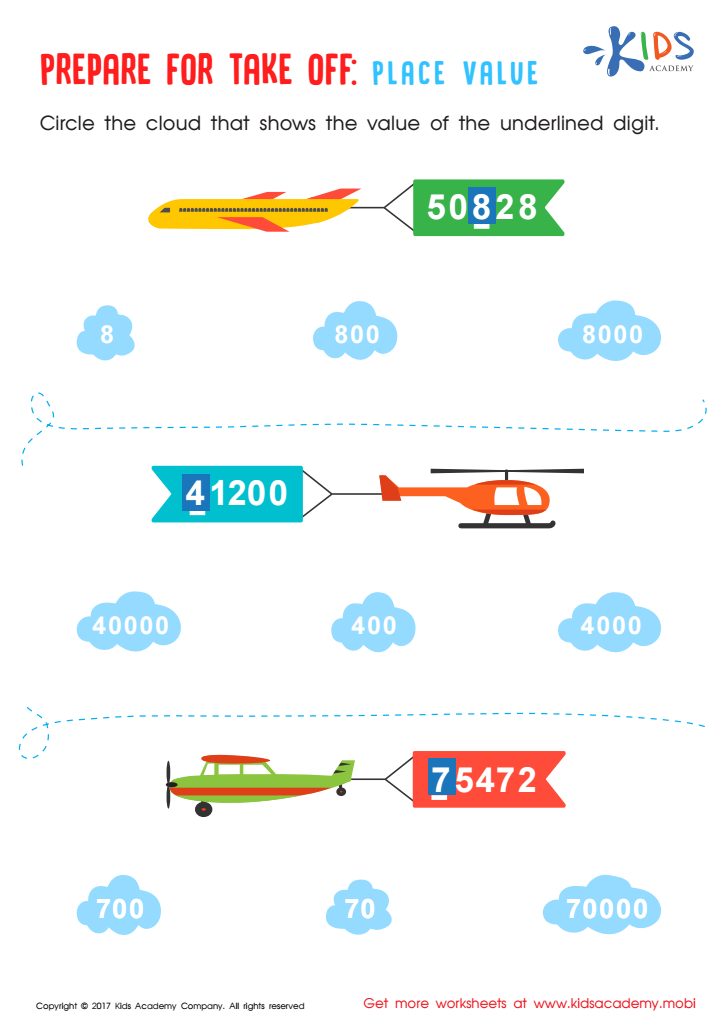
Free Place Value Worksheet for 3rd Grade
Take place value to new heights with this free 3rd grade worksheet! Your child will use large numbers in the tens of thousands and identify the place value of the underlined digit. Explore sky-high numbers and soar in place value skills!
Free Place Value Worksheet for 3rd Grade
Worksheet
Join Kids Academy for Free
Who is primarily going to use this learning content?







Developing strong mathematical skills in children aged 4-9 is crucial for several reasons, impacting both their current educational journey and future opportunities. Firstly, early exposure to math creates a solid foundation for more complex concepts. At this age, children are particularly receptive to learning foundational skills like counting, simple addition and subtraction, and recognizing patterns, all of which are essential building blocks for higher-level math.
Moreover, early math skills are closely linked to academic achievement not just in mathematics, but across all subjects. Mathematical understanding enhances cognitive skills such as logical reasoning, problem-solving, and critical thinking. These skills are transferable and beneficial in subjects like science and reading comprehension.
Additionally, fostering an early interest and competence in math can lead to increased self-confidence in young students. When children find math enjoyable and experience success, it cultivates a positive attitude toward learning and academics in general. This positive mindset can encourage a lifelong love of learning and curiosity.
Parents and teachers play a pivotal role in this developmental phase by creating engaging and supportive learning environments. Fun activities, games, and hands-on learning experiences can make math exciting and relatable. Prioritizing early math skills not only supports educational attainment but also equips children with essential life skills, fostering adaptable and capable future adults.








