Subtraction Worksheets for Ages 4-9 - Page 5
97 filtered results
-
From - To
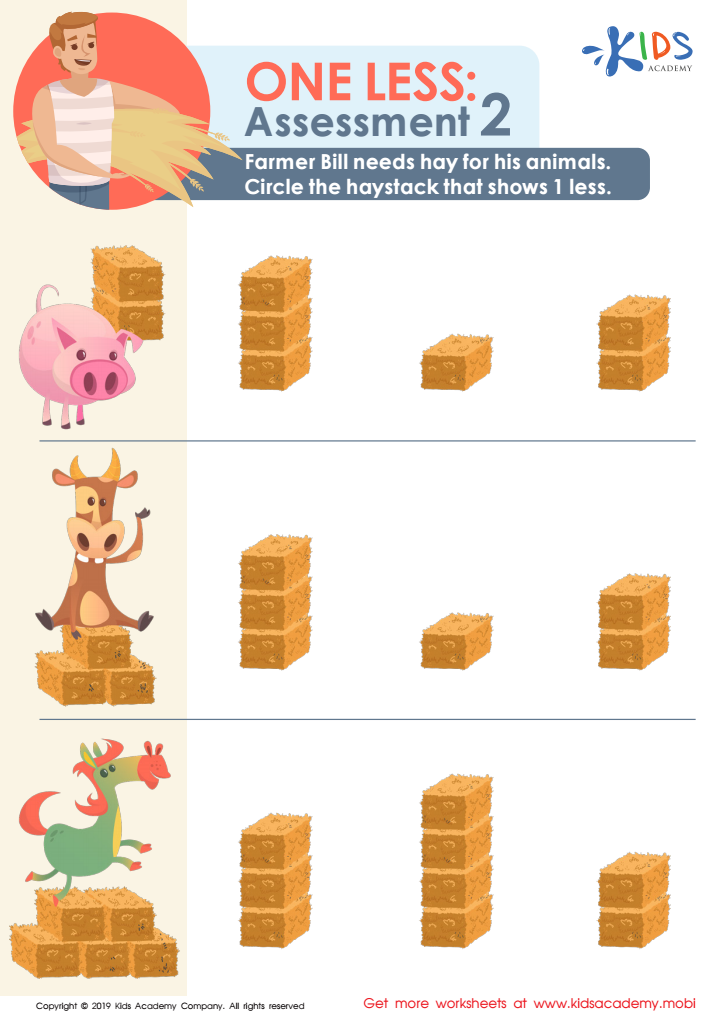
One Less: Assessment 2 Worksheet
 Assign to My Students








Understanding subtraction is fundamental for children aged 4-9 as it lays the groundwork for their future mathematical learning. Subtraction is just not about taking one number away from another; it teaches critical thinking, problem-solving, and logic. When children learn subtraction, they develop an understanding of numbers and how they relate to each other, which is vital for higher arithmetic operations and for grasping more complex math concepts later on.
Subtraction skills play a life-long role; from simple tasks like determining how much money is left after buying something, to more complex scenarios such as budgeting and statistical analyses. Early comprehension in this area opens doors to real-world applications that require such numerical skills.
For parents and teachers, ensuring a strong grasp of subtraction at an early age helps students build confidence and reduces math anxiety as they grow older. Activities engaging tactile or visual processes (like using manipulatives or drawing pictures) can make learning deduction intuitive and enjoyable, rather than intimidating.
Additionally, subtraction helps develop cognitive abilities that go beyond mathematics. It encourages a systematic way of thinking essential for other academic areas and everyday situations. Prioritizing subtraction education prepares children for future success in school and beyond, providing a vital tool not just in mathematics but in understanding the world around them.








