
Understanding Simple Machines Reading Worksheets for Ages 4-9
3 filtered results
Difficulty Level
Grade
Age
-
From - To
Subject
Activity
Standards
Explore our engaging "Understanding Simple Machines Reading Worksheets" designed specifically for kids aged 4-9! These worksheets introduce young learners to the fascinating world of simple machines, such as levers, pulleys, and inclined planes. By combining fun reading activities with illustrations, children will enhance their vocabulary and comprehension skills in an interactive way. Perfect for early-grade classrooms or at-home learning, our worksheets encourage curiosity and critical thinking as students discover how simple machines make work easier. Download now to inspire young minds and provide a solid foundation in science concepts through enjoyable reading exercises tailored for early learners!
Favorites
With answer key
Interactive
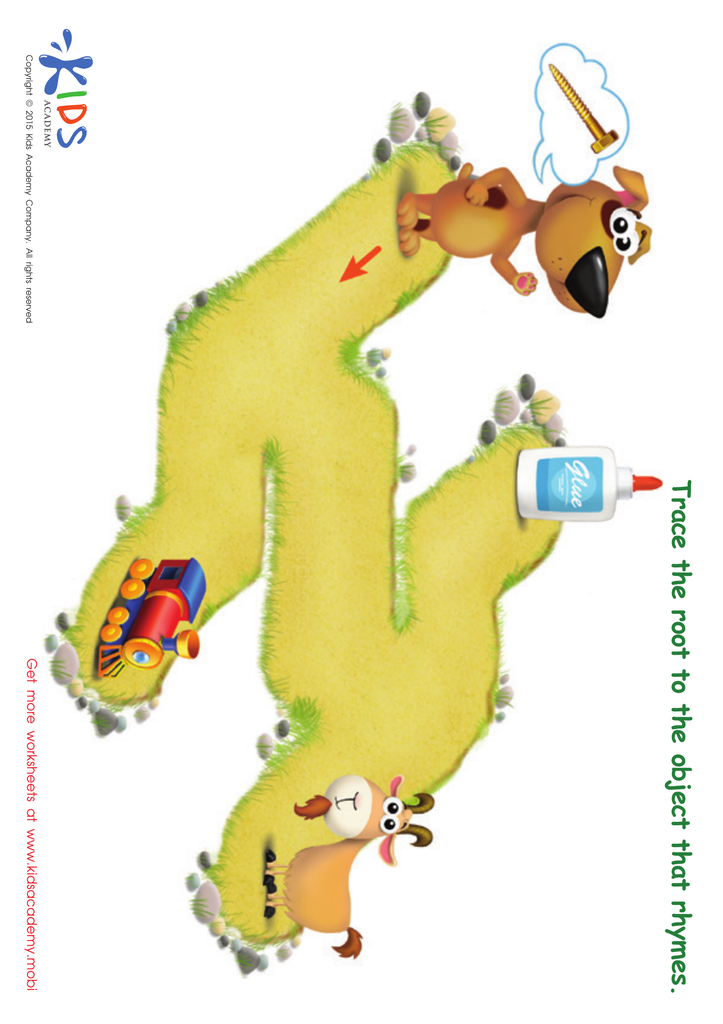
Screw Rhyming Words Worksheet
Worksheet
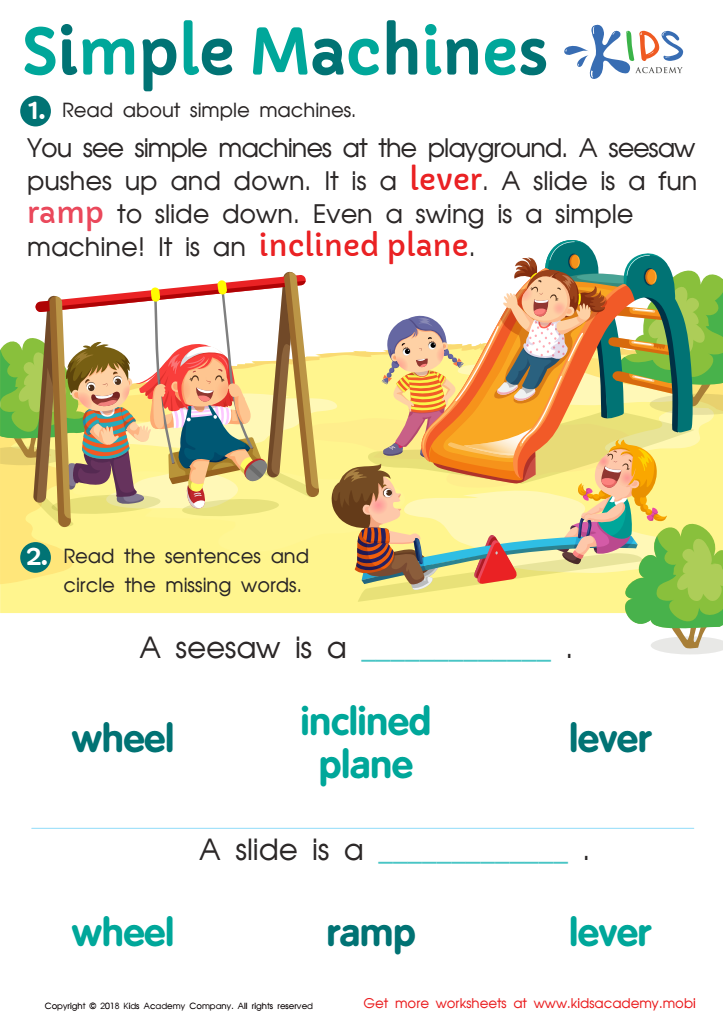
Simple Machines Worksheet
At the playground, your kids likely love to play and swing. Swings are simple machines – they work by using force to move something. Read the following sentences to them, with some words missing - help them fill in the blanks. Simple machines make work easier by __changing__ the size or __direction__ of a force. Swings use a _fulcrum_ and a _lever_ to move.
 Assign to My Students
Simple Machines Worksheet
Worksheet
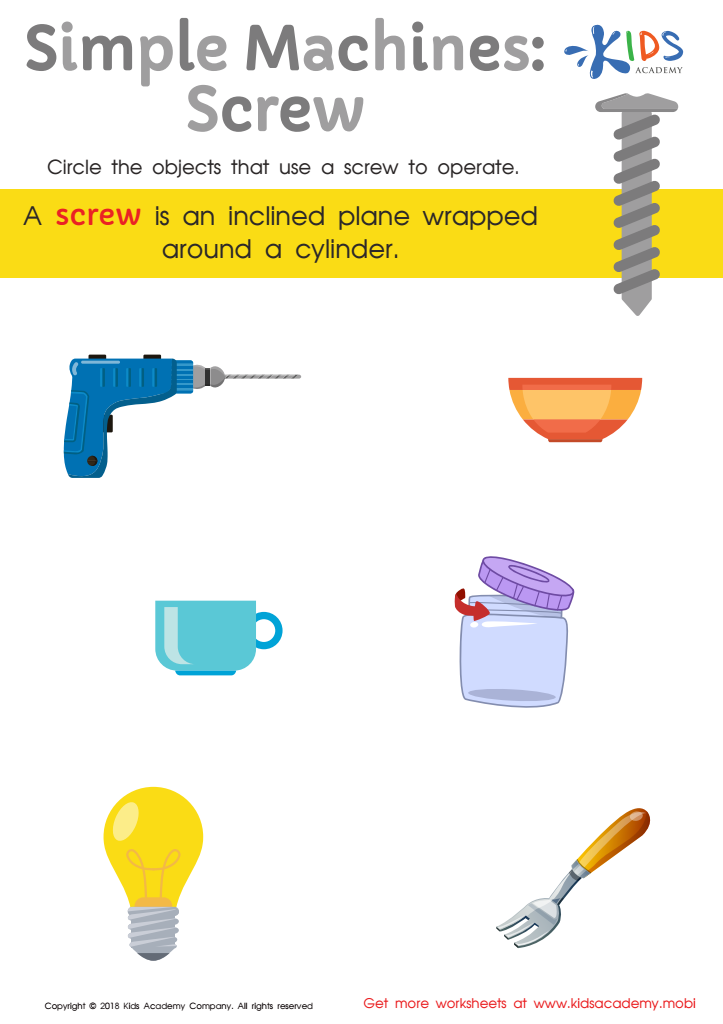
Simple Machines: Screw Worksheet
Explain to your kids that learning about simple machines can be fun - like the swings they love on the playground. Ask them to name some of their favorites. Point out that screws are used to connect simple machines. Then, look at pictures together and have your kids circle the objects that use a screw.
Simple Machines: Screw Worksheet
Worksheet
Join Kids Academy for Free
Who is primarily going to use this learning content?








Understanding simple machines is crucial for children aged 4-9 as it forms the foundation of their comprehension of how the world works. Simple machines, such as levers, pulleys, inclined planes, wheels and axles, screws, and wedges, are integral to everyday tasks, from riding a bicycle to lifting objects. By introducing these concepts at an early age, parents and teachers can inspire curiosity and critical thinking skills.
Engaging with simple machines provides children with hands-on learning experiences that foster problem-solving and innovation. As they interact with these concepts through play, they develop important skills such as observation, experimentation, and reasoning. Learning about simple machines also helps enhance a child's language and math abilities, as they use new vocabulary related to mechanics and engage in measurement and spatial relationships.
Additionally, understanding simple machines can lead to a better grasp of science and engineering concepts later in their education. It encourages STEM (Science, Technology, Engineering, Math) learning, which is increasingly vital in today’s technology-driven society. By prioritizing this learning at an early age, parents and educators equip children with the knowledge and skills that promote lifelong interest and excitement in the fields of science and engineering.








