
Cognitive Development Reading Comprehension Worksheets for Ages 4-9
11 filtered results
Difficulty Level
Grade
Age
-
From - To
Subject
Activity
Standards
Unlock your child's potential with our engaging Cognitive Development Reading Comprehension Worksheets, designed specifically for ages 4-9! These interactive resources enhance critical thinking and understanding while fostering a love for reading. Each worksheet features age-appropriate stories and questions that promote cognitive growth, helping young learners improve their comprehension skills, vocabulary, and ability to make connections. Fun illustrations and diverse topics keep children captivated and eager to learn. Perfect for homeschooling or in-class activities, these worksheets ensure that reading is not just educational but also enjoyable. Boost your child's reading journey today with our thoughtful, skill-building worksheets!
Favorites
With answer key
Interactive
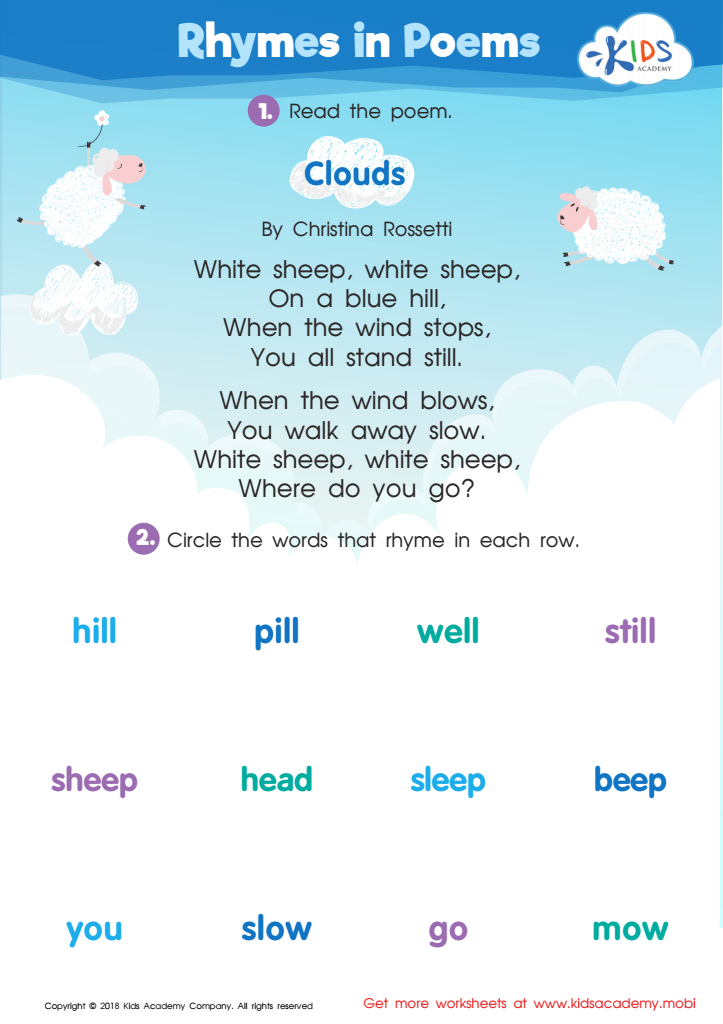
Rhymes in Poems Worksheet
Poems are lovely works of literature; some with rhymes, and some without. This poem for kids is full of rhymes and tells the tale of a sheep. Read it aloud to your kids, then help them circle the rhyming words.
 Assign to My Students
Rhymes in Poems Worksheet
Worksheet
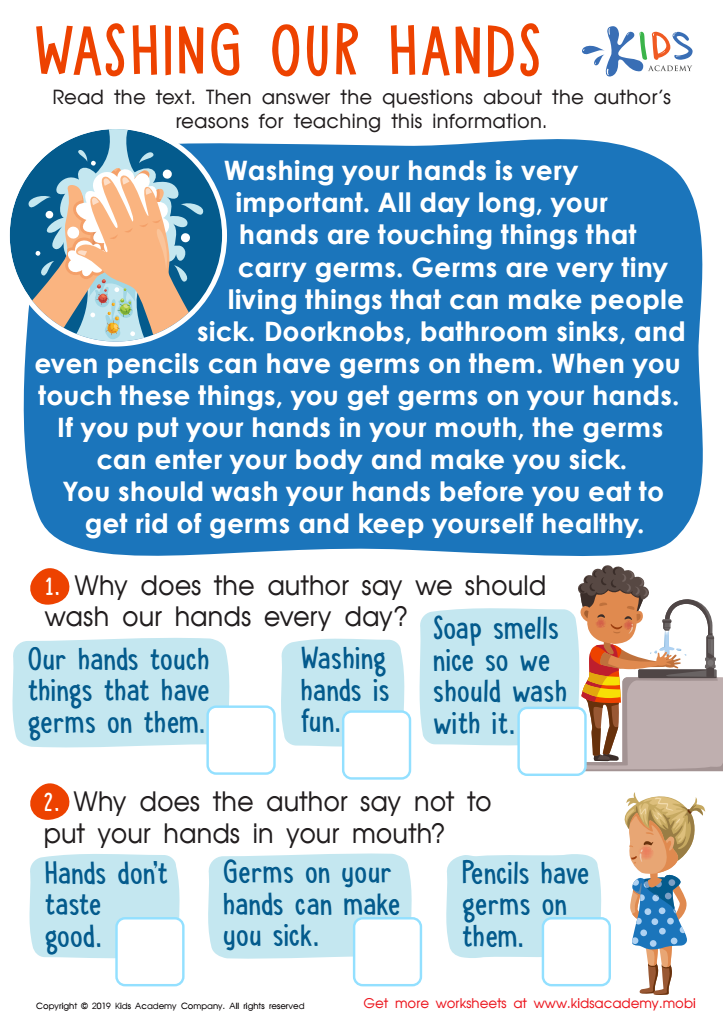
Washing Our Hands Worksheet
Reading allows us to gain knowledge. Informational texts provide essential facts which we need to be able to interpret and use. This PDF worksheet helps kids understand the importance of handwashing. It informs them of the germs they may come into contact with, before asking them to answer related comprehension questions.
Washing Our Hands Worksheet
Worksheet
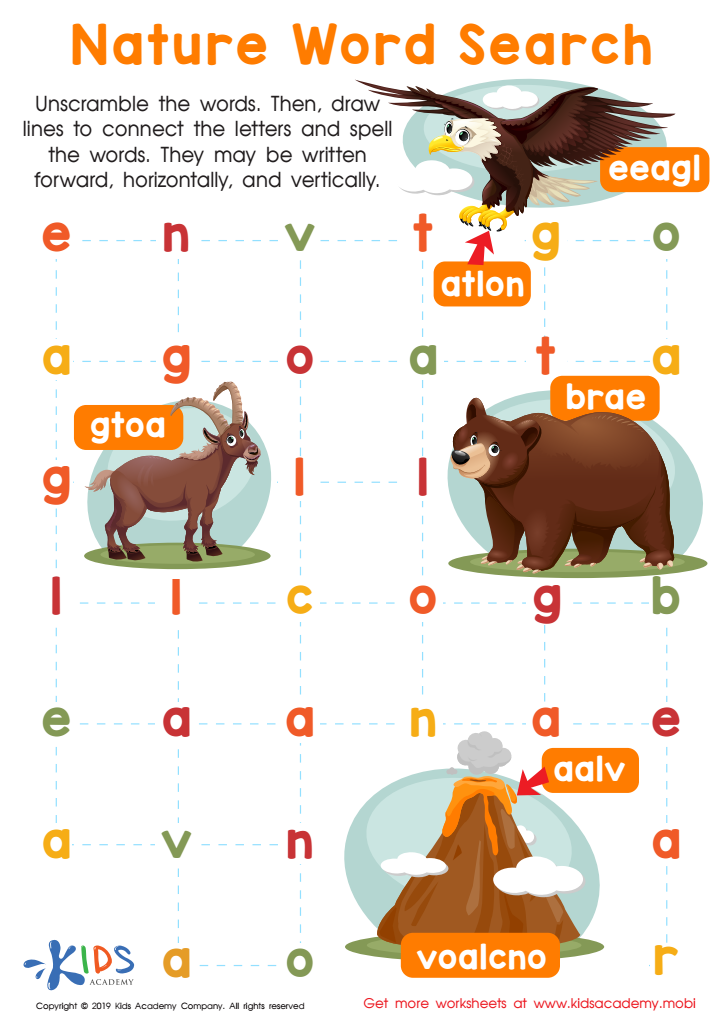
Nature Word Search Worksheet
Unscramble science vocabulary words and find them in this fun worksheet! Use the pictures as clues if you get stumped; you can also write down the words for reference. Solve the puzzle when you're done to finish!
Nature Word Search Worksheet
Worksheet
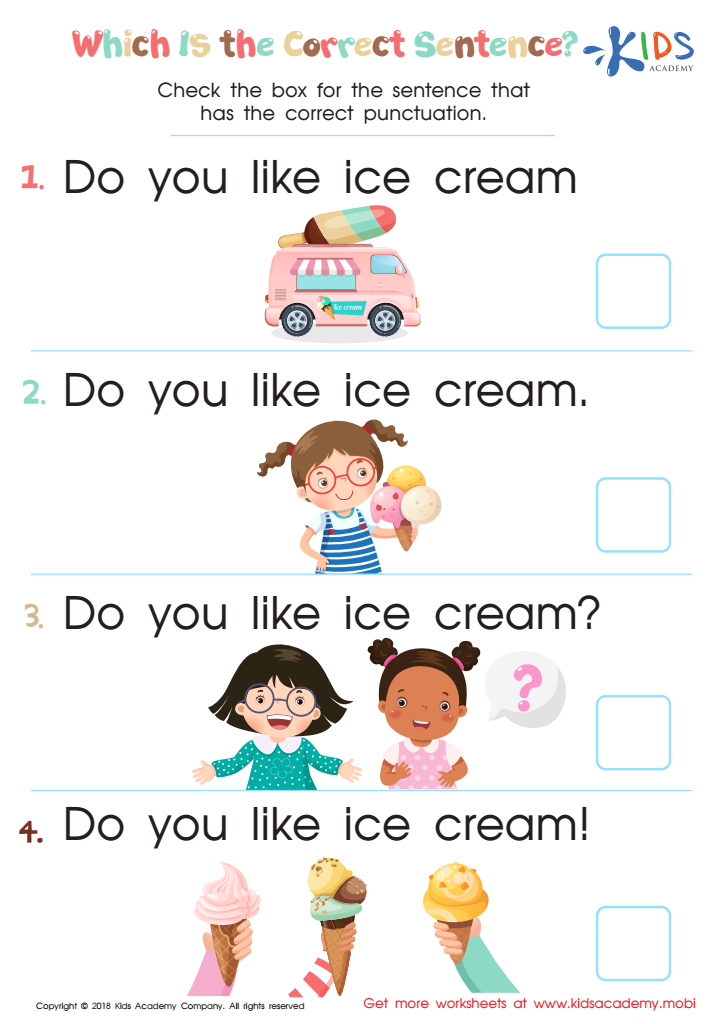
Which is the Correct Sentence? Worksheet
Punctuation is crucial in sentence formation. If your kid still doesn't grasp it, bigger hurdles await when writing sentences. Get them to read simple sentences, then ask if they know the right punctuation. Assist them in selecting the sentence that has the accurate punctuation.
Which is the Correct Sentence? Worksheet
Worksheet
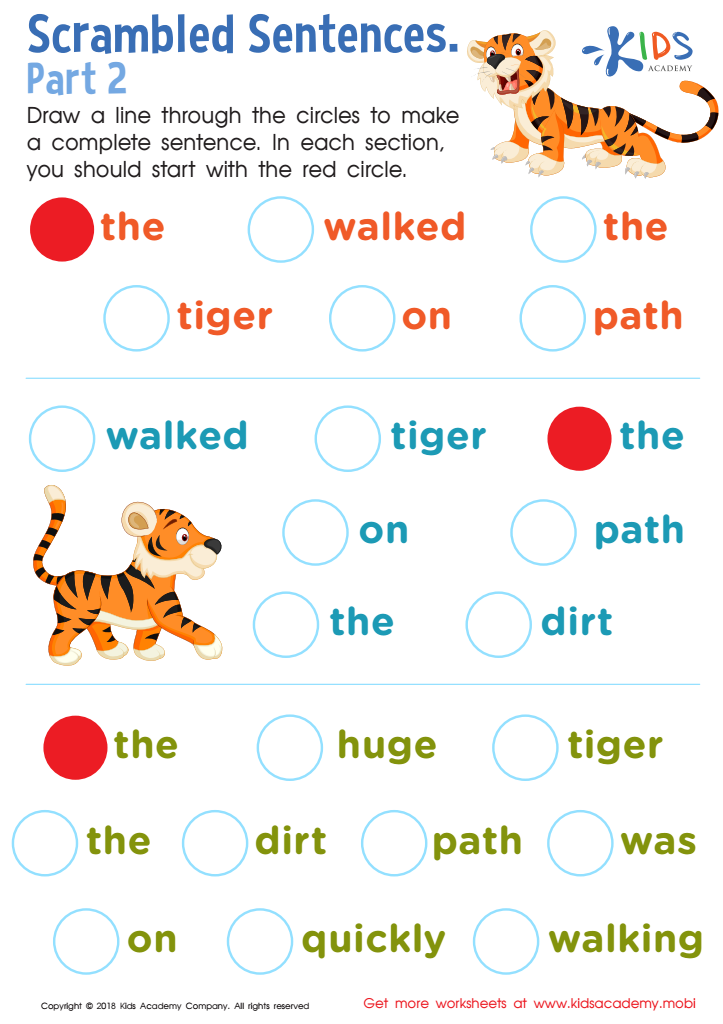
Scrambled Sentences Part 2 Worksheet
This printable worksheet helps kids construct simple, correct sentences. Introduce them to making sentences if they're new to it. Have them draw a line through the circles to form a sentence, starting with the red circle. After completing this exercise, they'll be able to craft short sentences with confidence.
Scrambled Sentences Part 2 Worksheet
Worksheet
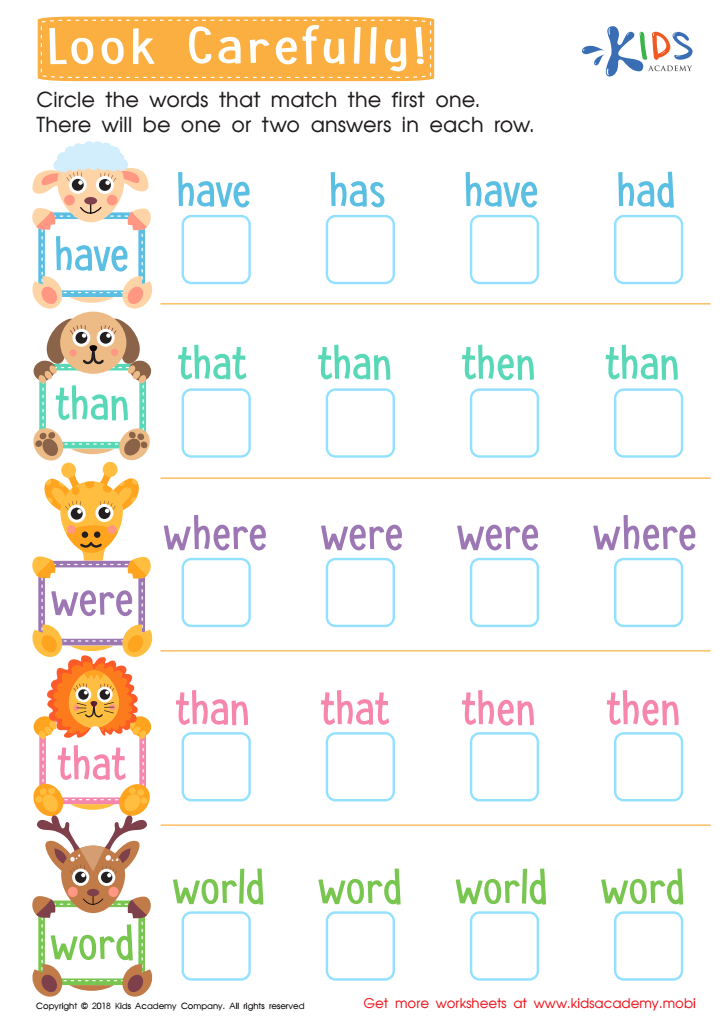
Look Carefully Worksheet
It's crucial to teach kids to identify sight words and become fluent readers. This free worksheet helps make it simpler for kids to learn the similarities and differences between similar words. They'll get practice by looking at the box word and selecting the one that matches from the row.
Look Carefully Worksheet
Worksheet
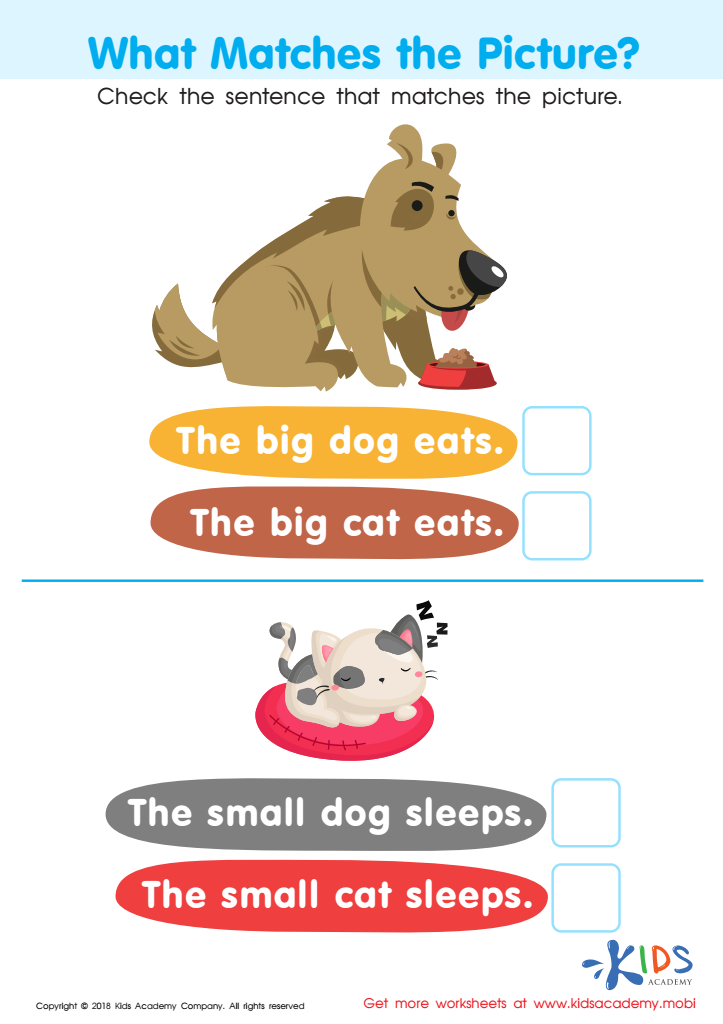
What Matches the Picture? Worksheet
Emerging readers can use pictures of cute pets and phrase repetition to match sentences to pics, building skills while having fun! It's a great way to bolster vocab and confidence, motivating them to keep reading.
What Matches the Picture? Worksheet
Worksheet
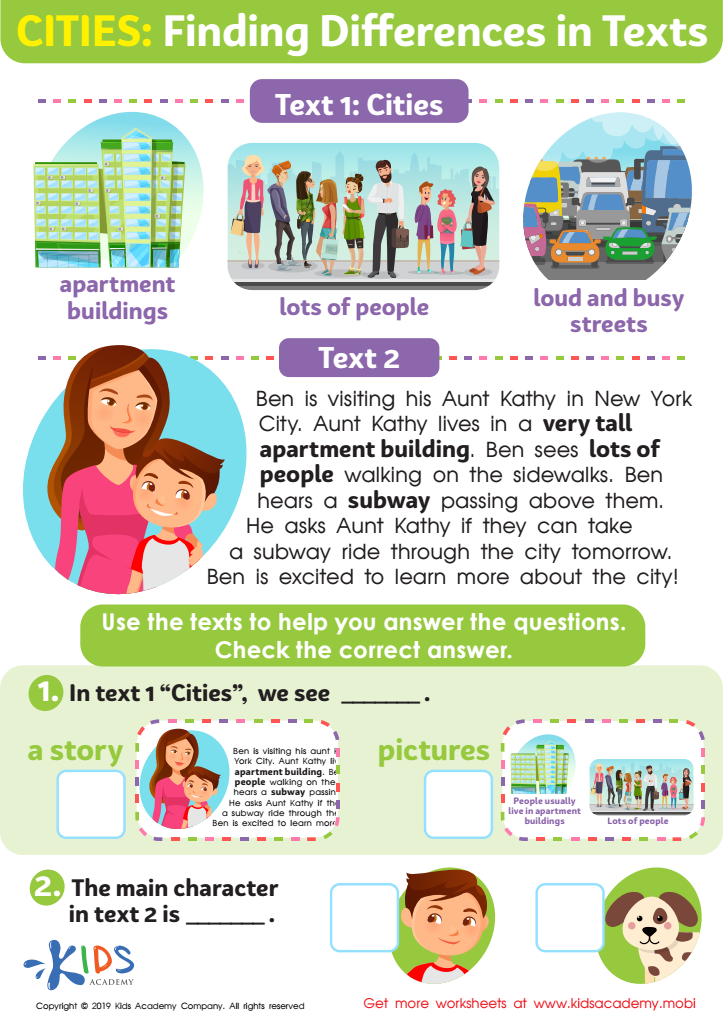
Cities: Finding Differences Worksheet
Critical thinking is essential for reading comprehension. New readers must be able to identify the key information in different text formats. This worksheet helps children learn what they might find in cities and how to differentiate between stories and pictures.
Cities: Finding Differences Worksheet
Worksheet
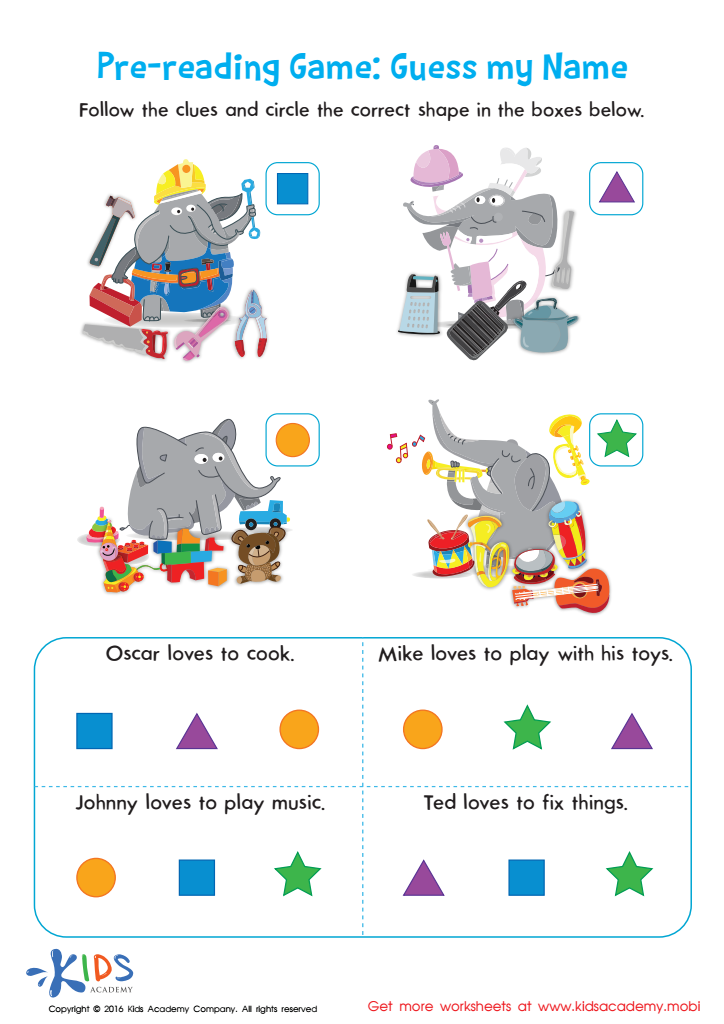
Pre Reading Worksheet Guess My Name
Guess My Name is a fun way to practice inference skills.
Guess My Name is a fun pre-reading game to help your child practice drawing inferences from clues. With colorful illustrations, they'll use clues to match each elephant with its sentence and sharpen their inference skills.
Pre Reading Worksheet Guess My Name
Worksheet
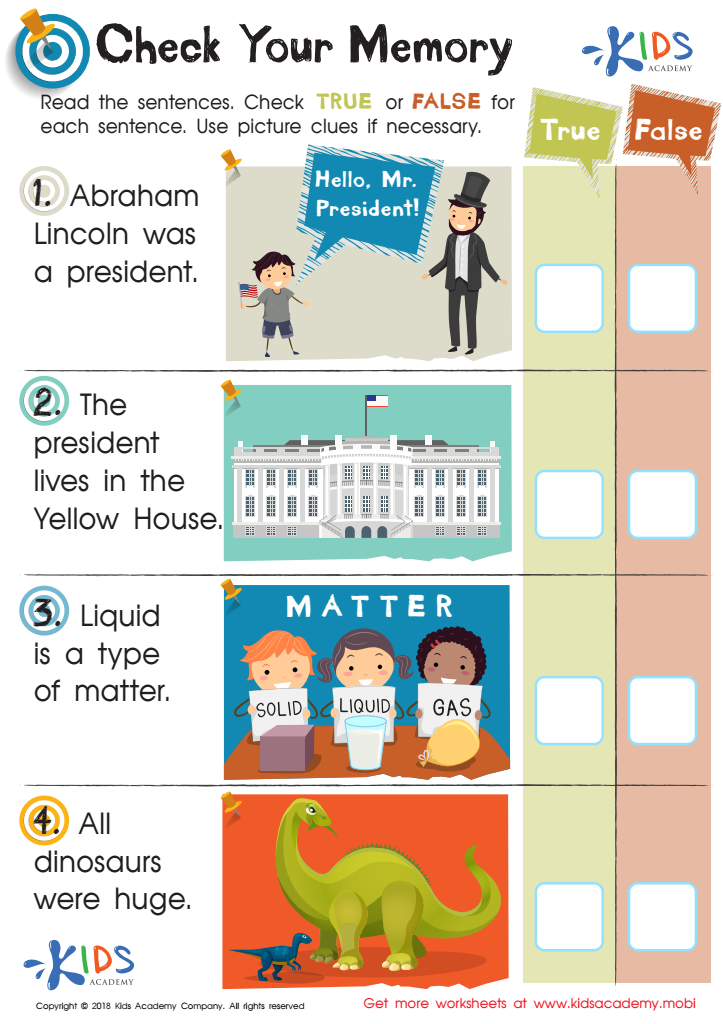
Check Memory Worksheet
Assisting your kids with their homework and using worksheets is a great way for them to learn. The vibrant visuals in this printout can help stimulate the mind and motivate your child. Have them read the sentences and then point to the associated images. Afterwards, ask them to state True or False for each sentence. If they are still uncertain, offer them the picture clues to assist further.
Check Memory Worksheet
Worksheet
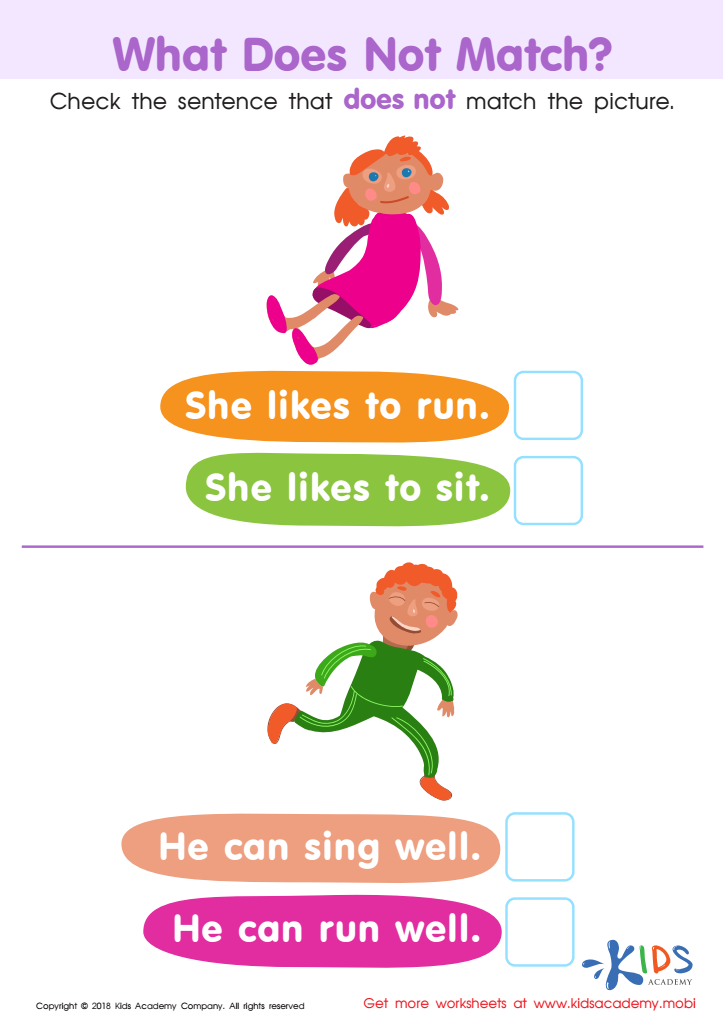
What Does Not Match? Worksheet
Emerging readers need to practice using visual cues and repetitive text. This colorful PDF provides them with an opportunity to look at pictures, use discrimination and discern which phrase does not match. It also enables them to gain familiarity with high-frequency words to aid decoding longer sentences.
What Does Not Match? Worksheet
Worksheet
Join Kids Academy for Free
Who is primarily going to use this learning content?








Cognitive development plays a crucial role in a child's reading comprehension, particularly for children aged 4-9, a key stage in literacy acquisition. During this formative period, children actively engage in understanding language concepts, vocabulary, and story structures. Parents and teachers should prioritize cognitive development because it lays the foundation for effective reading skills, essential for academic success.
Reading comprehension involves decoding words, but it also requires making connections, inferring meaning, and integrating prior knowledge. As children develop these cognitive skills, they become better equipped to tackle more complex texts. A strong reading comprehension ability not only enhances literacy but also fosters critical thinking and problem-solving skills, encouraging a lifelong love for learning.
Engaging children in interactive reading activities, like discussing stories and asking open-ended questions, stimulates cognitive growth and reinforces comprehension. Moreover, scaffolding support tailored to individual learning needs helps bridge gaps and promote confidence.
For children facing difficulties, early intervention is vital. By collaborating closely, parents and teachers can create an enriching environment where cognitive development flourishes, paving the way for better academic outcomes and fostering emotional intelligence as children connect with characters and themes in stories. Ultimately, investing in cognitive development today secures brighter futures for our young learners.








