Moral understanding Reading Comprehension Worksheets for Ages 4-9
5 filtered results
-
From - To
Discover our engaging Moral Understanding Reading Comprehension Worksheets designed for children aged 4-9! These worksheets help young learners grasp essential moral lessons through entertaining stories and relatable characters. Engaging activities promote critical thinking as kids evaluate actions and consequences, enhancing their emotional intelligence. Perfect for classroom or at-home learning, each worksheet includes colorful illustrations and comprehension questions to foster discussion and reflection. Make reading meaningful by guiding children to recognize values such as empathy, honesty, and kindness. Equip your students with the moral compass they need to navigate their world while developing strong reading skills. Start exploring our worksheets today!
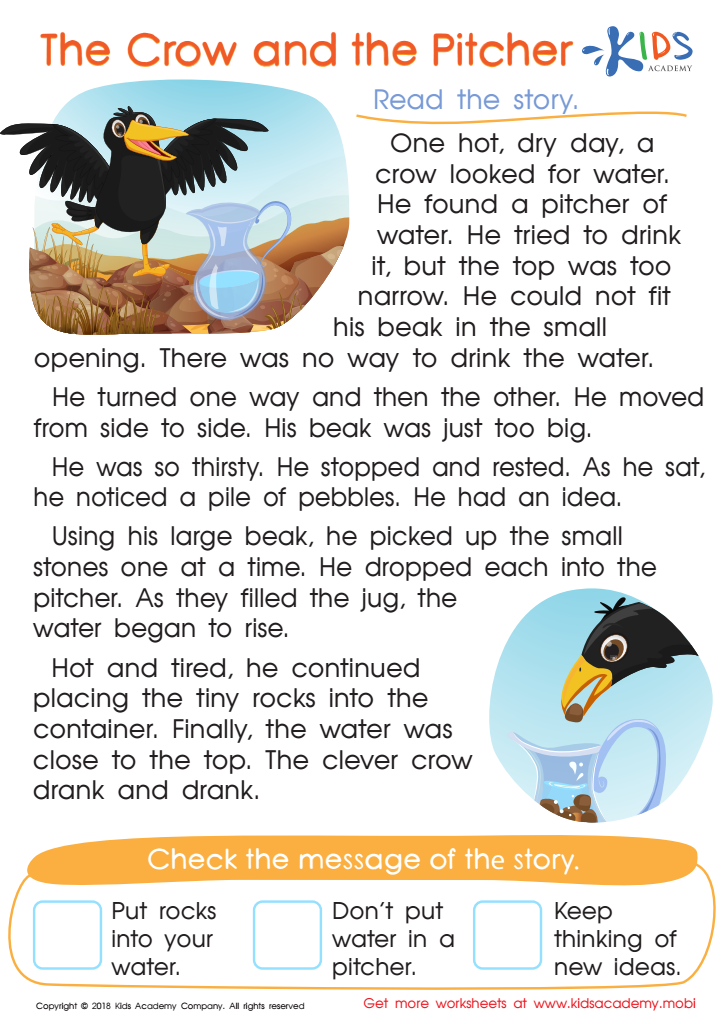
The Crow and the Pitcher Worksheet
 Assign to My Students
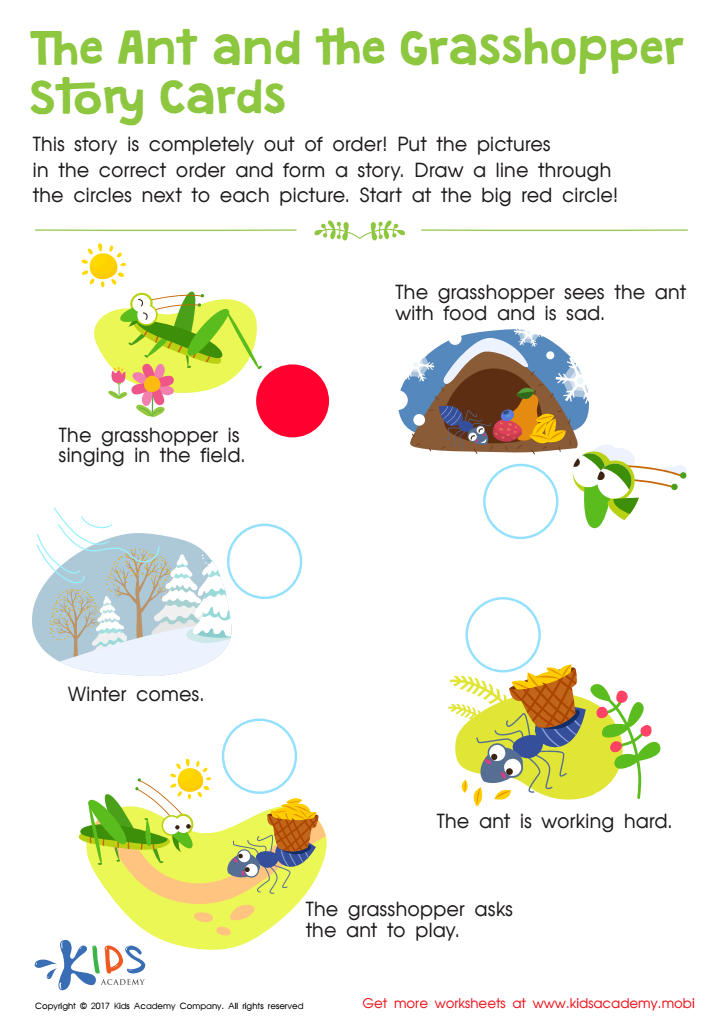
The Ant and The Grasshopper Worksheet
True or False? The Boy Who Cried Wolf Worksheet
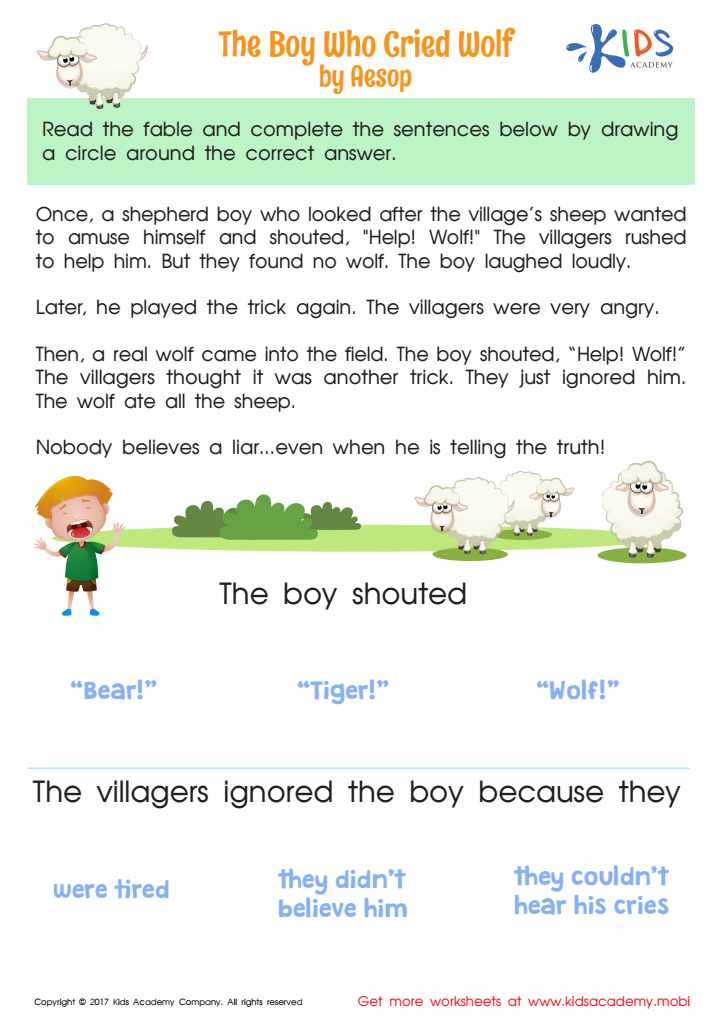
The Boy Who Cried Wolf Worksheet
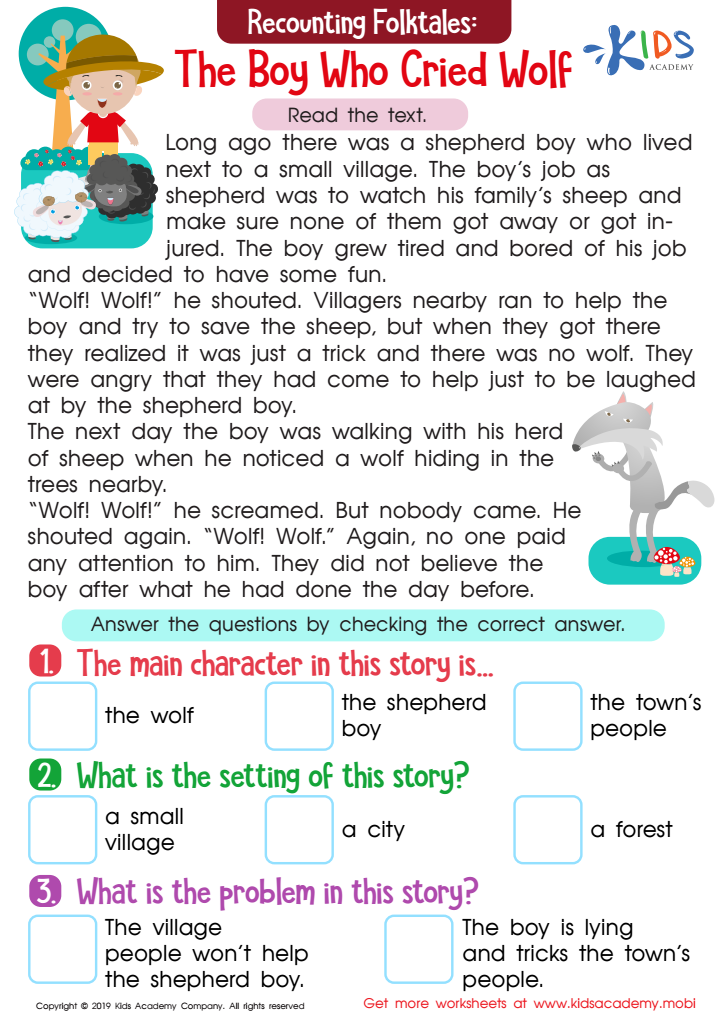
The Boy Who Cried Wolf Part 1 Worksheet







Moral understanding and reading comprehension are crucial components of a child's development, particularly for ages 4-9. During these formative years, children not only acquire literacy skills but also navigate social interactions and cultural norms. Moral understanding refers to the ability to differentiate between right and wrong and to empathize with others, while reading comprehension involves grasping the meaning of text.
Parents and teachers should prioritize these areas because they fundamentally shape a child's worldview and relationships. Stories often embed moral dilemmas and ethical lessons, offering children opportunities to engage with concepts like fairness, compassion, and responsibility. By promoting moral development through reading, educators and parents can help children understand the consequences of their actions and the importance of treating others with kindness.
Furthermore, strong reading comprehension enhances critical thinking skills, enabling children to analyze the motivations behind characters' actions and connect them to real-life situations. This not only boosts literacy but also prepares children to express their values and make ethical decisions. Involvement in moral narrative discussions can lead to more compassionate, socially aware individuals. Overall, nurturing both moral understanding and reading comprehension is vital for fostering a generation of empathetic and responsible citizens.








