
Improving comprehension Science Worksheets for Ages 4-9
4 filtered results
Difficulty Level
Grade
Age
-
From - To
Subject
Activity
Standards
Discover our "Improving Comprehension Science Worksheets for Ages 4-9," designed to boost young learners' understanding of key science concepts while nurturing their reading skills. Our engaging and fun worksheets cover a variety of topics and are tailored to meet the developmental needs of children ages 4 to 9. Each worksheet is crafted to enhance comprehension, encourage curiosity, and build a strong foundation in science. Ideal for both classroom and home use, these worksheets make learning science an exciting adventure. Help your child explore, comprehend, and love science with our expertly designed resources!
Favorites
With answer key
Interactive
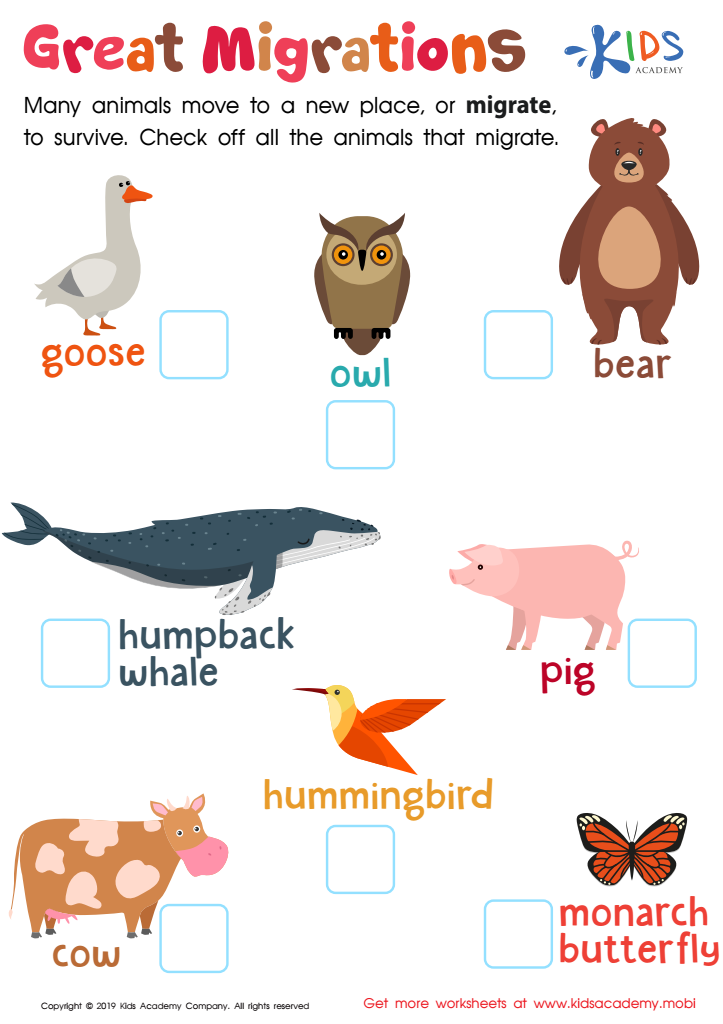
Great Migrations Worksheet
Identify animals in the worksheet with your kids. See which ones migrate: check the boxes! Migration is when birds and other animals only appear for certain seasons or long periods, then come back when the weather changes.
 Assign to My Students
Great Migrations Worksheet
Worksheet
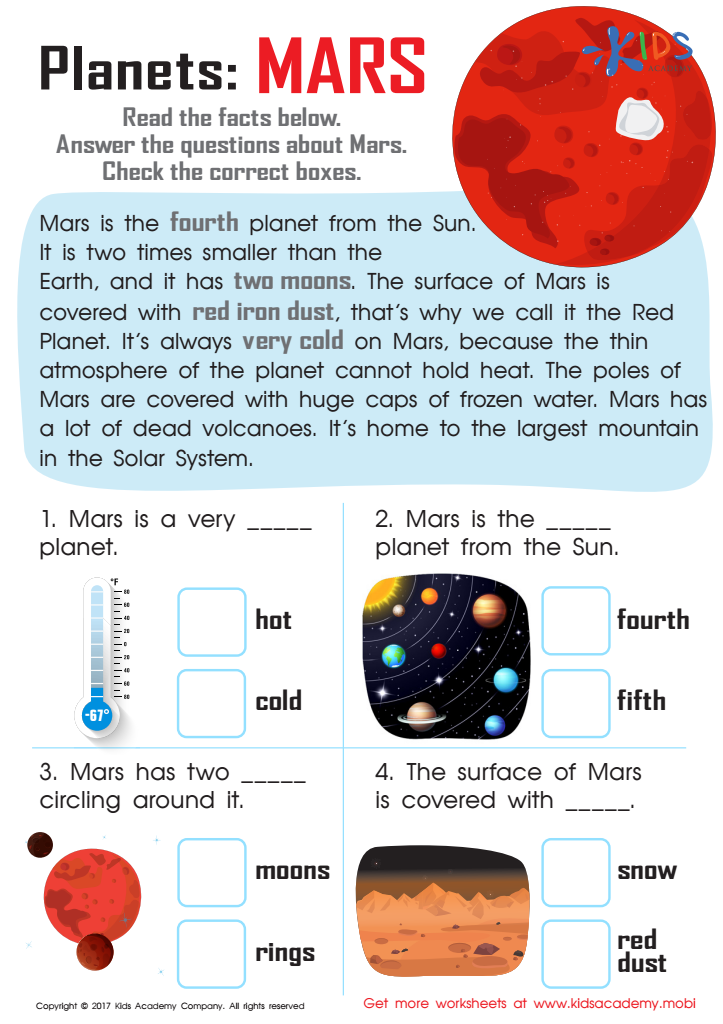
Mars Fact Printable Worksheet
Want to learn about Mars? Get this fun printable worksheet - it's packed with information about the red planet. Discover facts about its temperature, terrain and position in the solar system. It's a great way for kids to explore the wonders of our universe.
Mars Fact Printable Worksheet
Worksheet
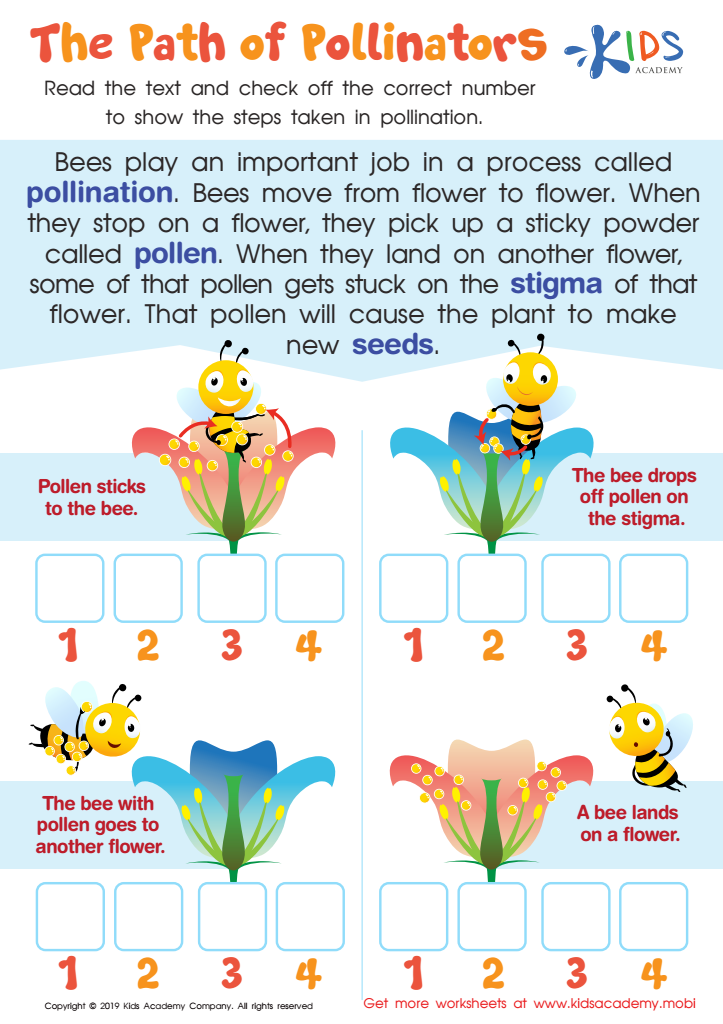
The Path of Pollinators Worksheet
Bees play a vital role in pollination: they transfer pollen between flowers, allowing them to produce new seeds. Without bees, we'd have less flowers and vegetation. Explain the process to your students and have them check off the right number to show the steps in pollination.
The Path of Pollinators Worksheet
Worksheet
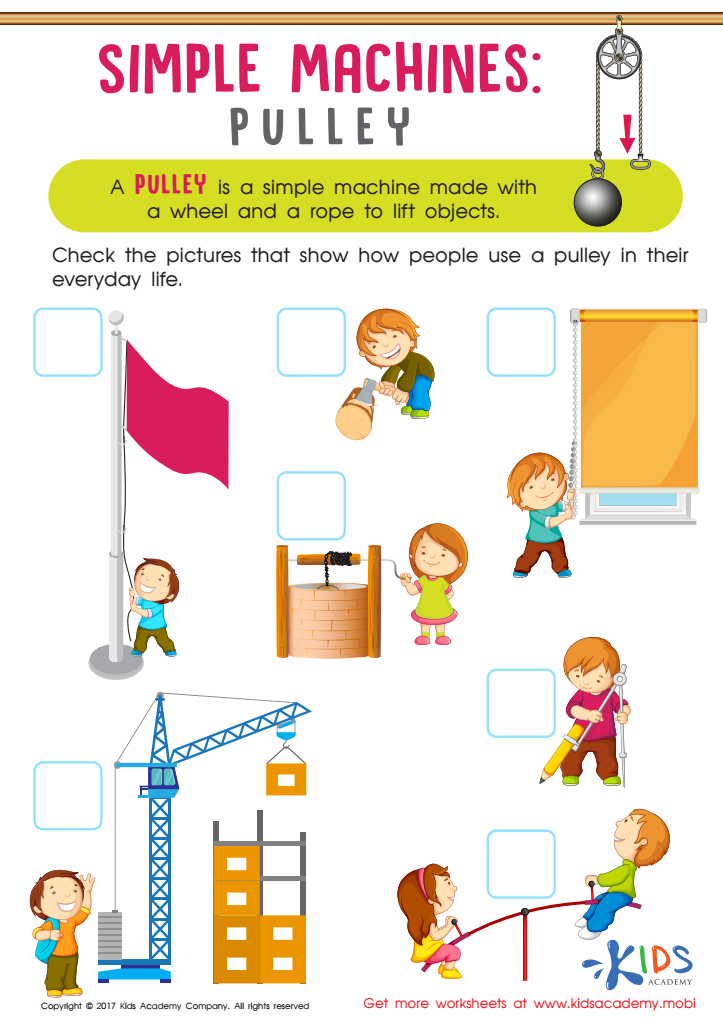
Simple Machines Pulley Worksheet
Pulleys make everyday life easier, from flag poles to elevators. This worksheet helps kids recognize and appreciate how pulleys simplify our lives. They'll learn about the many practical uses for these simple rope and wheel systems.
Simple Machines Pulley Worksheet
Worksheet
Join Kids Academy for Free
Who is primarily going to use this learning content?






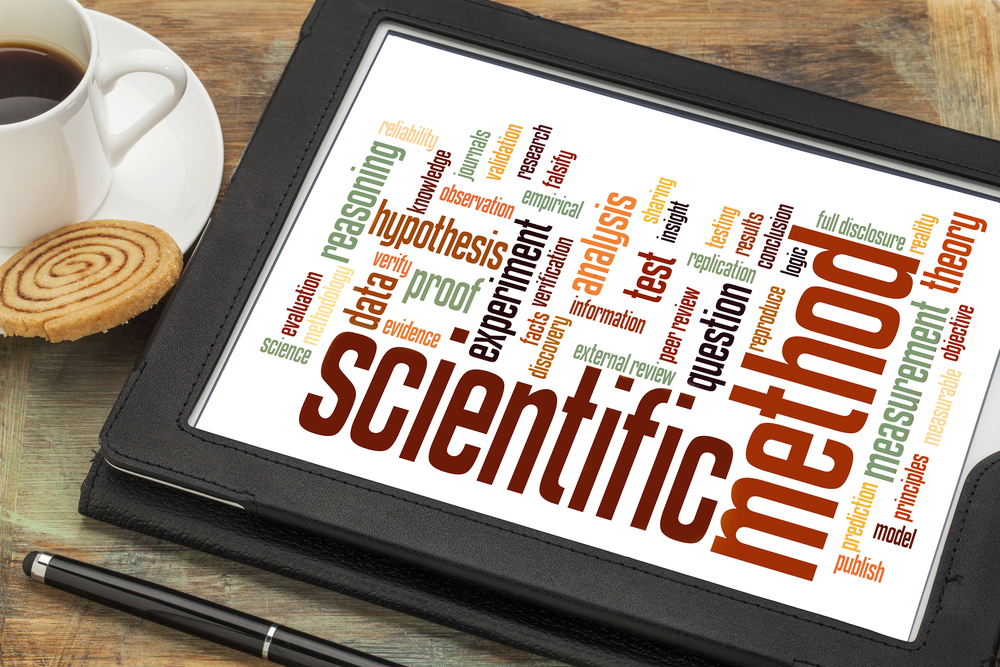

Improving science comprehension in early childhood is crucial because it lays the groundwork for lifelong learning and curiosity. Children aged 4-9 are at a developmental stage where their cognitive abilities and curiosity about the world are rapidly expanding. Introducing science concepts during this period helps to foster critical thinking, problem-solving skills, and a deep understanding of the natural world. This foundation is essential not just for academic success, but also for developing informed, capable adults who are equipped to tackle complex global challenges.
Moreover, engaging with science nurtures a child's innate curiosity and encourages an investigative mindset. Hands-on experiments, observations, and questioning the world around them can make learning both fun and meaningful, instilling a love for science at a young age. When parents and teachers prioritize science comprehension, they also promote language development and literacy, as science involves reading, understanding, and communicating complex ideas.
Furthermore, early exposure to science can inspire future interests and careers in STEM (Science, Technology, Engineering, Mathematics) fields, which are critical for the future job market. Finally, fostering a positive attitude towards science at a young age can help combat stereotypes and encourage diversity in STEM fields. Prioritizing science comprehension for young children thus has far-reaching benefits that extend well beyond the classroom.







