Recognizing Patterns Science Worksheets for Ages 4-9
3 filtered results
-
From - To
Explore our "Recognizing Patterns Science Worksheets" designed for children ages 4 to 9! These engaging worksheets help young learners identify and understand patterns in their environment, a foundational skill in science and mathematics. Each worksheet features vibrant illustrations and age-appropriate activities that captivate children's imaginations while promoting critical thinking. From simple sequences to more complex patterns, our resources provide a fun way to enhance observational skills and encourage curiosity. Perfect for classroom activities or at-home practice, these worksheets align with educational standards to ensure your child is on the path to success. Start fostering scientific exploration today!
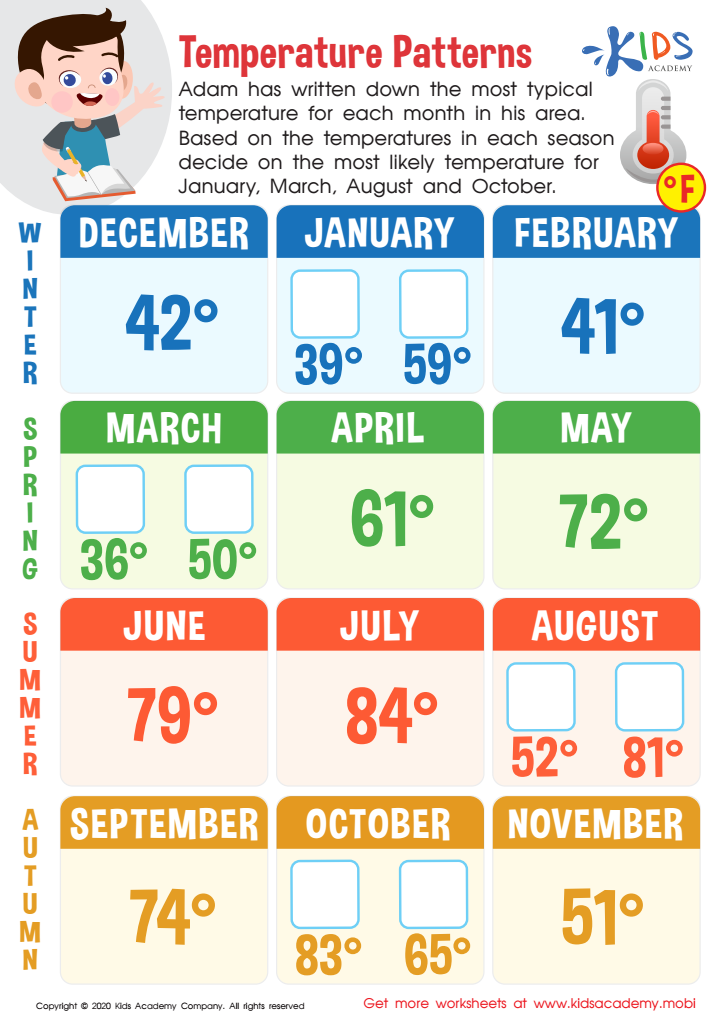
Temperature Patterns Worksheet
 Assign to My Students
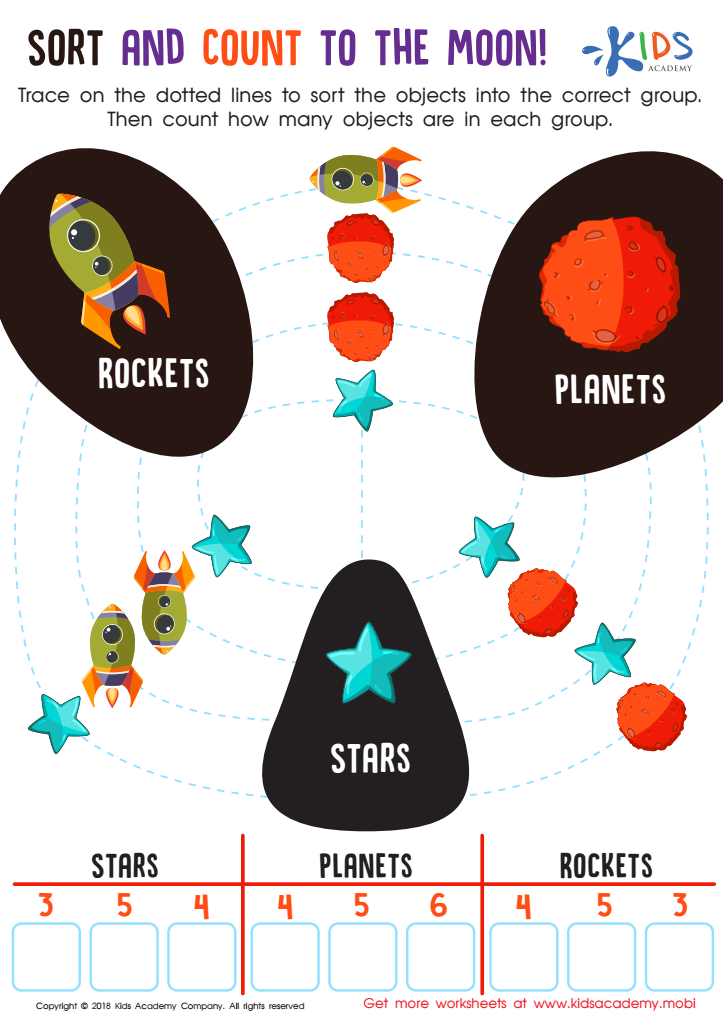
Sort and Count to the Moon Worksheet
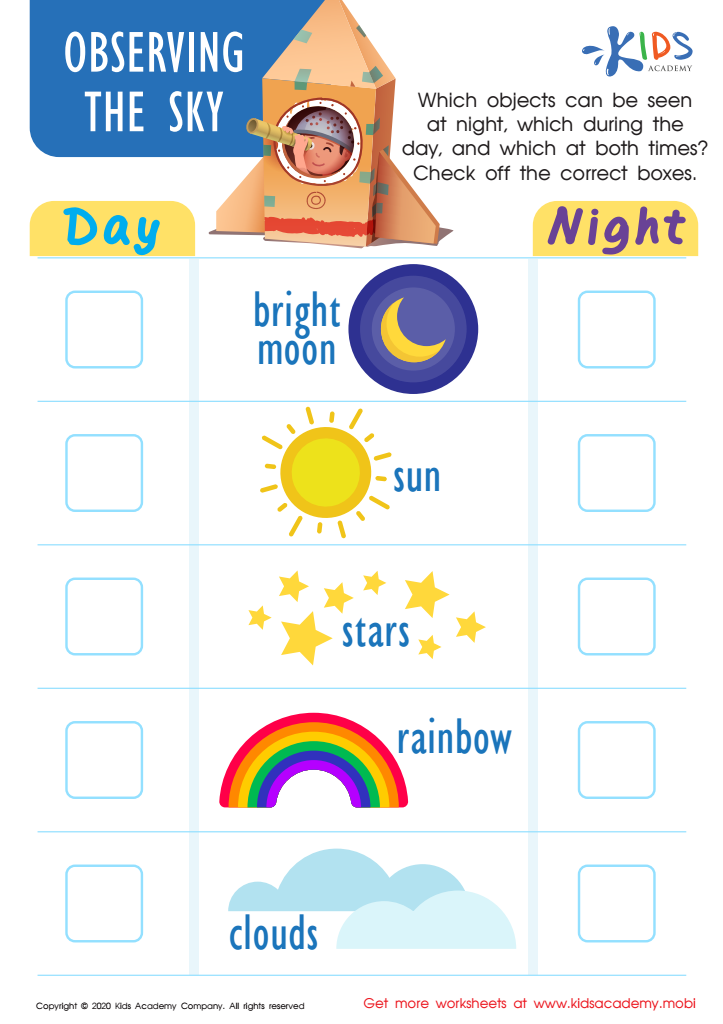
Observing the Sky Worksheet







Recognizing patterns is a fundamental skill in early education, particularly in science for children aged 4-9. This developmental stage is crucial for fostering critical thinking and problem-solving abilities, and pattern recognition serves as a building block for these skills. Parents and teachers should care deeply about this concept because it allows children to make connections between different ideas and experiences, enhancing their understanding of the world around them.
When children learn to identify patterns, such as shapes, colors, or sequences in nature, they develop observational skills that are essential in scientific inquiry. For instance, recognizing seasonal changes or the growth patterns of plants leads to a deeper appreciation of biology and ecosystems. Moreover, this skill is linked to mathematical thinking, as understanding patterns can aid in grasping concepts like counting, sorting, and arranging.
Encouraging pattern recognition also cultivates creativity. When children engage in art or music, patterns help them create rhythm and structure. Finally, fostering this skill promotes confidence as children celebrate their discoveries, setting a foundation for lifelong learning. By prioritizing recognition of patterns in science, parents and teachers can equip young learners with invaluable tools that enrich their educational journey and spark an enduring curiosity about the world around them.







