
Science knowledge application Science Worksheets for Ages 4-9
3 filtered results
Difficulty Level
Grade
Age
-
From - To
Subject
Activity
Standards
Unlock your child’s curiosity and potential with our Science Knowledge Application Worksheets, designed for ages 4-9! Our engaging, age-appropriate worksheets inspire young learners to apply their scientific knowledge through fun, hands-on activities. With a wide variety of topics such as plants, animals, weather, and space, these worksheets encourage critical thinking and a love for discovery. Tailored to align with educational standards, each worksheet boosts observational skills, problem-solving, and creativity. Foster a lifelong passion for science and pave the way for academic success. Download our beautifully crafted, expert-approved worksheets today and watch your child thrive!
Favorites
With answer key
Interactive
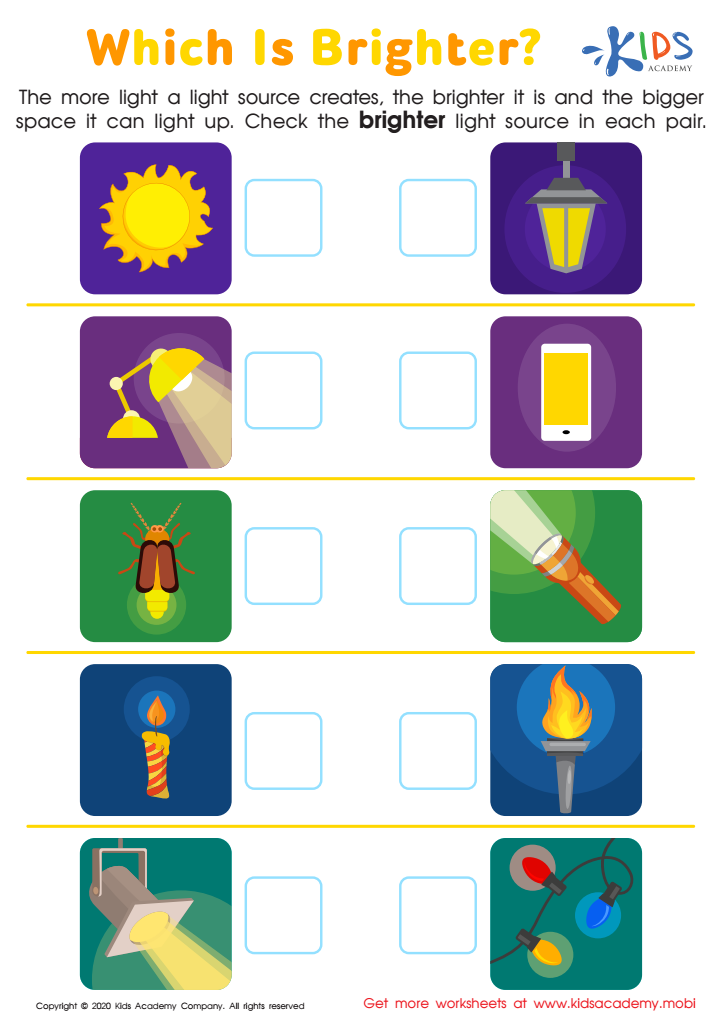
Which Is Brighter? Worksheet
Before the exercise, ask students to recall sources of light. Use this worksheet to explain that the brighter the light source, the more space it can light up. Identify the different light sources in the pictures, then check the brighter light source in each pair. The biggest natural source of light is the sun.
 Assign to My Students
Which Is Brighter? Worksheet
Worksheet
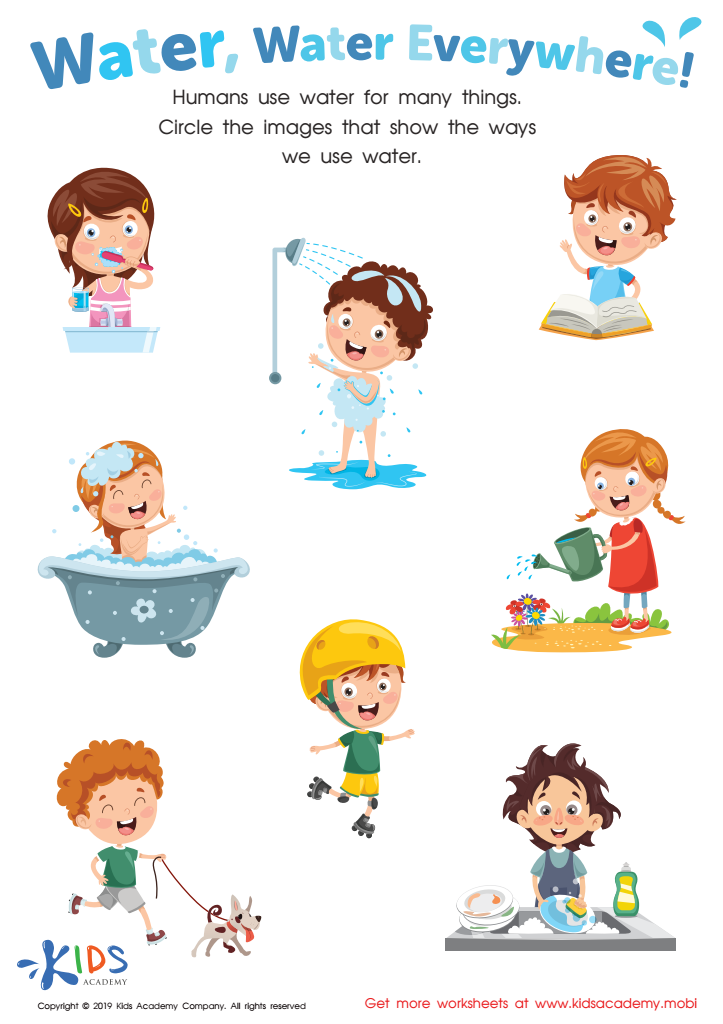
Water, Water Everywhere! Worksheet
Ask your kids how we use water daily. Point out how vital it is to the environment, as many living things couldn't exist without it. Show them this worksheet with kids doing different things that involve water. Ask them to identify what each one is doing, then help them circle the images which show the ways we use the water.
Water, Water Everywhere! Worksheet
Worksheet
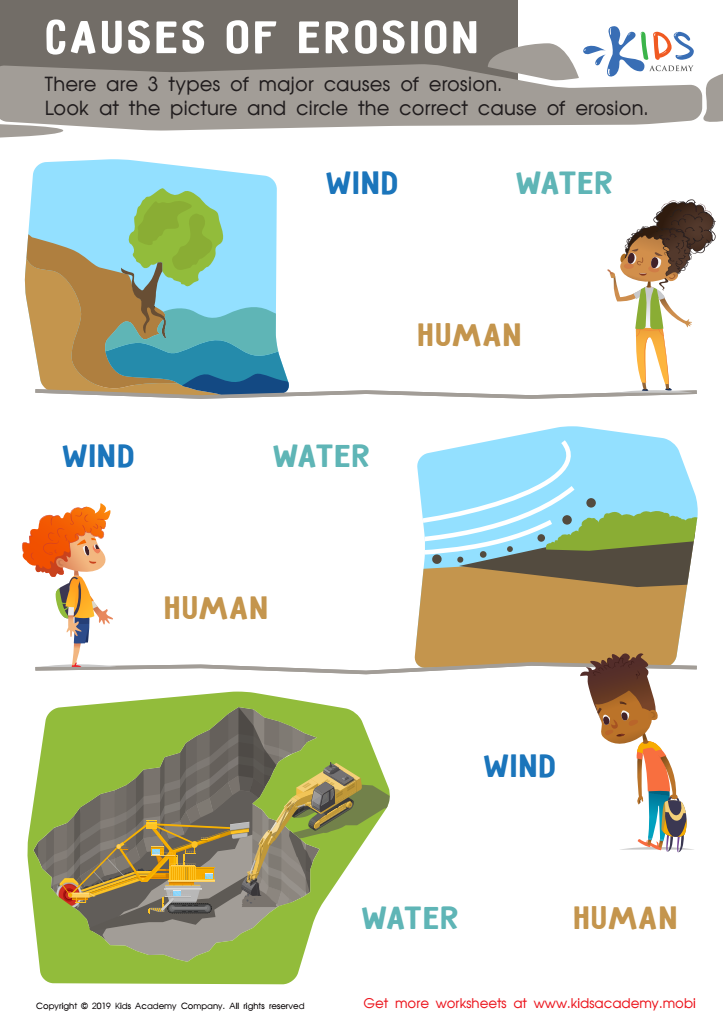
Causes of Erosion Worksheet
Earth is a habitable planet for humans and all life forms, providing us with what we need to survive. However, erosion caused by air, water or man can destroy or crumble parts of its surface. Teach kids the three causes of erosion and help them circle the correct one on a worksheet.
Causes of Erosion Worksheet
Worksheet
Join Kids Academy for Free
Who is primarily going to use this learning content?








Parents and teachers should prioritize science knowledge for children aged 4-9 because it lays a foundational understanding of the world, promotes curiosity, and encourages critical thinking. At this developmental stage, children possess a natural sense of wonder and are eager to explore their surroundings. Engaging them with science nurtures this curiosity, helping them develop an early interest in the subject that can lead to a lifelong passion for learning and discovery.
Science education for young children helps build essential cognitive skills such as observation, experimentation, and problem-solving. These skills transfer to other areas of learning and everyday life, contributing to a child's overall intellectual development. For example, when children learn about plants and animals, weather patterns, or simple physics through hands-on activities, they enhance their ability to question, hypothesize, and reason systematically.
Moreover, an understanding of basic scientific principles empowers children to make informed decisions about their health, safety, and environment. As they grow, this knowledge can drive them to make choices that contribute to personal well-being and societal advancement.
Fostering science knowledge from an early age also helps bridge future educational gaps and promotes equity. Equipping all children, regardless of background, with scientific literacy ensures they are prepared to participate fully in a technology-driven world and contributes to a more informed, innovative, and responsible society.







