Science vocabulary enhancement Science Worksheets for Ages 4-9
3 filtered results
-
From - To
Unlock your child's scientific potential with our engaging Science Vocabulary Enhancement Worksheets, designed for ages 4-9! These interactive activities foster a love for science while expanding vocabulary in a fun and educational way. Each worksheet is tailored to introduce key scientific terms, helping young learners grasp concepts related to the natural world, experiments, and basic principles of science. With colorful illustrations and age-appropriate language, your child will enjoy exploring topics that spark curiosity and wonder. Perfect for parents and teachers alike, our worksheets support early literacy and scientific literacy, making learning a playful adventure! Start enriching your child's vocabulary today!
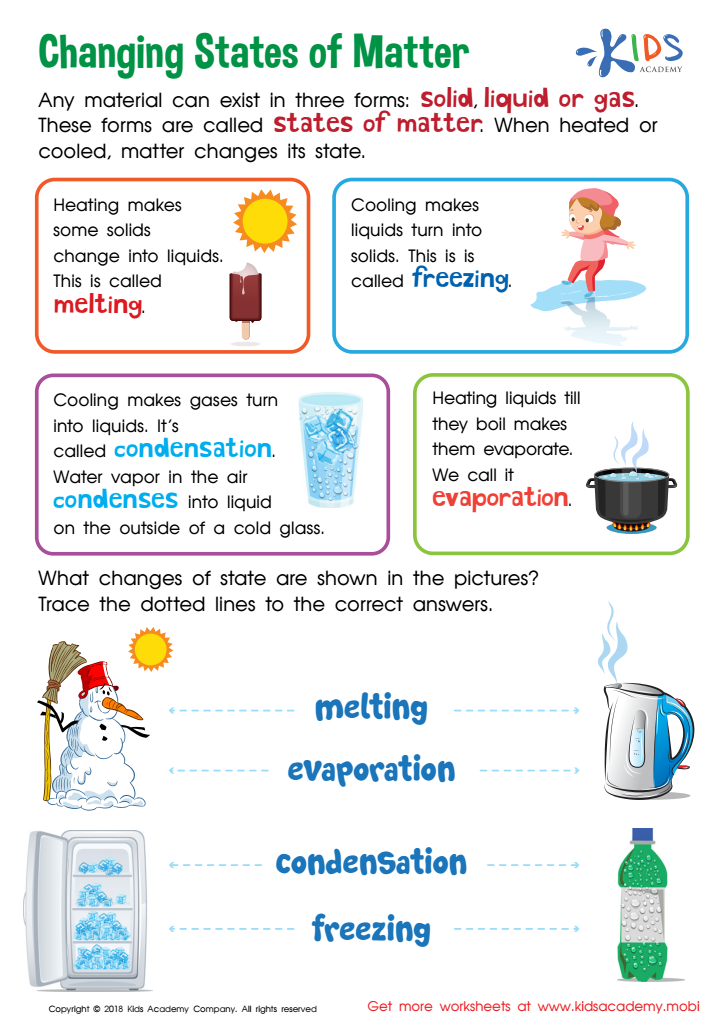
States of Matter Worksheet
 Assign to My Students
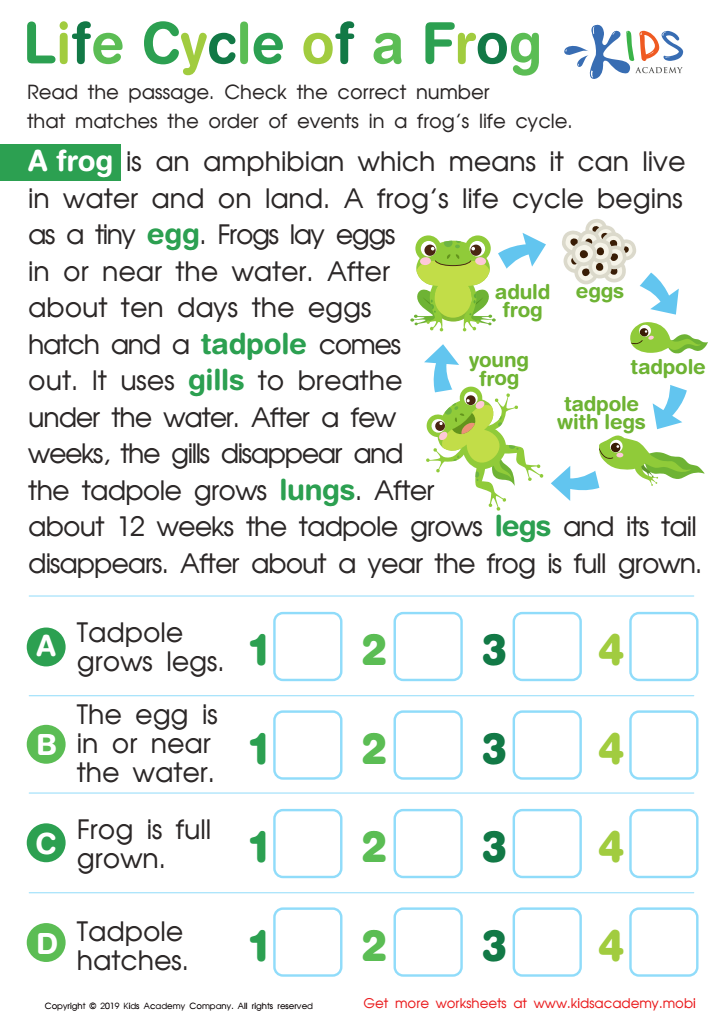
Life Cycle of a Frog Worksheet
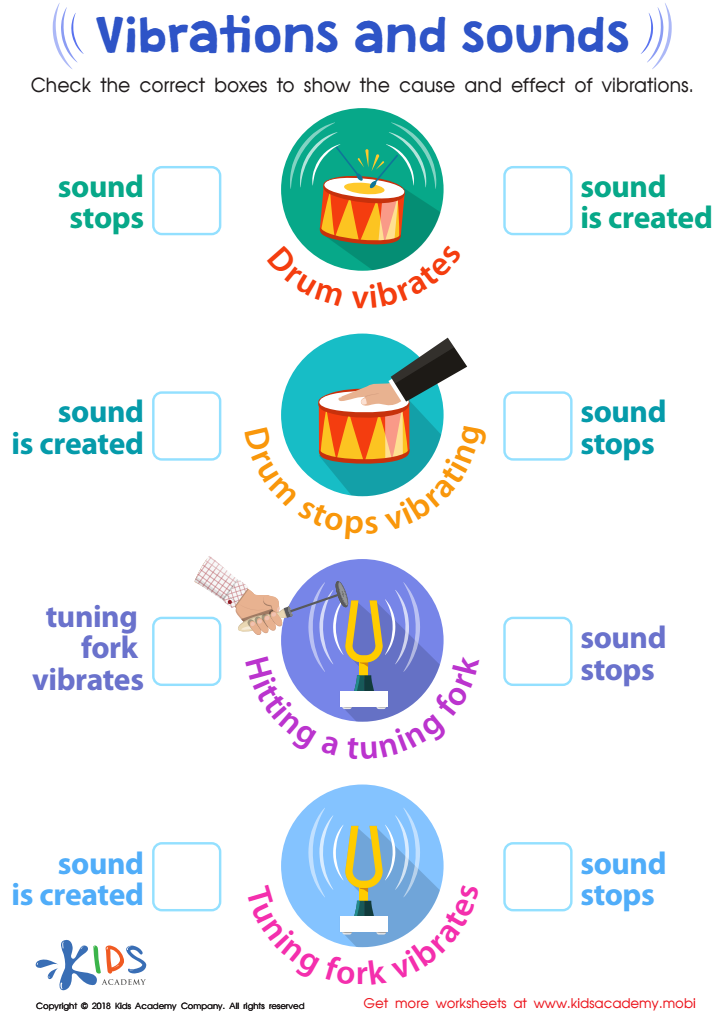
Vibrations and Sounds Worksheet








Enhancing science vocabulary for children ages 4-9 is crucial for their cognitive development and academic success. At this developmental stage, children are naturally curious about the world around them. A robust science vocabulary enables them to ask questions, express their observations, and articulate their understanding of various phenomena.
Improving science vocabulary fosters critical thinking skills, as children learn to engage with concepts like ecosystems, energy, and matter using precise language. This vocabulary also lays the groundwork for scientific literacy, ensuring that children are better prepared for more complex subjects in later grades.
Moreover, promoting science vocabulary can help bridge gaps in socioeconomic context. Children from different backgrounds may have varying exposure to scientific terms and concepts, and enhancing vocabulary can help level the playing field, encouraging all children to explore science equally.
Additionally, integrating science vocabulary into everyday conversations strengthens children's communication skills and boosts their confidence in classroom discussions. Ultimately, a strong science vocabulary enriches children's educational experiences, ignites a lifelong love for learning, and cultivates future innovators capable of tackling pressing global challenges. Thus, parents and teachers play a key role in supporting this linguistic and cognitive area of development.







