Solar system knowledge Science Worksheets for Ages 4-9
3 filtered results
-
From - To
Discover the wonders of our Solar System with engaging worksheets designed for children aged 4 to 9. Our Solar System Knowledge Science Worksheets provide interactive learning experiences that spark curiosity about planets, moons, and stars. Each worksheet is crafted to enhance critical thinking, improve long-term memory, and develop foundational science skills. With colorful illustrations and fun activities, kids will explore celestial bodies, understand their movements, and grasp basic astronomical concepts. Perfect for home or classroom use, these resources make science exciting and accessible, fostering a love of learning in young explorers. Get started on your cosmic adventure today!
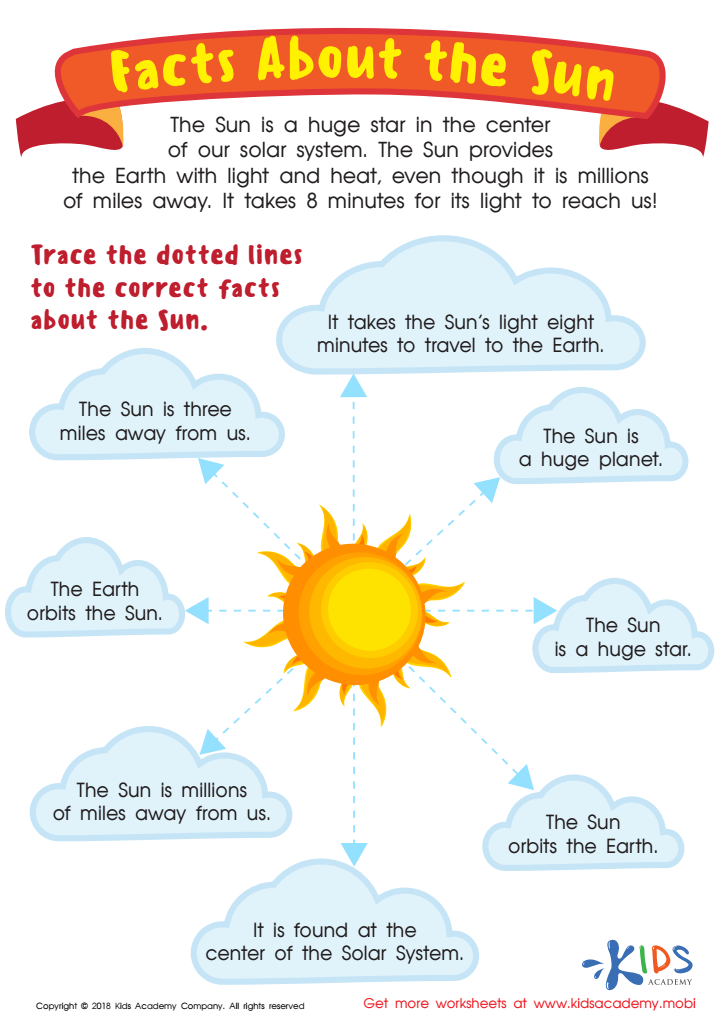
Facts About the Sun Worksheet
 Assign to My Students
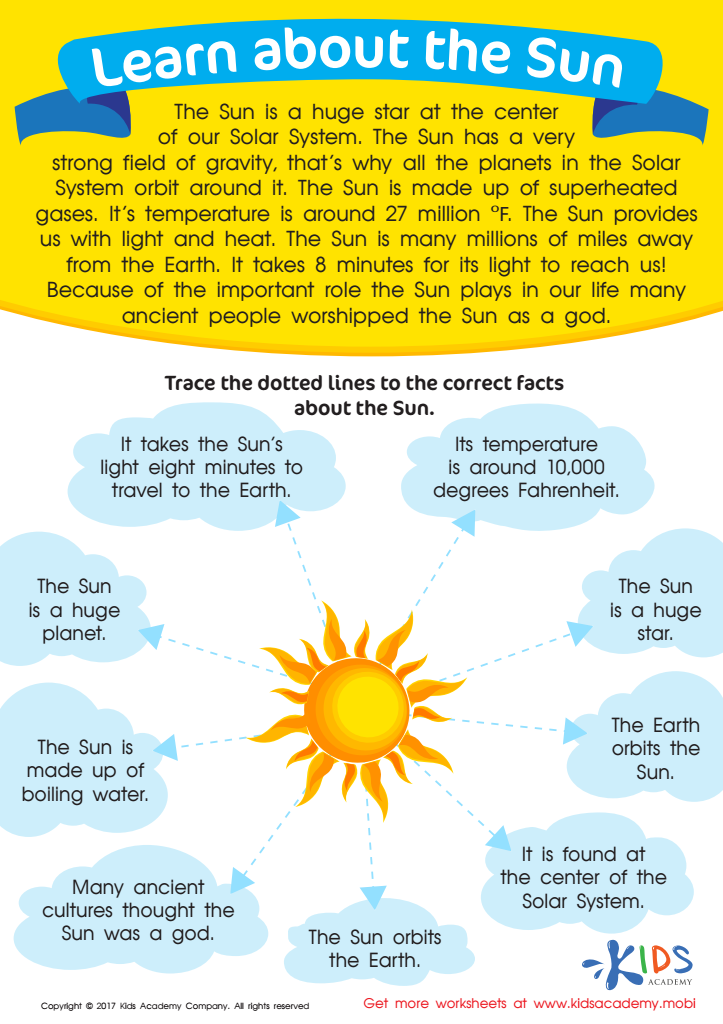
Sun Facts Worksheet
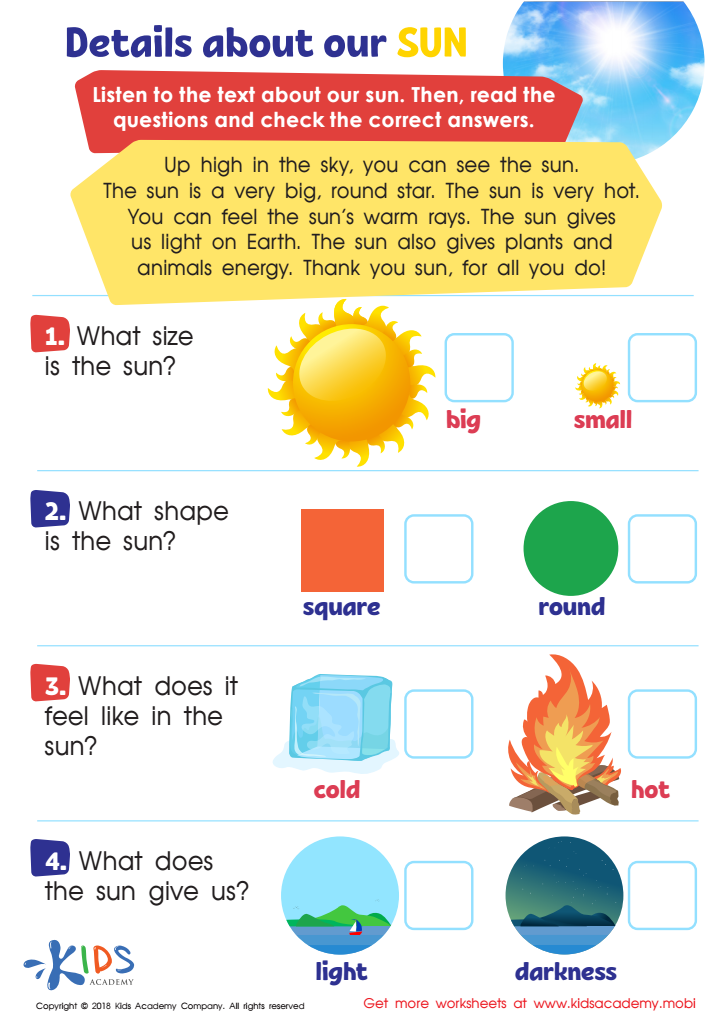
Details About Our Sun Worksheet






Understanding the solar system is important for children aged 4-9 as it ignites their curiosity about the universe and promotes early scientific literacy. At this age, children are naturally inquisitive, and learning about planets, the sun, and other celestial objects invites exploration and questioning. This foundational knowledge fosters a sense of wonder about the world beyond their immediate surroundings.
Teaching solar system concepts enhances critical thinking skills, as children become engaged in asking questions like why the sky is blue or how day and night occur. Moreover, it promotes creative thinking, allowing children to imagine life on other planets or consider the possibilities of space travel.
In addition, solar system knowledge can bridge various subjects, integrating science with art, storytelling, and even mathematics through concepts of distance, size, and scale. Such interdisciplinary learning supports holistic development.
Lastly, as issues like climate change and space exploration gain prominence, early exposure to astronomy can cultivate a sense of responsibility for the Earth and encourage children to dream big about future careers in science and technology. Therefore, parents and teachers should prioritize making solar system education engaging and fun, establishing a strong base for lifelong learning and curiosity.







