Understanding food chains Science Worksheets for Ages 4-9
3 filtered results
-
From - To
Explore our engaging "Understanding Food Chains" science worksheets designed for children ages 4-9! These educational resources simplify complex concepts, making it easier for young learners to grasp the interconnectedness of ecosystems. Through colorful illustrations and fun activities, students will discover the roles of producers, consumers, and decomposers in nature. Our worksheets encourage interactive learning, helping kids develop critical thinking skills as they engage with the food chain concept. Perfect for classroom settings or at-home learning, these worksheets are an ideal way to inspire curiosity about science while fostering a love for the environment. Dive into the world of food chains today!
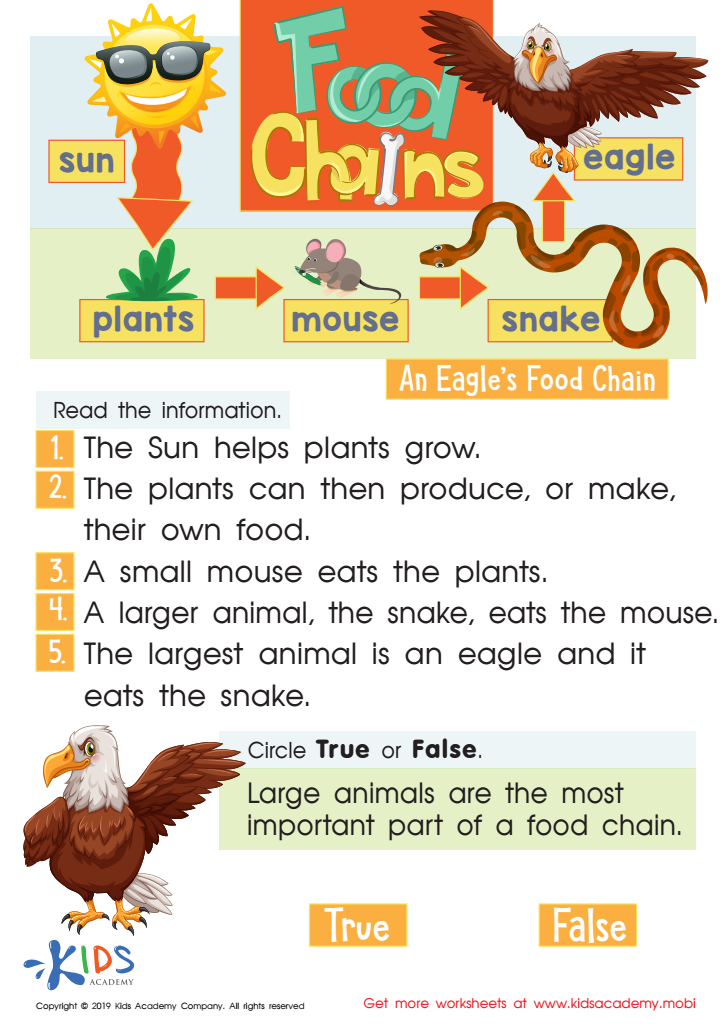
Food Chains Worksheet
 Assign to My Students
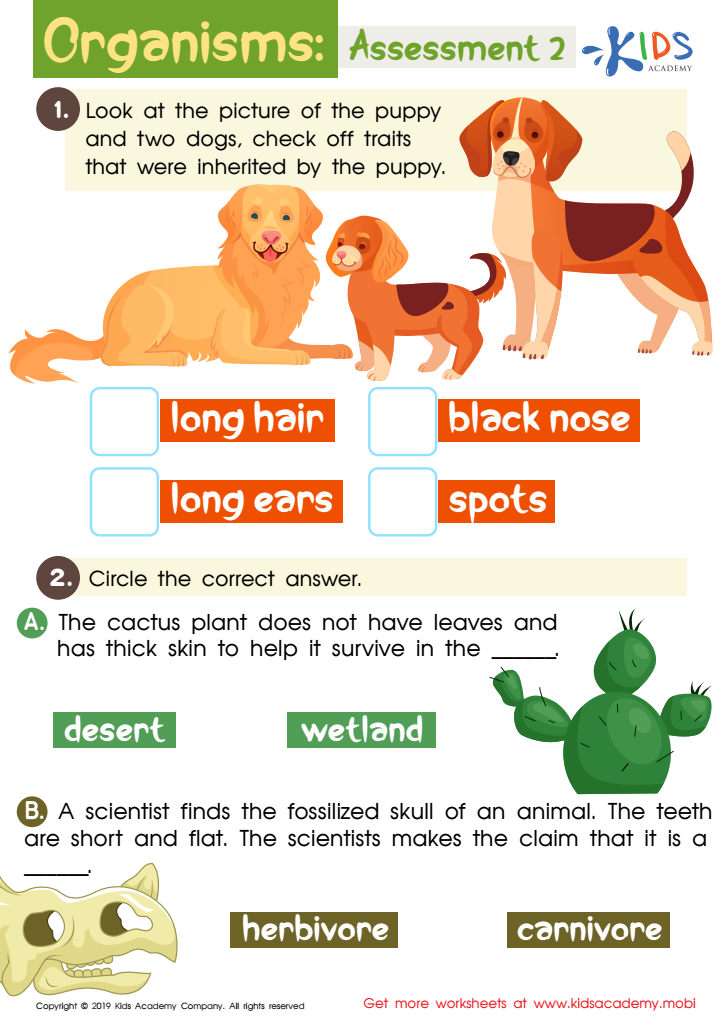
Organisms: Assessment 2 Worksheet
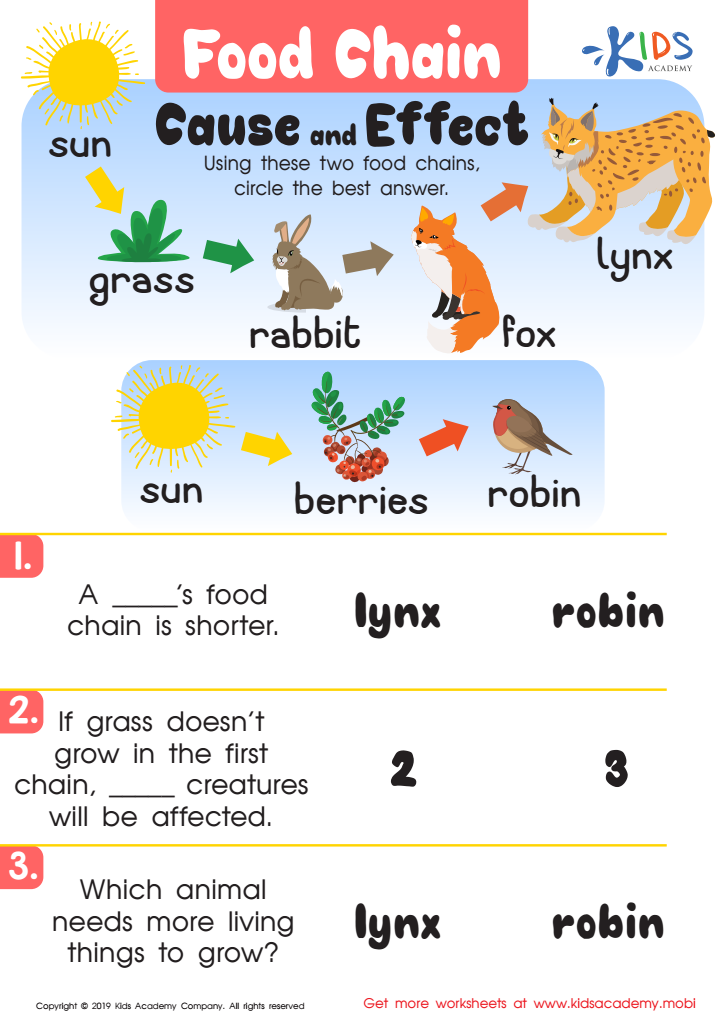
Food Chain Cause Worksheet





Parents and teachers play a crucial role in fostering a child's understanding of food chains, especially for ages 4 to 9. At this young age, children are naturally curious about the world around them, making it the perfect time to introduce fundamental scientific concepts. Learning about food chains helps children grasp the interconnectedness of life, highlighting how different organisms rely on one another for survival. This foundational knowledge builds respect for nature and promotes environmental stewardship.
Understanding food chains also stimulates critical thinking and observation skills as children discover who eats what in their surroundings. It encourages them to explore local ecosystems, fostering a love for nature and gardening, and cultivating inquiry-based learning. Engaging in discussions about producers, consumers, and decomposers can enhance vocabulary and scientific literacy, encouraging children to ask questions and seek answers.
Moreover, in today's world, where environmental issues are increasingly pressing, instilling this knowledge prepares children to become informed citizens who understand ecological balance. Ultimately, by nurturing an early understanding of food chains, parents and teachers empower children to appreciate and protect the delicate web of life on Earth. This knowledge lays a groundwork for future scientific learning and responsible environmental practices.







