Understanding symmetry Science Worksheets for Ages 4-9
3 filtered results
-
From - To
Discover the world of symmetry with our engaging "Understanding Symmetry Science Worksheets" designed for children aged 4-9. These thoughtfully crafted worksheets provide a fun, hands-on approach to learning fundamental concepts of symmetry through engaging visuals and interactive activities. Young learners will explore shapes, patterns, and reflection, promoting critical thinking and creativity. Perfect for classrooms or at-home learning, our worksheets cater to varying skill levels, making them ideal for enrichment or reinforcement. Foster a love for science while enhancing problem-solving abilities. Dive into the fascinating world of symmetry and watch your child's understanding and confidence grow! Download our worksheets today!
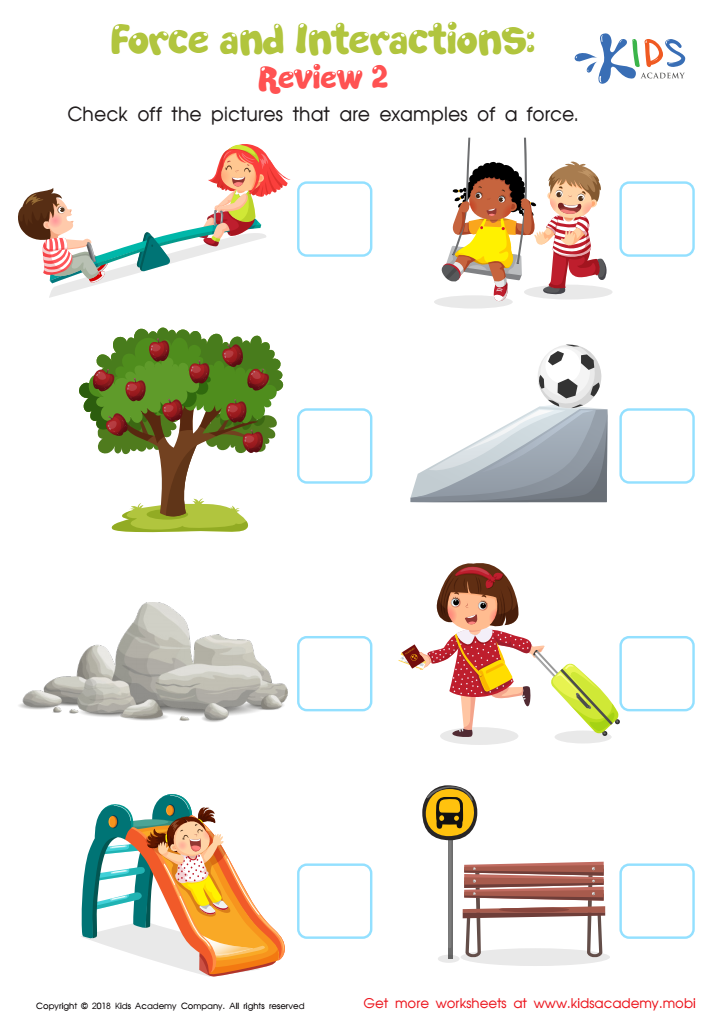
Force and Interactions: Review 2 Worksheet
 Assign to My Students
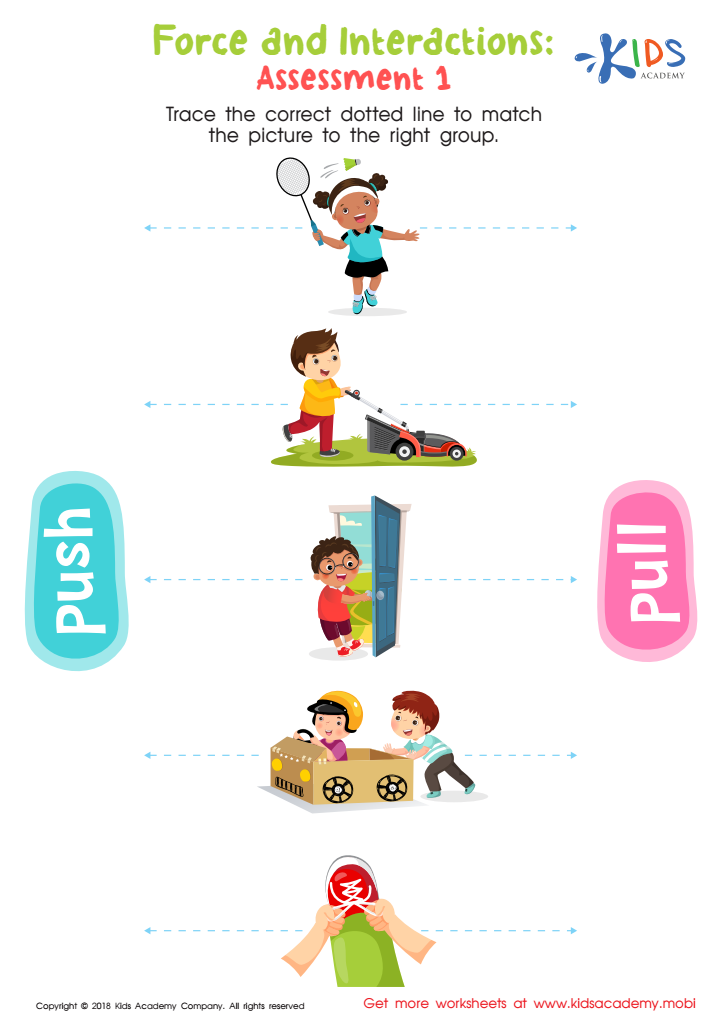
Force and Interactions: Assessment 2 Worksheet
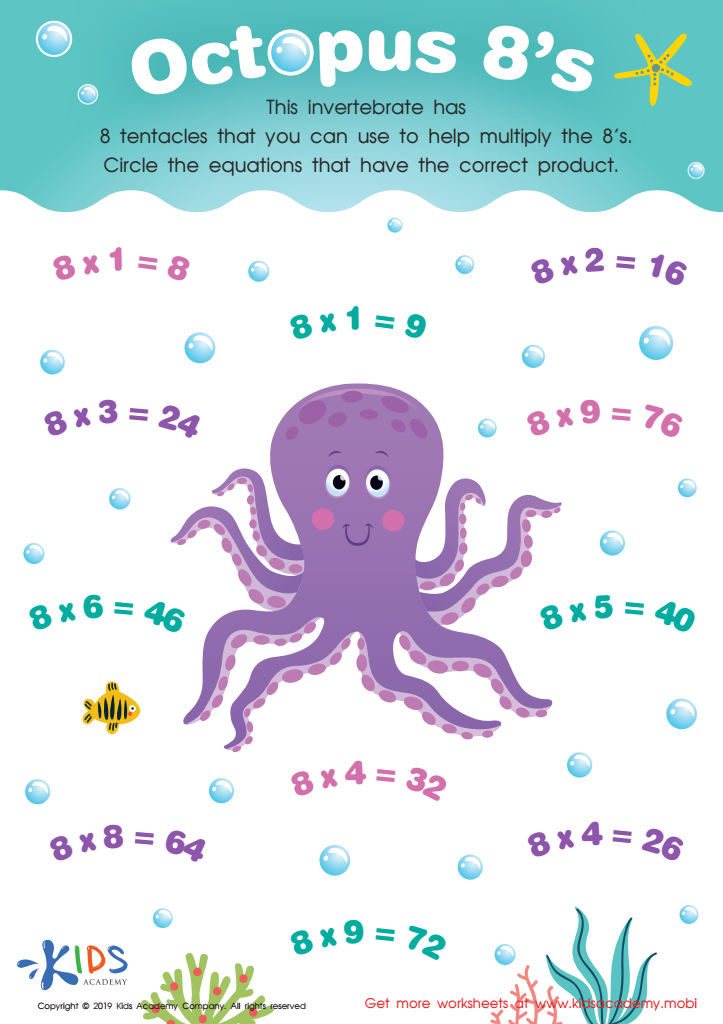
Octopus 8’s Worksheet







Understanding symmetry is essential for young learners, particularly between ages 4-9, as it lays a foundational comprehension of mathematics, science, and the natural world. For parents and teachers, fostering this understanding can enhance children's cognitive development and problem-solving skills.
At this age, children are naturally curious, making it the perfect time to introduce concepts of symmetry through engaging activities like art, nature walks, and simple geometry. Learning about symmetry helps children recognize patterns in their environment, which is crucial for their mathematical thinking. For instance, seeing symmetry can improve their ability to group objects and understand shapes, as well as plant the seeds for future topics like fractions.
Furthermore, symmetry encourages creative thinking and improves fine motor skills. Activities like cutting symmetrical shapes or drawing reflections can promote hand-eye coordination and creativity.
Additionally, understanding symmetry can have surprising interdisciplinary benefits. It fosters an appreciation for balance in art and nature, thereby enhancing emotional intelligence and observational skills. Overall, for parents and teachers, instilling knowledge about symmetry is not merely an academic exercise; it enriches children's critical thinking, creativity, and appreciation of the world around them.







