Plants Worksheets for Ages 4-9 - Page 2
25 filtered results
-
From - To
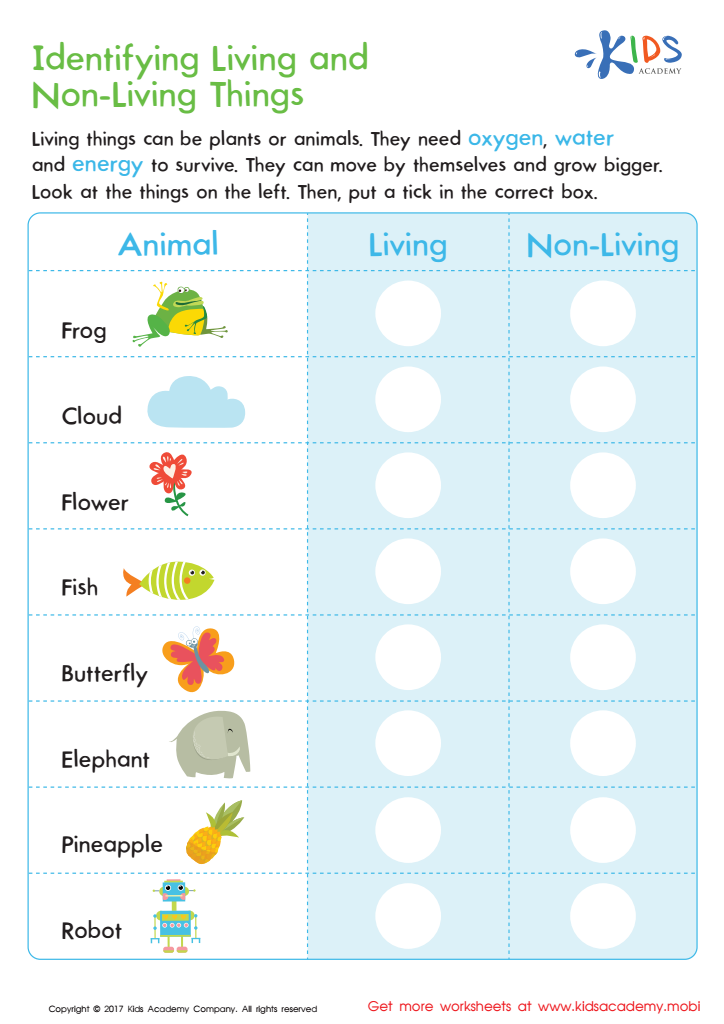
Identifying Living or Non–living Worksheet
 Assign to My Students










Parents and teachers should care about introducing plants to children ages 4-9 because it fosters a fundamental appreciation for nature and environmental stewardship. At this crucial developmental stage, kids are naturally curious and open to learning about the world around them. Engaging with plants can nourish this curiosity by offering hands-on learning opportunities that cover a range of educational areas including science, math, and even art.
When children observe how plants grow, they learn about basic biological processes like photosynthesis, the water cycle, and the importance of sunlight and nutrients. These lessons cultivate critical thinking and observation skills. Additionally, caring for plants teaches responsibility and patience, two essential life skills. Kids learn that their actions, such as watering or providing sunlight, have direct consequences, helping them to build a sense of accountability.
Furthermore, growing plants can encourage healthier lifestyles. Learning where food comes from might inspire children to eat more fruits and vegetables, promoting better nutritional habits. Activities involving plants, like gardening, also offer physical exercise and can reduce screen time, which is beneficial for their overall well-being.
Lastly, nurturing a love for plants early on can shape future adults who value and engage in sustainable practices, contributing to a healthier planet for generations to come.