Categorization skills Plants and Animals Worksheets for Ages 4-9
5 filtered results
-
From - To
Our "Categorization Skills: Plants and Animals Worksheets for Ages 4-9" are designed to make learning fun and engaging for young learners! These worksheets help children develop critical thinking and organization skills by identifying and grouping plants and animals based on common characteristics. Perfect for use at home or in the classroom, they promote curiosity and a deeper understanding of nature. Through colorful illustrations and interactive activities, kids will enjoy exploring the diverse world of flora and fauna while enhancing their scientific knowledge and cognitive abilities. Nurture your child’s love for science with these thoughtfully designed educational resources!
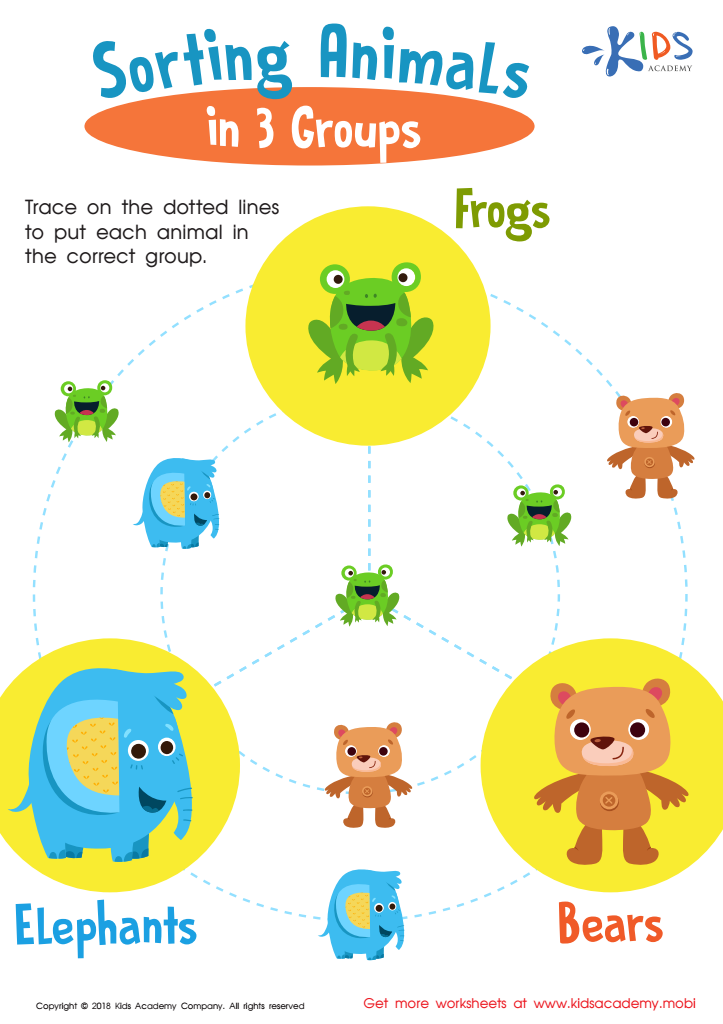
Sorting Animals in 3 Groups Worksheet
 Assign to My Students











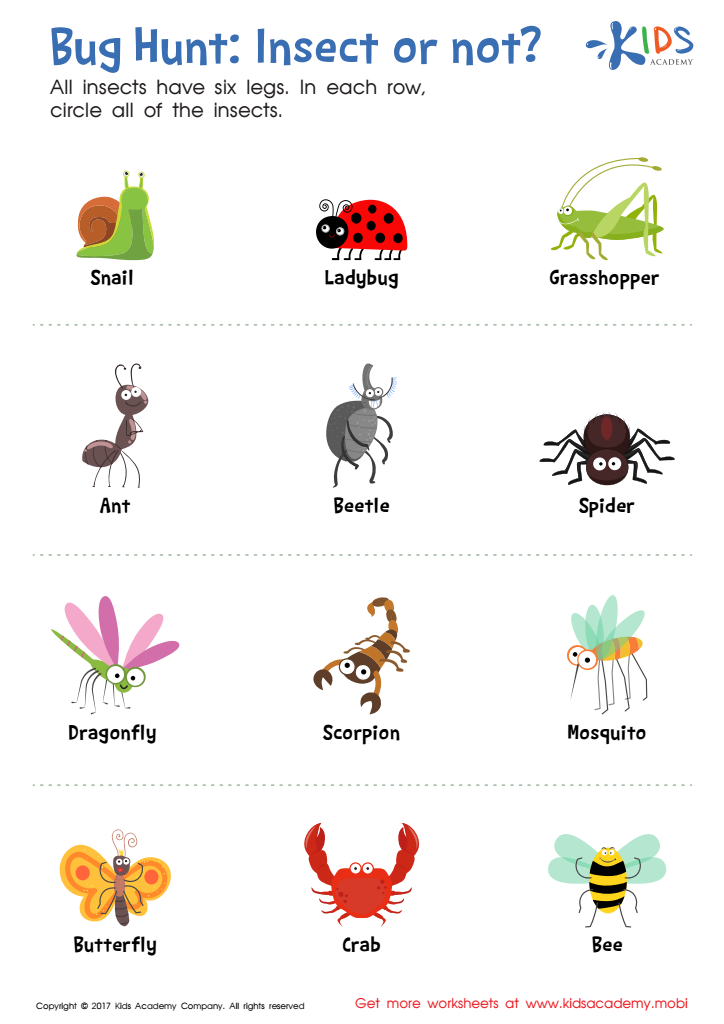
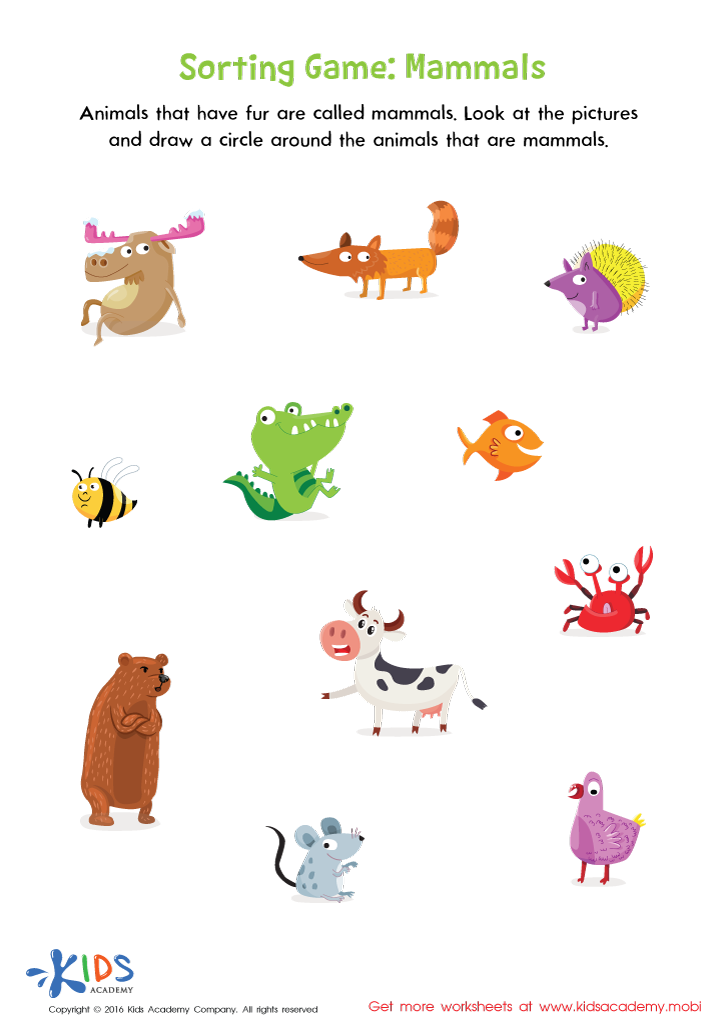
Mammals Sorting Worksheet
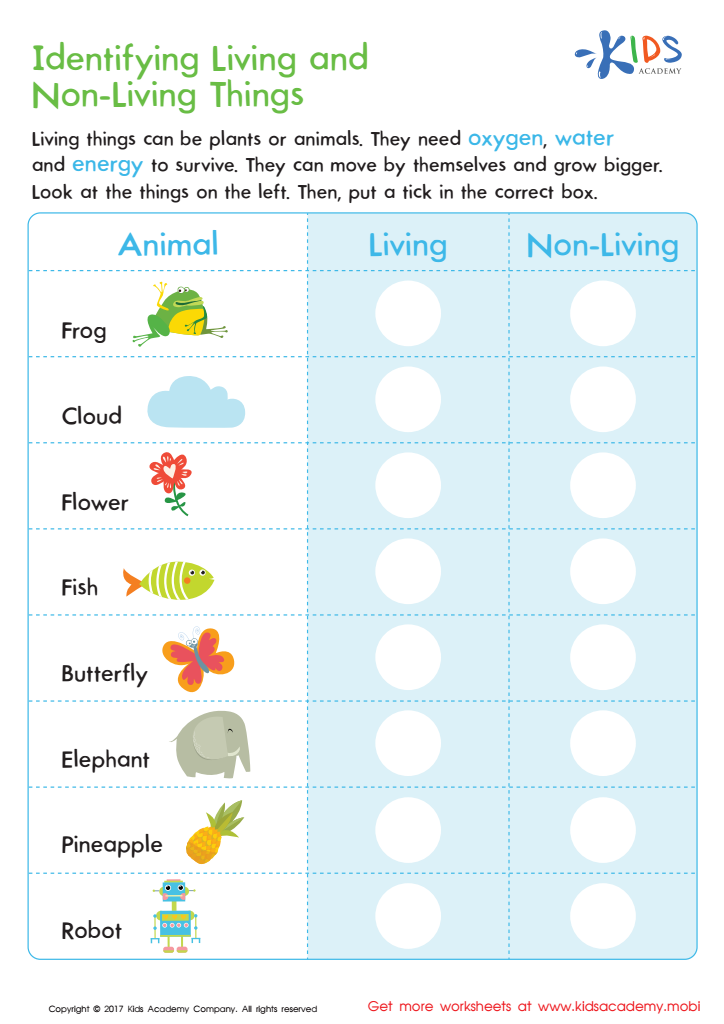
Identifying Living or Non–living Worksheet
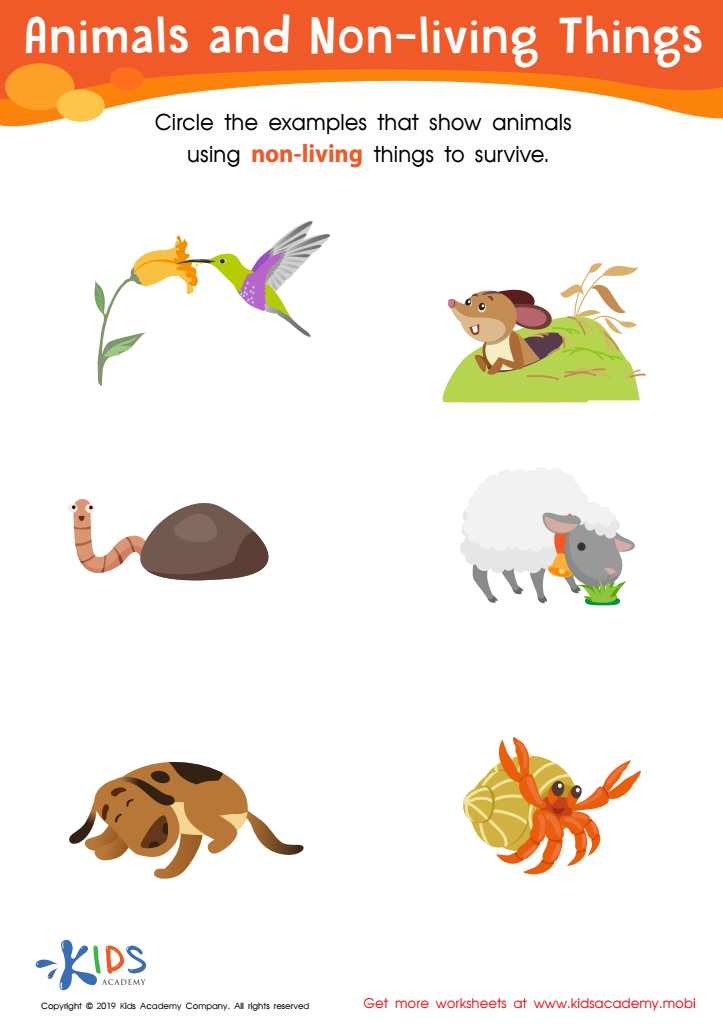
Animals and Non-Living Things Worksheet








Categorization skills are foundational for children aged 4-9 because they help structure understanding, critical thinking, and learning efficiency. Introducing these skills through topics like plants and animals is particularly effective, as these subjects are relatable and captivating for young minds.
At this developmental stage, children are naturally curious about the world around them. Learning to categorize plants and animals enhances their observational abilities, helping them notice differences and similarities. This process teaches basic scientific principles, encouraging logical thinking and making kids adept at questioning why things belong to certain groups.
For instance, by distinguishing mammals from birds based on characteristics like body structure or type of movement, children build a framework for more complex learning scenarios. These activities also strengthen memory as children often use visual aids, stories, or hands-on activities to grasp categorization concepts.
Moreover, understanding categories directly benefits their vocabulary and language skills. As they learn new terms and concepts associated with different groups, their ability to describe and articulate thoughts improves.
Most importantly, these skills lay the groundwork for cognitive development. They foster an organized thought process and help in other subjects such as math, where sorting and classifying are key steps. Encouraging categorization skills in plants and animals benefits not only academic growth but also problem-solving and daily decision-making.








