Solar system knowledge Space Worksheets for Ages 4-9
3 filtered results
-
From - To
Explore our engaging "Solar System Knowledge Space Worksheets" tailored for children ages 4-9! Designed for early learners, these vibrant worksheets introduce young astronomers to planets, stars, and the wonders of our solar system. Each activity sparks curiosity and enhances science skills through interactive learning, fun facts, and creative puzzles. Perfect for home or classroom use, our worksheets support STEM education and encourage a lifelong interest in space exploration. Inspire young minds with discovery and adventure beyond the skies. Join us on this cosmic journey!
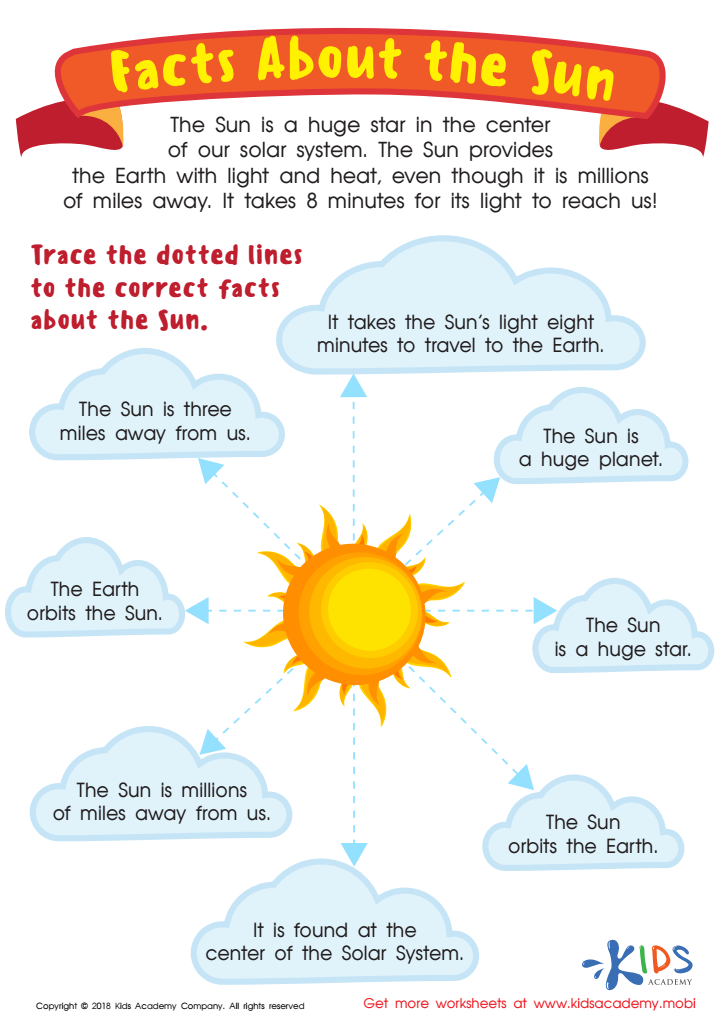
Facts About the Sun Worksheet
 Assign to My Students
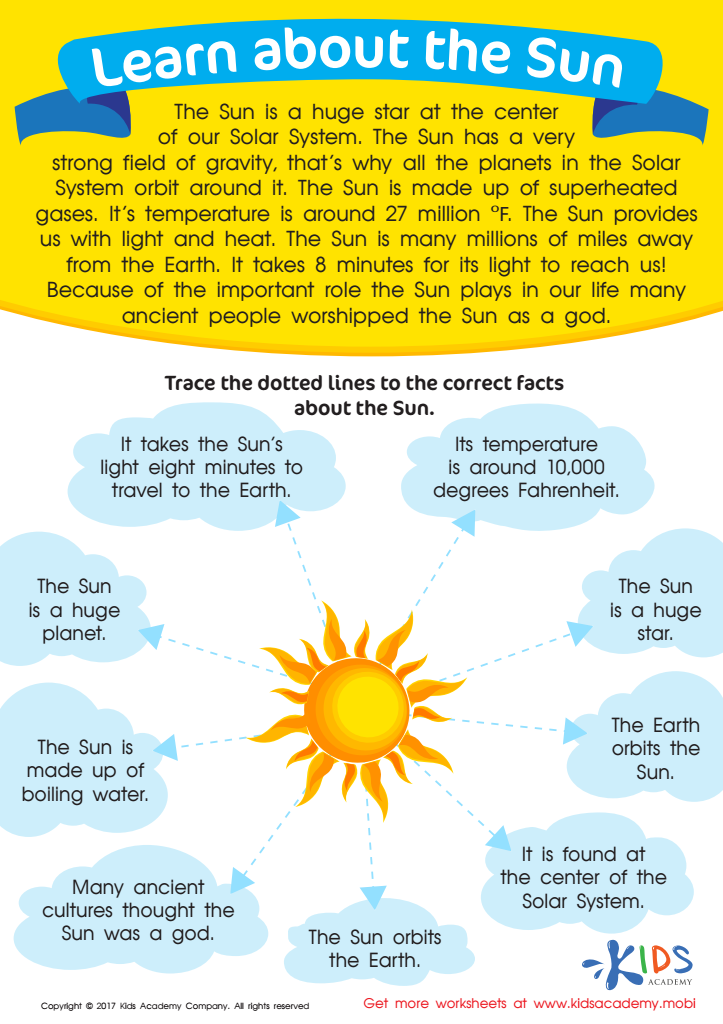
Sun Facts Worksheet
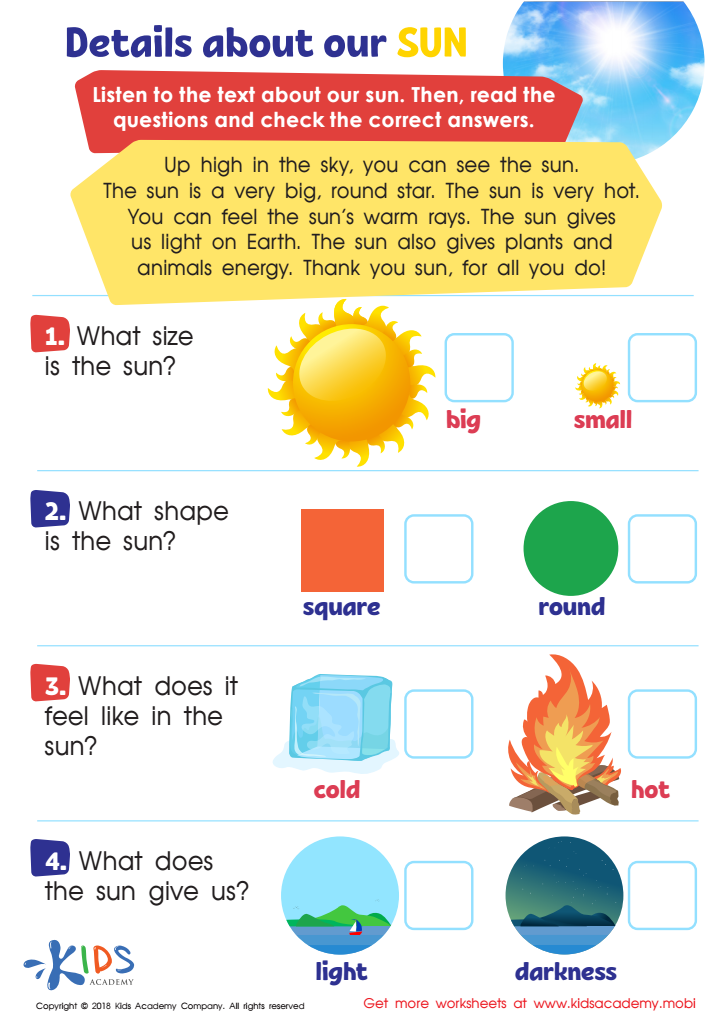
Details About Our Sun Worksheet






Introducing the solar system to children aged 4-9 is crucial because early curiosity can shape lifelong learning habits. Understanding space nurtures children’s fascination with science and awe of the universe, which promotes a love for discovery and problem-solving.
Firstly, space knowledge stimulates imagination. Children learn to dream big by pondering what it's like on other planets or how stars twinkle brightly from so far away. This sense of wonder drives their creativity and broadens their horizons beyond their immediate environment.
Secondly, teaching about the solar system at a young age lays a strong foundation for scientific literacy. Simple concepts like the Earth orbiting the Sun, moon phases, or gravity lead to more complex scientific understanding later. This incremental learning helps develop cognitive skills and critical thinking.
Additionally, learning about space encourages observation and curiosity—core elements of any scientific inquiry. Asking questions like, "Why does the moon change shape?" or "How do rockets work?" fosters an inquisitive mindset.
Moreover, grandparents, parents, and teachers engaging with this subject can strengthen bonds through shared activities. Stargazing, crafting models of the planets, or reading space-themed stories together promotes both educational and emotional connection.
Planting these seeds of interest enriches children's education early, promoting a future generation that values and understands science, technology, and the wonders of our universe.







