Handwriting practice Social Studies Worksheets for Ages 4-9
6 filtered results
-
From - To
Enhance your child's handwriting skills while exploring social studies with our engaging worksheets, specially designed for ages 4-9. These printable resources combine social studies concepts with handwriting practice, making learning both educational and fun. Each worksheet features creative prompts that encourage writing and reinforce essential knowledge about communities, maps, cultures, and history. Perfect for at-home learning or classroom activities, our handwriting practice worksheets help children improve their motor skills while fostering an understanding of the world around them. Join us in making learning enjoyable and effective! Explore our collection today and nurture your child's academic growth!
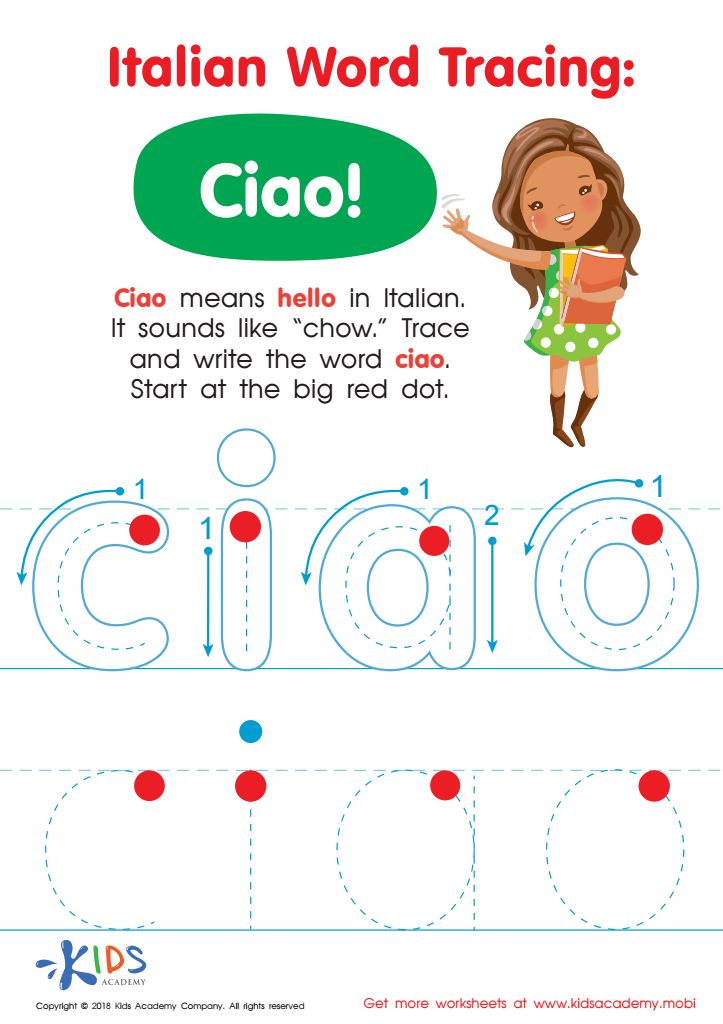
Italian Word Tracing: Ciao Worksheet
 Assign to My Students
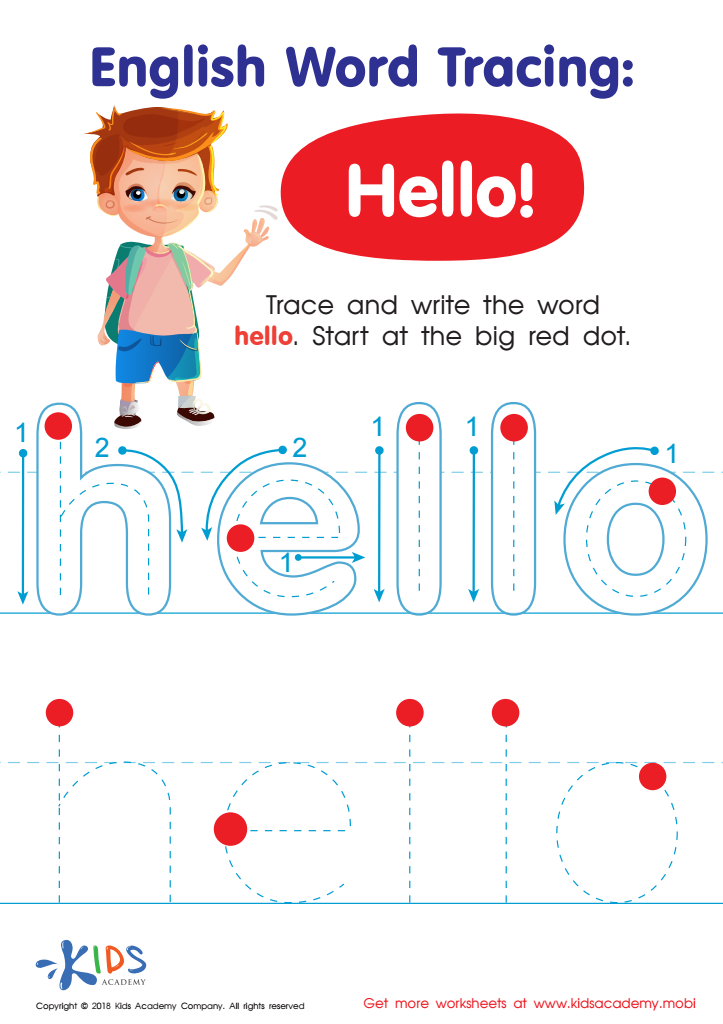
English Word Tracing: Hello Worksheet
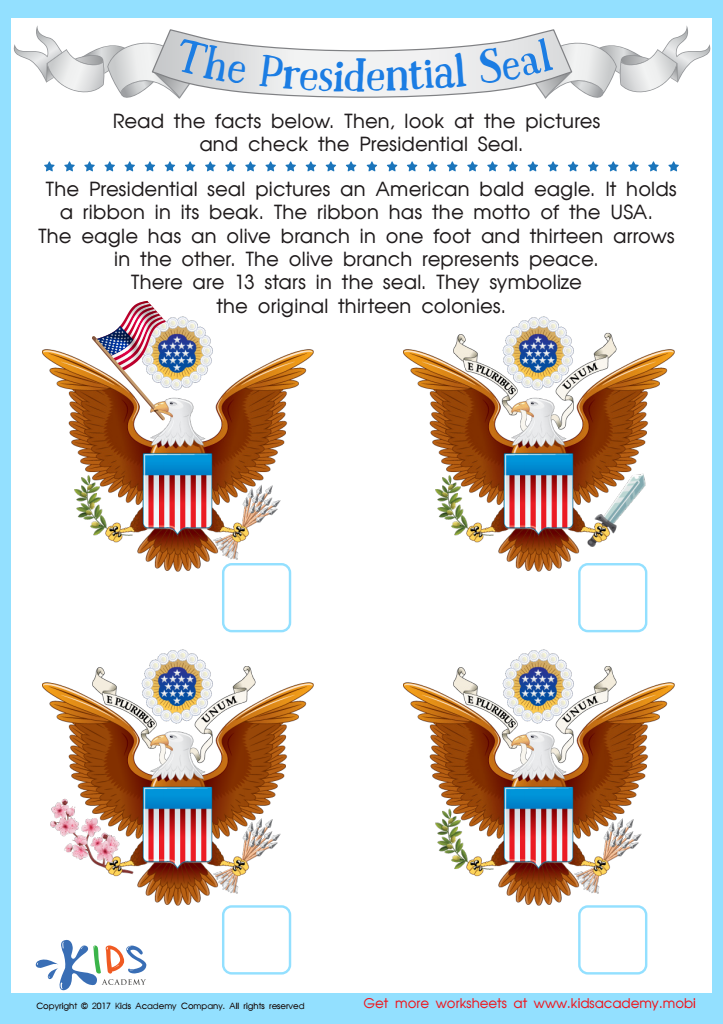
The Presidential Symbol Worksheet

Teachers Community Helpers Worksheet
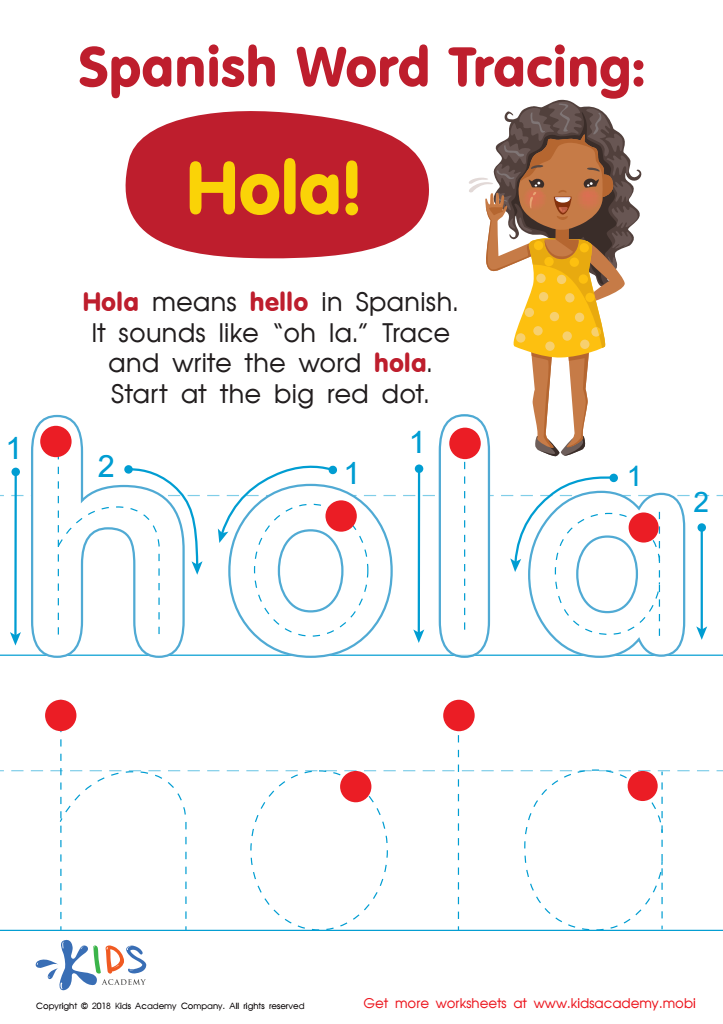
Spanish Word Tracing: Hola Worksheet
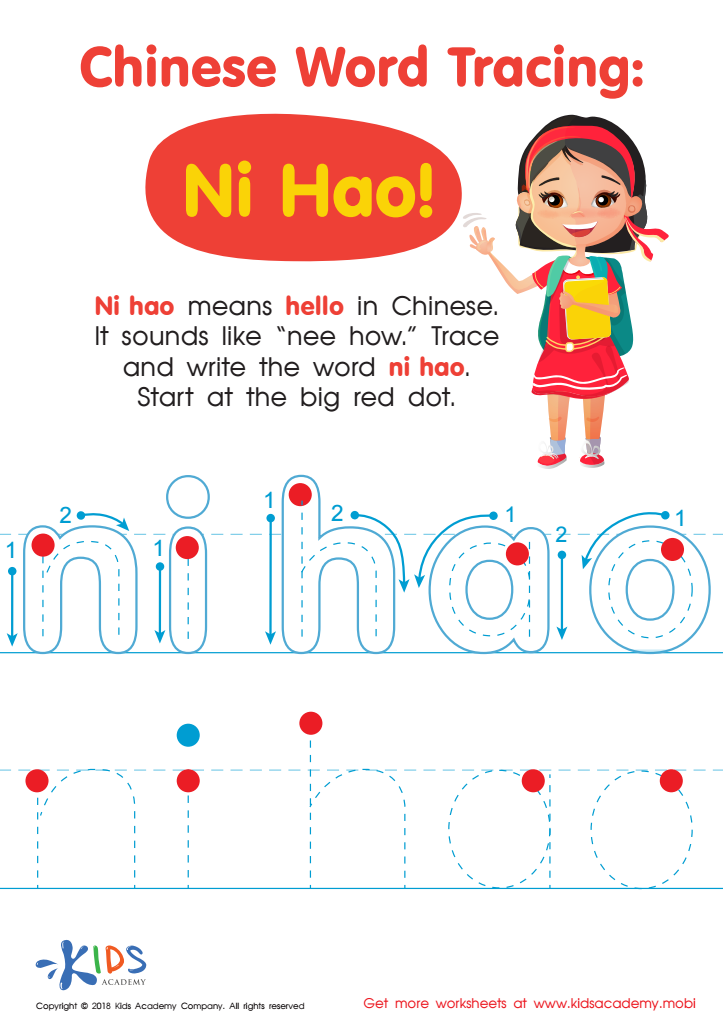
Chinese Word Tracing: Ni Hao Worksheet








Handwriting practice is crucial for children aged 4-9, especially in subjects like Social Studies, as it fosters cognitive, motor, and social development. First, handwriting engages fine motor skills, refining hand-eye coordination essential for various tasks beyond academics. As students learn to write, they build fine motor muscles that contribute to better overall coordination.
Second, handwriting aids cognitive processing. Writing notes about historical events or cultural practices helps students internalize information, aiding retention and comprehension. It encourages critical thinking, as children organize their thoughts and relate personal experiences to broader social studies themes.
Additionally, practicing handwriting in a social studies context enhances literacy skills. By connecting their writing exercises with thematic learning about communities and societal roles, children enrich their vocabulary and understanding of social dynamics.
Finally, it instills a sense of pride and accomplishment. As children develop their handwriting skills, they gain confidence, which positively impacts their participation in discussions about society and community.
In conclusion, emphasizing handwriting practice in Social Studies equips young learners with essential skills, enabling them to express their thoughts and understand the world around them while fostering enjoyment in learning. Both parents and teachers play a pivotal role in this foundation for future academic success.