Cursive Writing Worksheets for Ages 4-9 - Page 2
26 filtered results
-
From - To
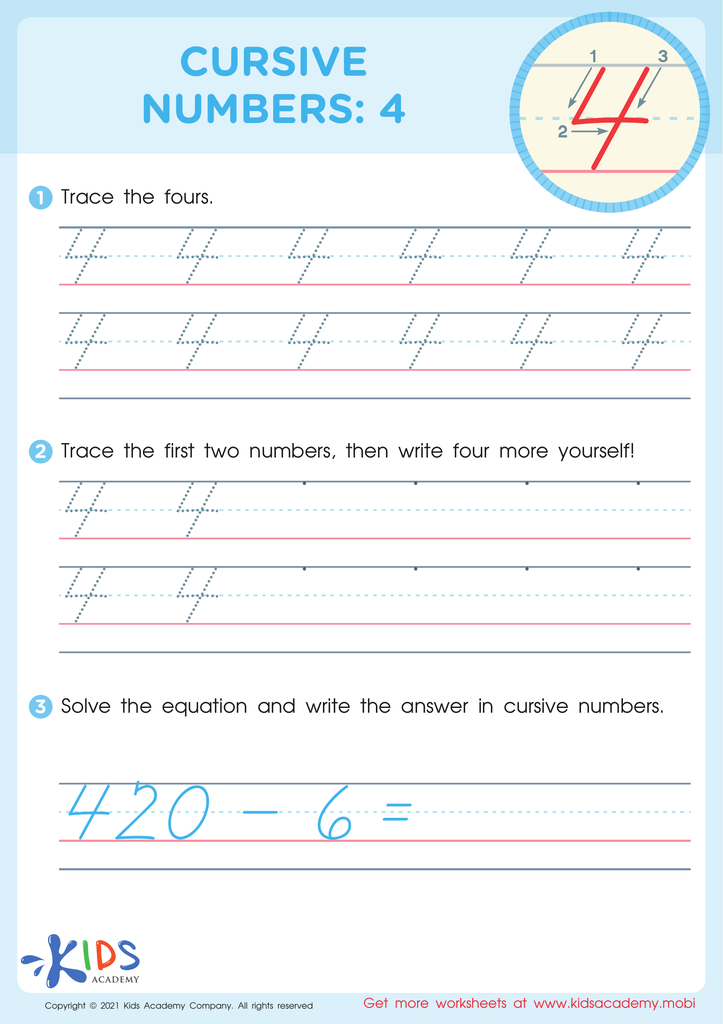
Cursive Numbers: 4 Worksheet
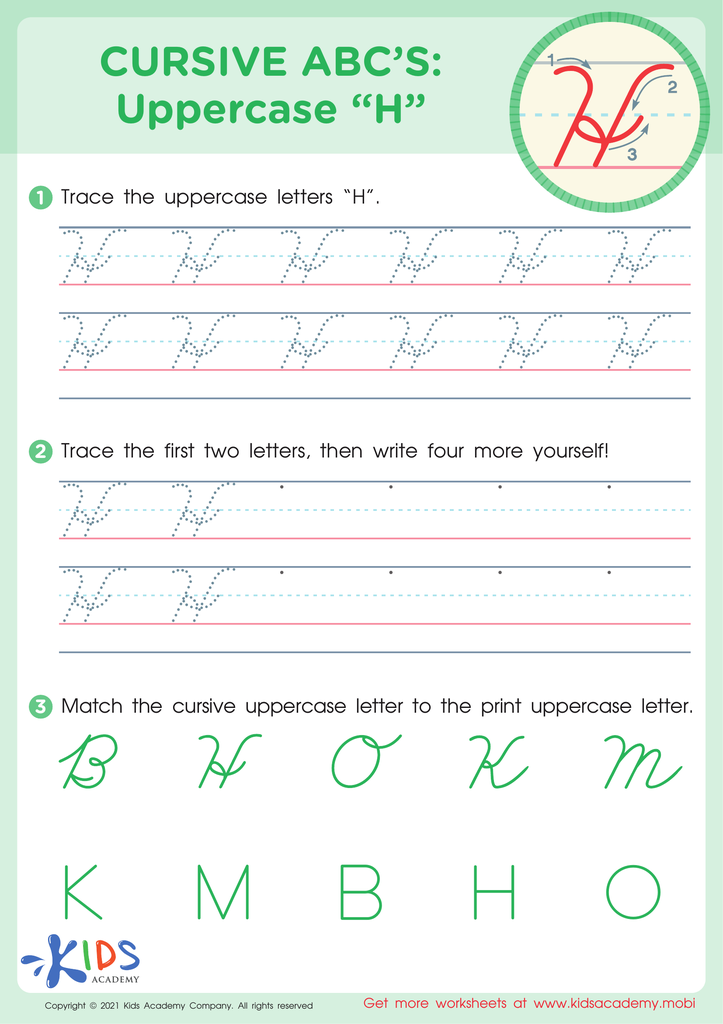
Cursive ABCs: Uppercase H







Cursive writing is an essential skill that supports children's development, especially for those ages 4-9. Firstly, it promotes fine motor skills and hand-eye coordination, as forming cursive letters requires precise movements. For young learners, these skills are crucial, as they lay the groundwork for writing fluency and overall handwriting competence.
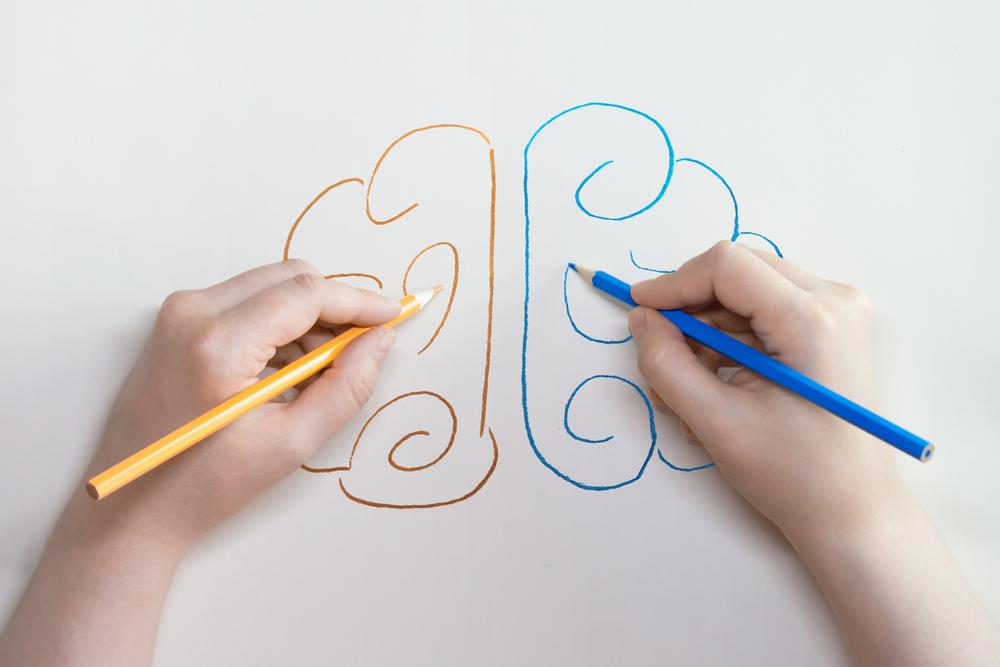
Moreover, cursive writing enhances cognitive development. The continuous flow of cursive encourages brain connections, aiding in faster comprehension and retention of information. Children can write more quickly with cursive, allowing them to focus on content rather than mechanics. This can be especially beneficial during creative writing exercises, where the ease of writing helps students express their thoughts more freely.
Additionally, cursive writing fosters a sense of ownership and creativity. Unique stylistic flourishes become a way for children to personalize their written expression. It can also contribute to historical literacy; understanding cursive opens up access to historical documents and artifacts, reinforcing a deeper connection to cultural heritage.
Finally, in an increasingly digital age, cursive writing offers a tangible, lasting skill that benefits students academically and creatively. Investing time in teaching cursive will provide lifelong advantages that extend beyond the classroom.








