Silent Vowels Worksheets for Ages 5-6
3 filtered results
-
From - To
Discover our engaging Silent Vowels Worksheets designed specifically for children aged 5-6! These fun and interactive resources help young learners grasp the concept of silent vowels while enhancing their reading and writing skills. Each worksheet features colorful illustrations and age-appropriate activities that captivate children’s attention. Through tracing, matching, and identifying silent vowels, your child will boost their phonetic awareness and vocabulary. Ideal for both classroom use and at-home learning, these worksheets cater to different learning styles, making education enjoyable. Join us in fostering a love for language as your little ones explore the fascinating world of silent vowels!
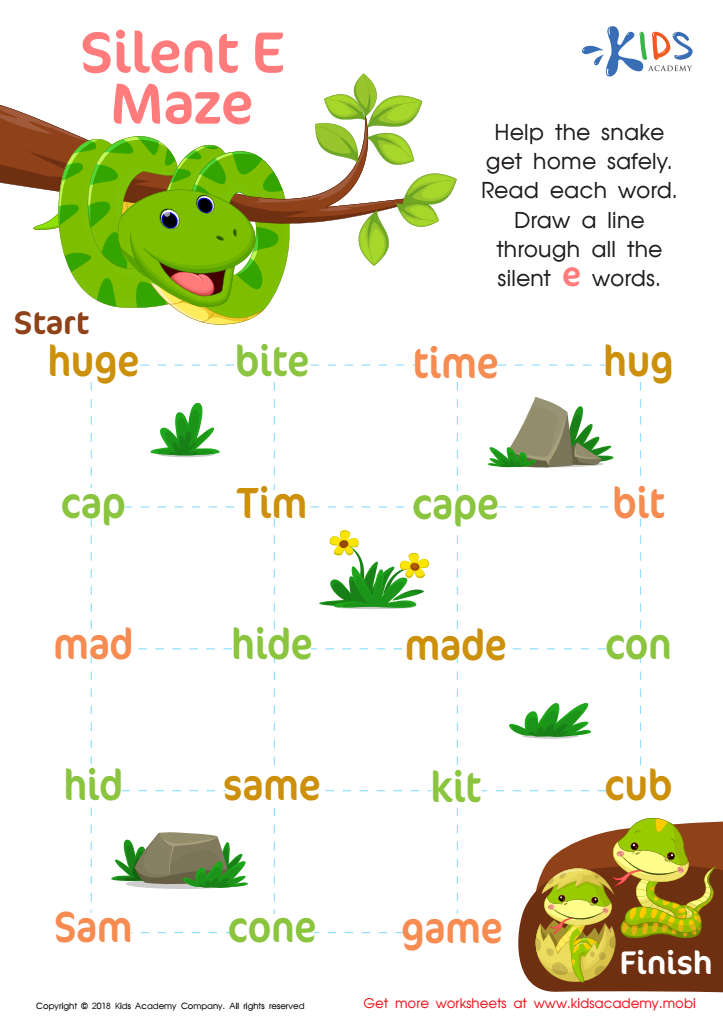
Silent E Maze Worksheet
 Assign to My Students
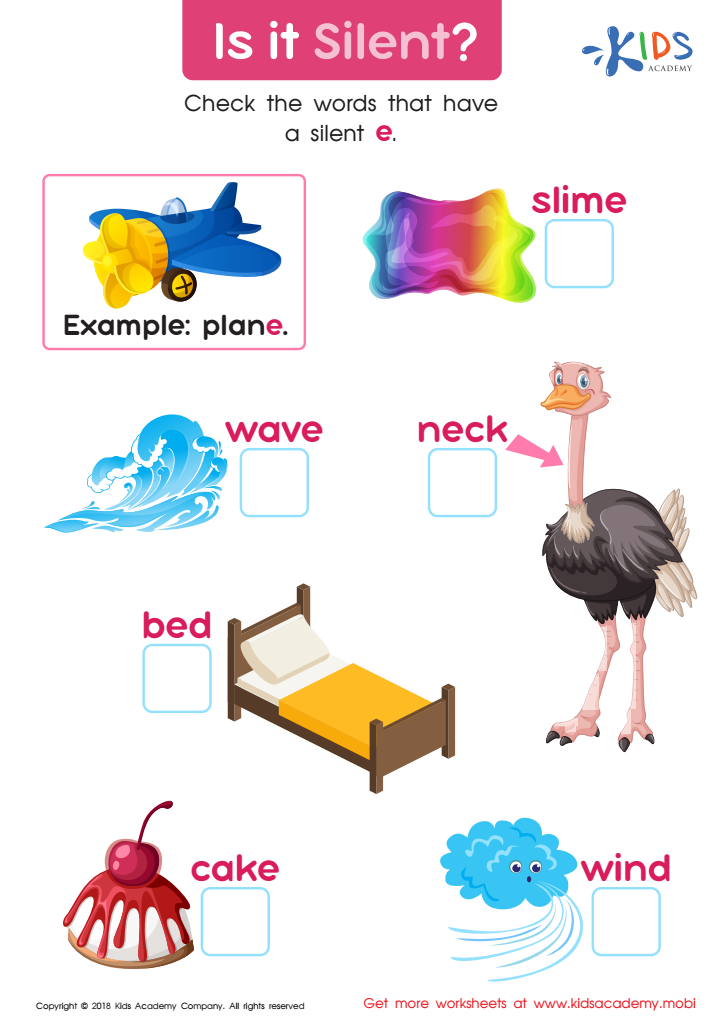
Is It Silent? Worksheet
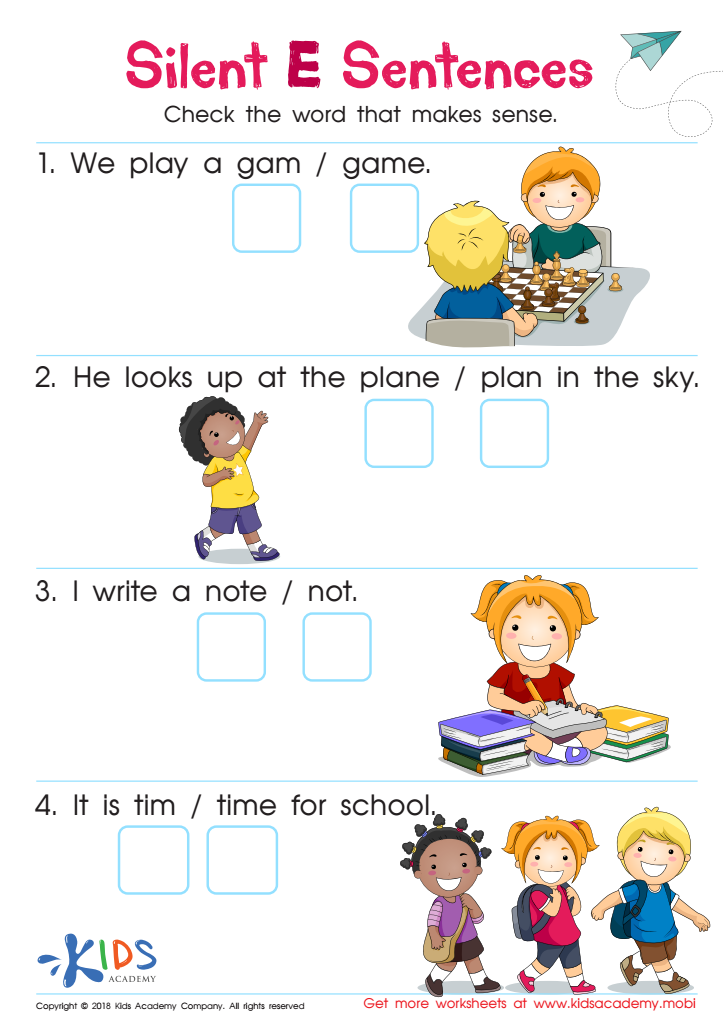
Silent E Sentences Worksheet


Silent vowels are an important phonetic feature that parents and teachers should focus on when teaching children aged 5-6. Understanding silent vowels, such as the 'e' in "time" or the 'u' in "guilt," helps young learners develop a deeper grasp of language. First, recognizing silent vowels enriches children’s reading skills. It enables them to decode words correctly, boosting reading fluency and comprehension. This foundation is critical as strong reading skills correlate with overall academic success.
Second, silent vowels support spelling proficiency. Young learners who understand these nuances can more accurately spell words, paving the way for better writing and communication skills. Third, focusing on silent vowels can enhance vocabulary development. As children encounter new words, understanding the roles of letters—both voiced and silent—contributes to their overall word comprehension.
Moreover, engaging activities around silent vowels can foster a love for learning. Interactive games or fun exercises can stimulate curiosity and make phonetics enjoyable. By highlighting silent vowels, parents and teachers engage students in critical thinking and phonemic awareness. Ultimately, cultivating an understanding of silent vowels lays a critical cornerstone in a young child's literacy journey, setting them up for future success in reading and language arts.








