Filters

224 filtered results

Clear all filters
Favorites
With answer key
Interactive

224 filtered results

Difficulty Level

Grade


Check out this FREE "Cognitive Development" Trial Lesson for age 5-6!

Demonstrate Understanding of Frequently Occurring Verbs and Adjectives by Relating Them to Their Opposites

Favorites
With answer key
Interactive
  • 5-6
  • Cognitive Development
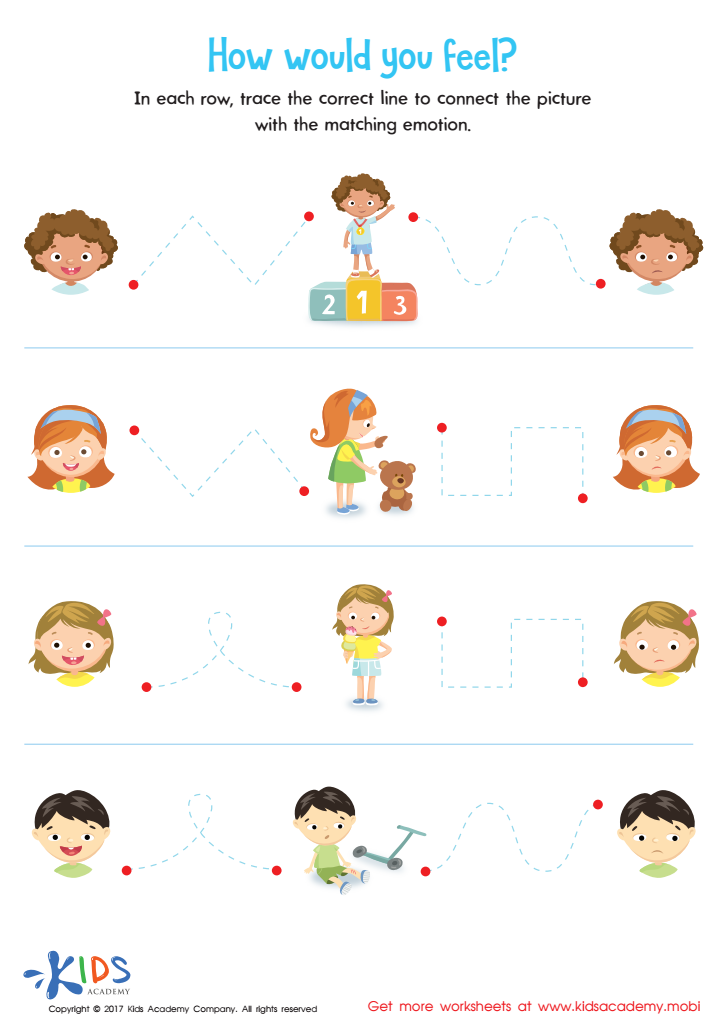
Feelings and emotions worksheet

Feelings and Emotions Worksheet

Kids must learn how to deal with situations and handle their own emotions. This worksheet helps them practice empathy and resilience, making them more self-aware and confident. It also helps them to relate their life experiences to common disappointments and develop coping mechanisms.
Feelings and Emotions Worksheet
Worksheet
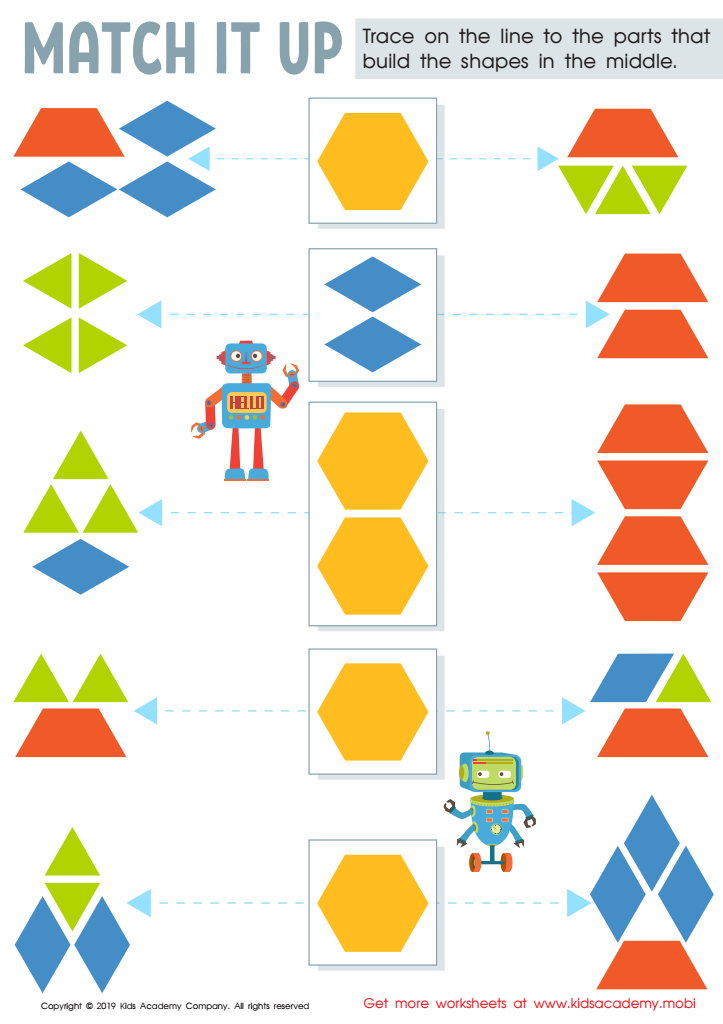
Match It up Worksheet

Match It up Worksheet

If your kids are into robots, they'll be thrilled to work on this worksheet. Ask them to name shapes they know, and help them draw and identify these shapes. Look at the shapes in the middle, and the sides. Finally, help your kids trace the lines to build the shapes in the middle.
Match It up Worksheet
Worksheet
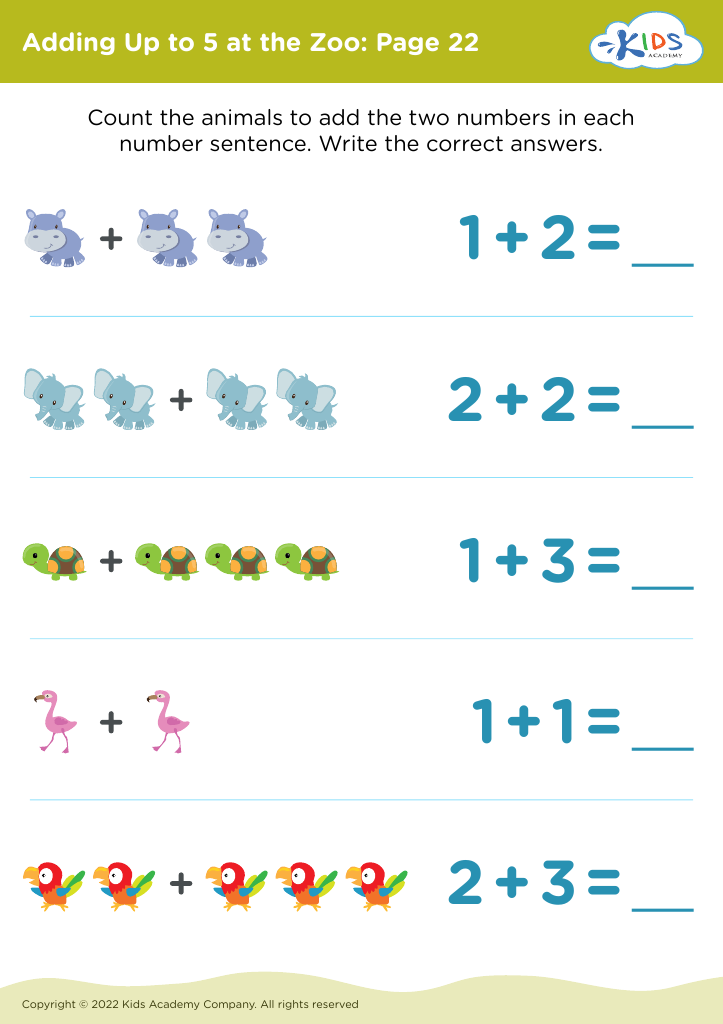
Adding Up to 5 at the Zoo: Page 22
Worksheet
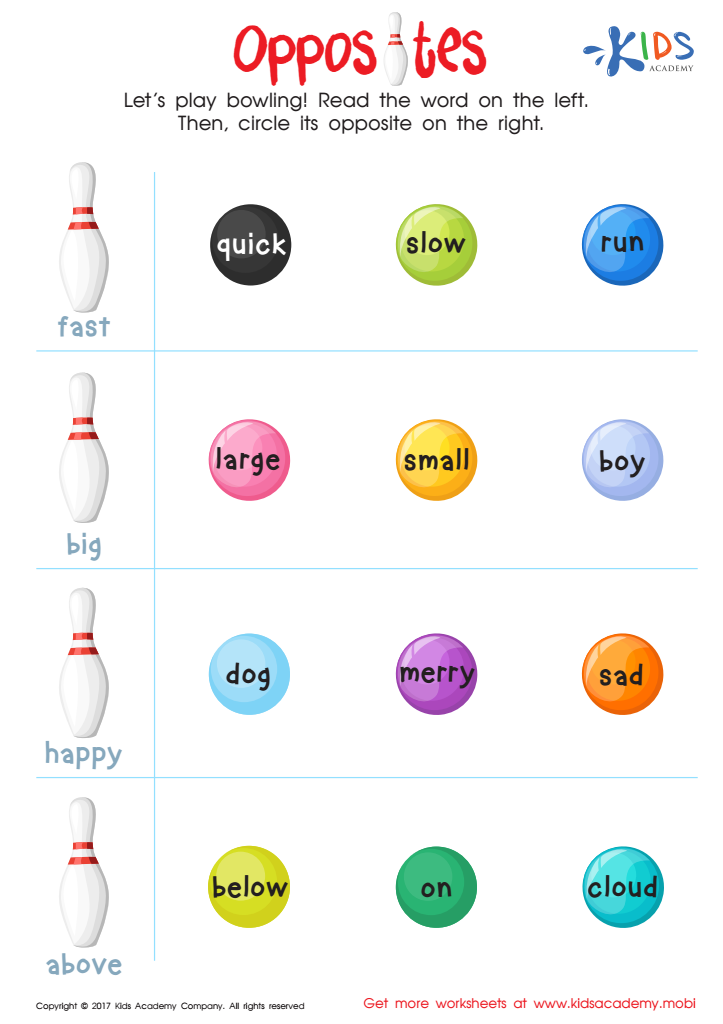
Opposites Worksheet
Opposites Worksheet

Opposites Worksheet

Have your students identify and circle the opposites of the words on the left. As a fun bowling-themed exercise, read the words and ask your kids if they know the opposites. Look through the options on the right and see if the answer is there; then, circle the correct answers.
Opposites Worksheet
Worksheet
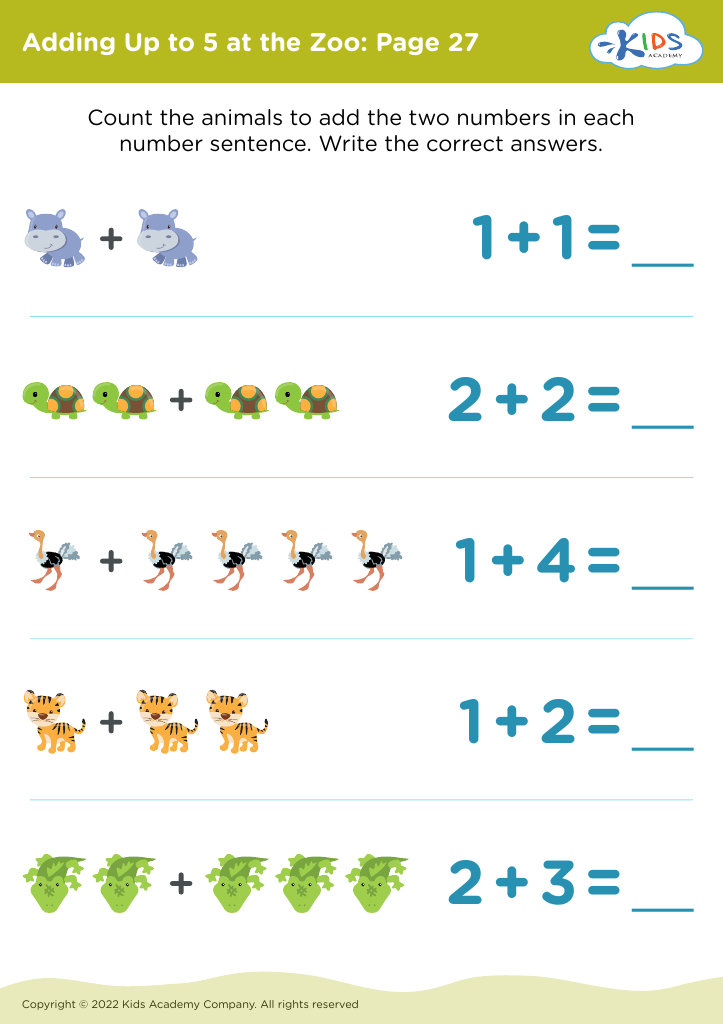
Adding Up to 5 at the Zoo: Page 27
Worksheet
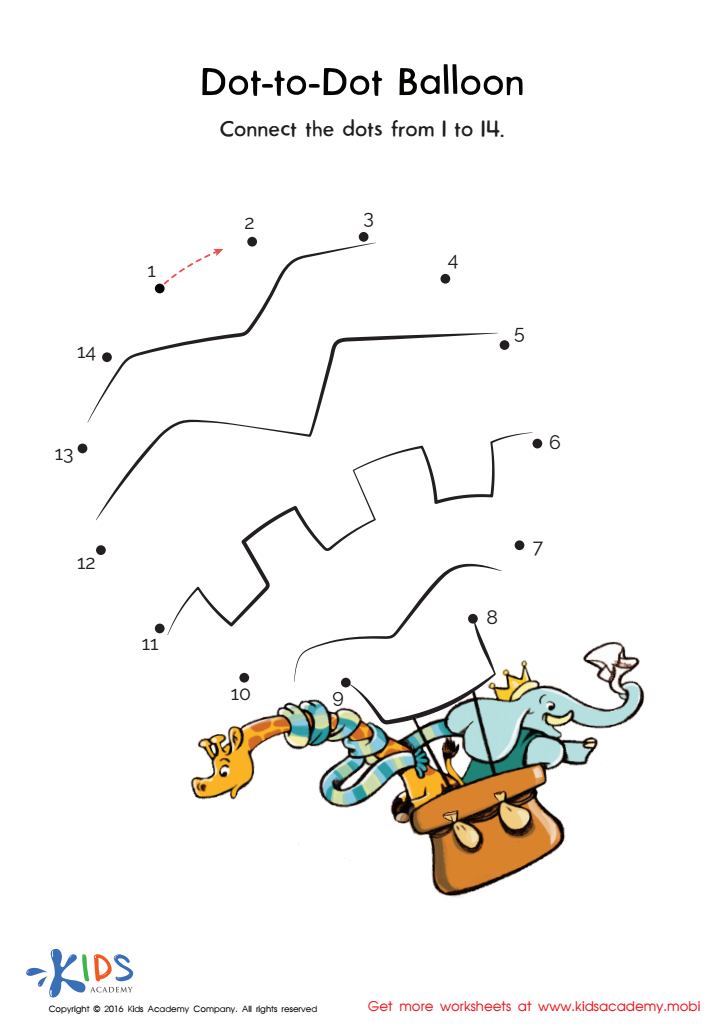
PDF Worksheet Dot to Dot Balloon

Balloon Connect Dots Worksheet

Balloon Connect Dots Worksheet
Worksheet
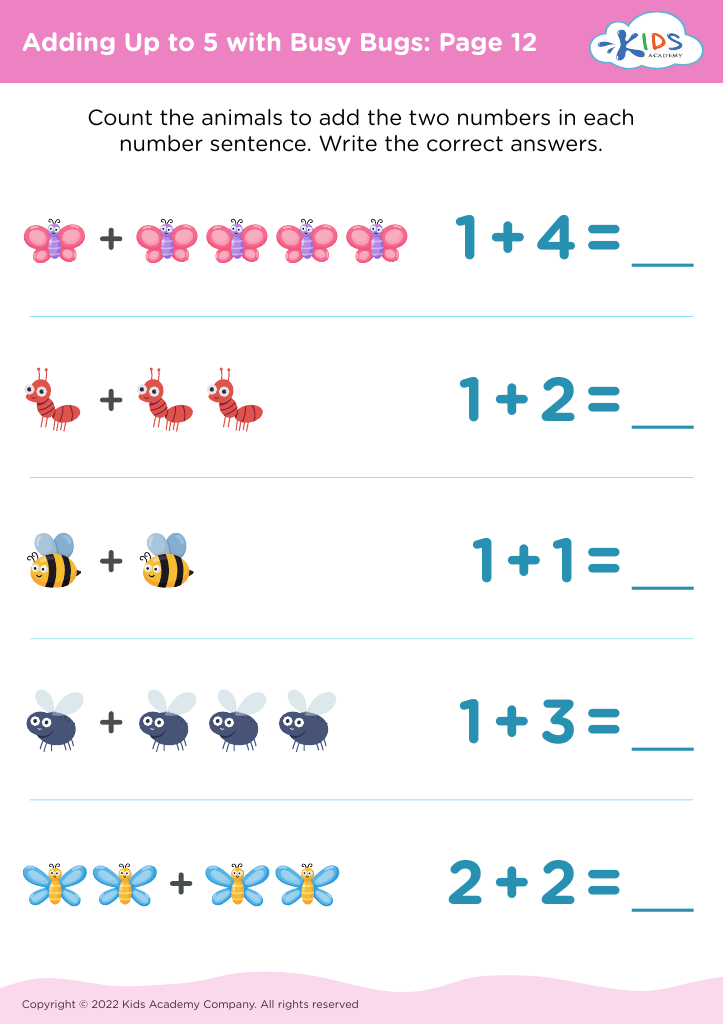
Adding Up to 5 with Busy Bugs: Page 12
Worksheet
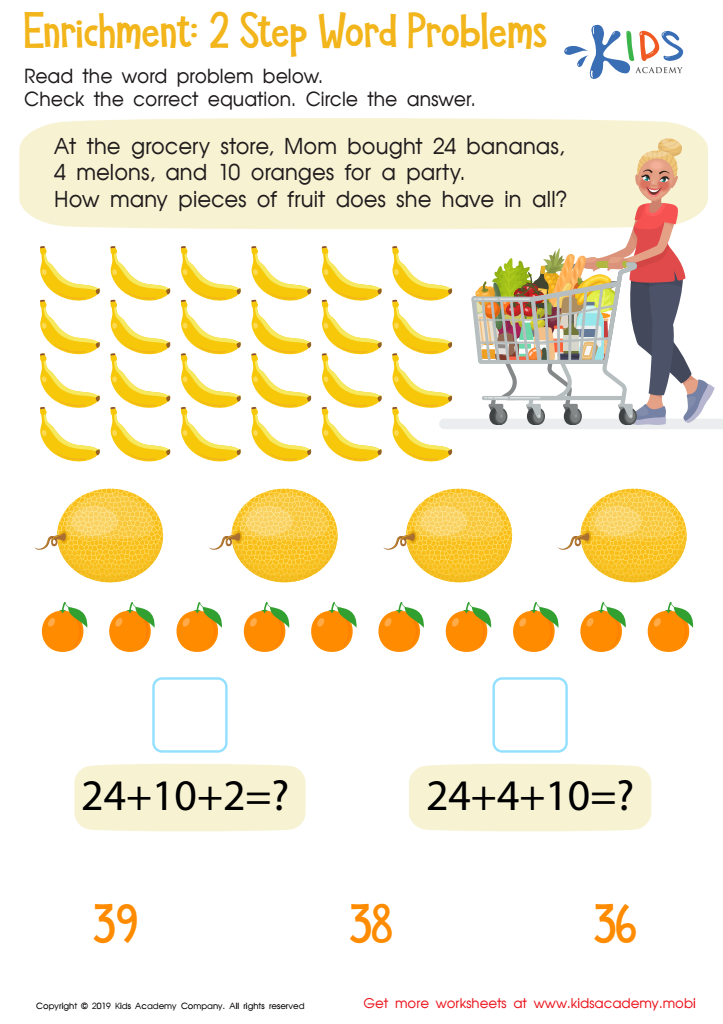
Enrichment -2 Step Word Problems Worksheet

Enrichment -2 Step Word Problems Worksheet

Help your students learn math easier and faster with this colorful worksheet. Read the word problem and then guide them in checking the correct equation and finding the answer. Your students will benefit from the extra help, as they work through new concepts each day.
Enrichment -2 Step Word Problems Worksheet
Worksheet
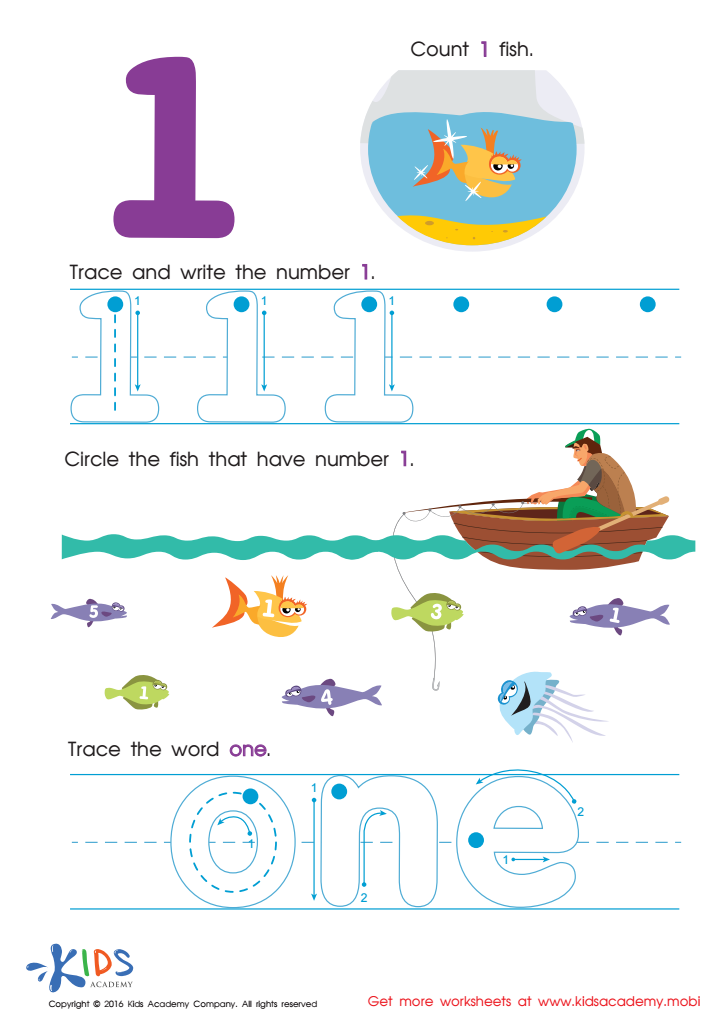
Learning Numbers Worksheets: Learning to Write 1 PDF

Learning to Write 1 Worksheet

Learning to write numbers can be easy and fun! Get this new number worksheet to help your child excel. Practice counting, tracing and writing the number “one”, then circle the fish with “1” on them. Revise spelling and have fun! Get more tracing numbers worksheets at Kids Academy and enjoy the learning process.
Learning to Write 1 Worksheet
Worksheet
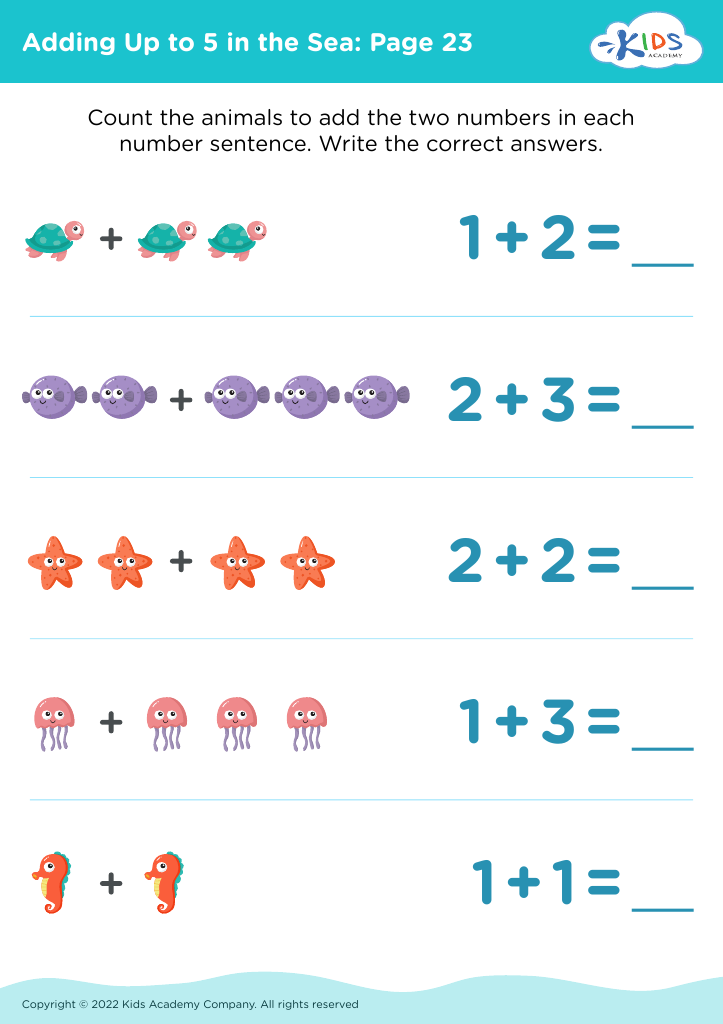
Adding Up to 5 in the Sea: Page 23
Worksheet
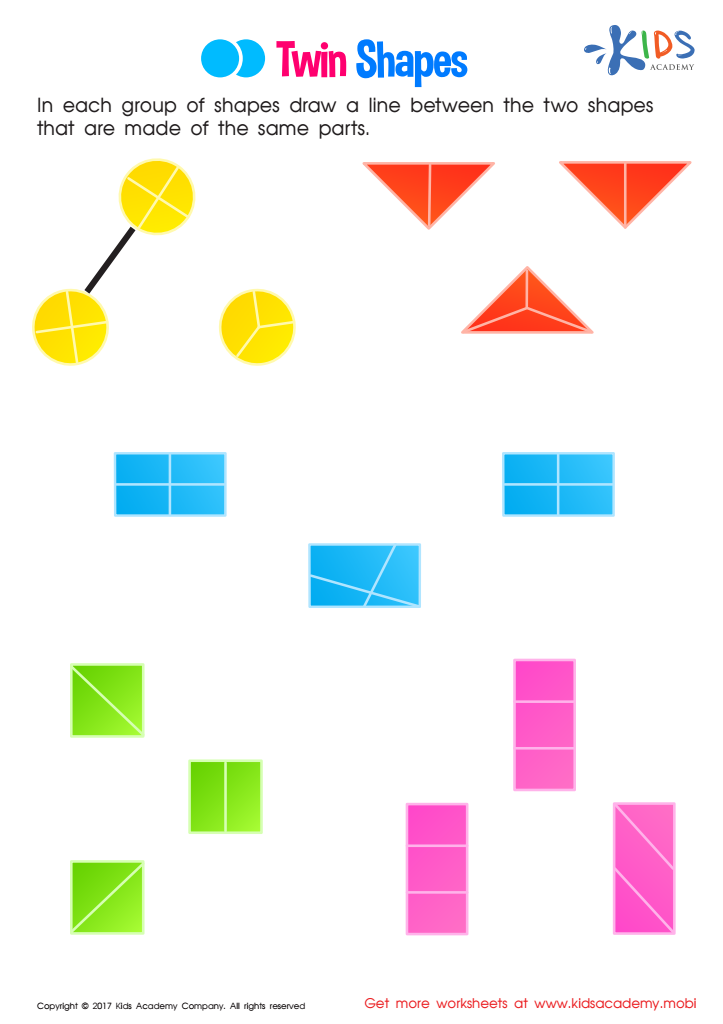
Twin Shapes Worksheet

Twin Shapes Worksheet

Your students' goal in this worksheet is to find the twin shapes: drawing a line between two shapes made of the same parts. Likely, the first shapes encountered were circles, triangles, rectangles and squares - examples of which are seen frequently in everyday life. Encourage them to apply what they know and work out which is the twin shape!
Twin Shapes Worksheet
Worksheet
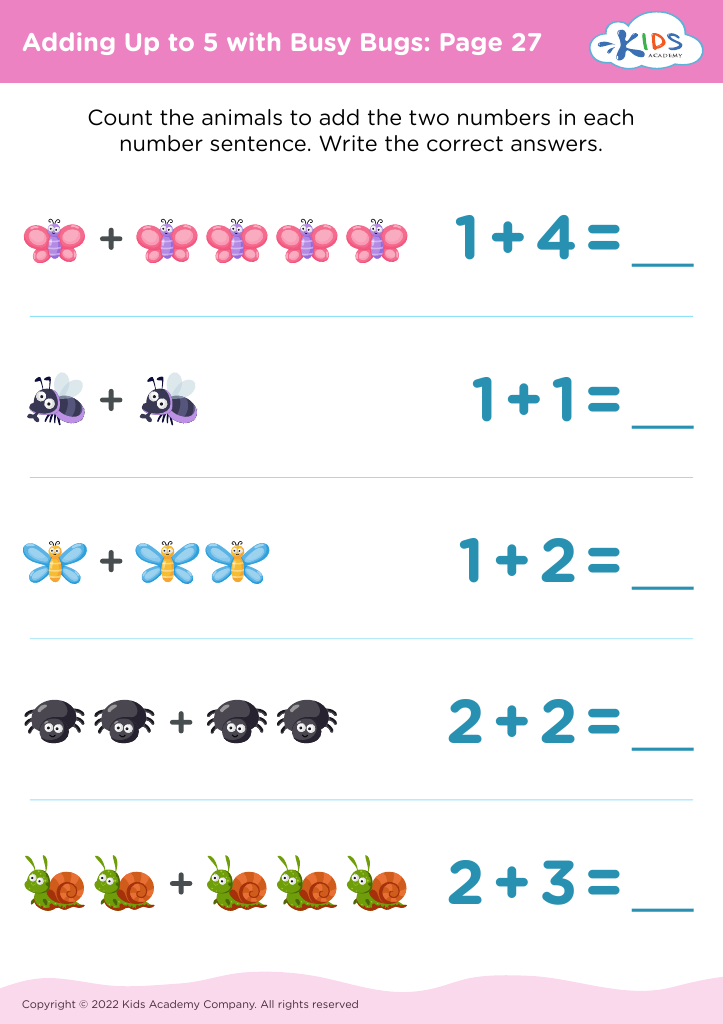
Adding Up to 5 with Busy Bugs: Page 27
Worksheet
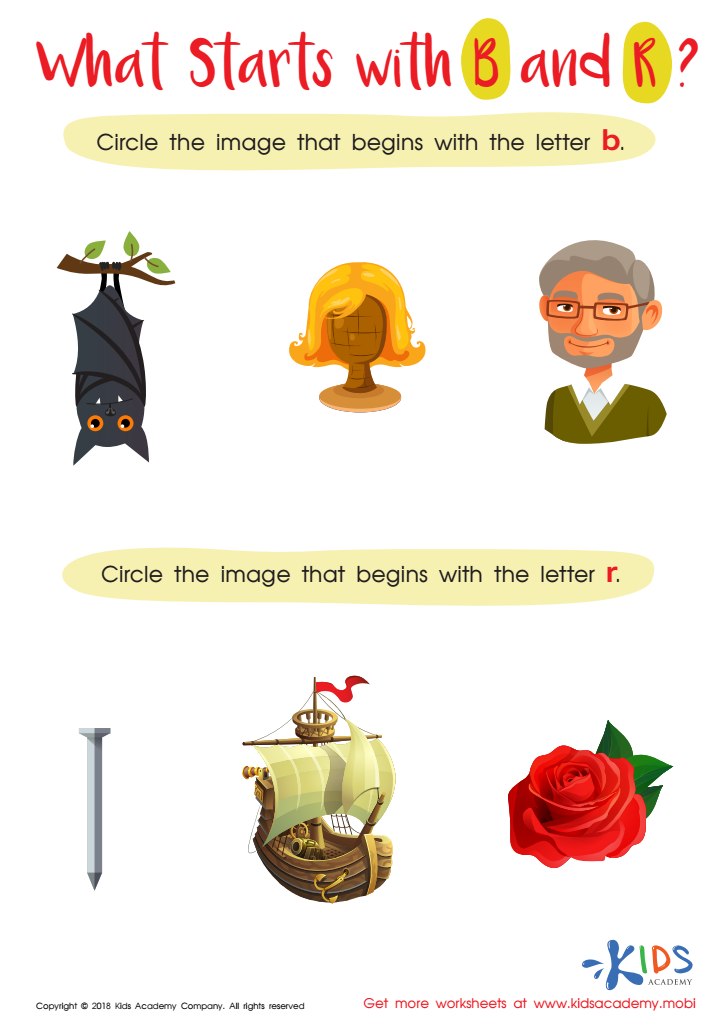
What Starts with B and R? Worksheet
What Starts with B and R? Worksheet
Download this worksheet to help young readers practice visual and motor skills! They'll enjoy matching pictures with "B" and "R" letters while tracing the images. Bright and colorful, this engaging activity will help kids differentiate between words and have fun doing it.
What Starts with B and R? Worksheet
Worksheet
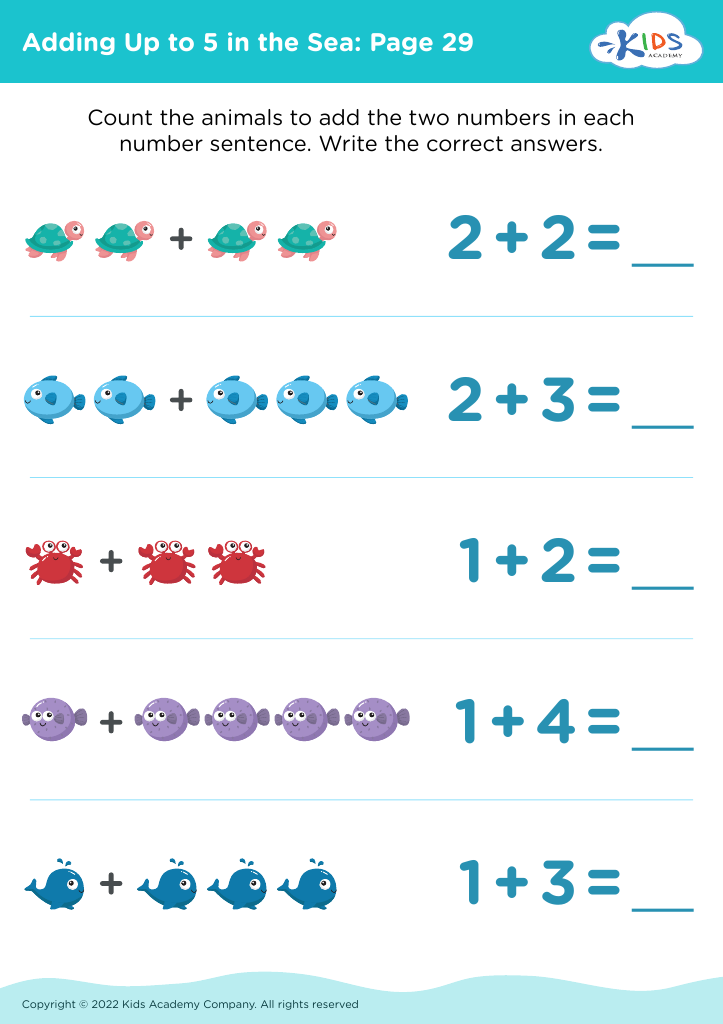
Adding Up to 5 in the Sea: Page 29
Worksheet
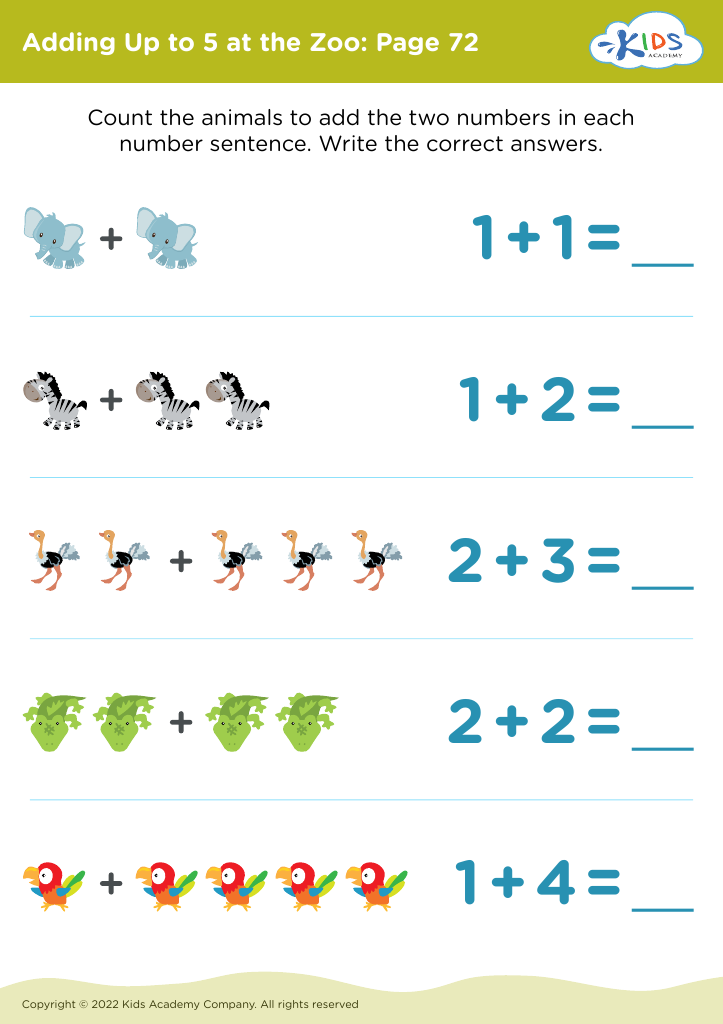
Adding Up to 5 at the Zoo: Page 72
Worksheet
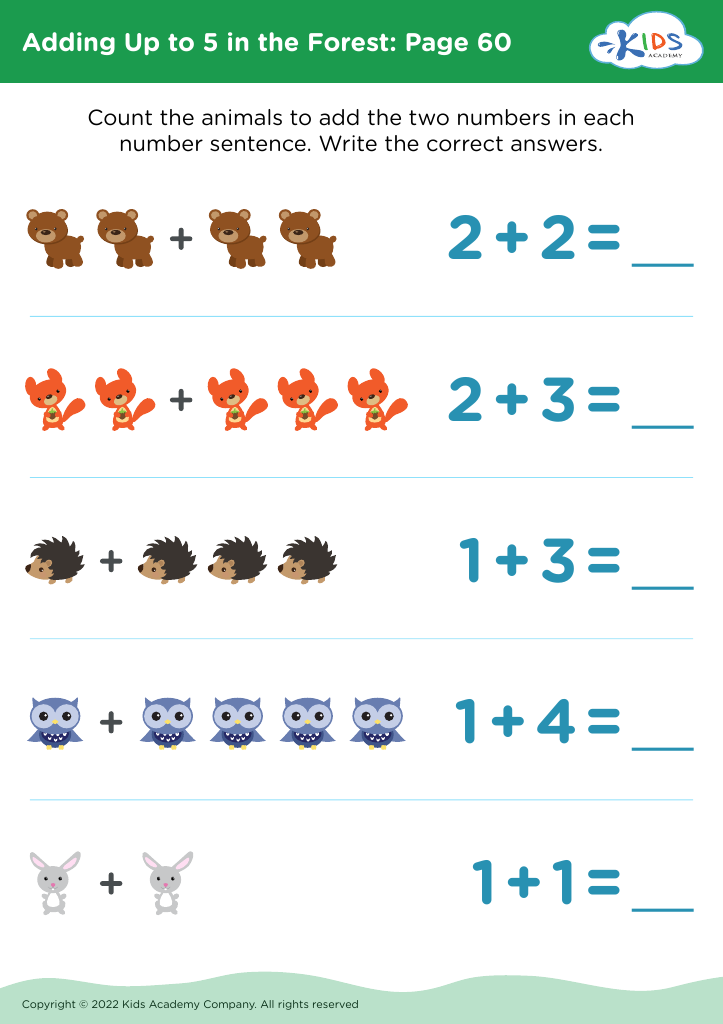
Adding Up to 5 in the Forest: Page 60
Worksheet
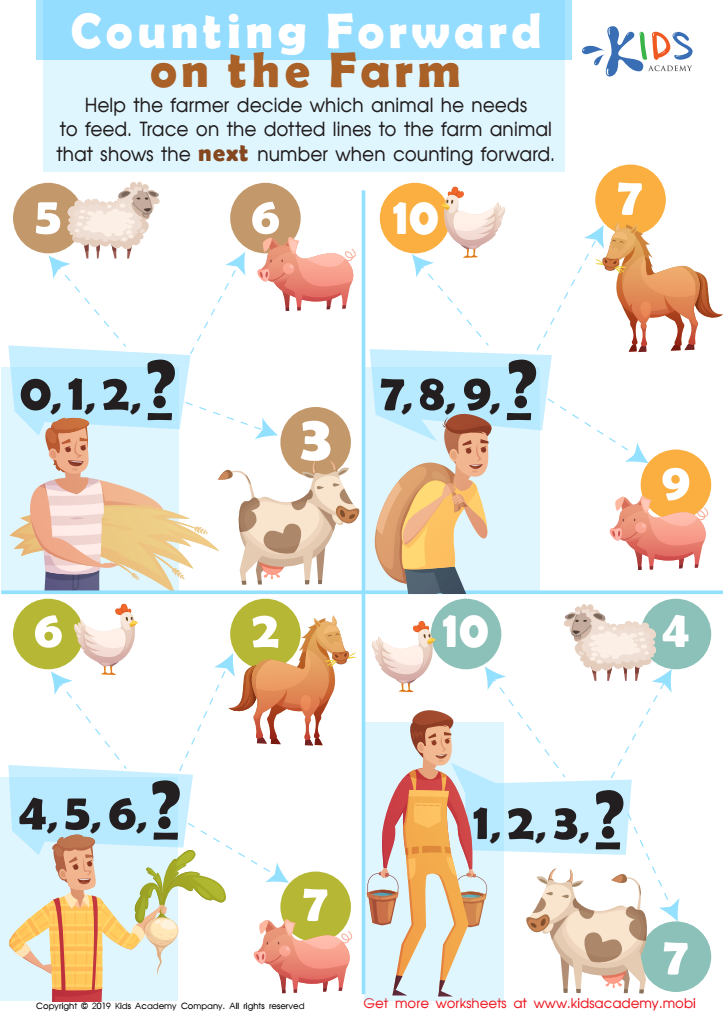
Counting Forward On the Farm Worksheet

Counting Forward On the Farm Worksheet

Help your child practice counting with this fun worksheet. Have them help a farmer feed the right animal by counting on from a starting point. This activity will help them build number line thinking and refine fine motor skills.
Counting Forward On the Farm Worksheet
Worksheet
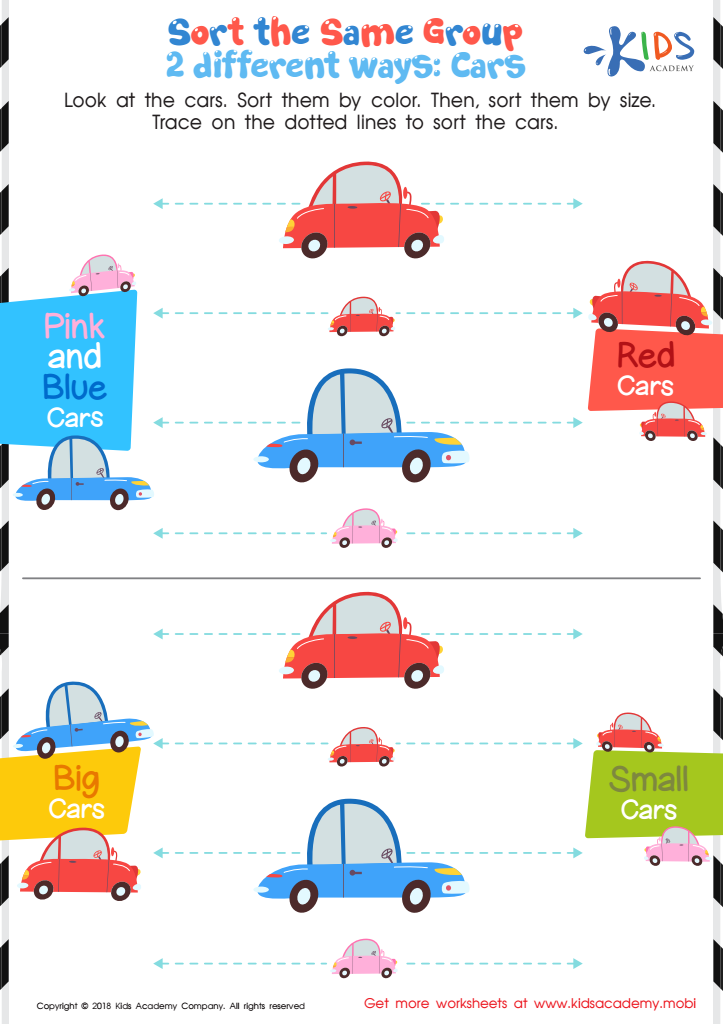
Sort the Same Group 2 Different Ways: Cars Worksheet
Sort the Same Group 2 Different Ways: Cars Worksheet

Look at the pictures with your child. Can they identify the objects? Ask them to sort the cars first by color and then size. Assist them to trace the dotted lines to sort the cars by color and size. This worksheet lets you easily assess your child's color and size organization skills.
Sort the Same Group 2 Different Ways: Cars Worksheet
Worksheet
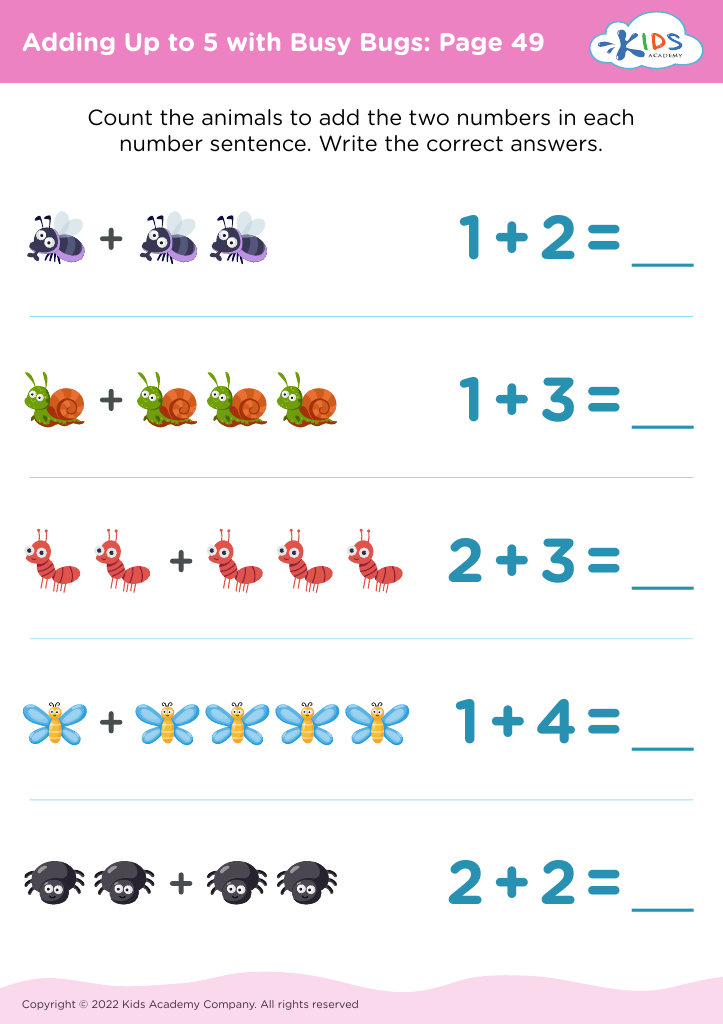
Adding Up to 5 with Busy Bugs: Page 49
Worksheet
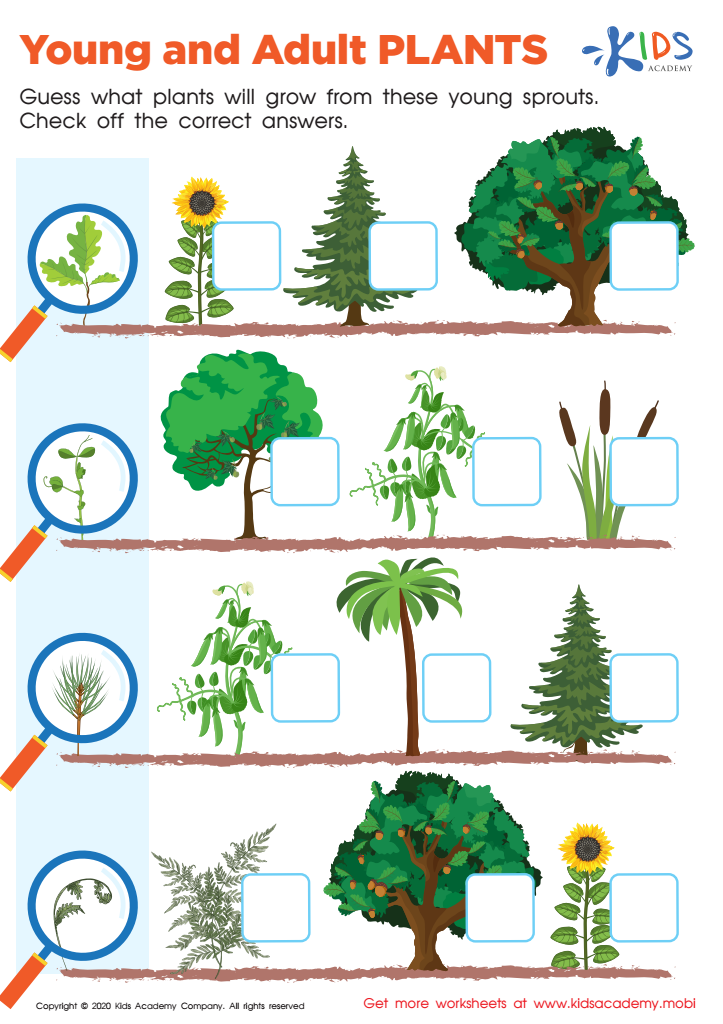
Young and Adult Plants Worksheet

Young and Adult Plants Worksheet

Examine the sprouts, then compare the leaves of the nearby trees. Check the box next to the tree that looks similar to the sprout to complete the worksheet. Problem-solving and analysis skills will be put to the test! 80 words.
Young and Adult Plants Worksheet
Worksheet
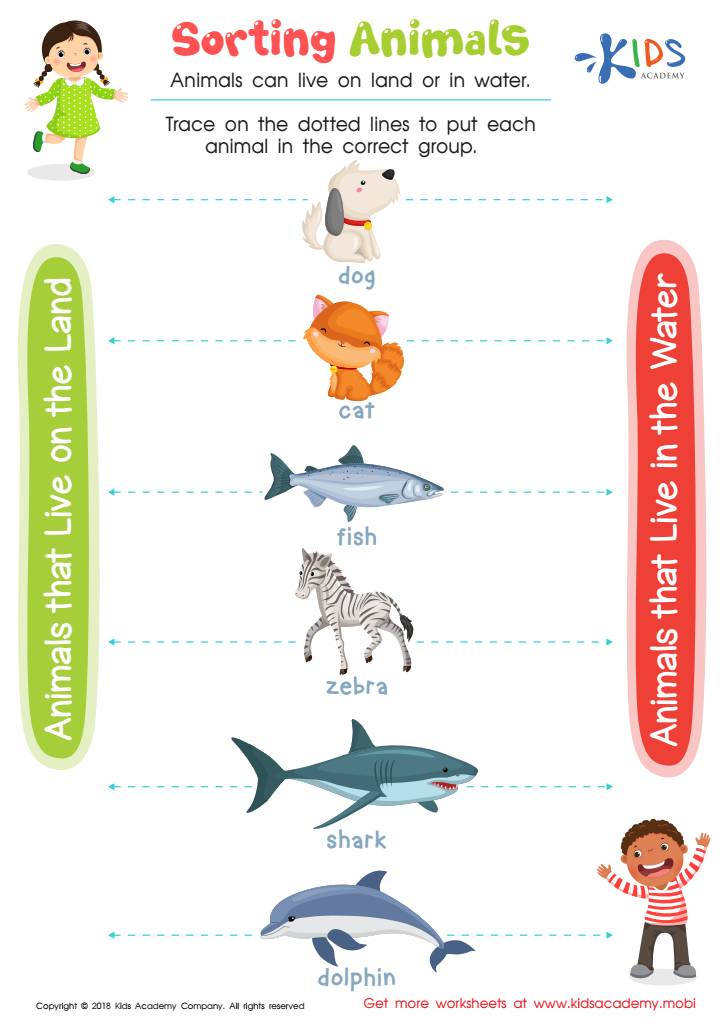
Sorting Animals Worksheet

Sorting Animals Worksheet

Your kids will love this free, interactive worksheet! With image clues, they can read and trace the animal names, and then sort them into groups of land or water animals. It's an enjoyable way to boost their critical thinking, fine motor and prior knowledge skills.
Sorting Animals Worksheet
Worksheet
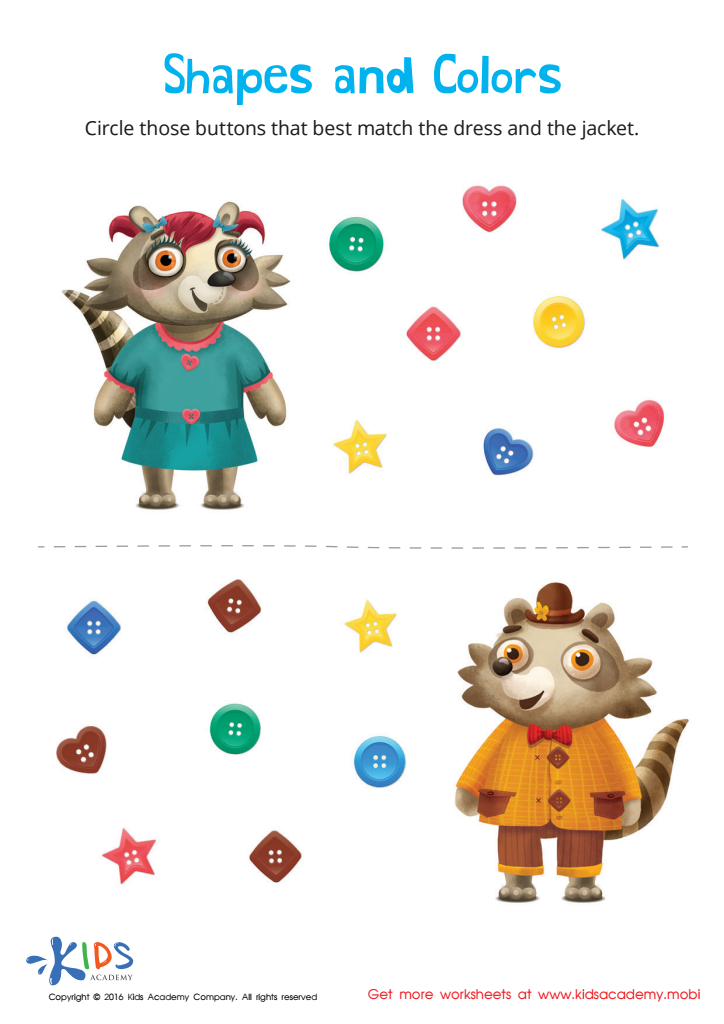
Matching Colors Worksheet

Matching: Shapes and Colors Worksheet
Help Mr. and Mrs. Raccoon find the right buttons to match their shirts! Kids will identify shapes and colors and learn to match them correctly.
Matching: Shapes and Colors Worksheet
Worksheet
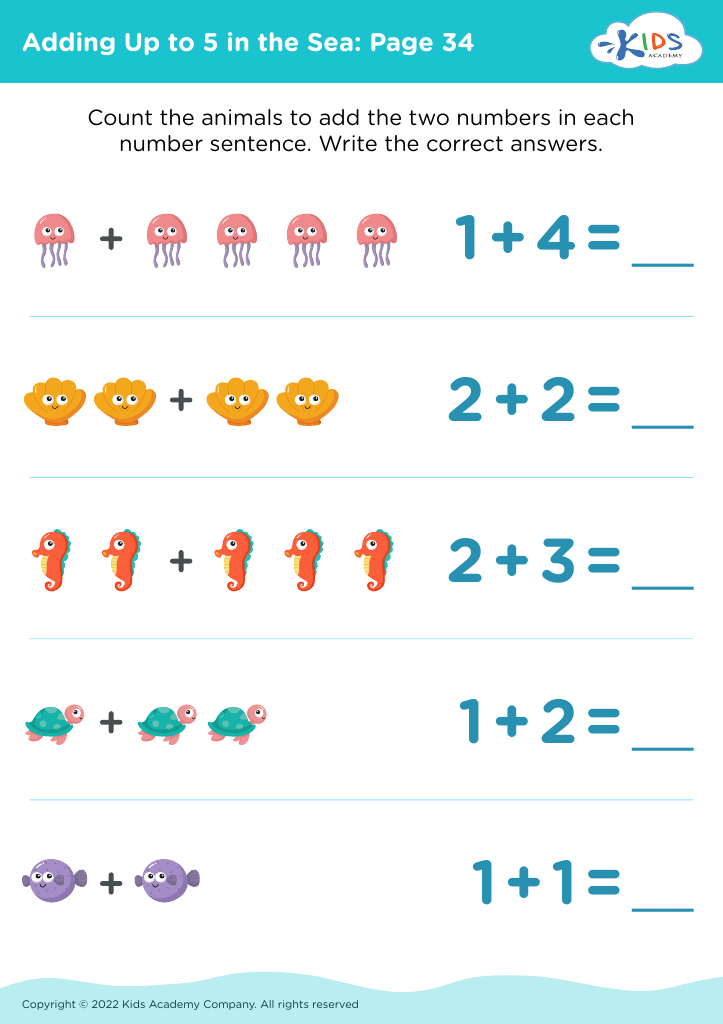
Adding Up to 5 in the Sea: Page 34
Worksheet
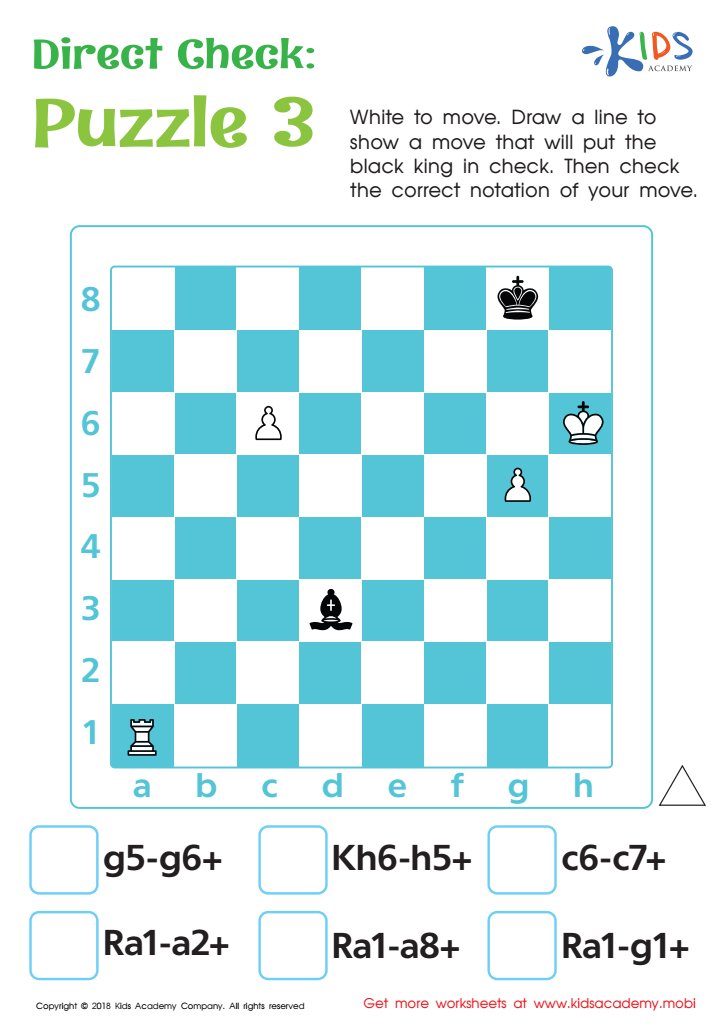
Direct Check: Puzzle 3 Worksheet


Direct Check: Puzzle 3 Worksheet

Chess is a great way to help your child develop their strategic, mathematical, and thinking skills. Test their understanding with this simple worksheet: they must get the black king in checkmate with white pieces, then select the notation that shows the correct move. See just how much progress they've made!
Direct Check: Puzzle 3 Worksheet

Worksheet


Cognitive development in children aged 5-6 is crucial as it lays the foundation for future learning, problem-solving, and social interactions. At this age, children's brains are rapidly growing and forming new neural connections, making it an optimal period for acquiring essential skills. By nurturing cognitive development, parents and teachers can enhance children's abilities to think, understand, and remember.

During this stage, kids begin to develop important cognitive abilities such as memory, attention, and the capacity to understand complex concepts. For example, they start learning how to count, recognize letters, and understand the consequences of their actions. These skills are fundamental for their success in school and everyday life.

In addition, cognitive development is closely tied to emotional and social growth. Children with strong cognitive skills are better able to regulate their emotions, engage in meaningful social interactions, and cope with challenges. They become more resilient and adaptable, which are important traits for overall well-being.

Moreover, early cognitive development sets the stage for lifelong learning. Children who receive rich cognitive stimulation early on are more likely to develop a love for learning, perform well academically, and have better educational and professional outcomes in the long run. Therefore, parents and teachers should actively engage children in activities that stimulate their brains and provide supportive, enriching environments to foster robust cognitive development.