Understanding fractions Addition & Subtraction Worksheets for Ages 5-6
5 filtered results
-
From - To
Unlock the world of fractions for your young learners with our engaging Addition and Subtraction Worksheets tailored for ages 5-6! These worksheets build foundational skills in understanding fractions, making learning fun and interactive. Children will explore visual aids, such as pie charts and number lines, to grasp the concepts of adding and subtracting fractions. Designed to foster critical thinking and problem-solving skills, these resources encourage children to approach math with confidence. Suitable for home or classroom use, our worksheets provide a practical way for kids to cultivate a love for math while mastering essential fraction operations. Start facilitating enjoyable learning today!
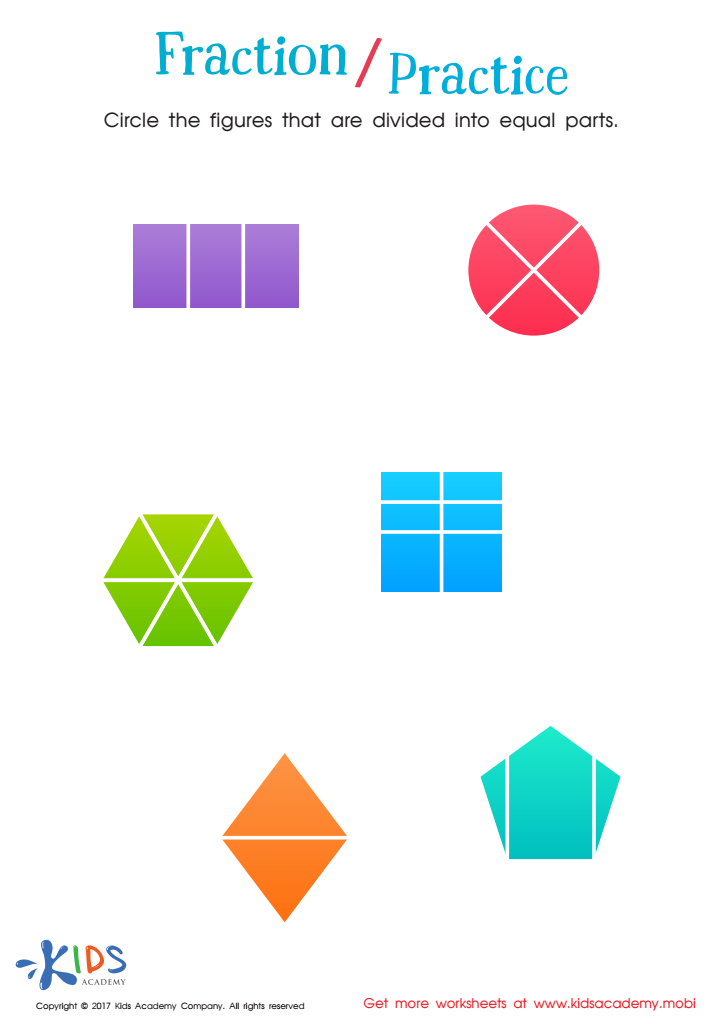
Fractions: Shapes Worksheet
 Assign to My Students
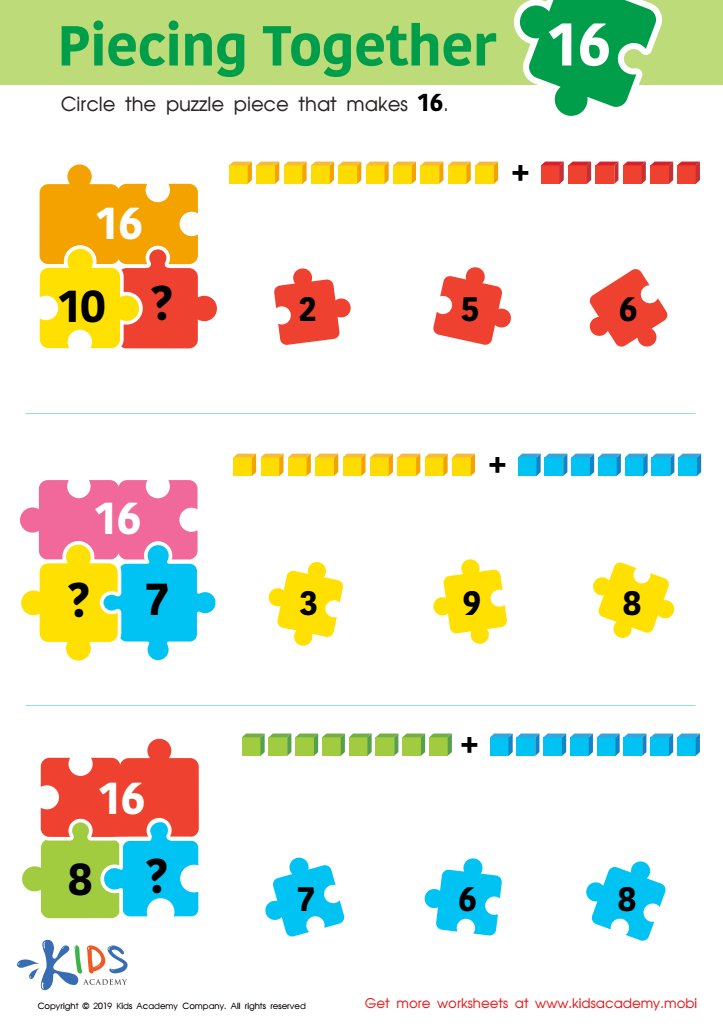
Piecing Together 16 Worksheet
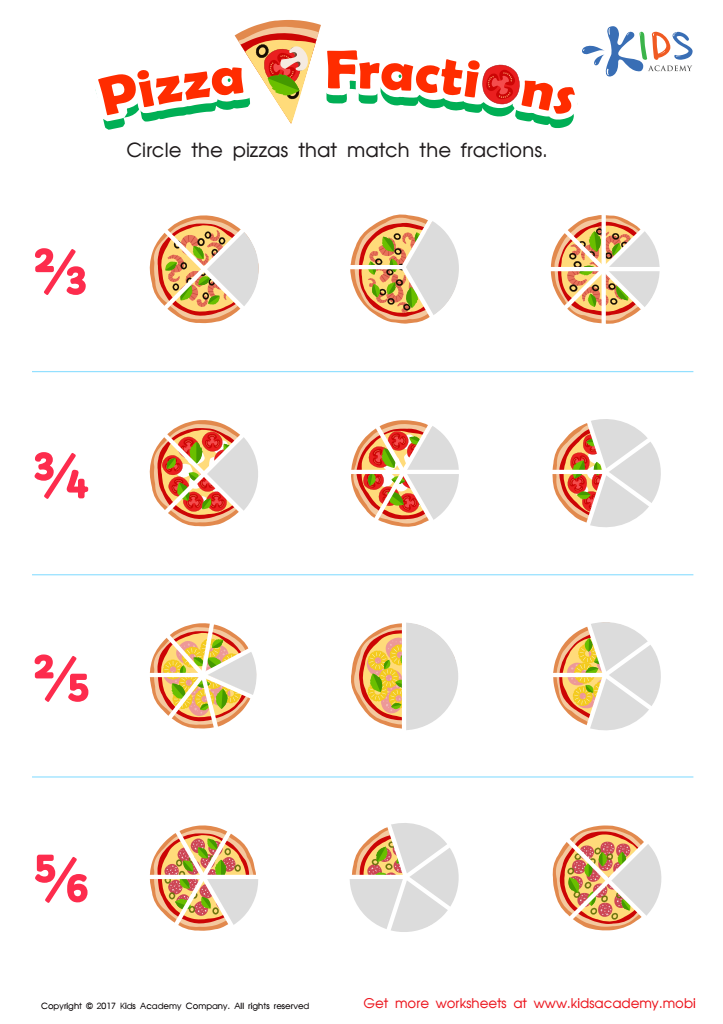
Fractions: Pizza Printable
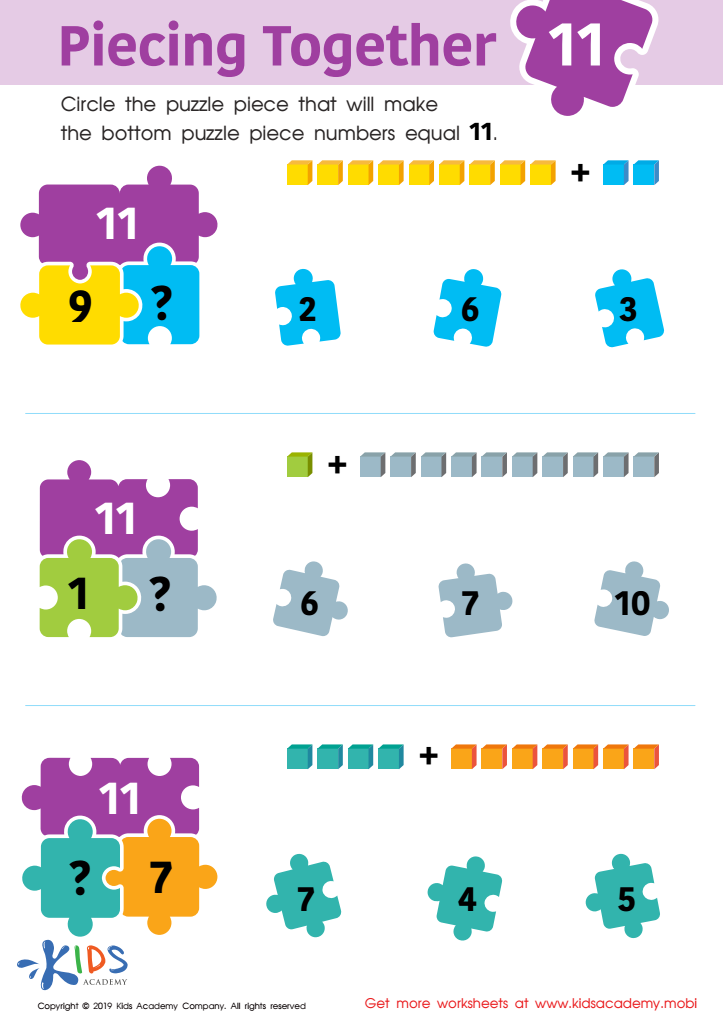
Piecing Together 11 Worksheet
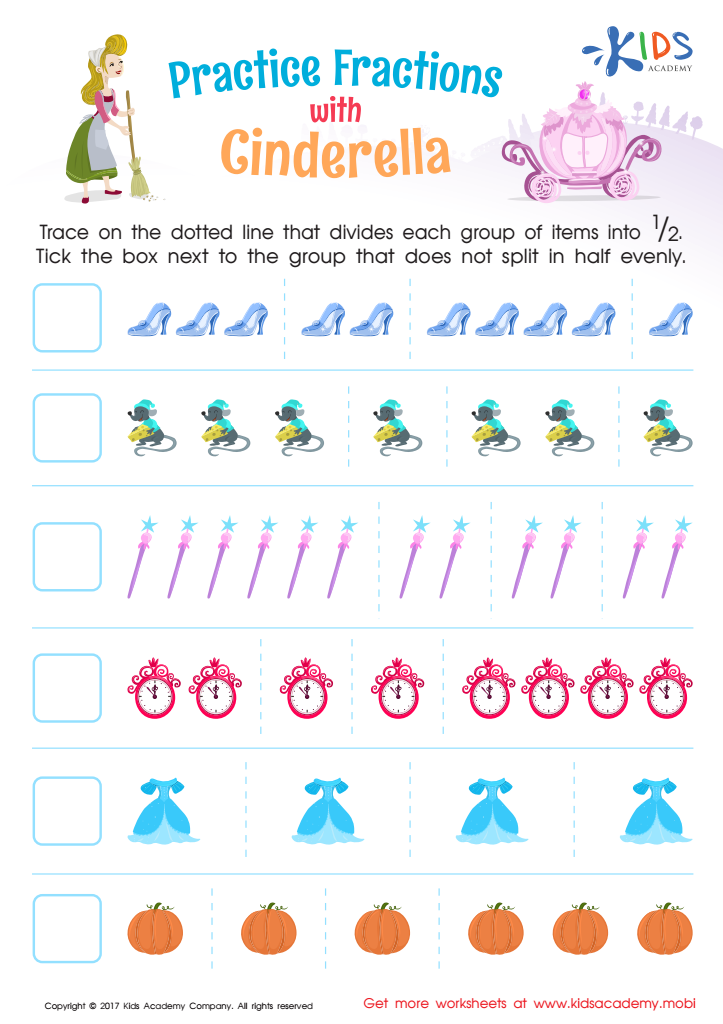
Fractions: Cinderella Printable








Understanding fractions, particularly addition and subtraction, lays a crucial foundation for young learners aged 5-6. First and foremost, grasping these concepts equips children with essential mathematical skills that extend beyond mere numbers. Fractions are not only fundamental to higher-level math—such as ratios, percentages, and algebra—but also vital for everyday situations, like cooking or sharing among friends.
For parents and teachers, fostering a solid comprehension of fractions can inspire confidence in children. At this age, children are naturally curious, and harnessing that curiosity through engaging fraction activities, such as sharing snacks or dividing blocks, resonates well with their developmental stage.
Additionally, fractional understanding aids in developing critical thinking and problem-solving skills. As children learn to add and subtract fractions, they enhance their ability to visualize sets and models, promoting analytical thought.
Incorporating tactile, visual, and playful experiences in teaching these concepts makes learning enjoyable, thus setting a positive tone for future educational adventures. Ultimately, supporting young learners in understanding fractions creates a brighter, more mathematically literate future, empowering them with the tools necessary for navigating the complexities of life. Both parents and teachers play a pivotal role in championing this crucial step in early education.








