Understanding fractions Geometry Worksheets for Ages 5-6
18 filtered results
-
From - To
Explore our engaging "Understanding Fractions Geometry Worksheets" designed specifically for children aged 5-6! These interactive worksheets introduce young learners to the concept of fractions through colorful visuals and simple geometric shapes. By using fun activities that involve dividing shapes into equal parts, kids will build a solid foundation in fractional understanding while enhancing their geometry skills. Our thoughtfully crafted exercises encourage critical thinking, promote problem-solving abilities, and make learning math enjoyable! Ideal for both classroom and at-home learning, these worksheets provide parents and educators with the perfect resource to support children's early math development. Start their journey to mathematical confidence today!
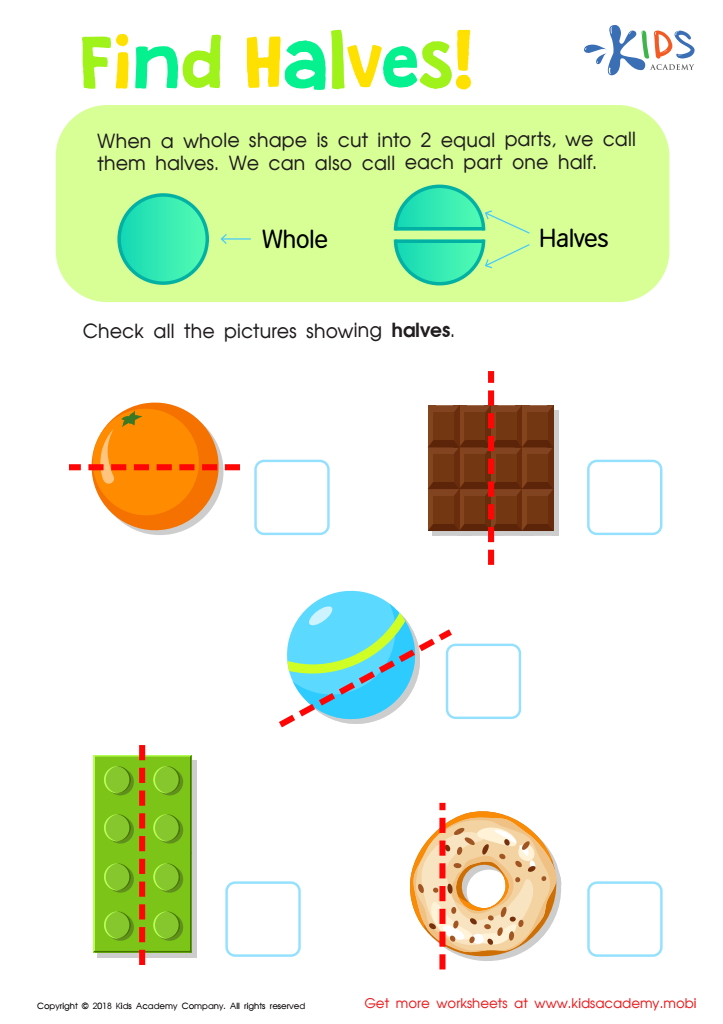
Find Halves Worksheet
 Assign to My Students











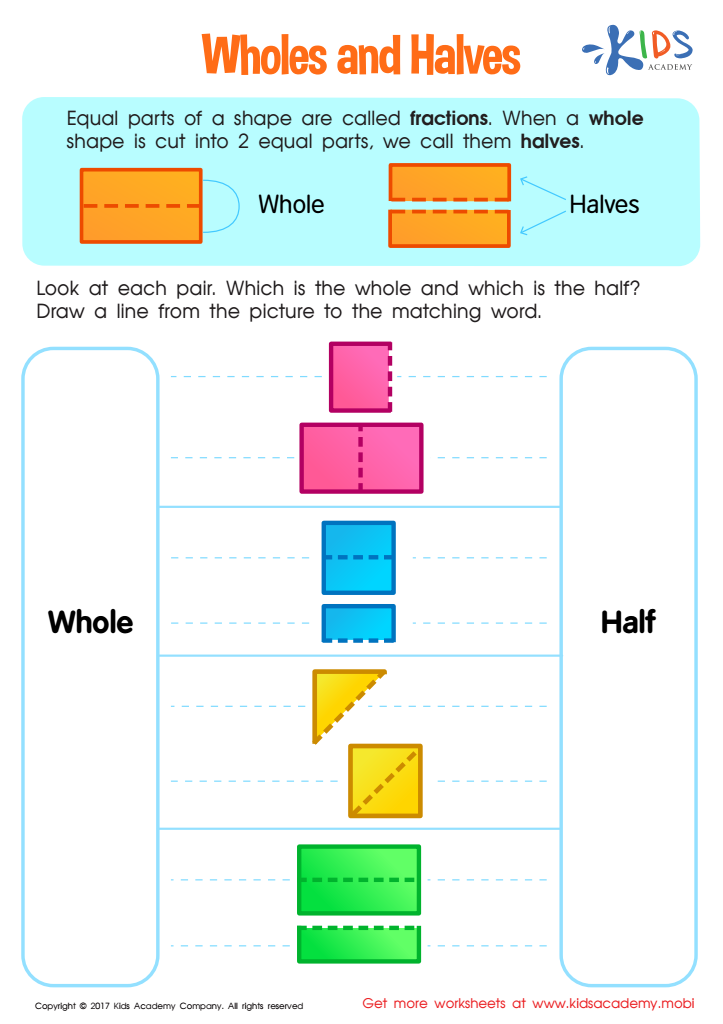
Wholes and Halves Worksheet
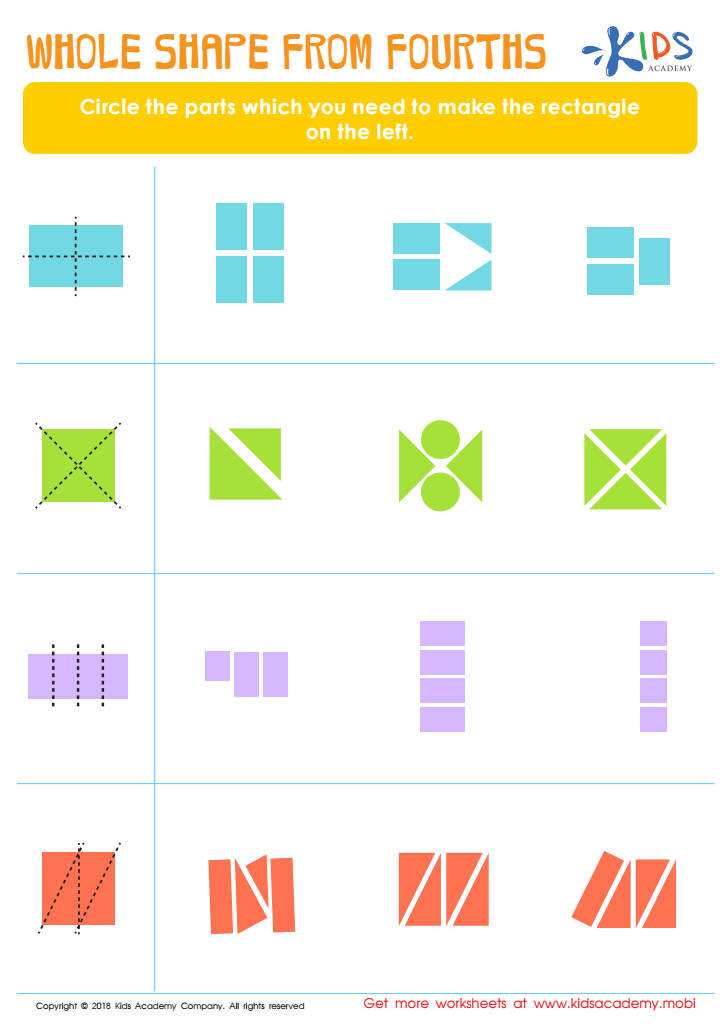
Whole Shape from Fourths Worksheet
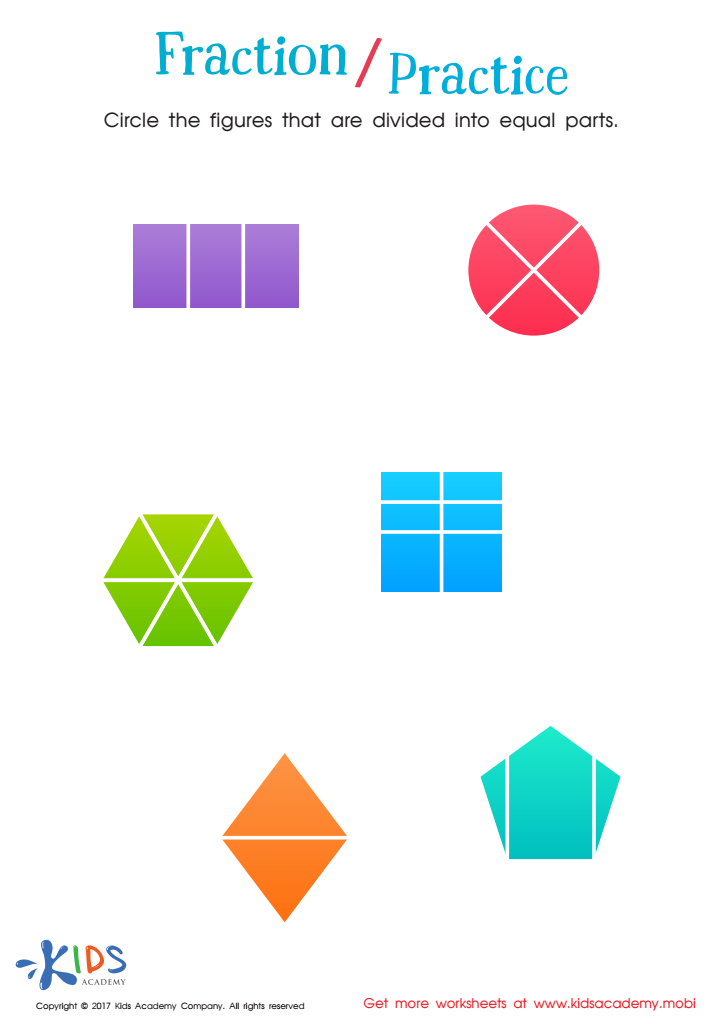
Fractions: Shapes Worksheet
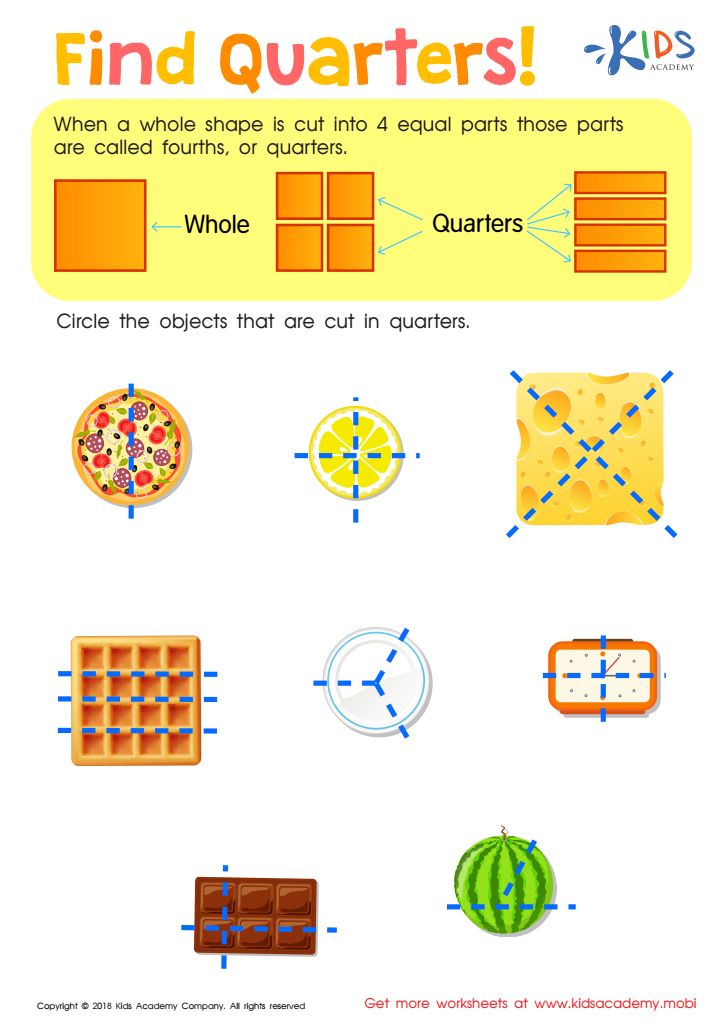
Find Quarters Worksheet
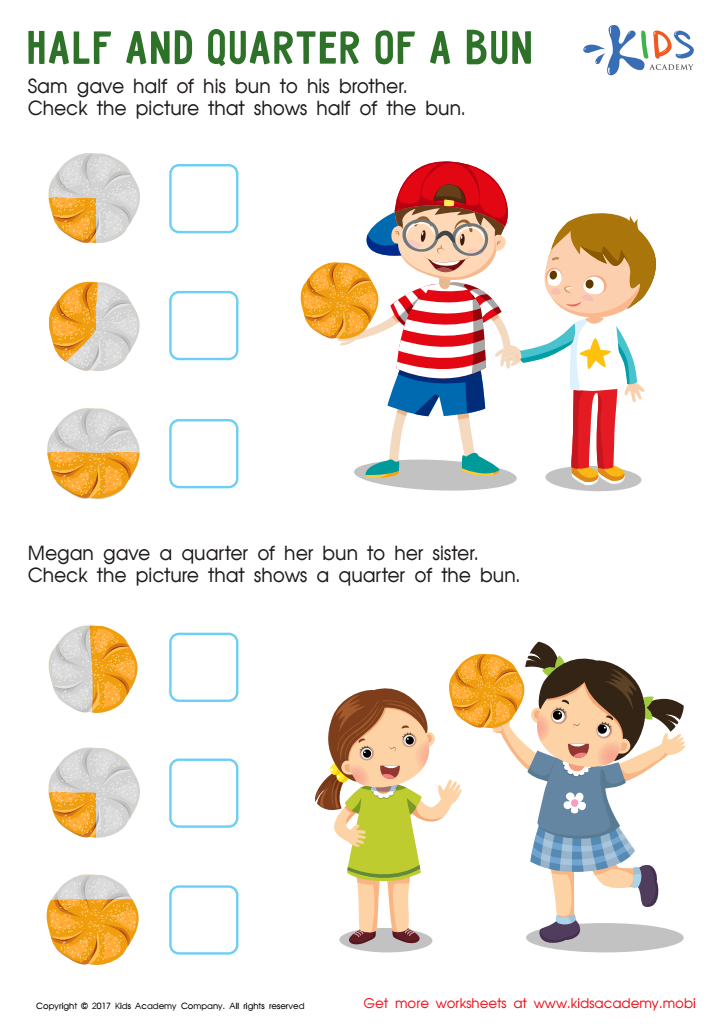
Half and Quarter of a Bun Worksheet
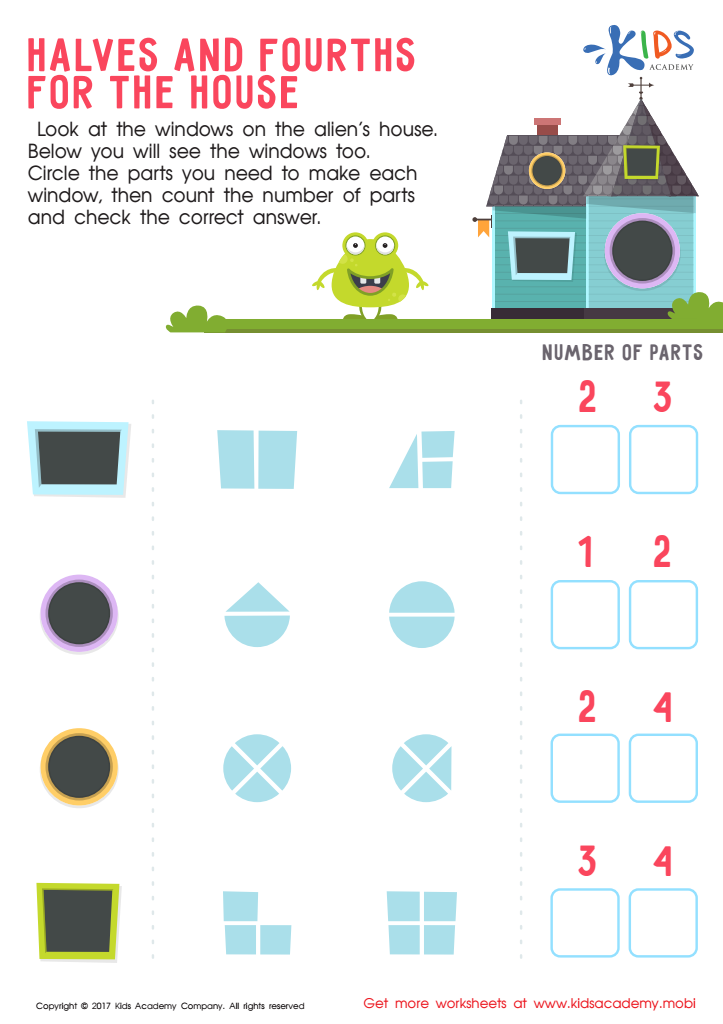
Halves and Fourths for the House Worksheet
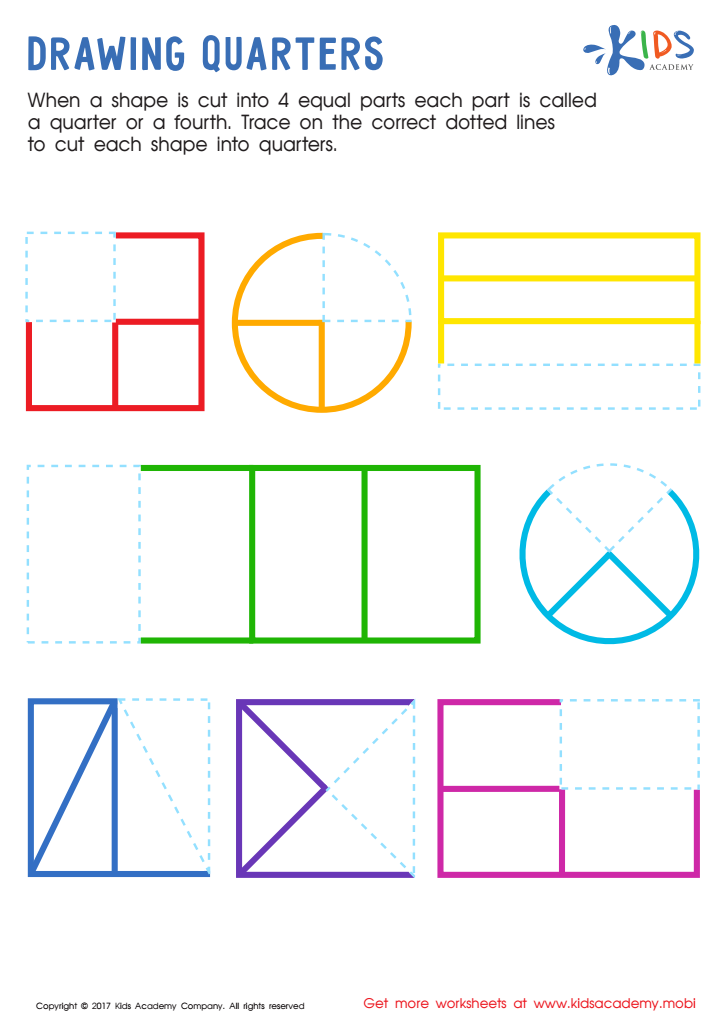
Drawing Quarters Worksheet
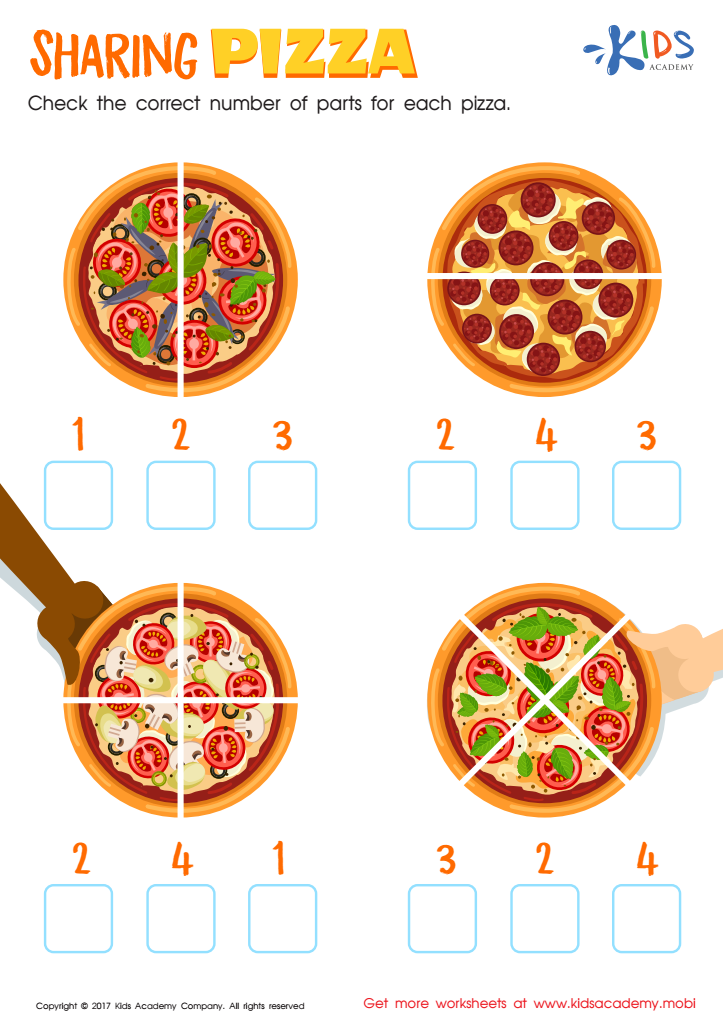
Sharing Pizza Worksheet
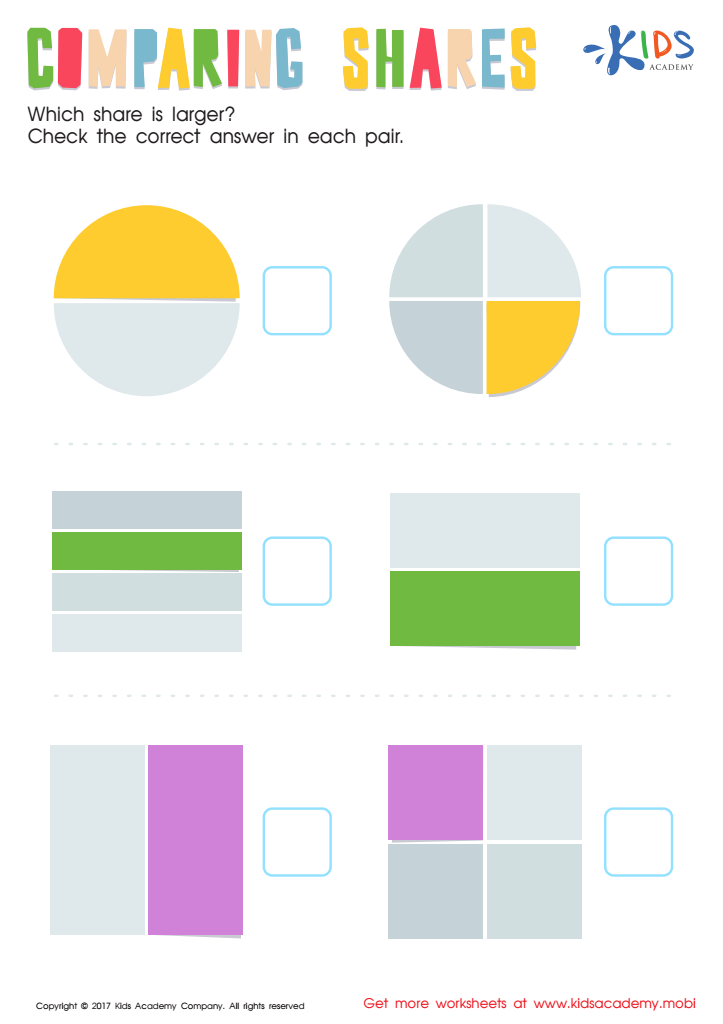
Comparing Shares Worksheet
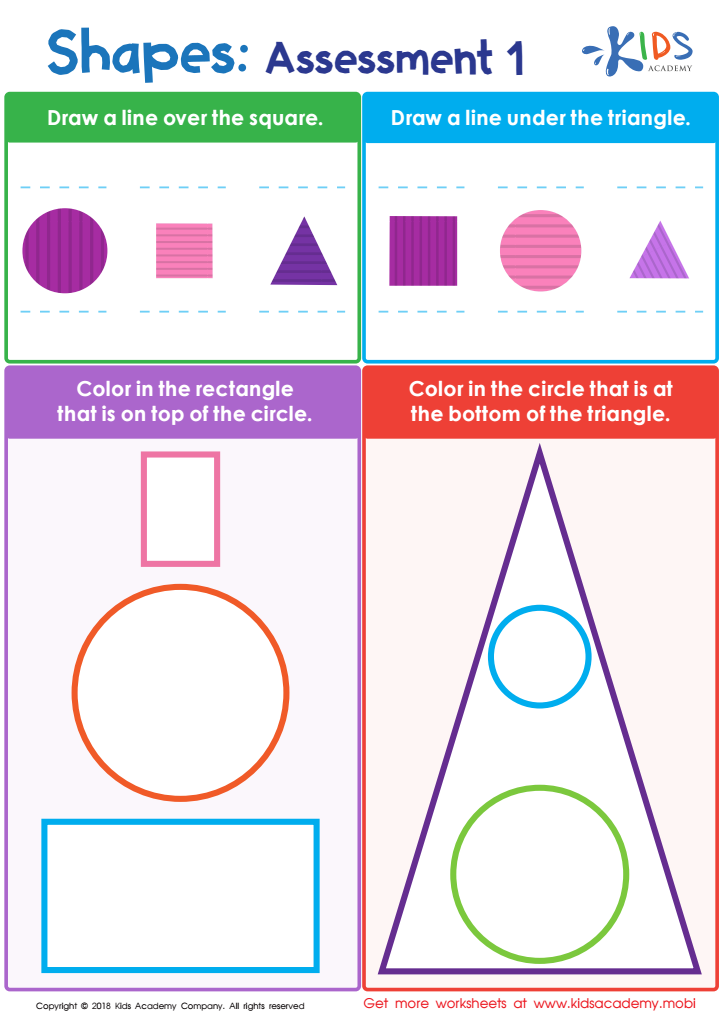
Shapes: Assessment 1 Worksheet
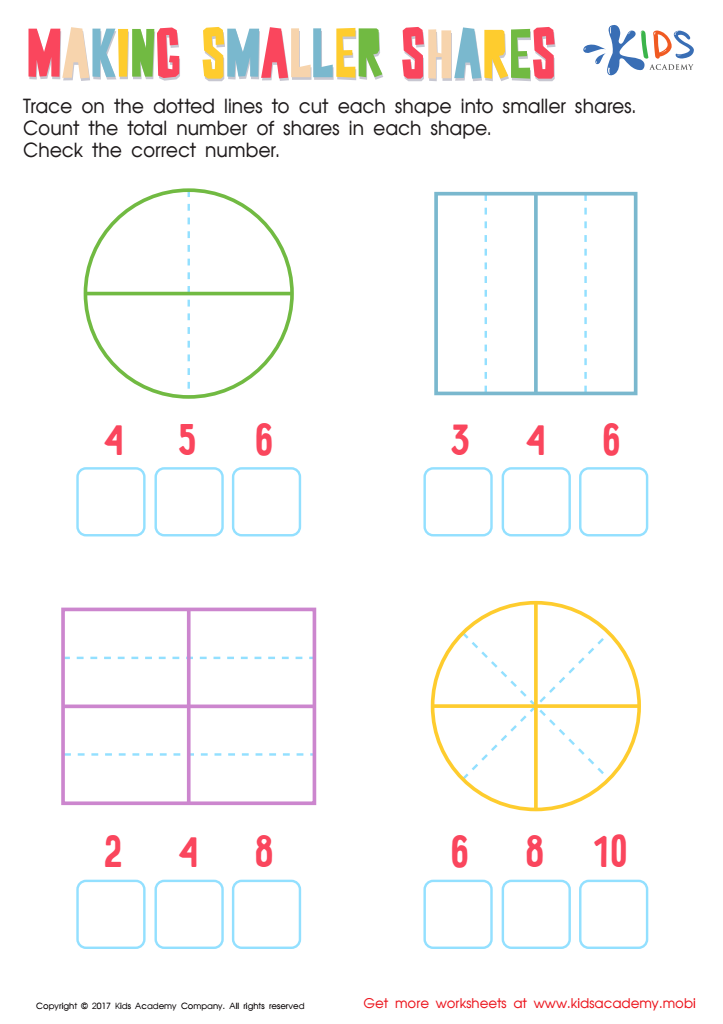
Making Smaller Shares Worksheet
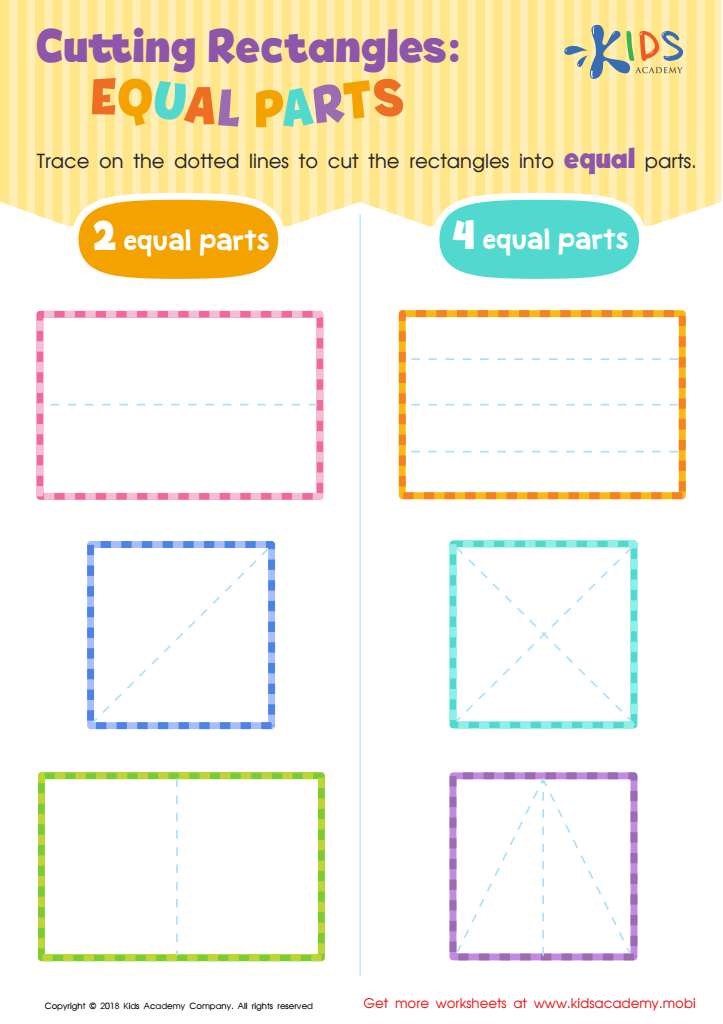
Cutting Rectangles: Equal Parts Worksheet
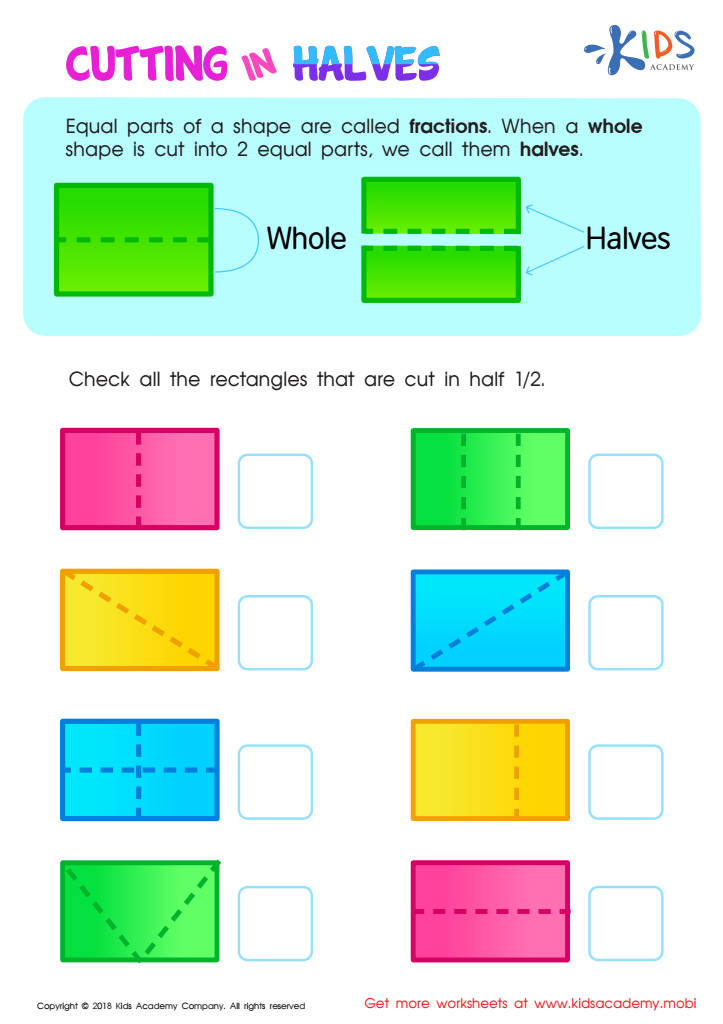
Cutting in Halves Worksheet
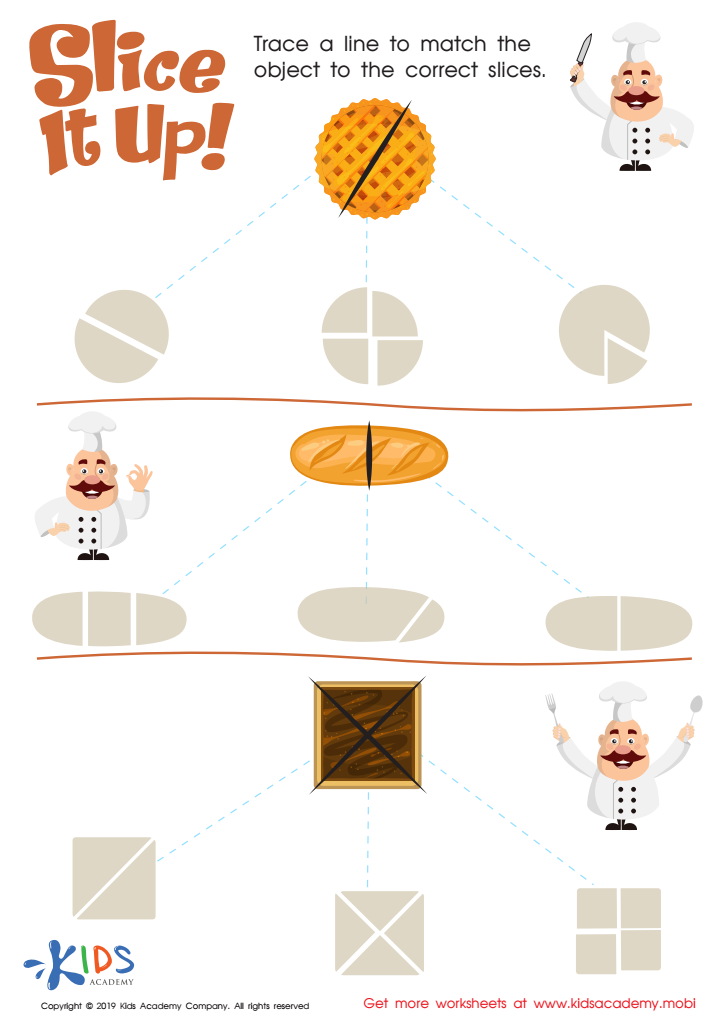
Slice It Up Worksheet
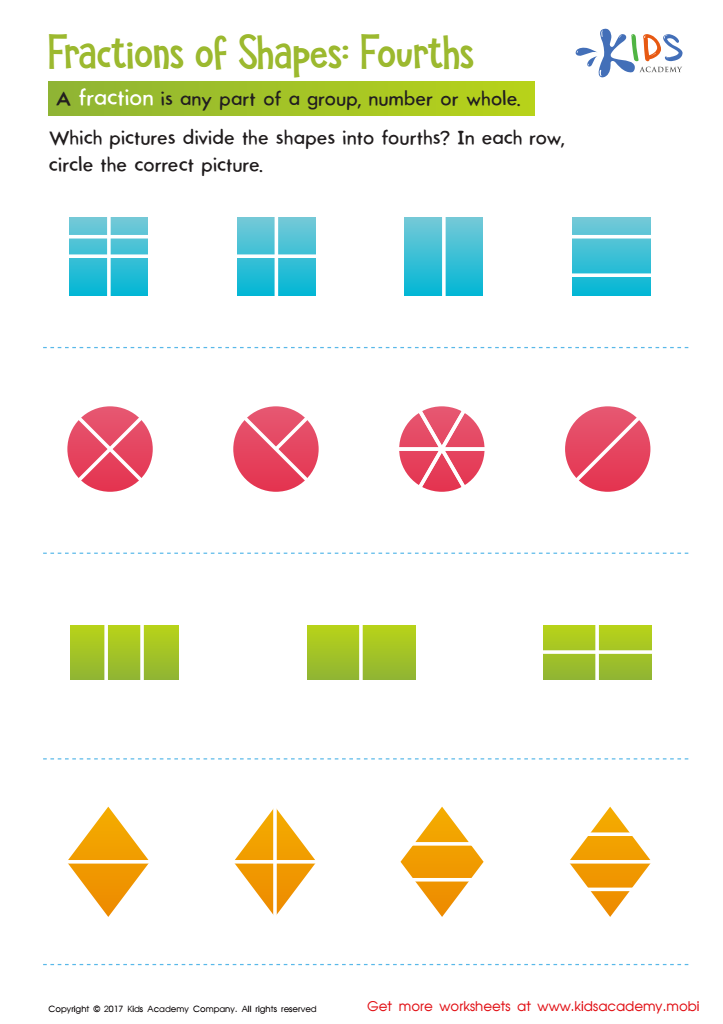
Fractions of Shapes Worksheet
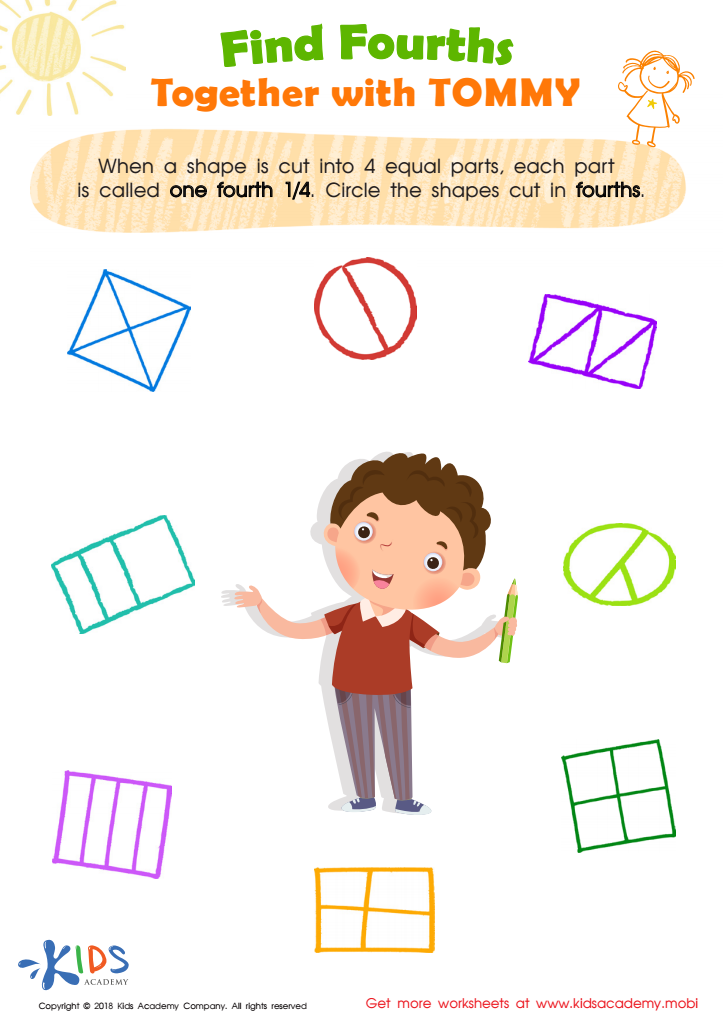
Find Fourths Together with Tommy Worksheet
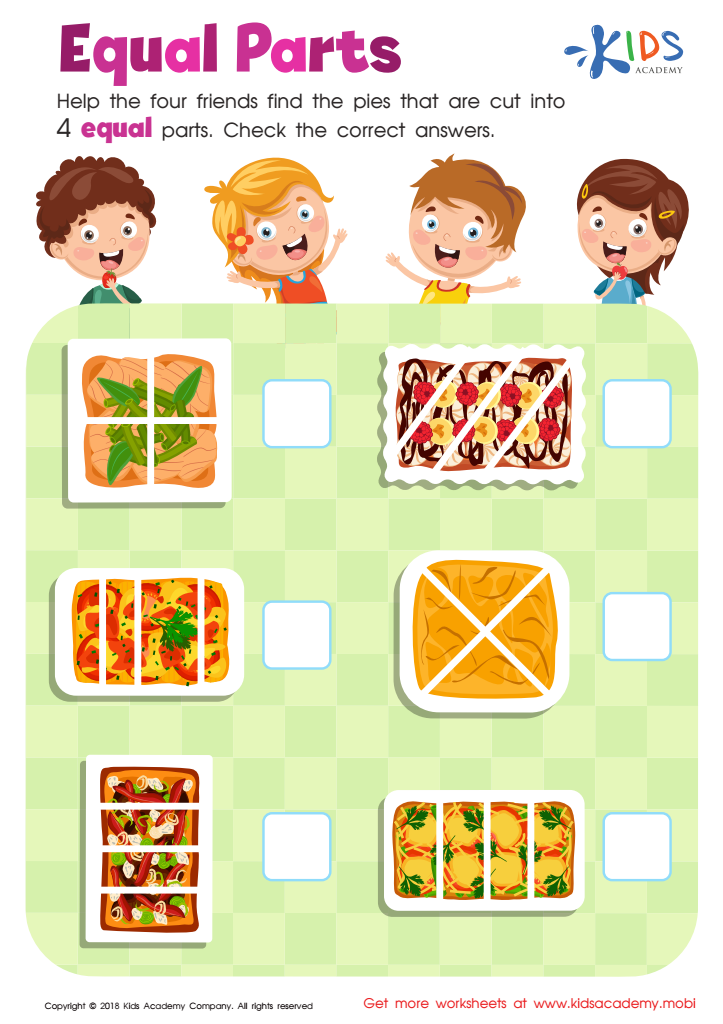
Equal Parts: Food Worksheet








Understanding fractions and geometry at ages 5-6 is crucial for a child’s mathematical foundation and overall cognitive development. At this young age, children are naturally curious and eager to explore concepts through play and hands-on activities. Introducing fractions can help children grasp the idea of part-whole relationships, which is fundamental for understanding more complex math later on. Engaging in activities that involve dividing shapes or sharing objects introduces them to basic fractions like halves and quarters in a fun, relatable way.
Geometry, on the other hand, enhances spatial awareness and the ability to visualize relationships between objects. By exploring shapes, sizes, and positions, children build critical thinking and problem-solving skills. Understanding traits of two-dimensional and three-dimensional shapes fosters an appreciation for patterns and symmetry.
Moreover, mastering these concepts situates children for success in future math levels, as they are essential in everyday life—arithmetic, measuring, and even cooking require a grasp of fractions. Lastly, when parents and teachers collaboratively engage children in these educational journeys, they ignite a love for learning that encourages curiosity and confidence in mathematics, setting the stage for lifelong exploration and discovery.








