Understanding tens Numbers Worksheets for Ages 5-6
4 filtered results
-
From - To
Our "Understanding Tens Numbers Worksheets" for ages 5-6 are designed to help young learners grasp the foundational concept of place value and the significance of tens in our number system. These engaging and colorful worksheets use visual aids, counting exercises, and simple arithmetic to make learning fun and effective. Perfect for classroom or home use, these worksheets align with early math curriculum standards and are an ideal resource for parents and teachers looking to enhance math skills in children. Foster a love for math in your child while building a strong numerical foundation with our expertly crafted resources.
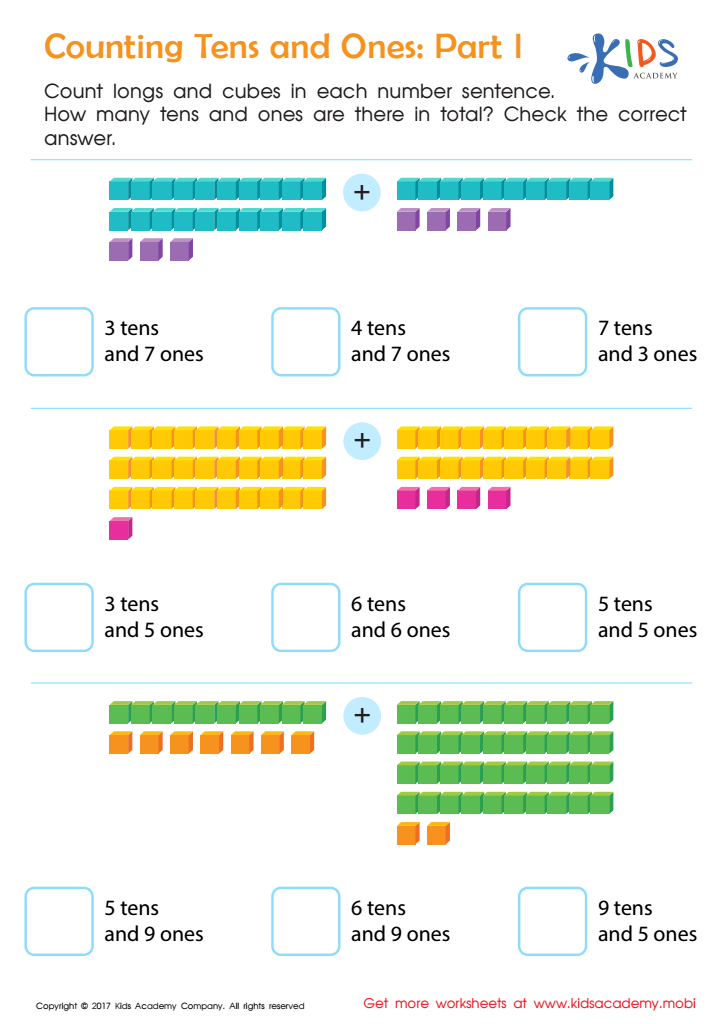
Counting Tens and Ones: Part 1 Worksheet
 Assign to My Students
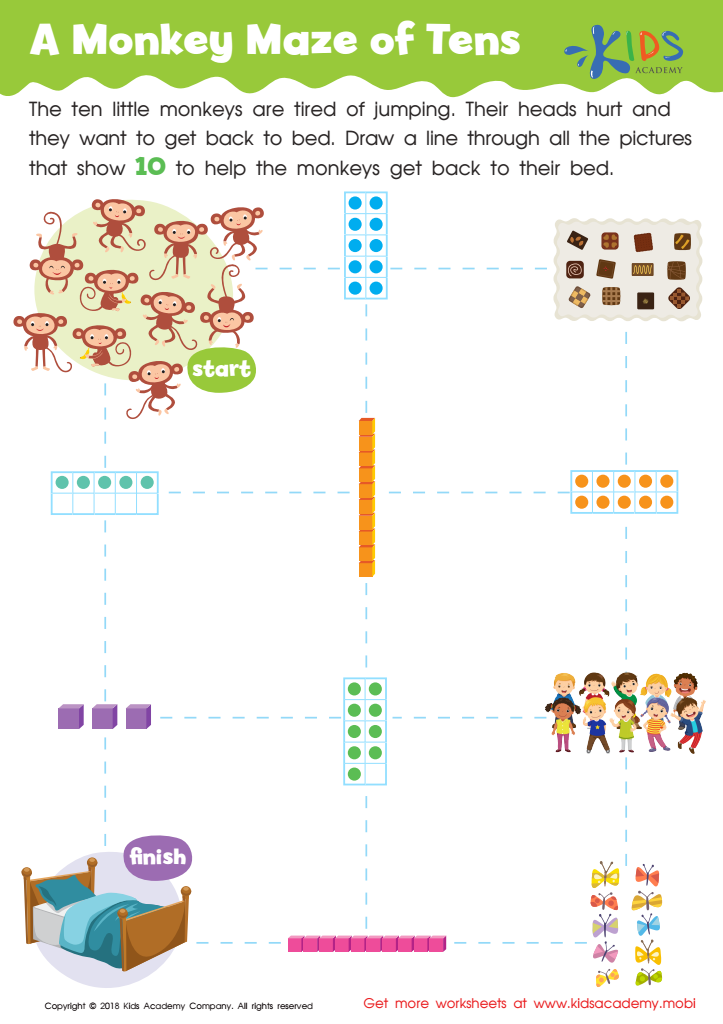
A Monkey Maze of Tens Worksheet
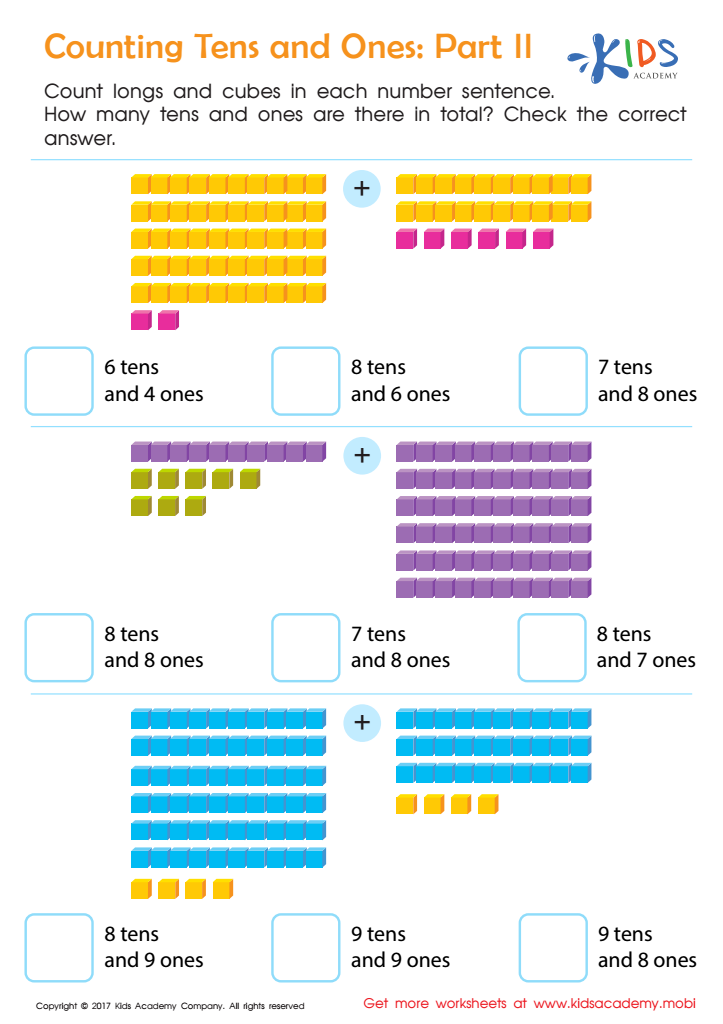
Counting Tens and Ones: Part 2 Worksheet
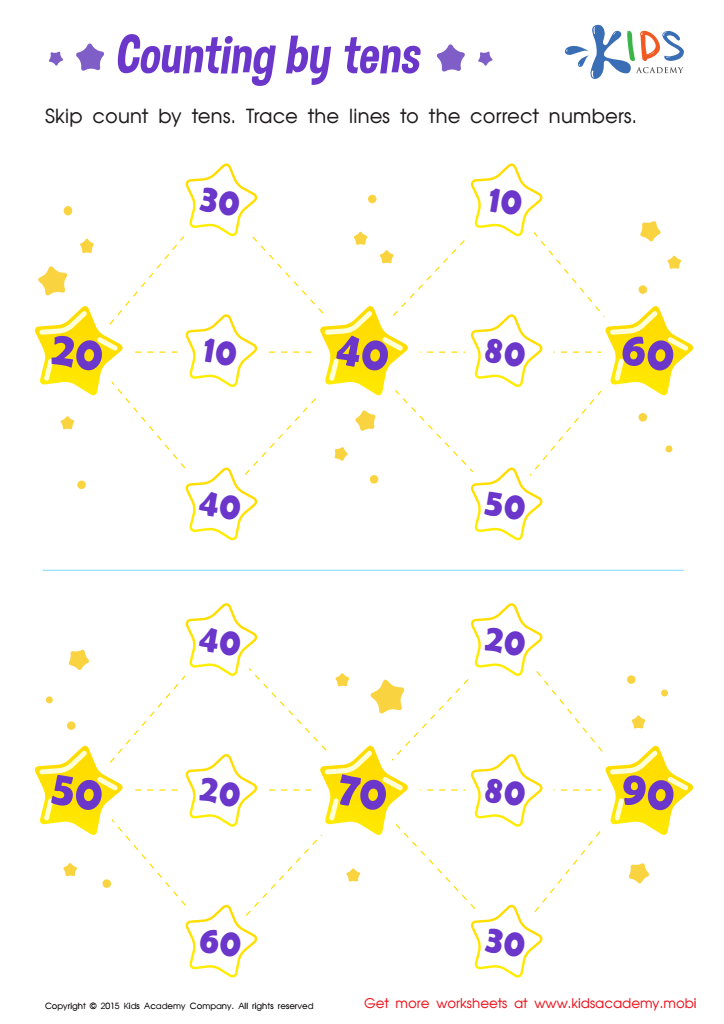
Learn Dozens: Counting by Tens Printable








Understanding tens numbers is fundamental for young learners aged 5-6, as it forms the basis for their numerical fluency and future mathematical success. At this foundational stage, grasping the concept of tens and ones helps children comprehend our base-10 number system, crucial for performing basic arithmetic operations like addition and subtraction. When children recognize that the number '12' means one set of ten and two extra units, they begin to understand place value, which is essential for more advanced calculations.
Moreover, early mastery of tens numbers enables smoother transitions to topics like regrouping or carrying over in addition, and borrowing in subtraction. This foundation not only boosts their computational skills but also enhances problem-solving abilities, fostering critical thinking.
From a cognitive development perspective, learning tens numbers builds children's mental math capabilities, allowing them to manipulate numbers flexibly. This competency can increase their confidence and positive attitude towards math, reducing anxiety around the subject.
For educators and parents, emphasizing this area means setting kids up for long-term academic achievement. It ensures they have the skills to tackle more complex mathematical concepts as they advance through school. Therefore, investing time and effort in understanding and practicing tens numbers is invaluable for young learners.








