Reading comprehension Long And Short Vowel Worksheets for Ages 5-7
11 filtered results
-
From - To
Boost your child's reading skills with our engaging "Reading Comprehension Long and Short Vowel Worksheets" for ages 5-7. These carefully designed printables help young learners differentiate between long and short vowel sounds, enhancing their phonetic awareness and reading comprehension abilities. Through fun activities and colorful illustrations, children can practice and reinforce vowel recognition while simultaneously improving their reading fluency. Designed to align with educational standards, our worksheets are perfect for at-home practice or as a classroom supplement. Download now to give your early reader a strong foundation in essential reading skills!
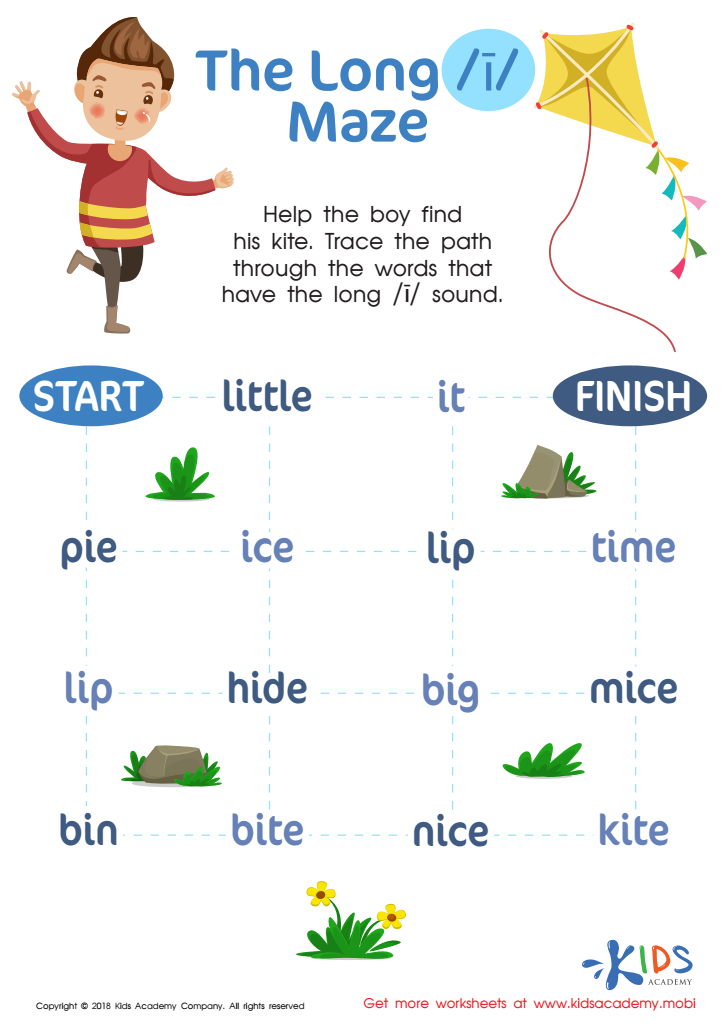
The Long I Maze Reading Worksheet
 Assign to My Students
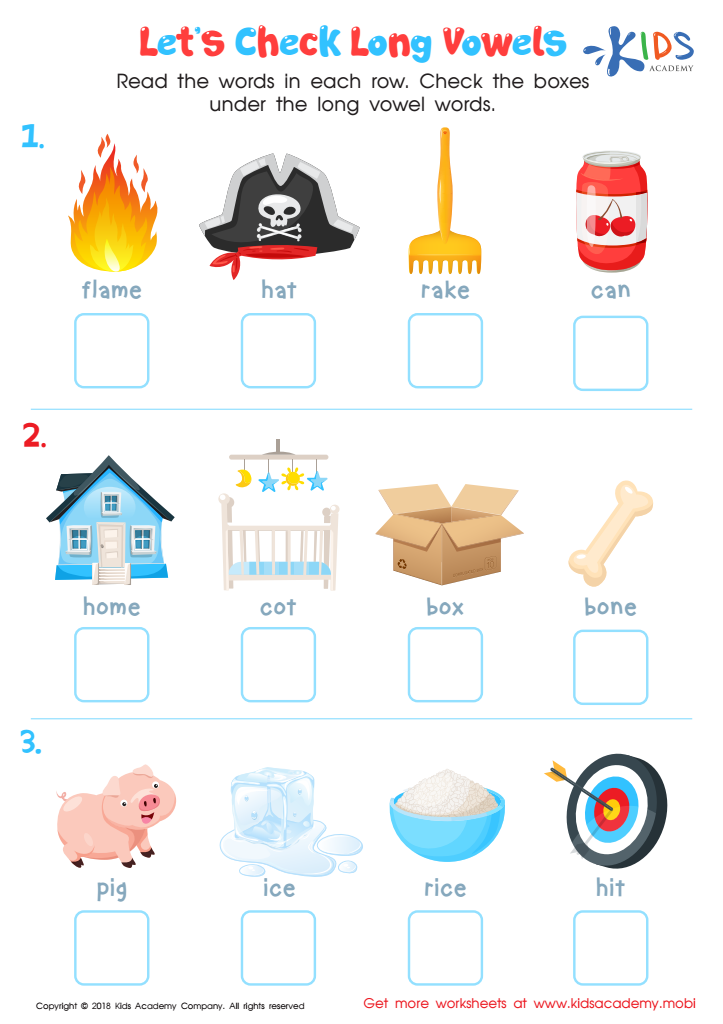
Let's Check Long Vowels: Assessment Worksheet
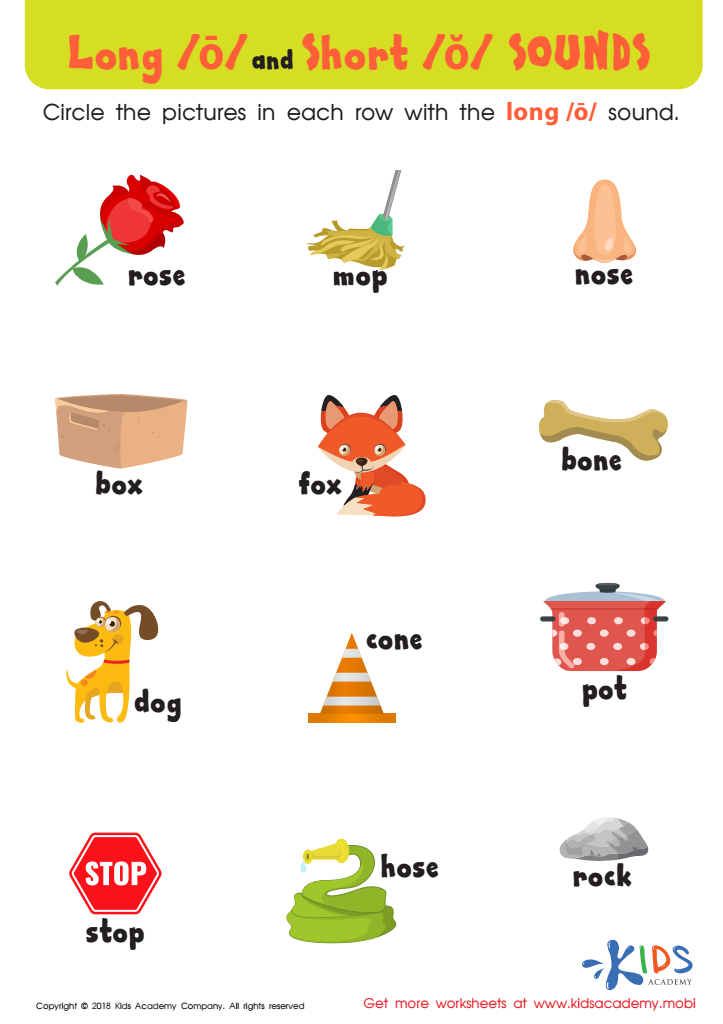
Reading: Long O and Short O Sounds Worksheet
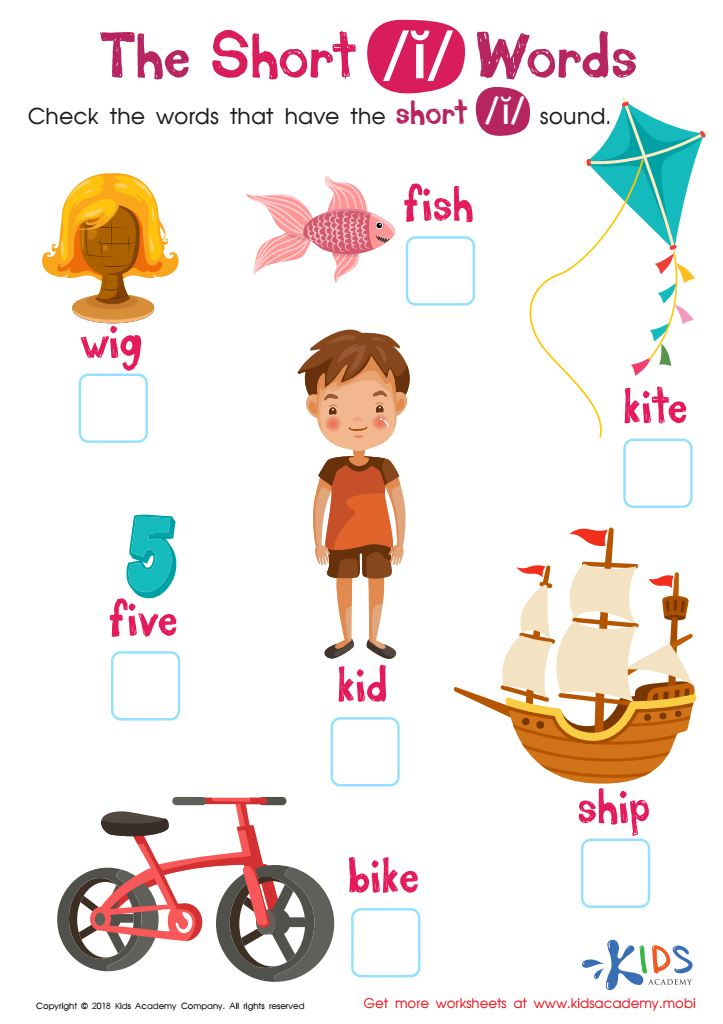
The Short I Words Reading Worksheet
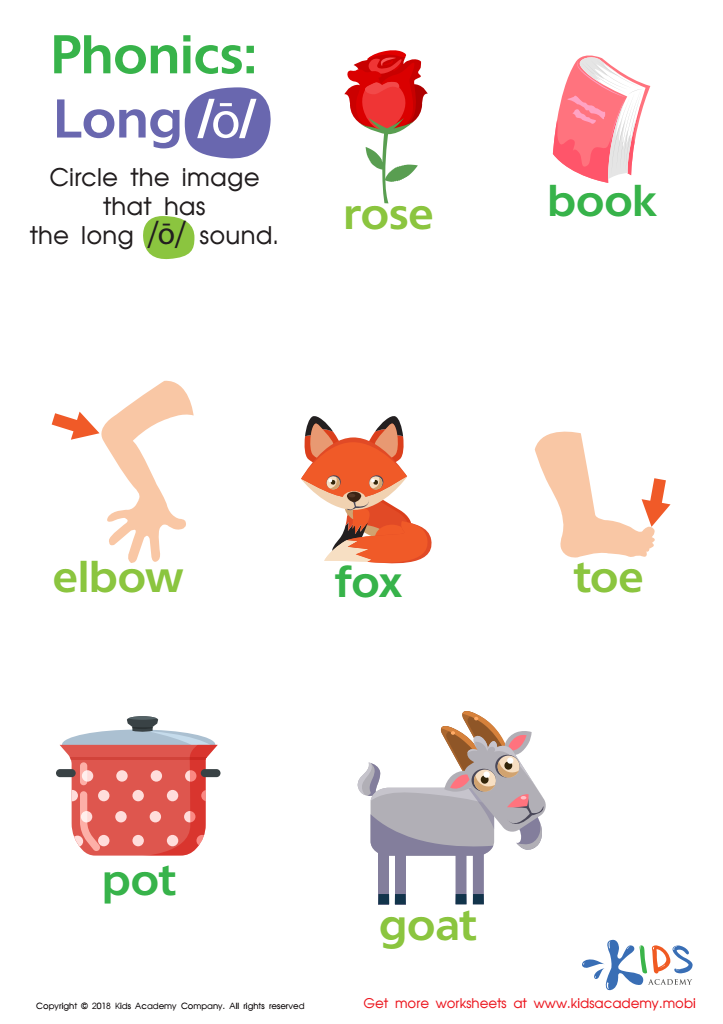
Phonics Long O Reading Worksheet
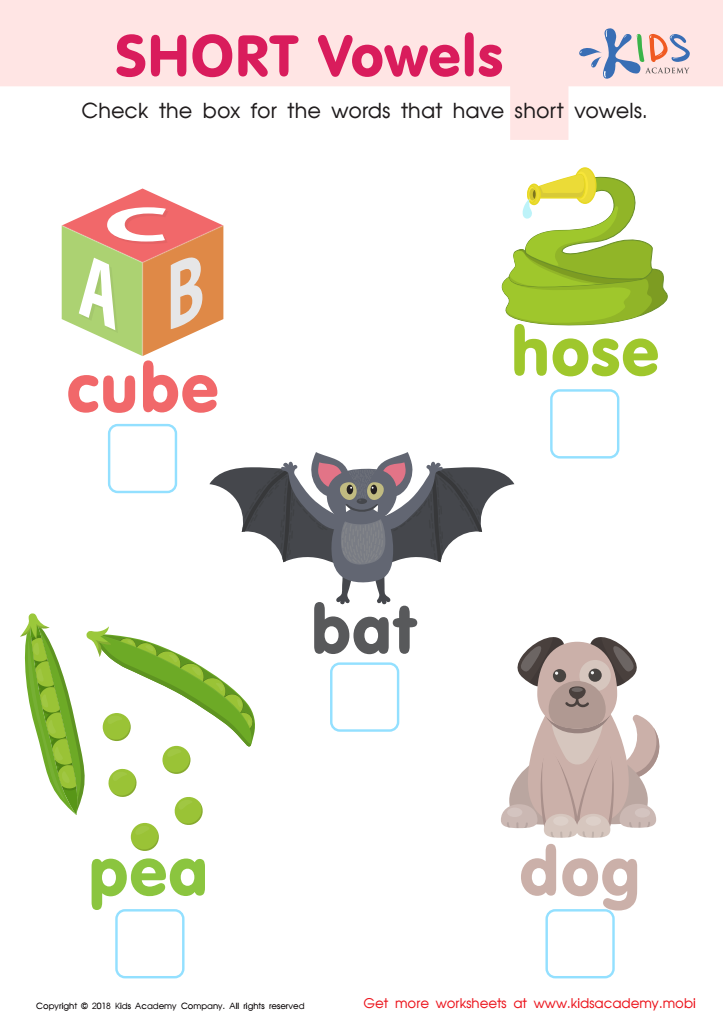
short vowels Worksheet
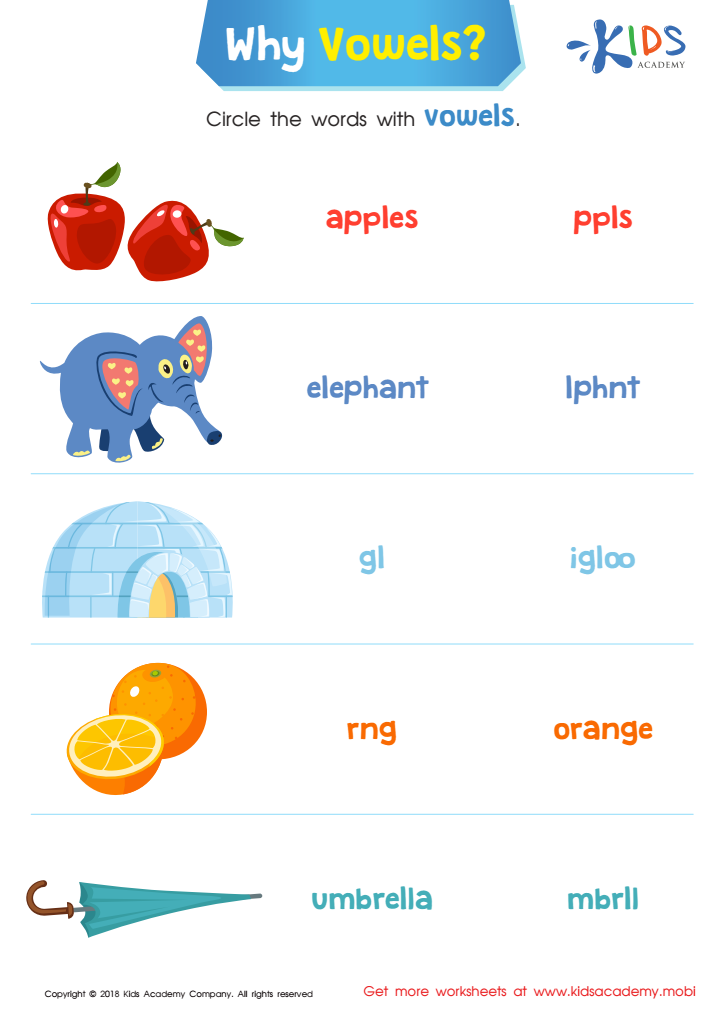
Why Vowels? Reading Worksheet
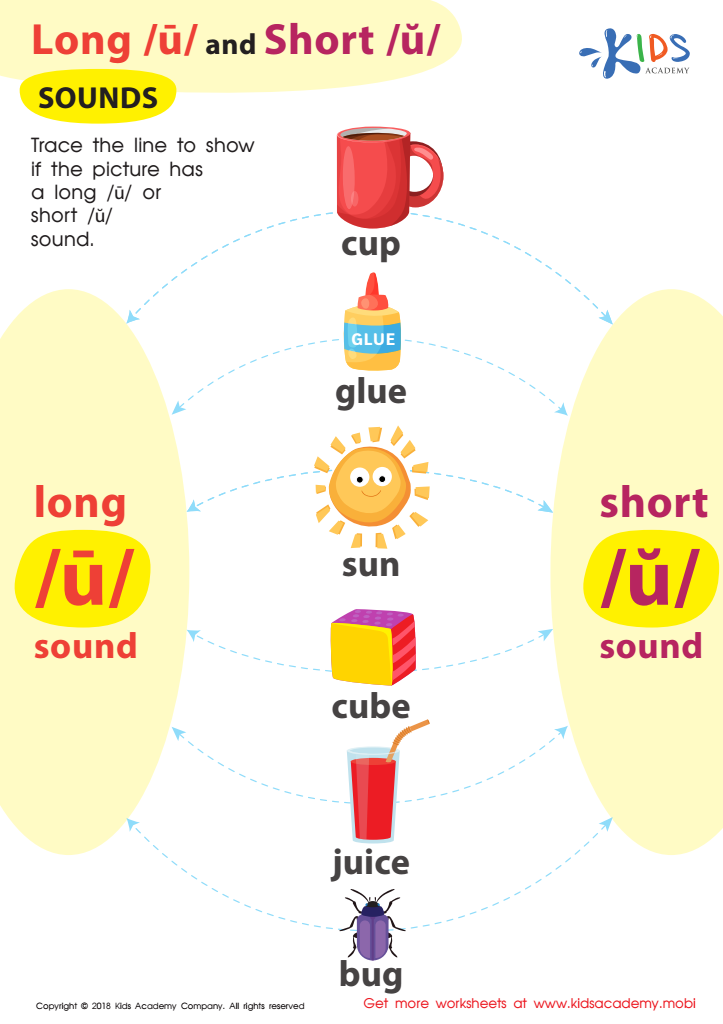
Reading: Long U and Short U Sounds Worksheet
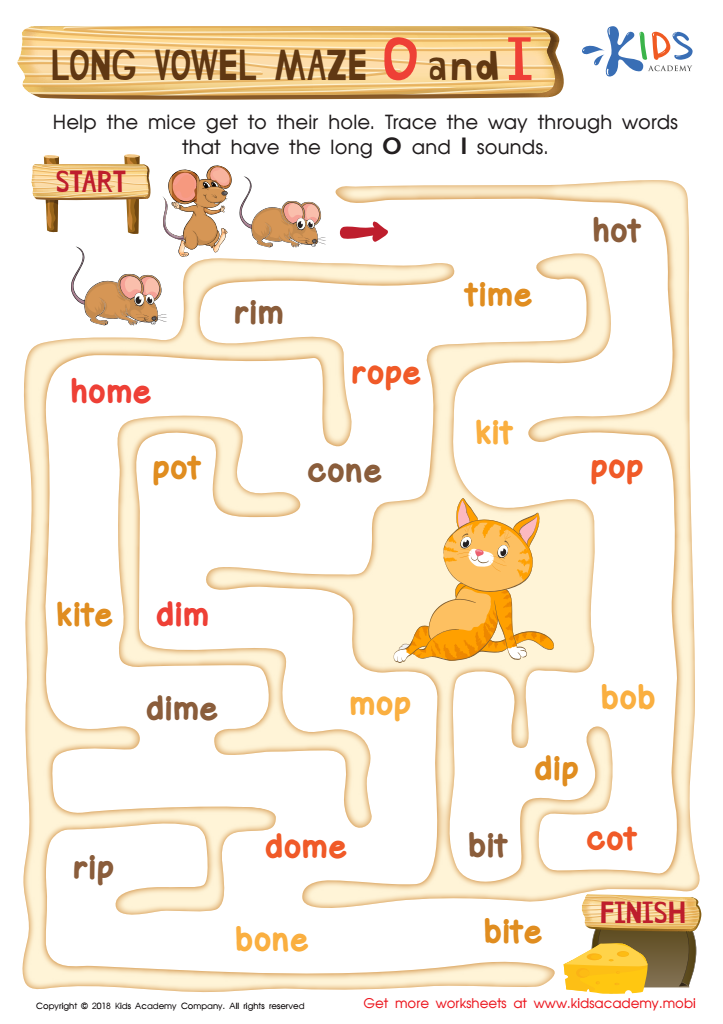
Long Vowel Maze /o/ and /i/ Worksheet
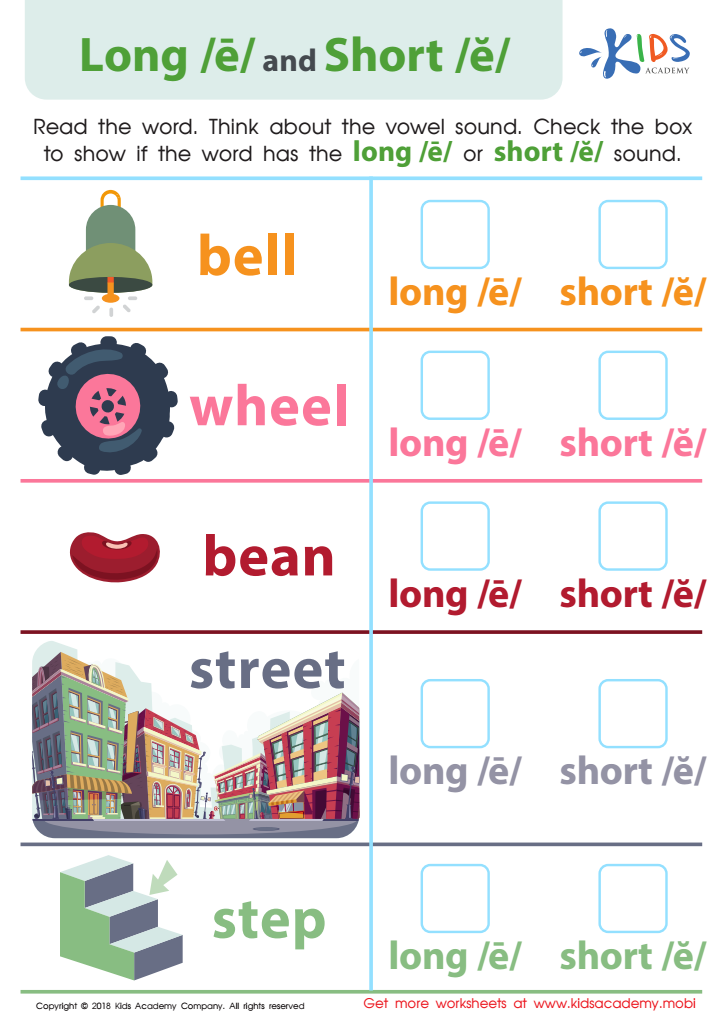
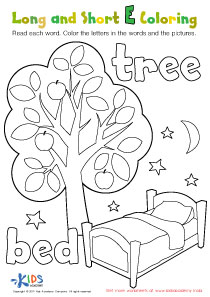
Reading: Long E and Short E Worksheet
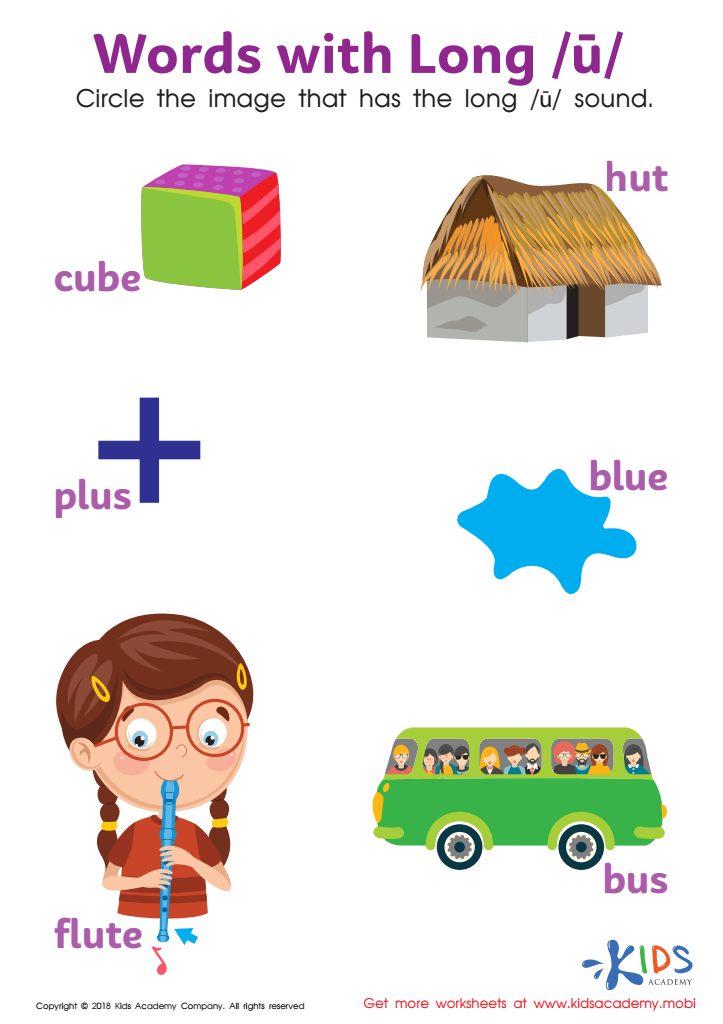
Words with Long U Reading Worksheet




Reading comprehension is a critical skill for young children, particularly those aged 5-7, as it lays the foundation for future learning and academic success. During these formative years, understanding the nuances of long and short vowel sounds plays a significant role. Mastering both long and short vowels helps children decode words more effectively, leading to enhanced reading fluency. This decoding mechanism is essential for young readers to progress from simple word recognition to understanding complex text.
For parents and teachers, fostering these early phonetic skills is crucial. When children grasp the differences between long and short vowel sounds, they can pronounce words correctly and more confidently, leading to a boost in vocabulary and communication skills. Improved reading comprehension directly contributes to their ability to follow instructions, understand stories, and engage with written material across various subjects.
Furthermore, early success in reading builds self-esteem and encourages a love for learning, important for lifelong educational journeys. Support from parents and teachers in this critical period ensures that children are not left struggling with basic reading tasks later on, which can have a negative impact on their overall academic confidence. Hence, investing time in teaching both long and short vowel sounds pays off greatly, underpinning broader literacy development.