Number Recognition Coloring Pages Worksheets for Ages 5-7
22 filtered results
Difficulty Level
Grade
Age
-
From - To
Subject
Activity
Standards
Our Number Recognition Coloring Pages Worksheets for Ages 5-7 provide an engaging way for young learners to master number recognition and counting skills. Each worksheet combines fun coloring activities with educational content, encouraging children to identify, trace, and color numbers from 1 to 20. Clearly designed images and playful themes keep your child entertained while reinforcing numeral knowledge and fine motor skills. Ideal for use in the classroom or at home, these worksheets offer a perfect blend of learning and creativity, making maths enjoyable and accessible for kindergarten and first-grade students. Download now for endless educational fun!
Favorites
With answer key
Interactive
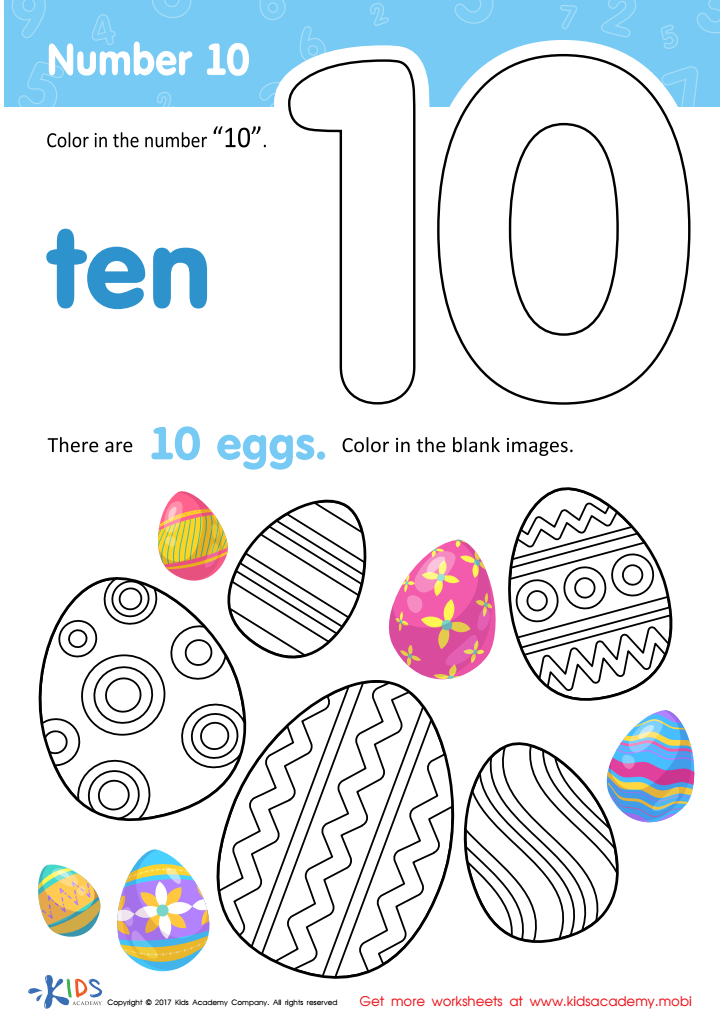
Number 10 Printable
Easter eggs are a great way to combine creativity and learning! Help your child explore the number 10 with our fun coloring page. The intricate designs will spark their imagination and fuel their artistic side, while they practice important numeracy basics. Get creative with eggs and enjoy the fun, no matter the time of year!
Download (PDF)
 Assign to My Students
Assign to My Students
Number 10 Printable
Worksheet
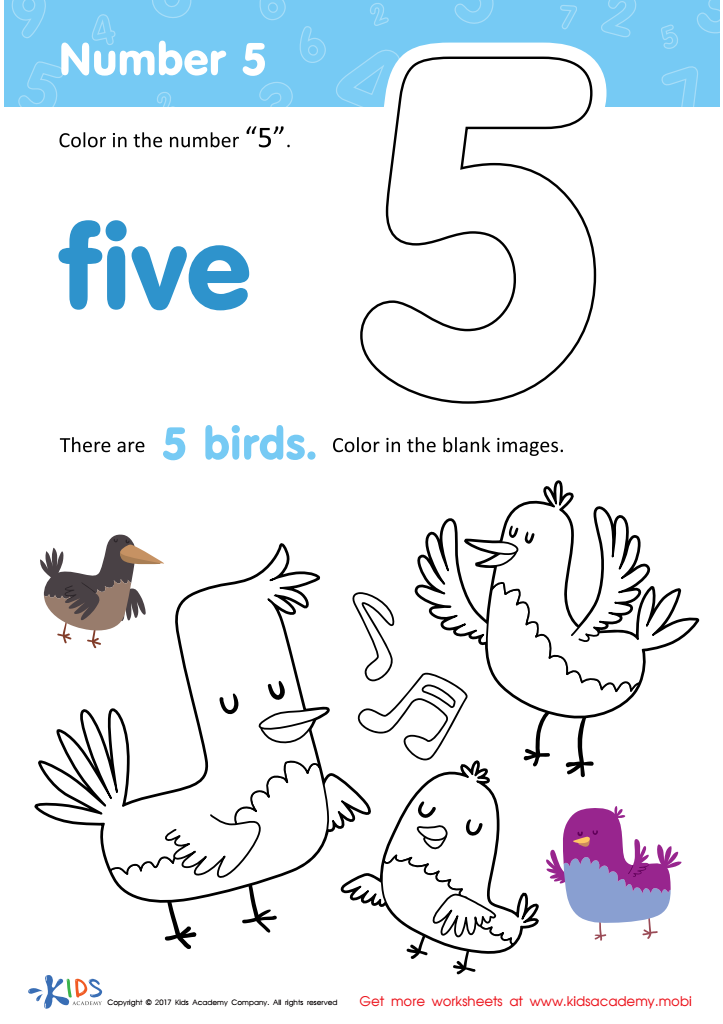
Number 5 Printable
Let your child have fun with this number 5 coloring page! They'll adore coloring the birds and music notes, while learning to recognize the number 5. Enjoy listening to the birds sing their beautiful songs!
Download (PDF)
Assign to My Students
Assign to My Students
Number 5 Printable
Worksheet
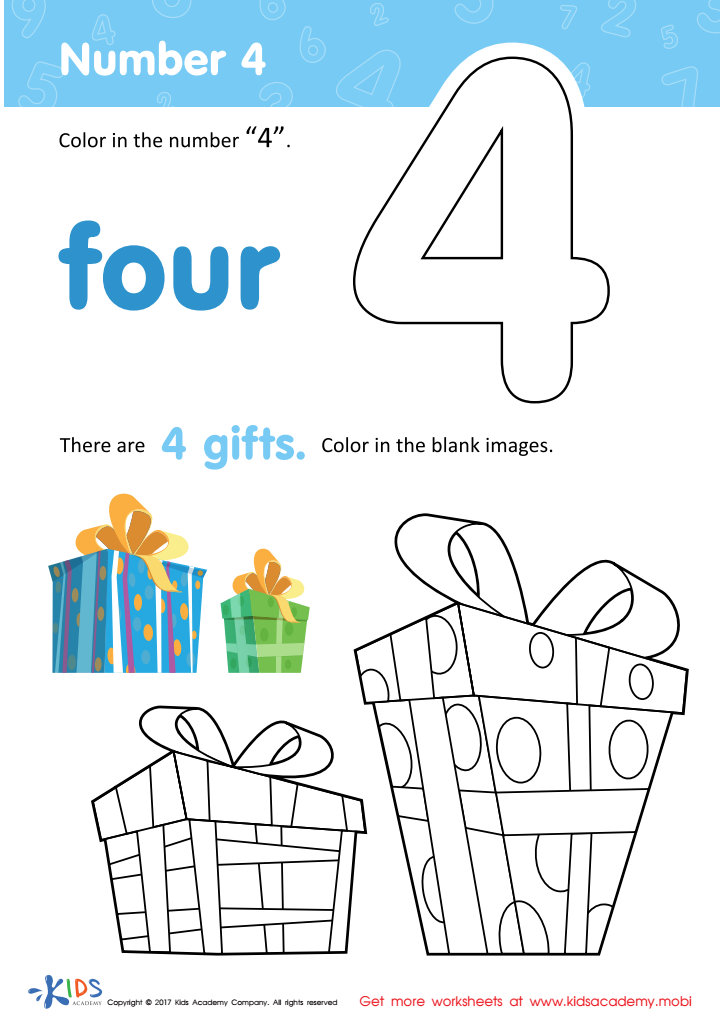
Number 4 Printable
Kids love gifts! Give your child a learning opportunity with this number 4 coloring page. As they design their own wrapping paper, they'll learn to read and recognize the number four. An exciting way to have fun and learn at the same time!
Download (PDF)
Assign to My Students
Assign to My Students
Number 4 Printable
Worksheet
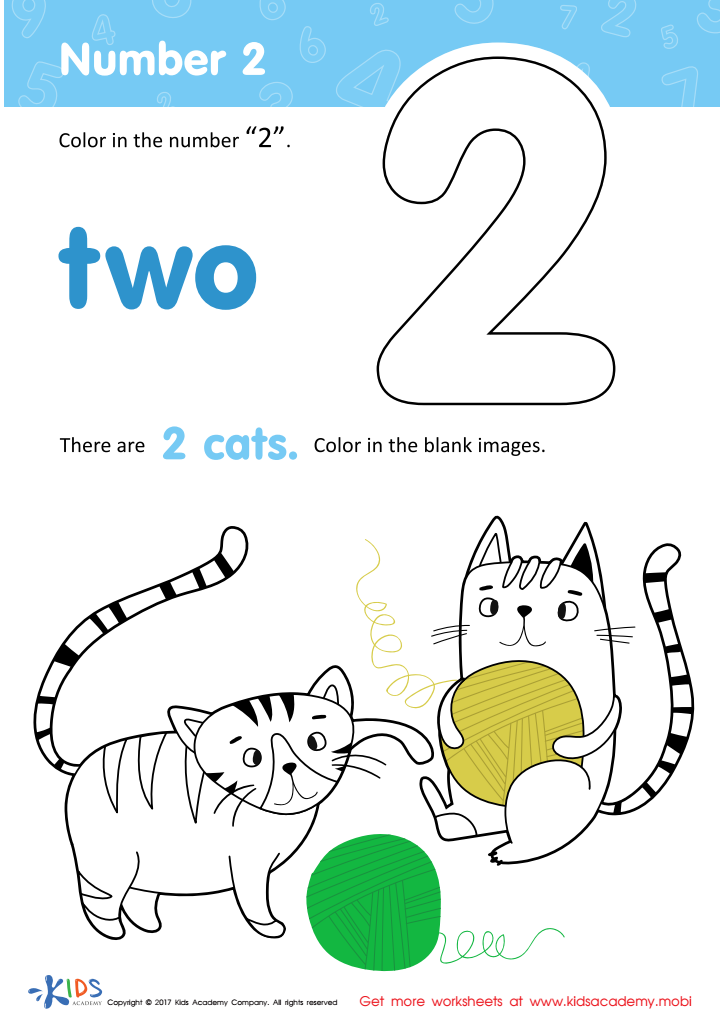
Number 2 Printable
Help your child learn to recognize the number two with these cats and their yarn balls. Print this coloring page – it's great for counting and coloring fun! Your child will develop basic numeracy skills as they visually see numbers in action.
Download (PDF)
Assign to My Students
Assign to My Students
Number 2 Printable
Worksheet
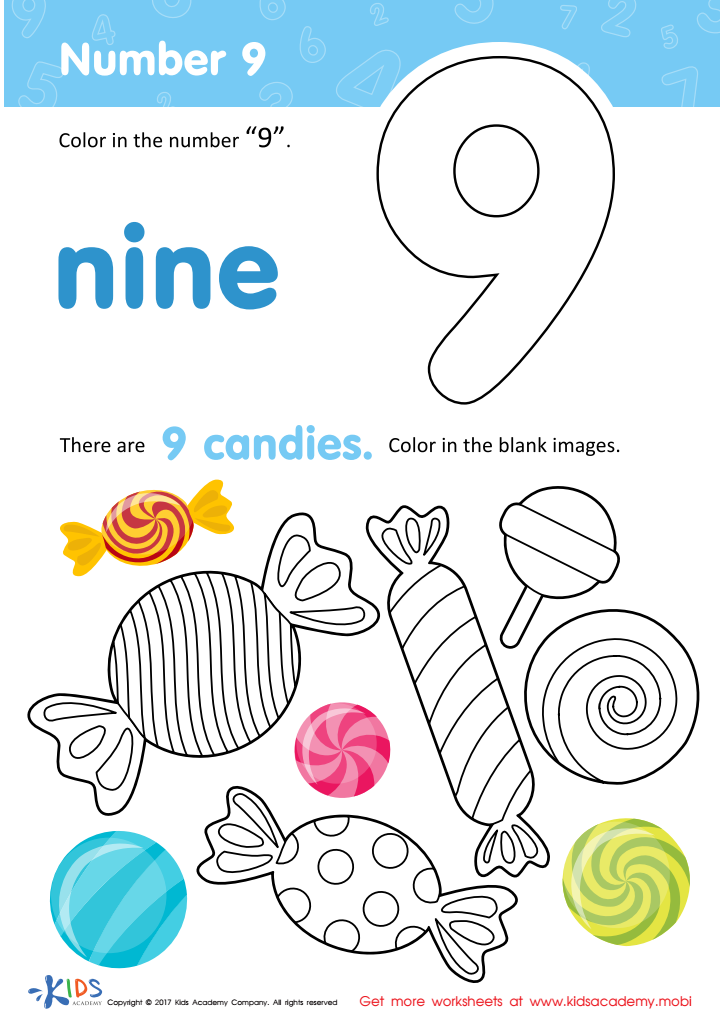
Number 9 Printable
Let your child hone their reading and counting skills with this fun coloring page! With the number 9 candies, your child can decorate their own favorite treats. Make learning a sweet experience and let their mouth water! Help them count and recognize the numbers while having fun.
Download (PDF)
Assign to My Students
Assign to My Students
Number 9 Printable
Worksheet
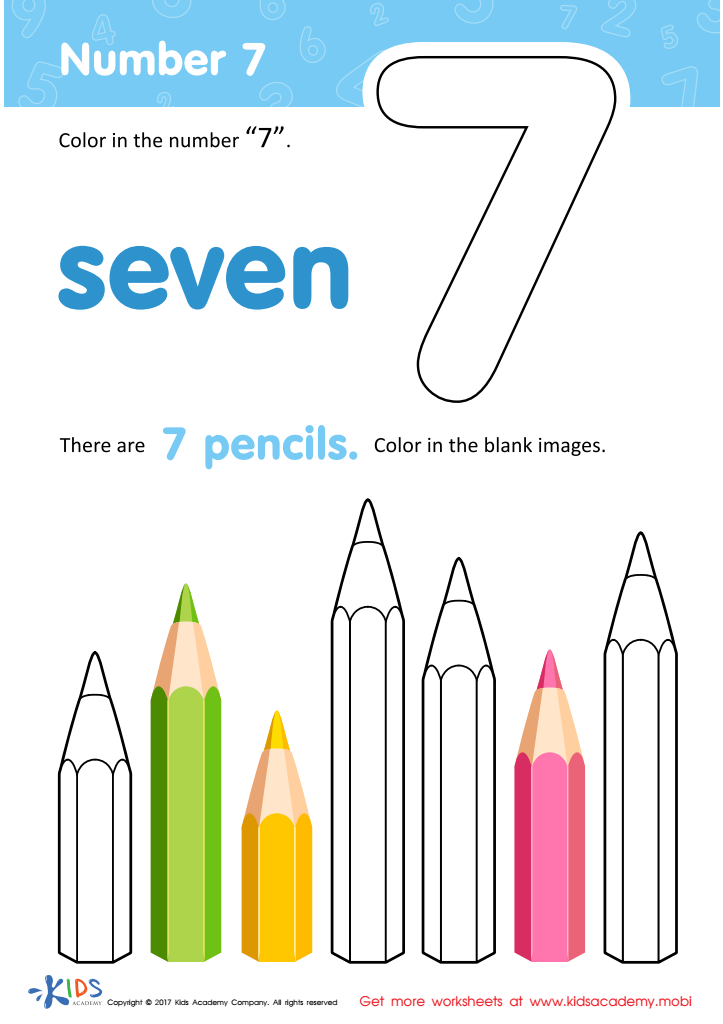
Number 7 Worksheet
Introduce beginning math to your child with this fun number 7 coloring page! Coloring the crayons and using the blank pencils for math equations will bring a creative twist to learning. Your child will love this worksheet!
Download (PDF)
Assign to My Students
Assign to My Students
Number 7 Worksheet
Worksheet
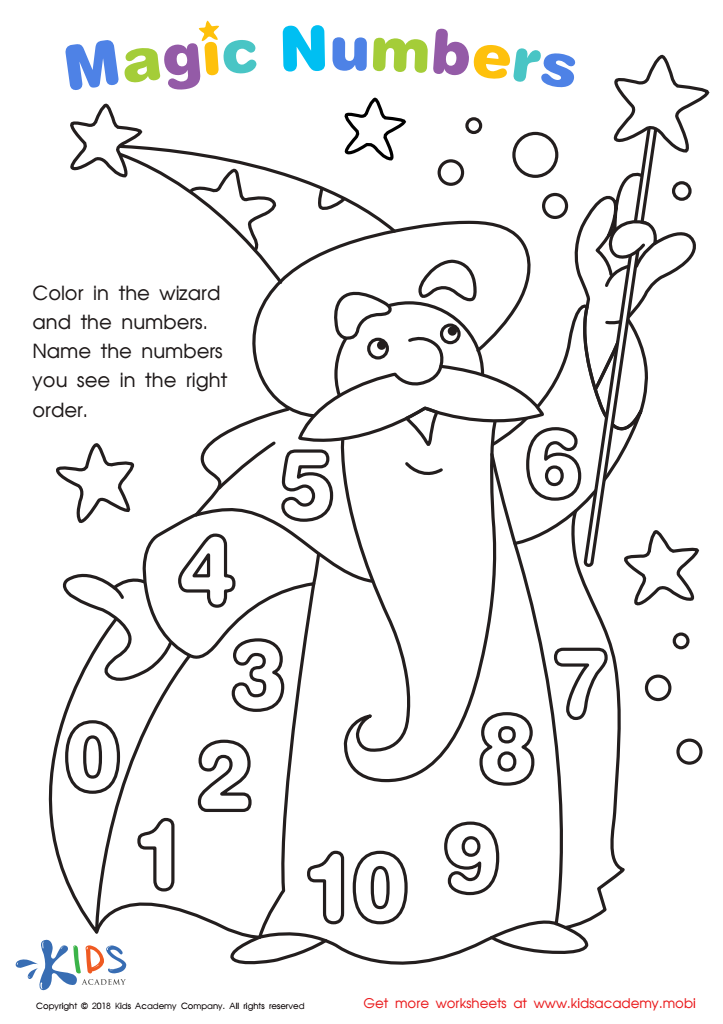
Magic Numbers Worksheet
Does your child have an interest in magic? Here's something they'll love - a coloring sheet featuring a wizard! Ask them to name the numbers from smallest to highest, then let them pick colors to color in the wizard and the numbers. It's sure to excite them!
Download (PDF)
Assign to My Students
Assign to My Students
Magic Numbers Worksheet
Worksheet
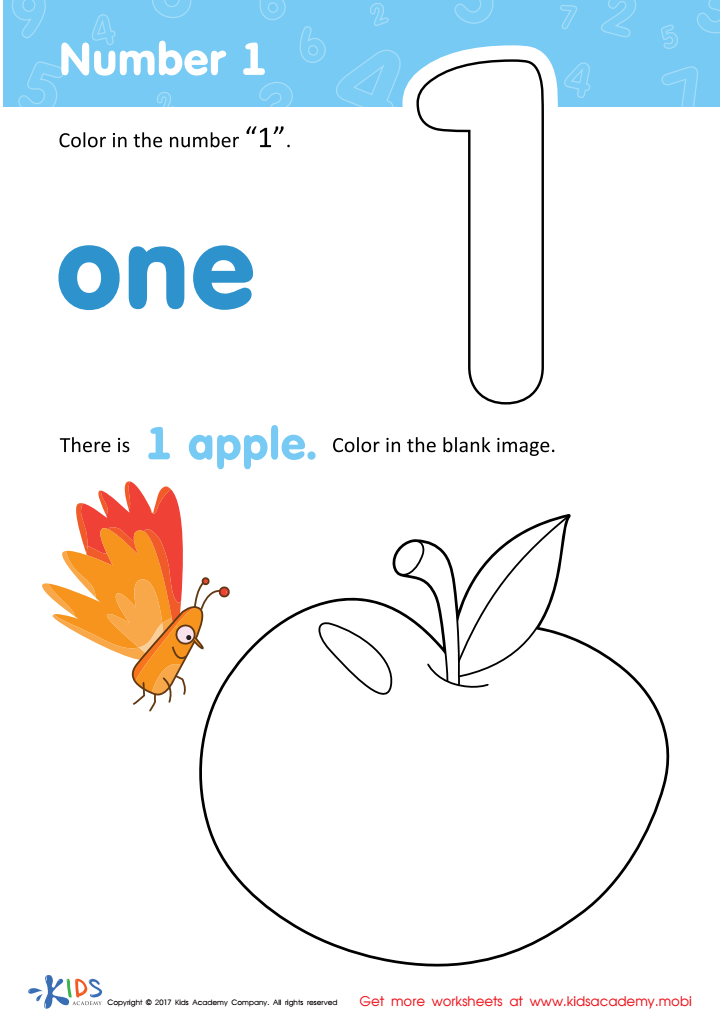
Number 1 Printable
An apple a day keeps the doctor away, but this coloring page can keep your child and the preschool teacher happy, too! Teach them to recognize numeracy with this cute page, featuring number 1!
Download (PDF)
Assign to My Students
Assign to My Students
Number 1 Printable
Worksheet
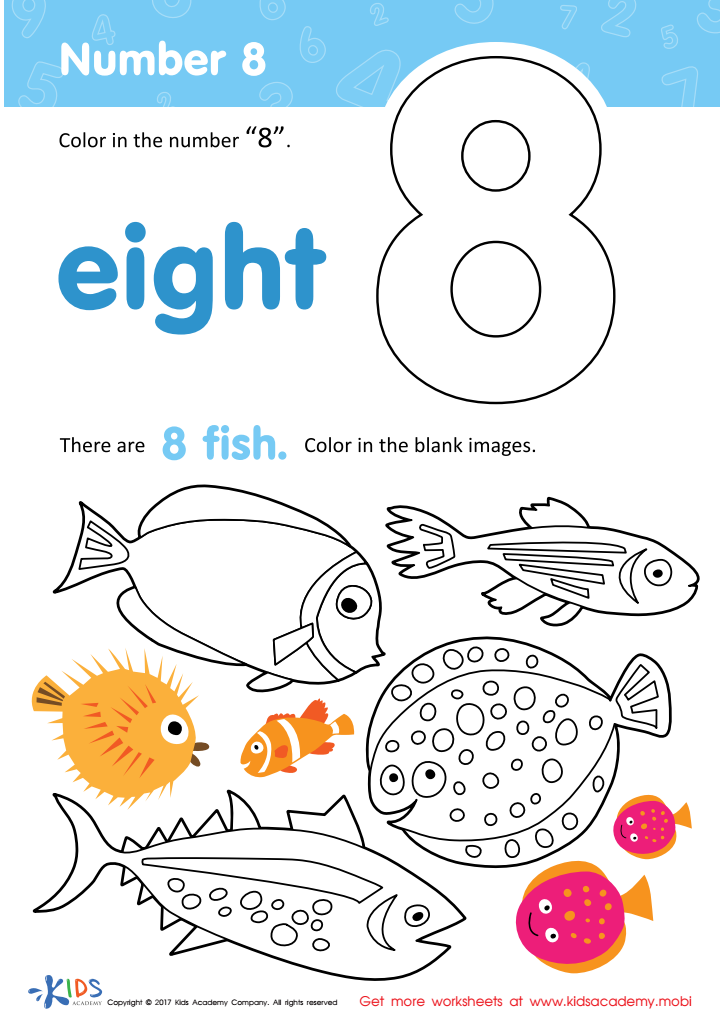
Number 8 Printable
Dive into the deep sea and learn to read and recognize the number eight! Challenge your child's creativity by having them create beautiful fish. They'll love counting and coloring with number 8.
Download (PDF)
Assign to My Students
Assign to My Students
Number 8 Printable
Worksheet
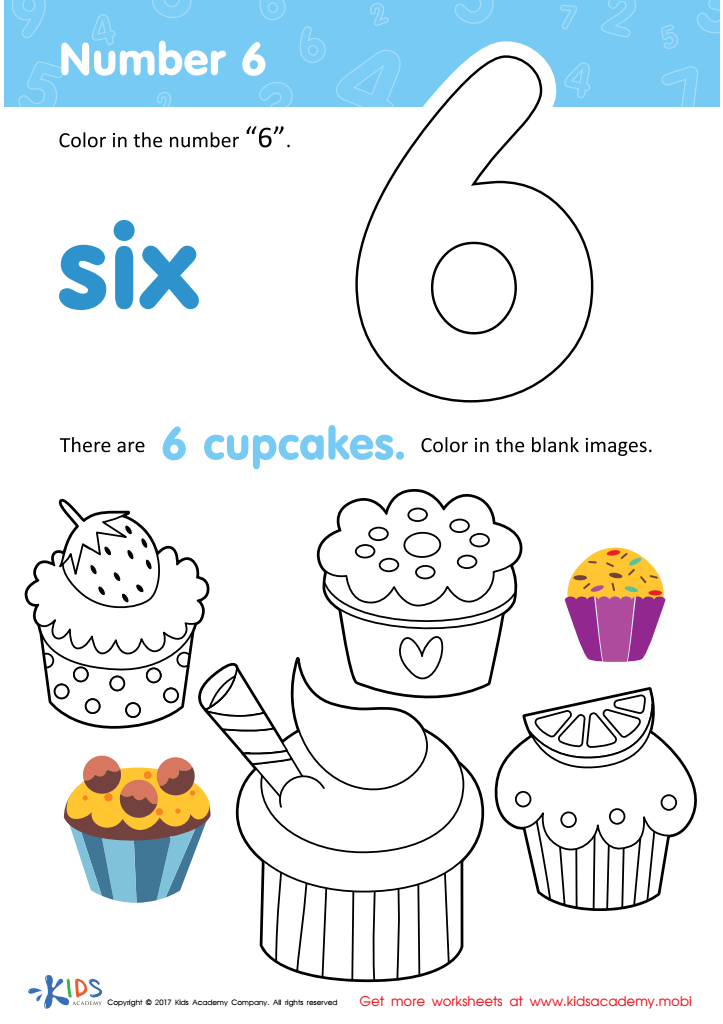
Number 6 Worksheet
Let's learn about the number six with cupcakes! Introduce your child to this fun and tasty coloring page. They'll love designing their own cupcakes while recognizing, counting, and reading the number six. An easy and enjoyable way to learn!
Download (PDF)
Assign to My Students
Assign to My Students
Number 6 Worksheet
Worksheet
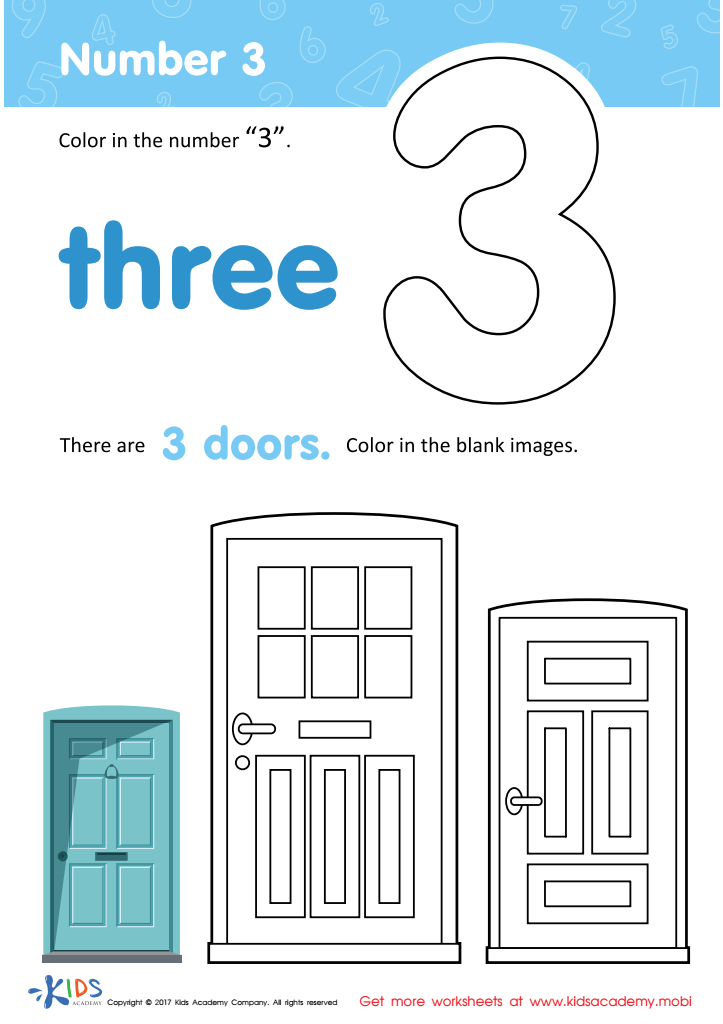
Number 3 Worksheet
Open the door to learning numbers! This counting coloring page helps kids recognize and count to 3, while using imagination and creativity to design lovely doors. It's a fun way to learn numbers!
Download (PDF)
Assign to My Students
Assign to My Students
Number 3 Worksheet
Worksheet
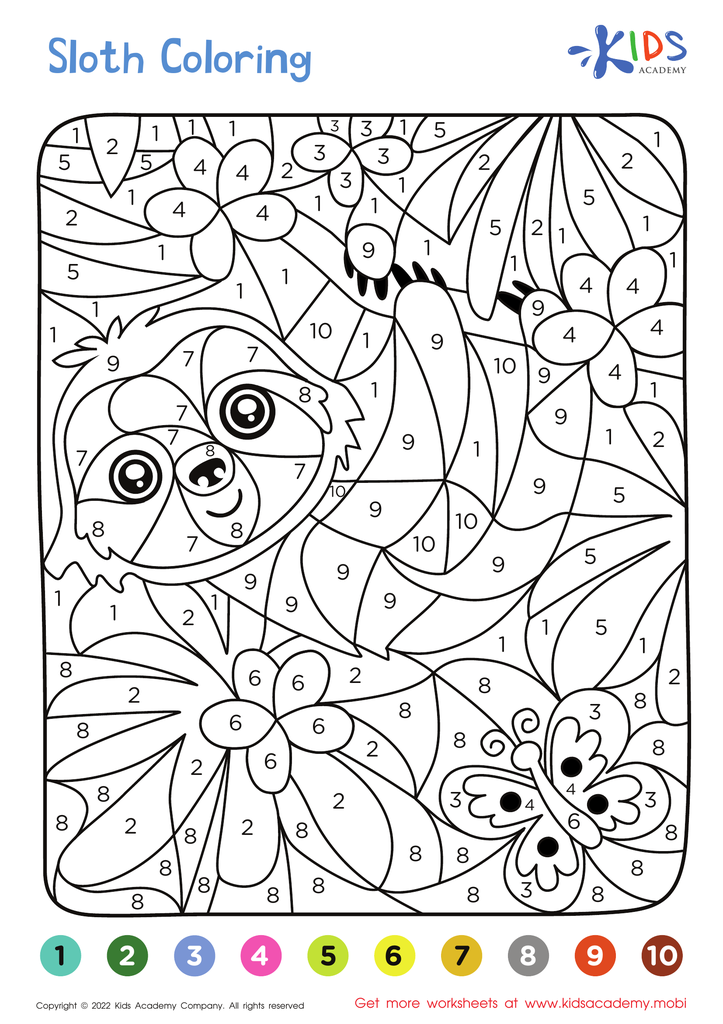
Sloth – Coloring by Numbers
Download our free coloring by numbers PDF page featuring a sloth! This fun activity is for all ages; just match the numbers to the colors and create a masterpiece. Get the entire family involved and see who can create the best sloth.
Sloth – Coloring by Numbers
Worksheet
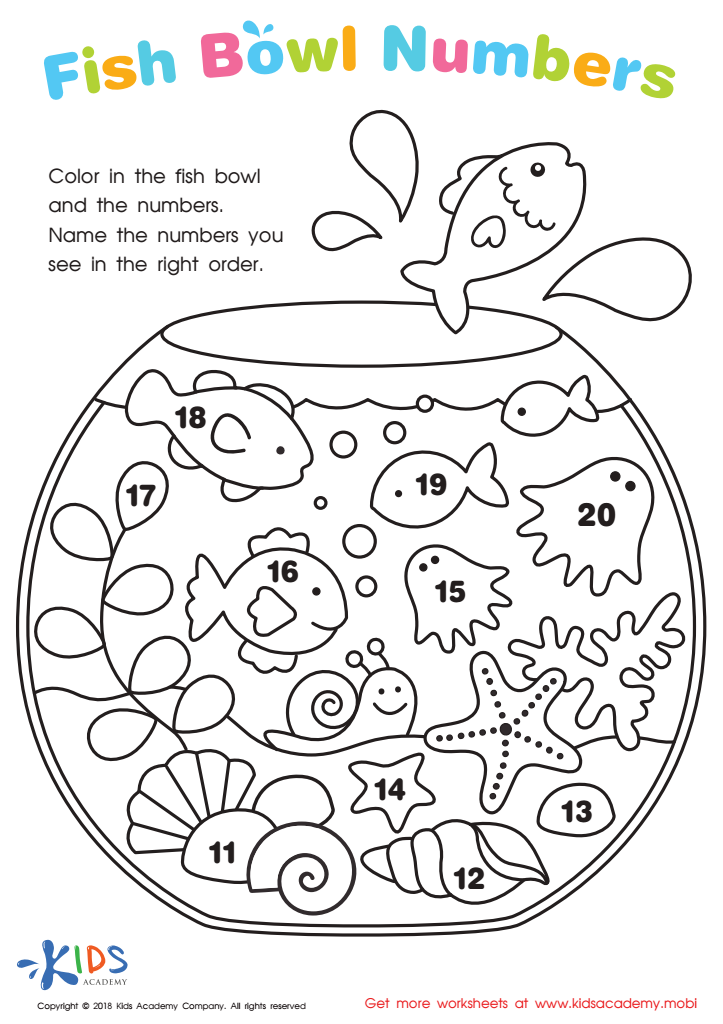
Fish Bowl Numbers Worksheet
Let your kids count and color with this fun exercise! Ask them to read out the numbers in the fish bowl in order, then help them pick out colors for the fish bowl and numbers. An easy-peasy activity for kids who can count - they'll have lots of fun!
Download (PDF)
Assign to My Students
Assign to My Students
Fish Bowl Numbers Worksheet
Worksheet
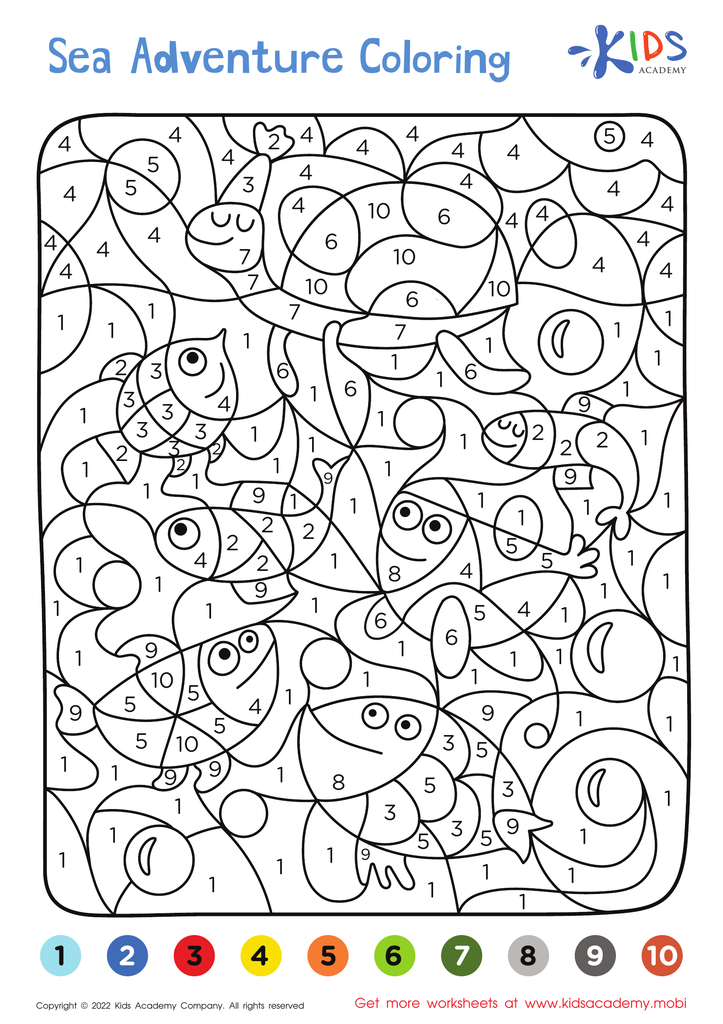
Sea Adventure – Coloring by Numbers
Unlock a sea adventure with a free coloring by numbers PDF page! Download now to get creative and fill the page with vibrant colors.
Sea Adventure – Coloring by Numbers
Worksheet
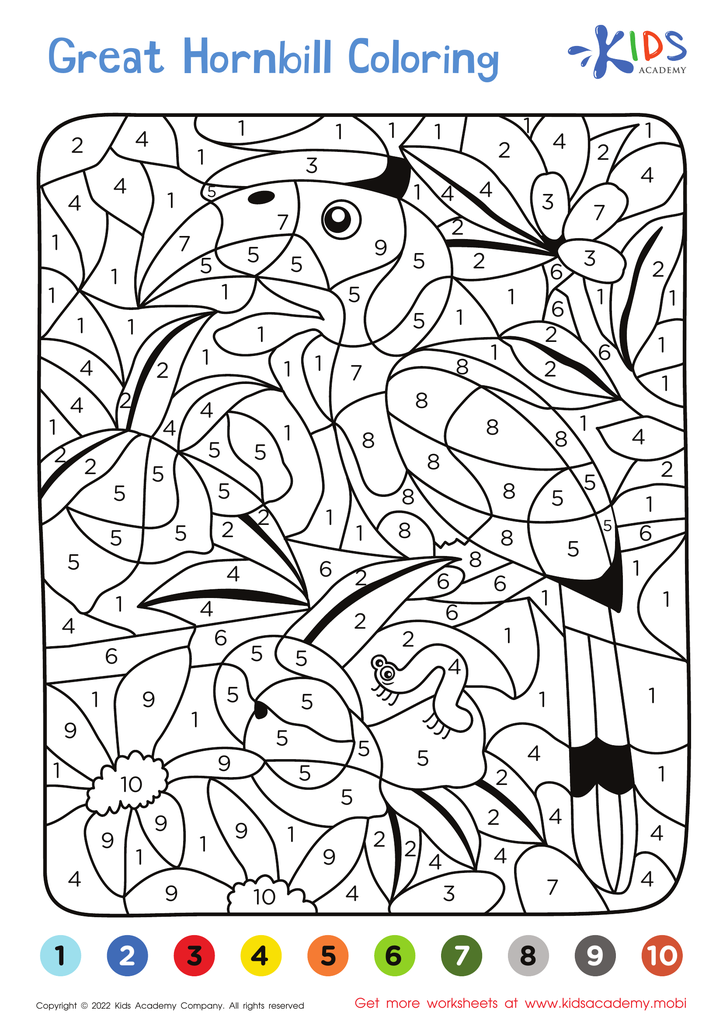
Great Hornbill – Coloring by Numbers
Download our free PDF page, featuring a hornbill for you to color in! Numbers are provided so you can follow along, making the picture come to life. Fun for all ages!
Download our free PDF page and have fun coloring a hornbill according to the numbers! You'll bring the picture to life with every stroke of your creativity. Perfect for all ages!
Great Hornbill – Coloring by Numbers
Worksheet
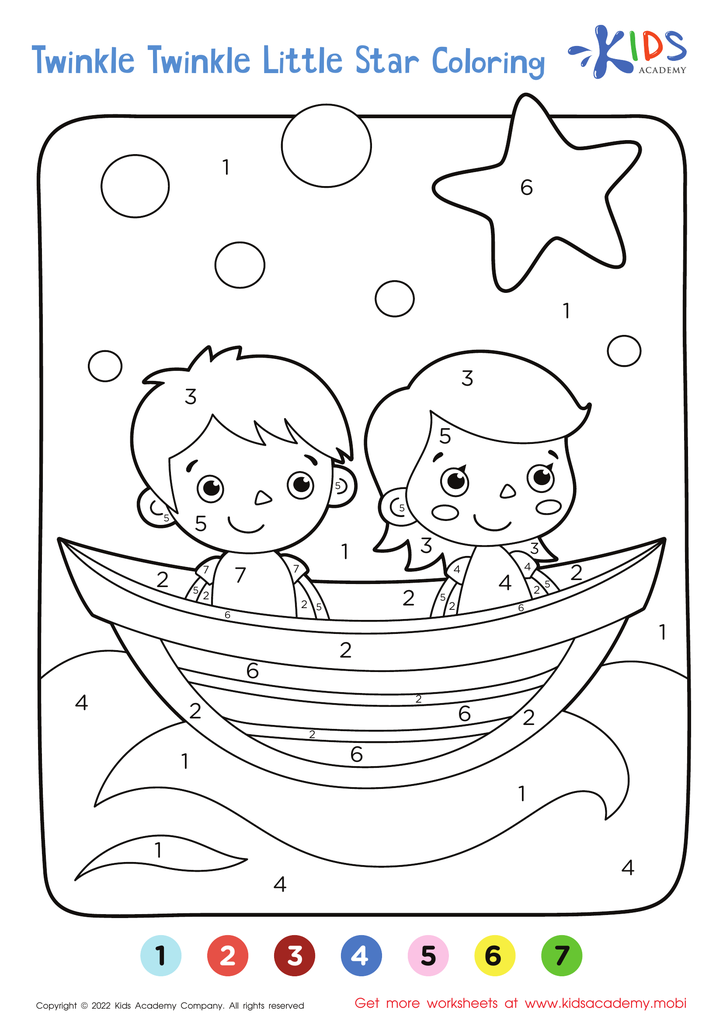
Twinkle, Twinkle, Little Star – Coloring by Numbers
Color a scene from Twinkle Twinkle Little Star with our free coloring page. Download the PDF and use the numbers to bring the nursery rhyme to life. Have fun! (80 words)
Twinkle, Twinkle, Little Star – Coloring by Numbers
Worksheet
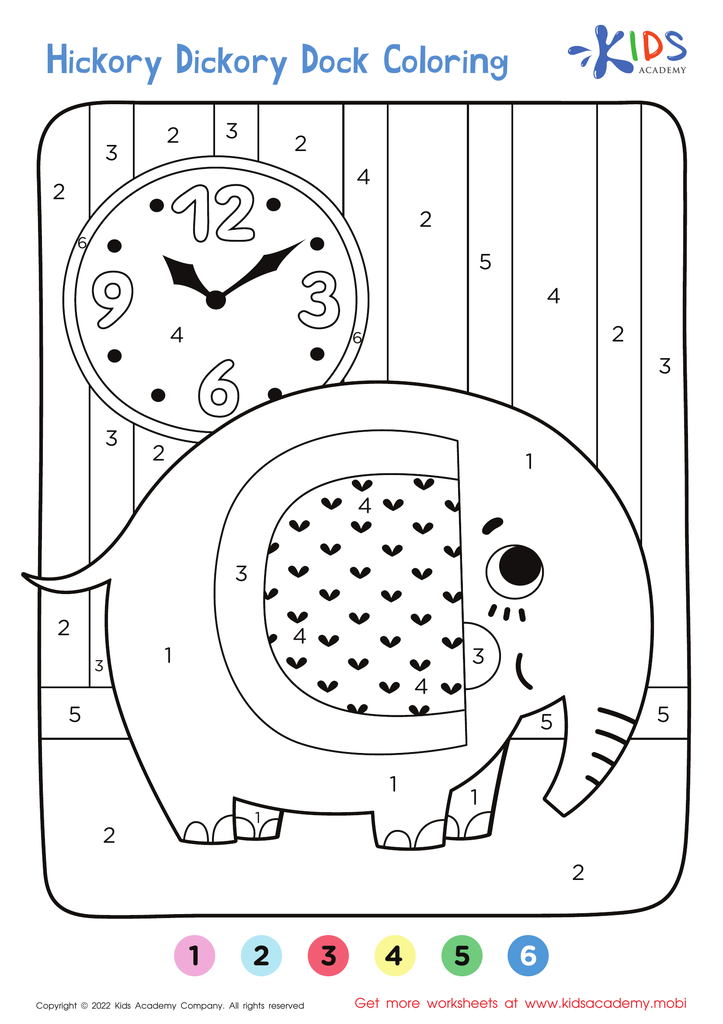
Hickory Dickory Dock – Coloring by Numbers
Colour in a classic nursery rhyme with our free Hickory Dickory Dock PDF page. Follow the numbers to create a scene that will bring the rhyme to life. Download now and get creative!
Hickory Dickory Dock – Coloring by Numbers
Worksheet
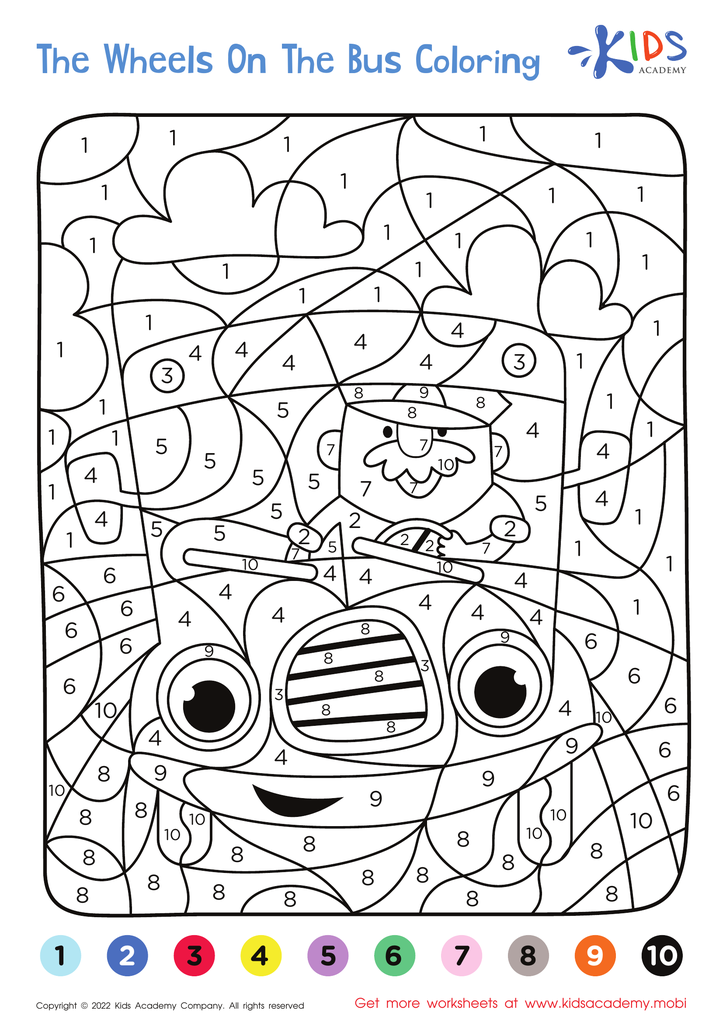
Wheels on the Bus – Coloring by Numbers
Download our free PDF page to color in the bus driver! Simply print, find the right colors, and start creating some fun! Have a great time and don't forget to share your masterpiece with us!
Wheels on the Bus – Coloring by Numbers
Worksheet
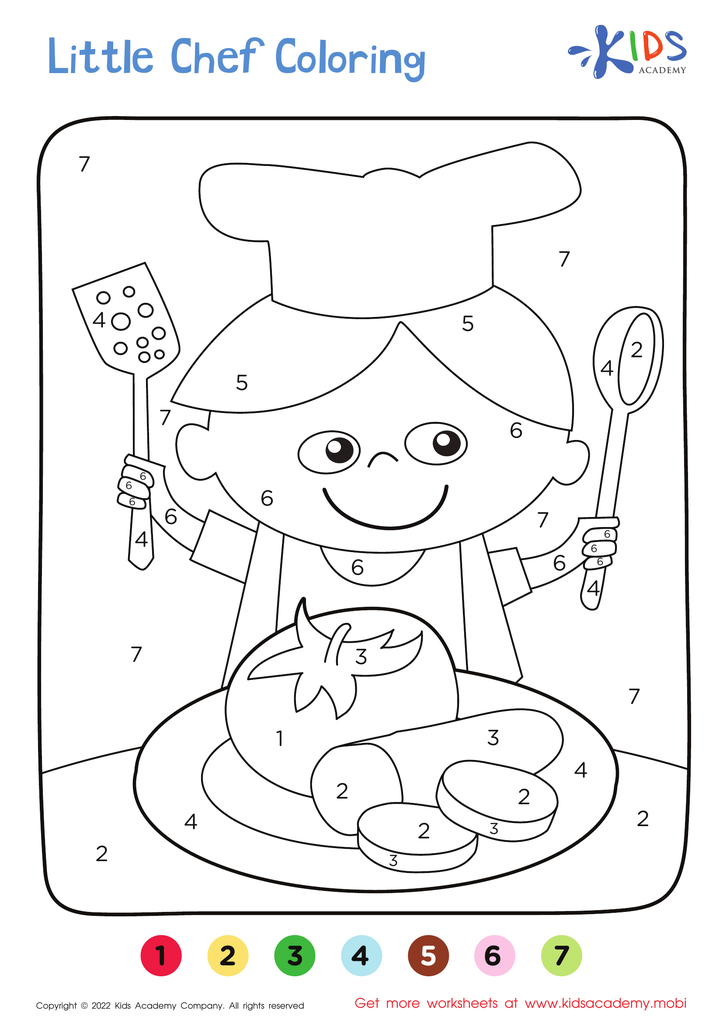
Little Chef – Coloring by Numbers
This PDF page lets you color in a cute little chef! Download it for free and explore your artistic side by using numbers to color in the picture. Let your creativity flow and have some fun!
Little Chef – Coloring by Numbers
Worksheet
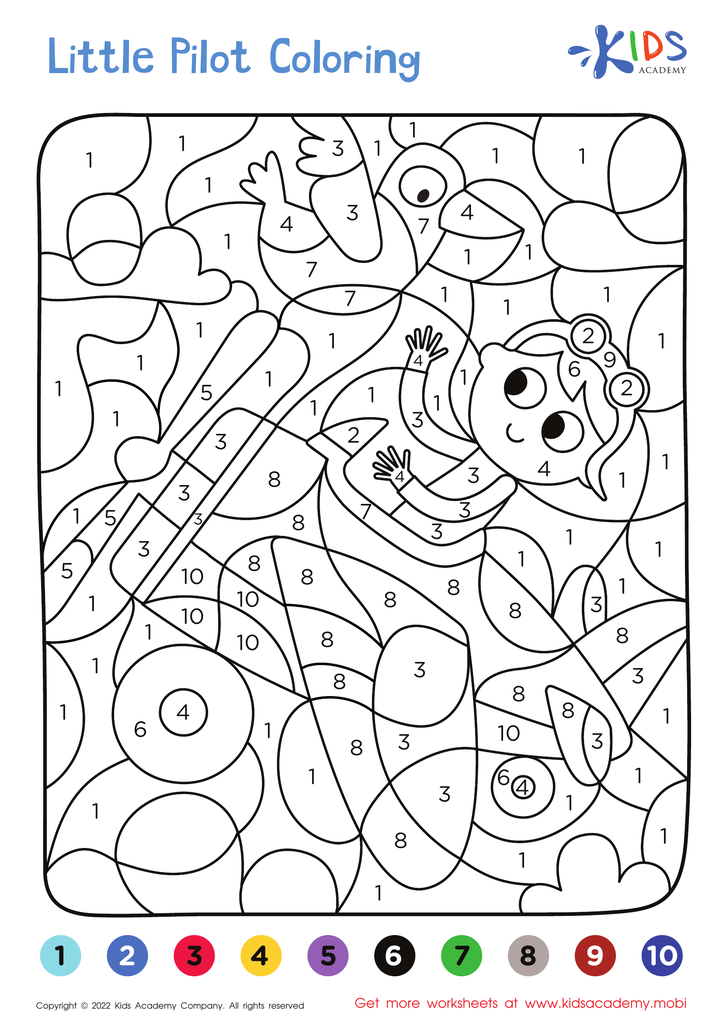
Little Pilot – Coloring by Numbers
Grab your crayons and have fun coloring this free PDF page featuring a pilot. Just match the numbers to the colors and you're ready to go! An excellent activity for young kids and adults alike.
Coloring made easy! Download this free PDF page of a pilot and have fun matching the numbers to the colors. An enjoyable activity for all ages. Get your crayons ready and let the fun begin!
Little Pilot – Coloring by Numbers
Worksheet
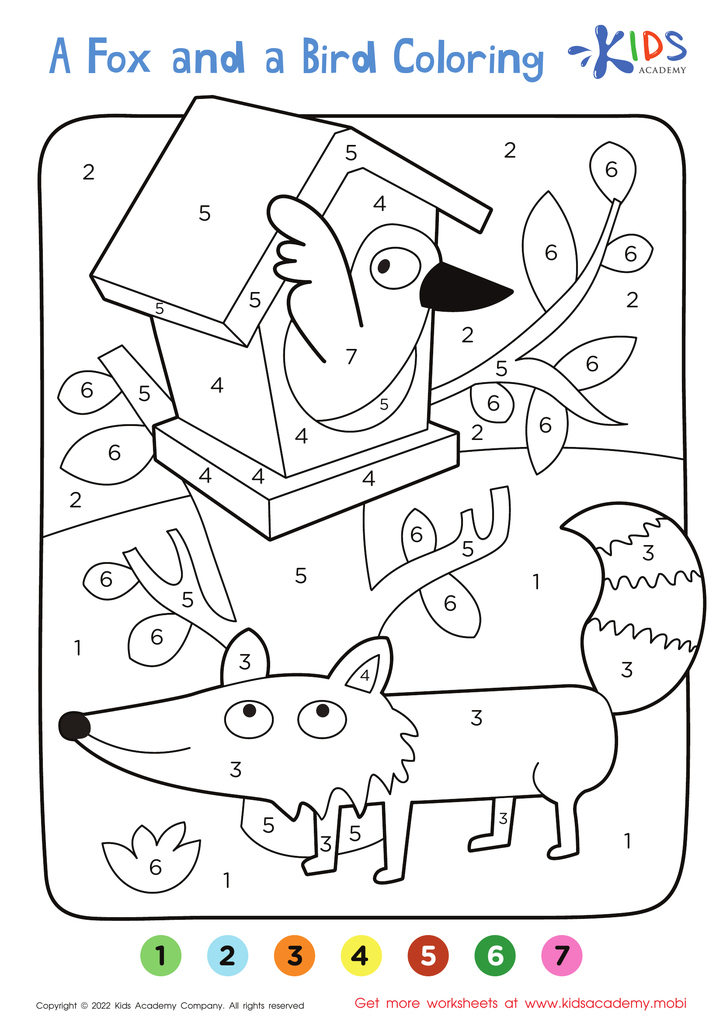
A Fox and a Bird – Coloring by Numbers
Download this free PDF page and color the fox and bird using numbers. Fun and easy way to be creative with the whole family! Spend quality time together and create something unique.
A Fox and a Bird – Coloring by Numbers
Worksheet
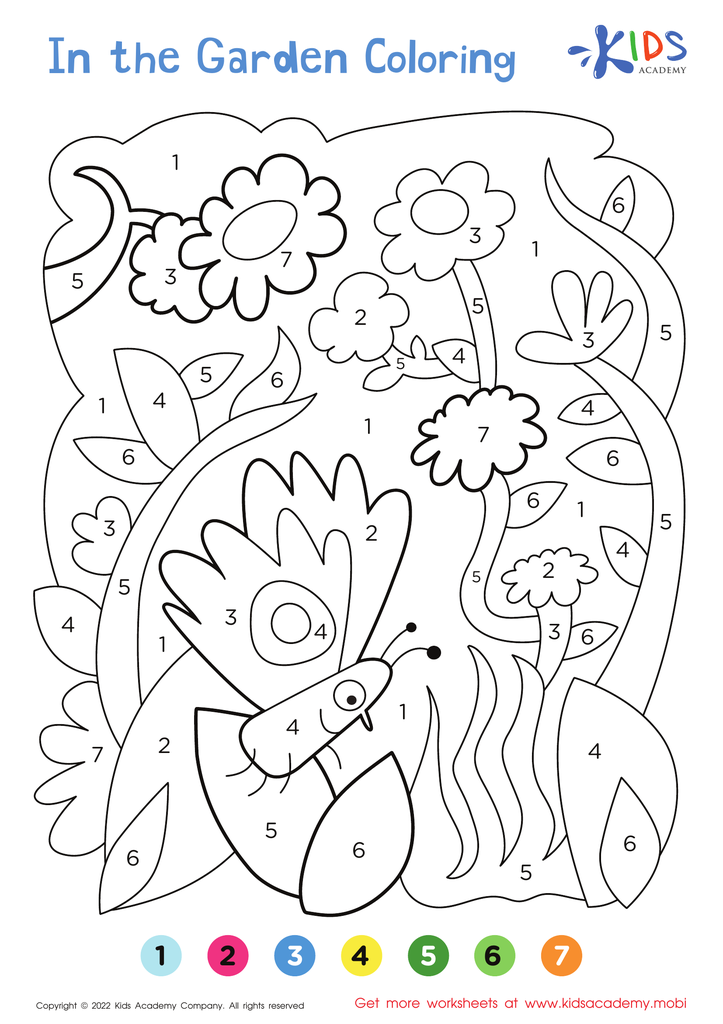
In the Garden – Coloring by Numbers
Download a free PDF page with a beautiful garden scene, perfect for coloring by numbers. Enjoy hours of creative fun and relaxation with this vibrant page.
In the Garden – Coloring by Numbers
Worksheet
Join Kids Academy for Free
Who is primarily going to use this learning content?








Number Recognition Coloring Pages are a crucial educational tool for children ages 5-7, blending creativity with foundational math skills. For parents and teachers, these coloring pages represent a fun and interactive method to introduce numbers and counting in a visually engaging way.
Firstly, coloring pages capture a child's imagination, making learning less intimidating and more accessible. Bright colors and engaging illustrations make abstract numerical concepts tangible. When children color numbers, they are visually and physically engaging with the digit, reinforcing memory and recognition.
Moreover, such activities can also enhance fine motor skills. Holding crayons and coloring within lines requires precise hand movements, promoting better hand-eye coordination and control — skills essential for writing.
Additionally, these pages can be stepping stones to more complex mathematical thinking. By establishing a solid understanding of number recognition, children build a foundation for arithmetic operations like addition and subtraction.
For educators and parents, it can be a window into the child's learning process, revealing their grasp of numbers, coordination, and even their emotional state. Using Number Recognition Coloring Pages is a joyous, multifaceted approach, fostering not just academic learning, but also emotional and physical development.
Incorporating such activities in early education is a proactive step towards making learning a joyous and holistic experience.