Comparing shapes Worksheets for Ages 5-7
6 filtered results
-
From - To
Our Comparing Shapes Worksheets for Ages 5-7 provide an engaging way for young learners to explore geometric concepts. These printable activities help children differentiate between various shapes, enhancing their critical thinking and observational skills. Through hands-on tasks like matching, sorting, and identifying shapes, kids will develop a strong foundation in geometry designed to align with early math learning standards. Ideal for use both at home and in the classroom, our worksheets make learning interactive and fun. Perfect for boosting visual-spatial awareness and preparing kids for more advanced math challenges. Encourage your child's learning journey with our expertly crafted resources!
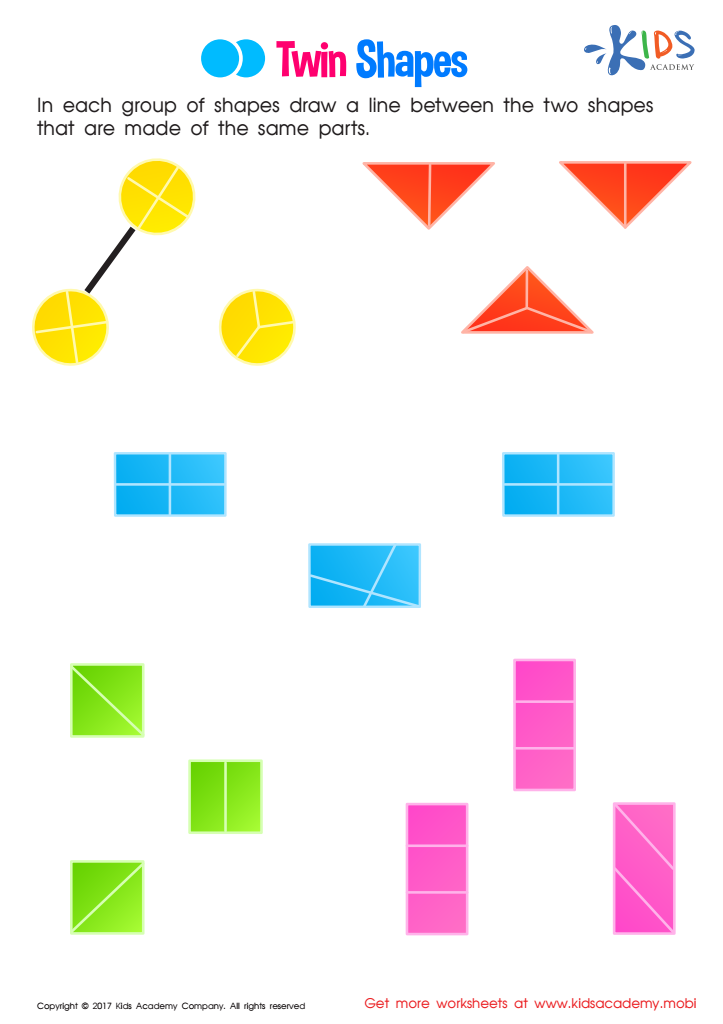
Twin Shapes Worksheet
 Assign to My Students
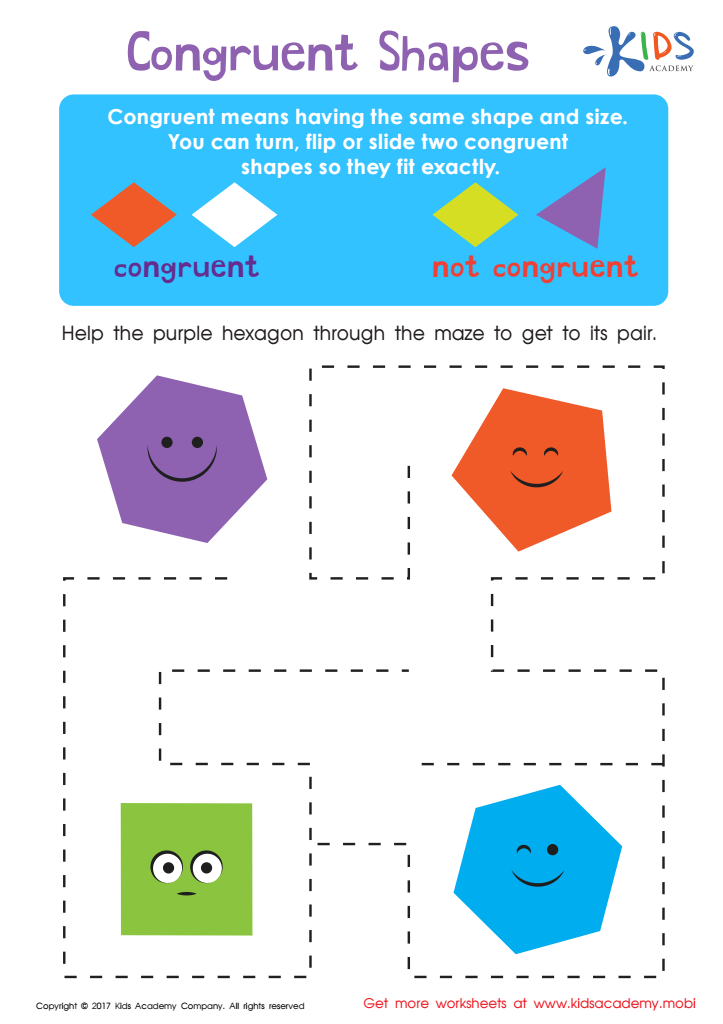
Congruent Shapes Worksheet
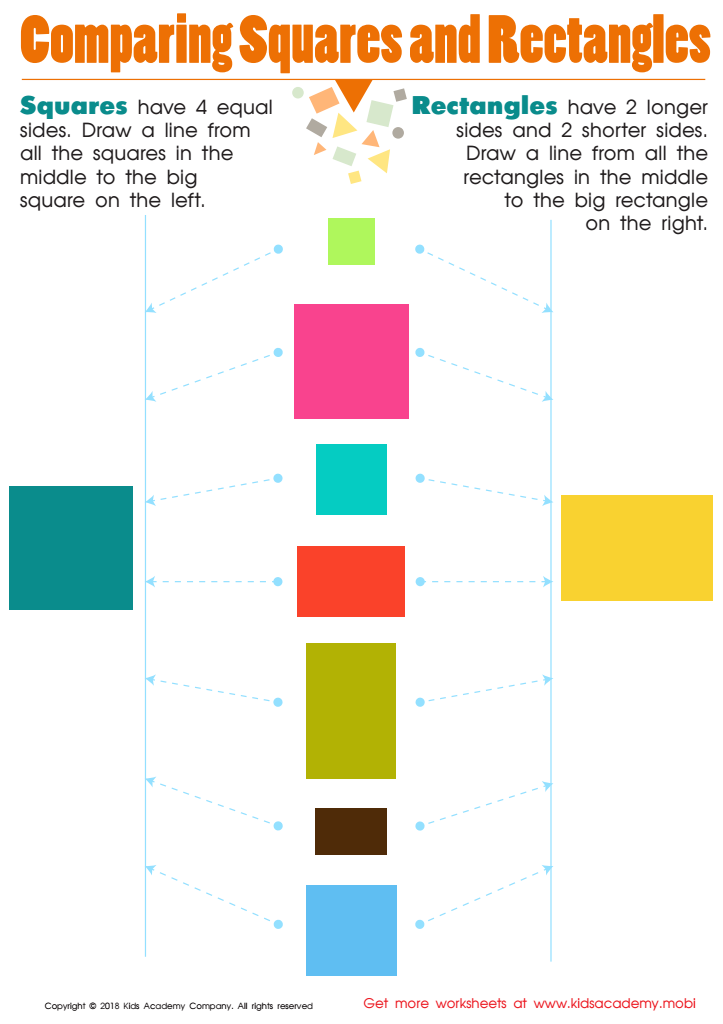
Comparing Squares Rectangles Worksheet
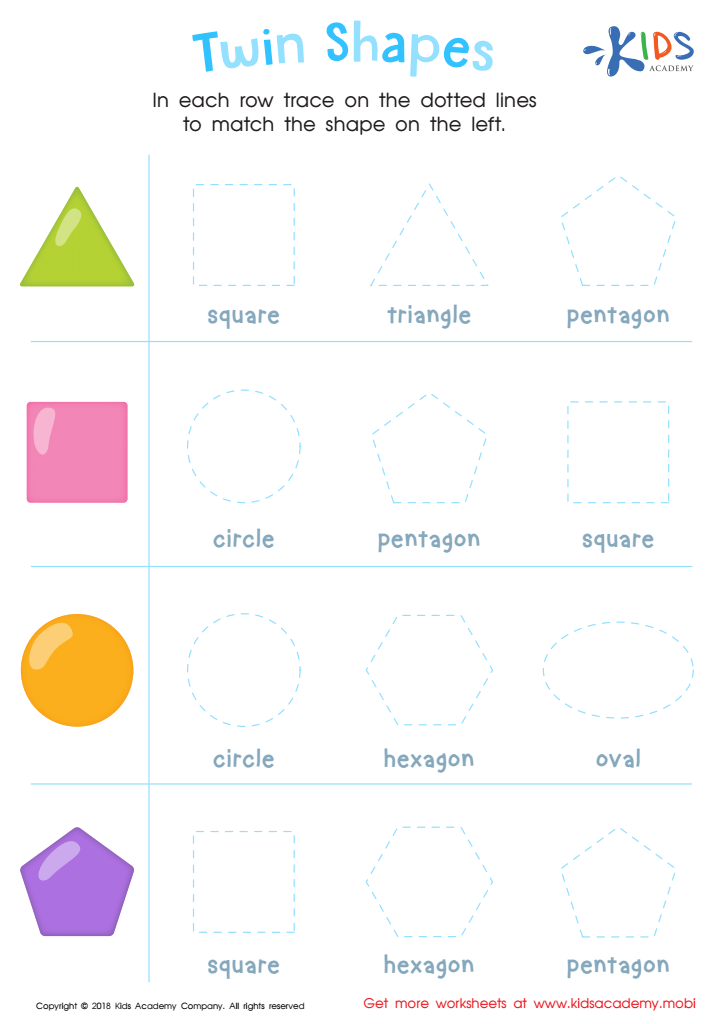
Twin Shapes Dot-to-Dot Worksheet








Comparing shapes is a foundational skill for children ages 5-7, laying the groundwork for more advanced mathematical and cognitive abilities. At this young age, kids are in the concrete operational stage of cognitive development, as described by Piaget, making it the perfect time to introduce basic geometric concepts. When parents or teachers engage children in comparing shapes, they are helping to develop critical thinking and problem-solving skills.
Firstly, recognizing and comparing shapes enhances spatial awareness, which is vital in understanding the physical world and in performing everyday tasks. Children learn to identify and differentiate shapes based on size, color, angles, and other properties, which also supports their recognition of patterns.
Moreover, comparing shapes encourages descriptive language and vocabulary building. Children learn words like "triangle," "square," "smaller," and "larger," which enhances their ability to communicate complex concepts clearly.
Additionally, these activities stimulate fine motor skills, essential for writing and other tasks requiring hand-eye coordination. By handling different shapes and comparing them, children refine their motor control.
Involving kids in comparing shapes also introduces basic arithmetic concepts, such as counting sides and vertices, reinforcing early math skills in a fun and engaging way. Overall, this foundational math practice not only ignites curiosity and interest in mathematics but also supports holistic cognitive, language, and physical development.








