
Enhancing problem-solving skills Worksheets for Ages 5-7
16 filtered results
Difficulty Level
Grade
Age
-
From - To
Subject
Activity
Standards
Boost your child's cognitive abilities with our "Enhancing Problem-Solving Skills Worksheets" designed for ages 5-7! These engaging worksheets are tailored to foster critical thinking and analytical skills through fun and interactive activities. Children will explore patterns, puzzles, and simple challenges that encourage creativity and logic. Our resources aim to build confidence in young learners as they tackle various scenarios, preparing them for future academic success. Perfect for use at home or in the classroom, these worksheets make learning enjoyable and effective. Help your child unlock their problem-solving potential today! Explore our collection and watch them thrive!
Favorites
With answer key
Interactive
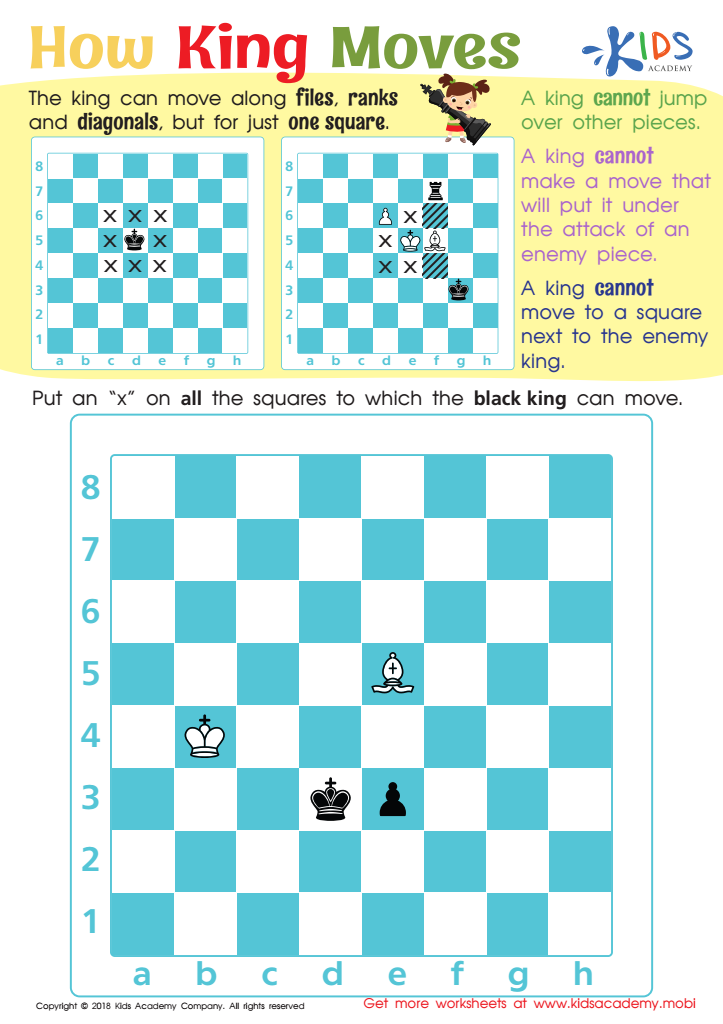
How King Moves Worksheet
Teach your kids the fundamentals of chess with this worksheet! The goal is to checkmate the opponent's king, so it must be protected at all times. The king moves along files, ranks, and diagonals (except one square at a time), and cannot move to a square next to the enemy king. Your kids will soon master the art of checkmate!
 Assign to My Students
How King Moves Worksheet
Worksheet
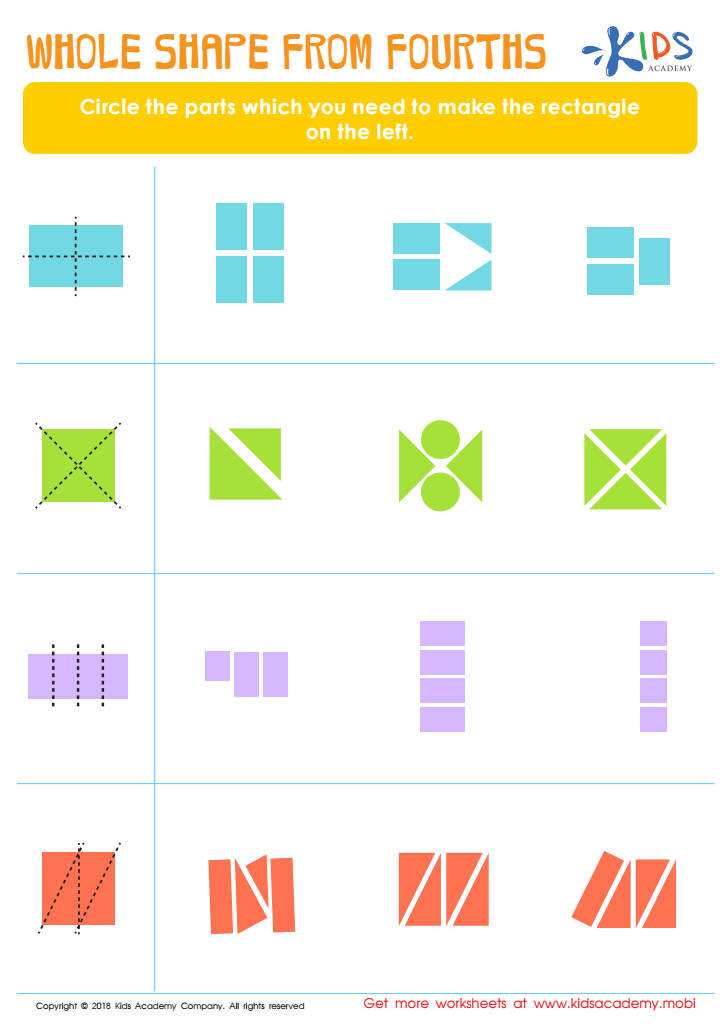
Whole Shape from Fourths Worksheet
Have your kids circle the shapes that'll form the rectangle on the left. It'll test their knowledge of shapes and ability to put them together to make a new one. Ask them to look at the parts on the right and circle the ones that'll form the rectangle.
Whole Shape from Fourths Worksheet
Worksheet
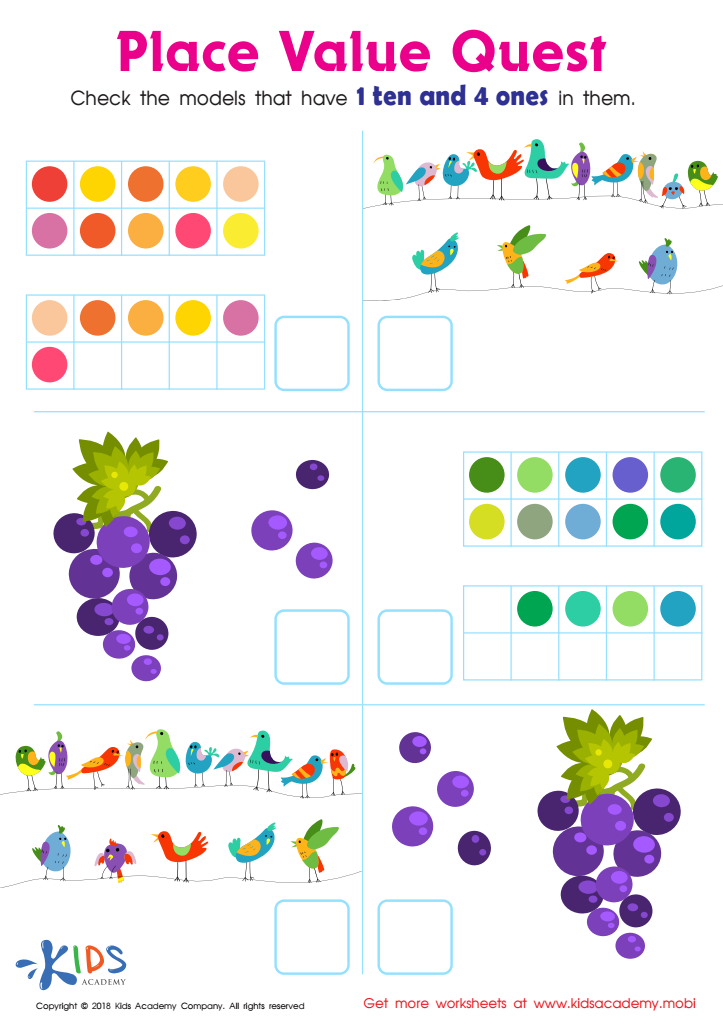
Place Value Quest Worksheet
Help your child explore place value with this fun worksheet! They'll pick the set of images that have 1 ten and 4 ones from a selection of birds, grapes, and dots. Checking the boxes that contain the answer, your child will learn to count and identify tens and ones. A quick math practice page that's sure to be a hit!
Place Value Quest Worksheet
Worksheet
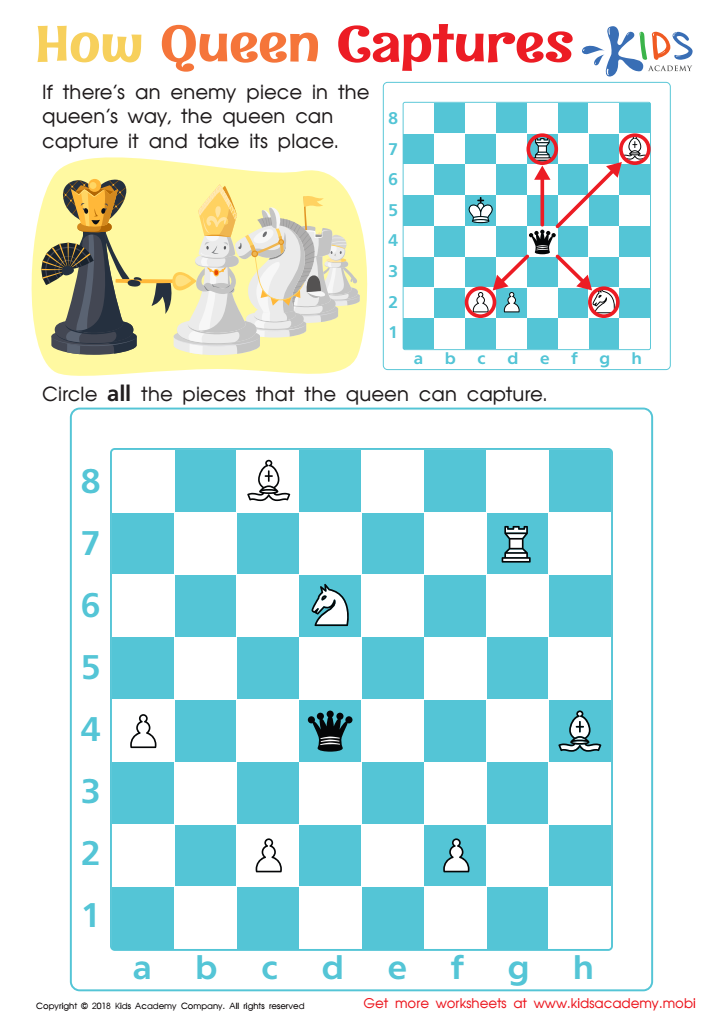
How Queen Captures Worksheet
Chess is a great game for sharpening math skills, strategic thinking, and knowledge of how each piece moves. If your child is interested, introduce them with this worksheet. It demonstrates how the queen can capture opposing pieces, such as another queen, and take their place.
How Queen Captures Worksheet
Worksheet
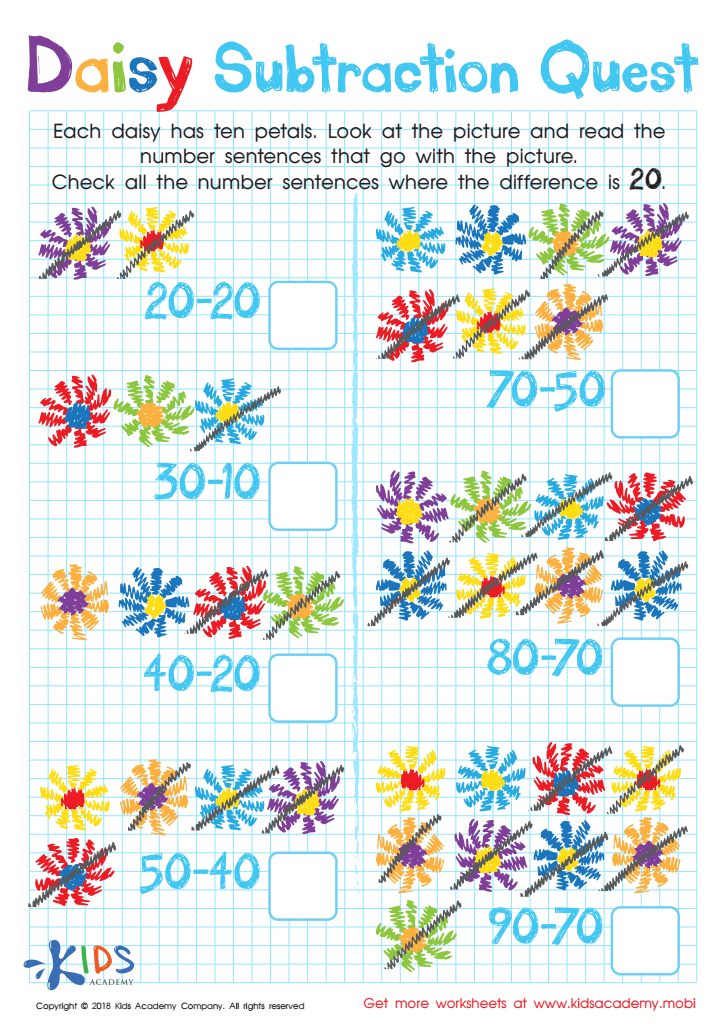
Daisy Subtraction Quest Worksheet
Ohh-la-la! These daisies are something special! With ten petals each, they're perfect for helping little math learners use tens to find number sentences that differ by 20. Our free worksheet is full of bright colors to engage and easy questions to strengthen math automaticity and confidence.
Daisy Subtraction Quest Worksheet
Worksheet
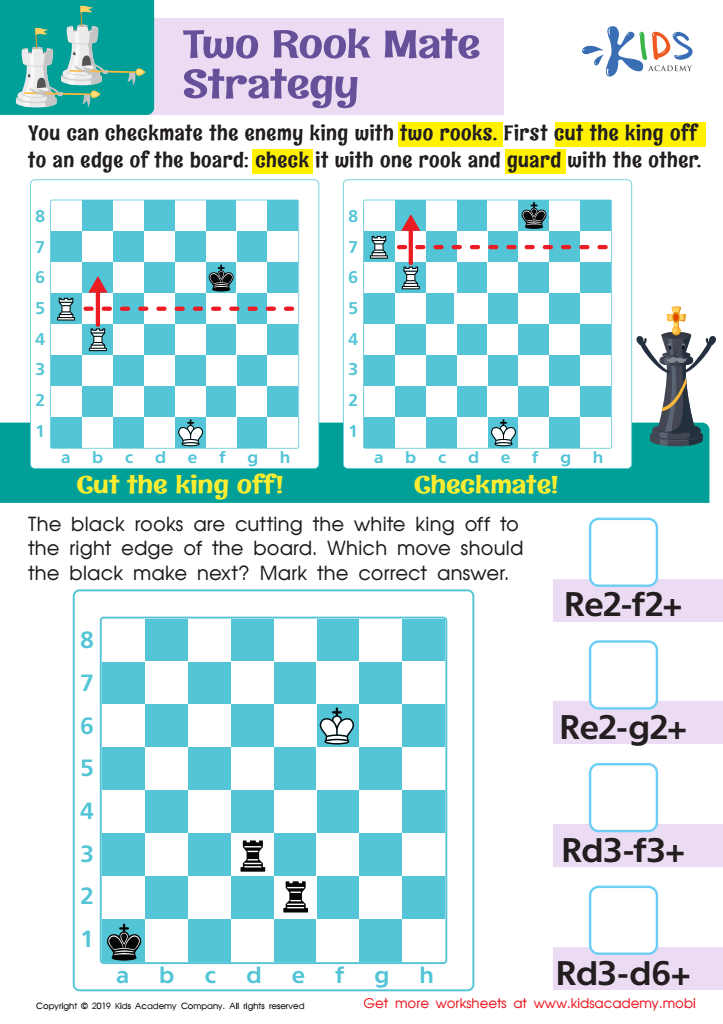
Two Rook Mate Strategy Worksheet
Kids who can play stress gain better reasoning, logic and critical thinking skills. This worksheet can teach kids the Two Rook Mate strategy to checkmate their opposite king. They'll discover how to close in the enemy king and protect with another rook, all the while enjoying a screen-free activity!
Two Rook Mate Strategy Worksheet
Worksheet
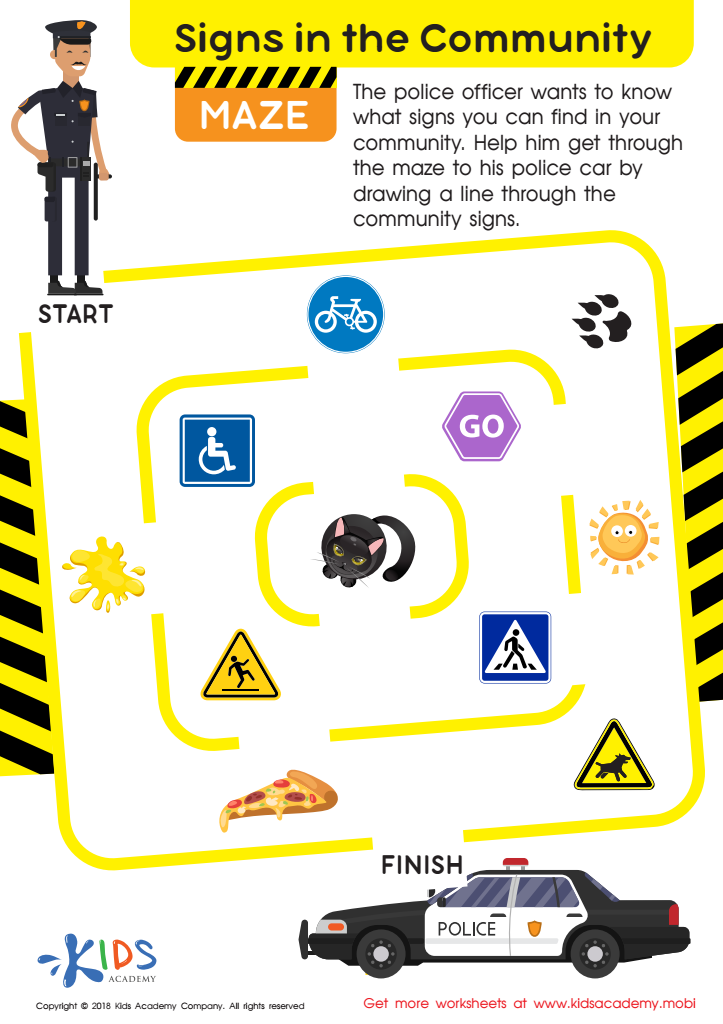
Signs in the Community: Maze Worksheet
This worksheet helps kids build writing skills like good hand grasp, pencil grip and how to hold a pencil. They can trace a path for the community helper to reach the car, learning community signs and strengthening fine-motor and pre-literacy skills while they enjoy the bright, colourful pictures.
Signs in the Community: Maze Worksheet
Worksheet
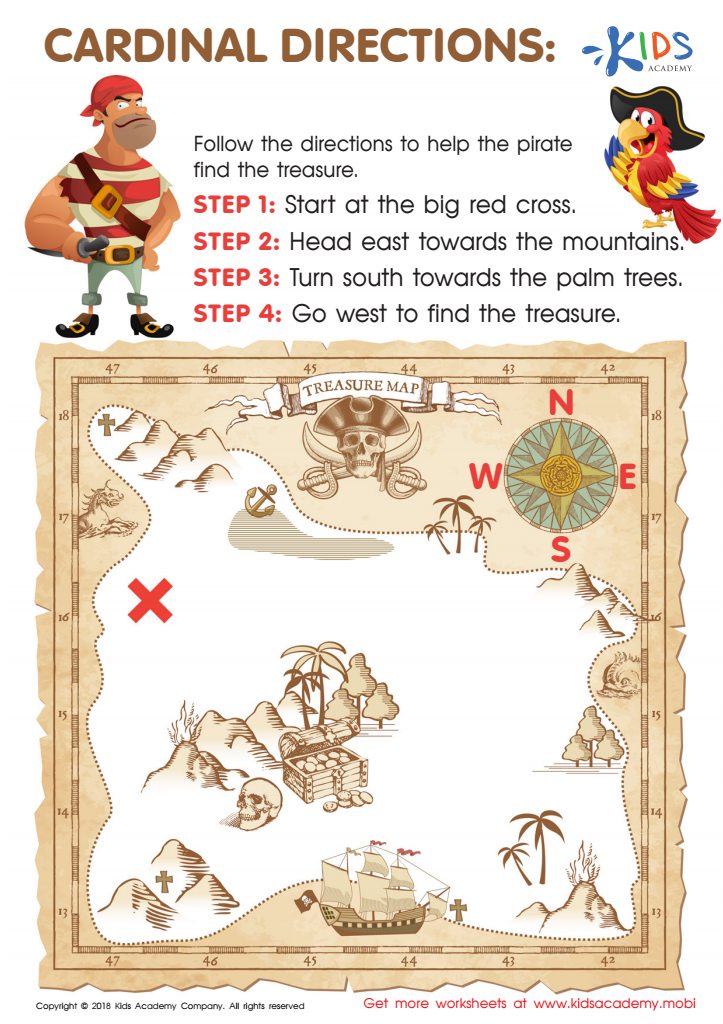
Cardinal Directions Treasure Map Maze Worksheet
Kids who love adventure will enjoy this fun activity! Read steps aloud and help your child follow the directions to help a pirate find treasure. There are four steps; with each one, your kid will be one step closer to the X that marks the spot! In the end, they'll have found the treasure if they've followed the instructions correctly.
Cardinal Directions Treasure Map Maze Worksheet
Worksheet
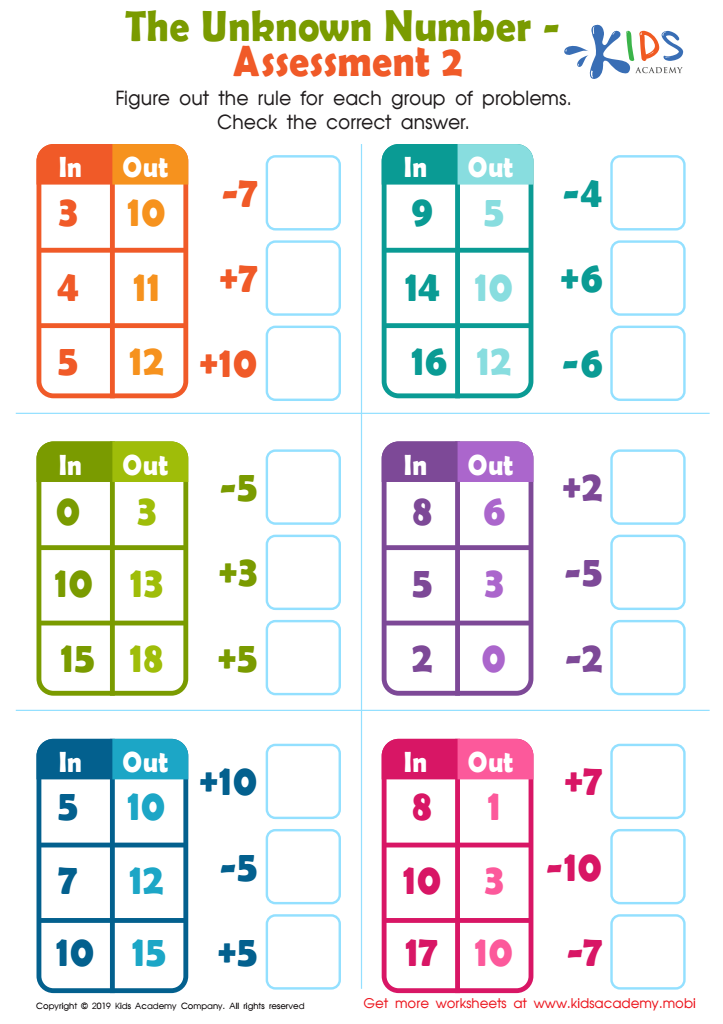
The Unknown Number - Assessment 2 Worksheet
Help your kids to figure out the rule for each group of math problems. Check the right answer and show that there's nothing to be nervous about. Encourage them and use creative learning for better understanding of math. Constant practice is key.
The Unknown Number - Assessment 2 Worksheet
Worksheet
Double Facts: Total Matching 2 Worksheet
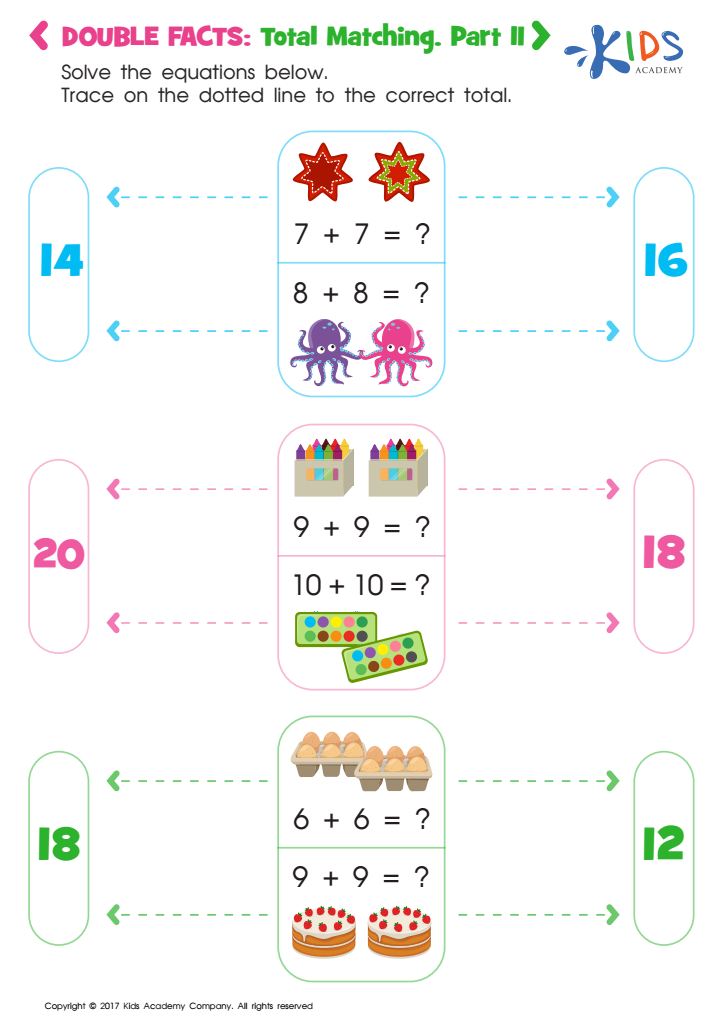
Having trouble with math? This printable worksheet is perfect for your child or student. It features simple addition problems that can be solved with your help. Trace the dotted line to the right answer and make counting numbers stress-free! Your young one will be solving math equations in no time.
Double Facts: Total Matching 2 Worksheet
Worksheet
Part, Part, Whole Worksheet
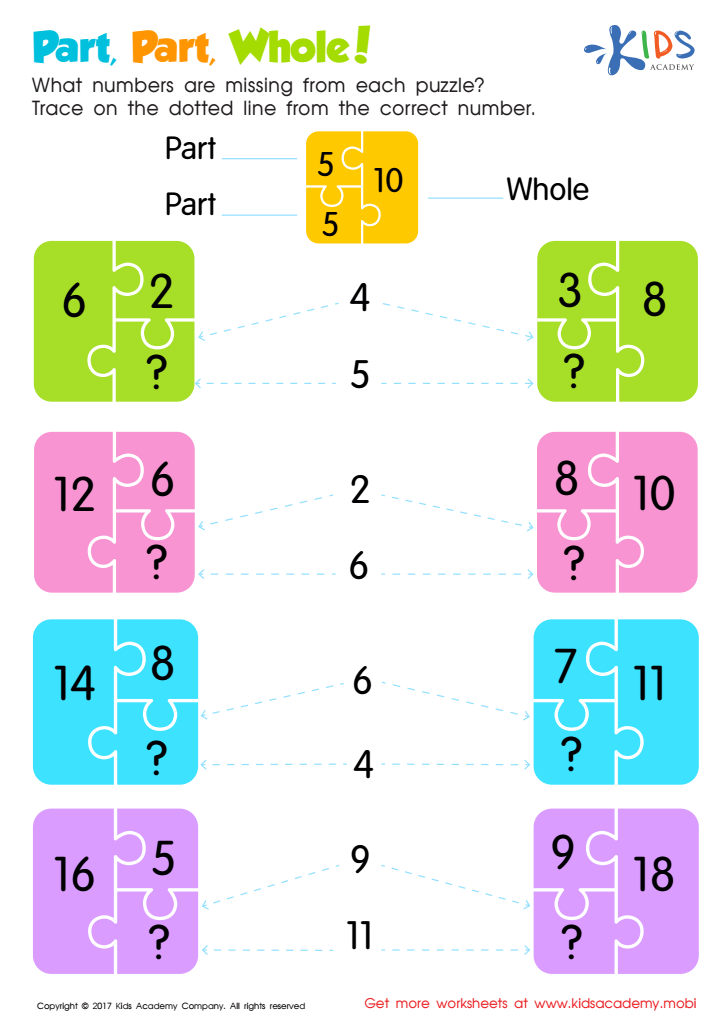
Help your child find the missing numbers in the puzzles. The worksheet combines fun and maths - stimulating the brain while keeping them engaged. Colourful pages will keep the learning enjoyable. Simple addition and subtraction will ensure they stay entertained.
Part, Part, Whole Worksheet
Worksheet
Join Kids Academy for Free
Who is primarily going to use this learning content?





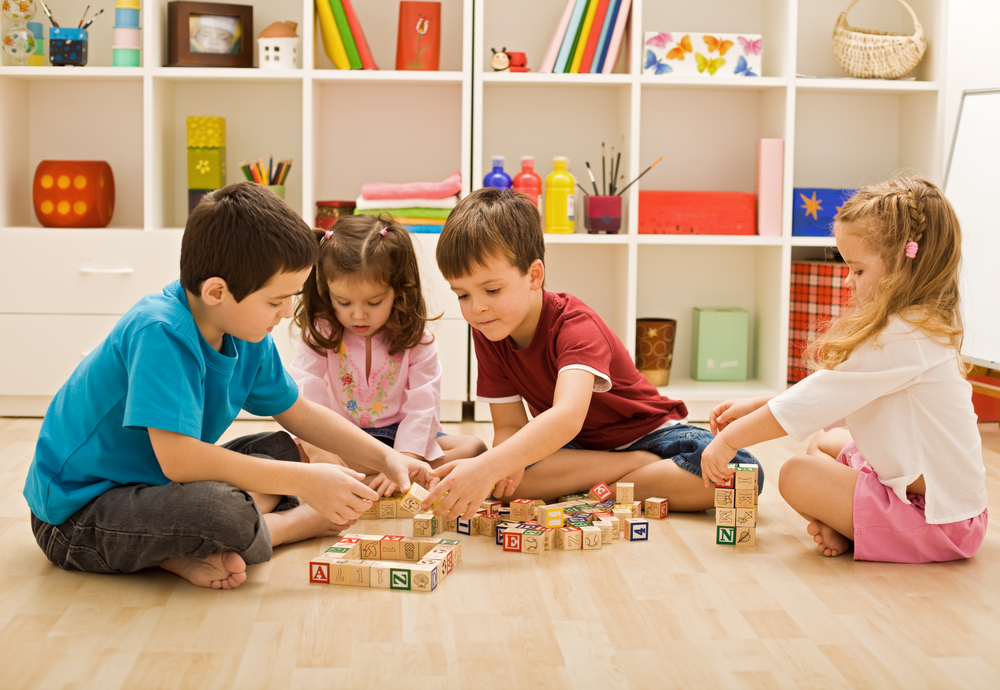

Enhancing problem-solving skills in children aged 5-7 is vital for their development and future success. At this age, children are naturally curious and begin to engage with challenges independently. Teachers and parents should prioritize problem-solving skills because they foster critical thinking, creativity, and resilience. By encouraging children to approach problems systematically, they learn how to analyze situations, consider various solutions, and understand the consequences of their choices.
Additionally, early problem-solving experiences lay the foundation for social and emotional development. Children learn to communicate effectively, collaborate with peers, and develop empathy by working through challenges. Problem-solving boosts self-confidence, as children experience the satisfaction that comes from overcoming obstacles.
Creating a supportive environment for developing these skills allows children to explore new ideas without the fear of making mistakes. This mindset is crucial in today's rapidly changing world, where adaptability and innovation are prized. By teaching youngsters to embrace challenges, parents and teachers equip them with essential tools for lifelong learning and personal growth. Ultimately, nurturing problem-solving skills forms engaged, responsible citizens who can contribute thoughtfully to society, making it a critical focus for caregivers and educators alike.








